Bengt Nordenberg
1822 – 1902
In short
Bengt Nordenberg (1822–1902) was a Swedish painter of the Düsseldorf school, renowned for his genre scenes of everyday life in Sweden’s Dalarna, Skåne and Blekinge regions.
Notable works
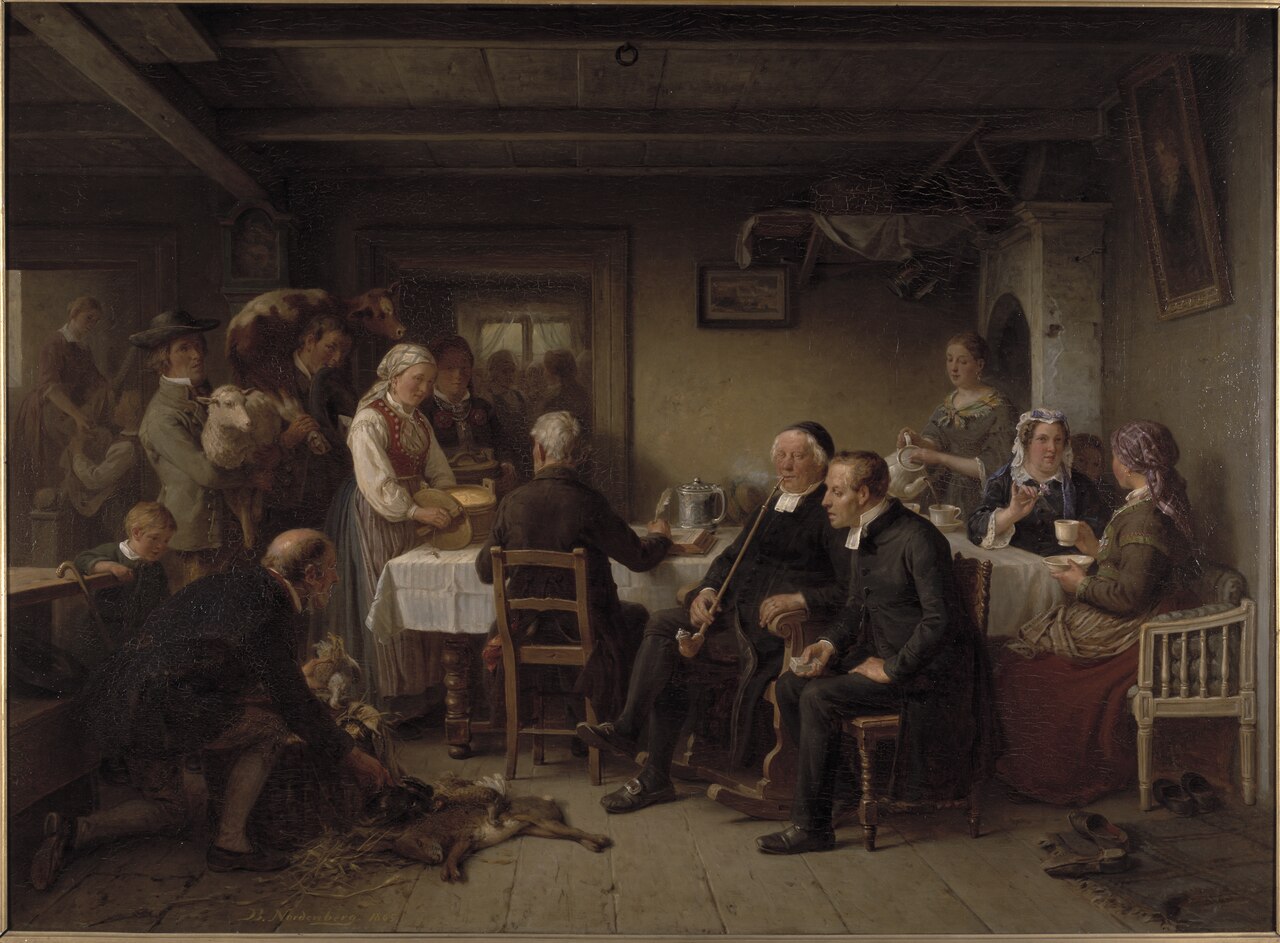
Early life Bengt Nordenberg was born in 1822 in the small parish of Jämshög, located in the province of Blekinge in southern Sweden. He grew up in a modest farming family, where the rhythms of rural life left a lasting impression on his visual imagination. As a child he displayed a keen interest in drawing, copying decorative motifs from local folk art and sketching the daily activities of his community. Recognising his talent, his parents arranged for him to receive basic artistic training in the nearby town of Karlskrona, where he learned the fundamentals of draughtsmanship and colour mixing.
In his late teens, Nordenberg secured a place at the Royal Swedish Academy of Arts in Stockholm. The Academy exposed him to the academic traditions of the time, emphasizing rigorous drawing from life, study of classical sculpture and the disciplined handling of oil paint. While there, he was introduced to the works of German painters who were gaining reputation across Europe, particularly those associated with the Düsseldorf school, whose emphasis on narrative clarity and meticulous detail resonated with his own sensibilities.
Career and style In the early 1850s Nordenberg moved to Düsseldorf, then a thriving artistic centre under the direction of the Academy of Fine Arts. The city attracted a pan‑European cohort of painters, and its teaching methods stressed a blend of romantic storytelling with a naturalistic approach to light and colour. Nordenberg enrolled in the studio of Wilhelm von Schadow, a leading figure of the school, where he refined his technique and absorbed the prevailing aesthetic.
Nordenberg’s mature style is characterised by a strong narrative impulse, careful composition, and a palette that balances warm earth tones with subtle highlights. He favoured genre subjects—scenes of ordinary people engaged in work, celebration or contemplation—rendered with a fidelity to local costume and architecture that gives his paintings an ethnographic quality. Although his work aligns with the Düsseldorf school’s academic precision, it also reflects a personal affinity for Swedish folk culture, which he depicted with affection rather than idealisation.
Throughout his career, Nordenberg maintained a steady output of paintings that were exhibited in both Germany and Sweden. He participated regularly in the annual exhibitions of the Düsseldorf Art Society and the Swedish Academy’s spring shows, earning a reputation as a reliable purveyor of scenes that appealed to a growing middle‑class market for nostalgic, yet technically accomplished, art.
Signature techniques Nordenberg’s technique combined a disciplined underdrawing with layered glazing. He would begin each canvas with a detailed charcoal sketch, establishing the placement of figures, architectural elements and the direction of light. Once the composition was approved, he applied a thin, opaque ground before building up colour in successive translucent glazes. This method allowed him to achieve depth of atmosphere while preserving the crisp outlines that are a hallmark of the Düsseldorf school.
His handling of light is particularly noteworthy. In interior scenes he employed chiaroscuro to model forms and to draw the viewer’s eye toward focal points, such as a candle or a window. In outdoor settings, he captured the fleeting quality of daylight by modulating warm ochres with cooler blues, a technique that lends his works a subtle sense of time passing. Additionally, Nordenberg paid meticulous attention to the texture of fabrics and the grain of wooden surfaces, often using a fine brush to render the weave of traditional Swedish costumes.
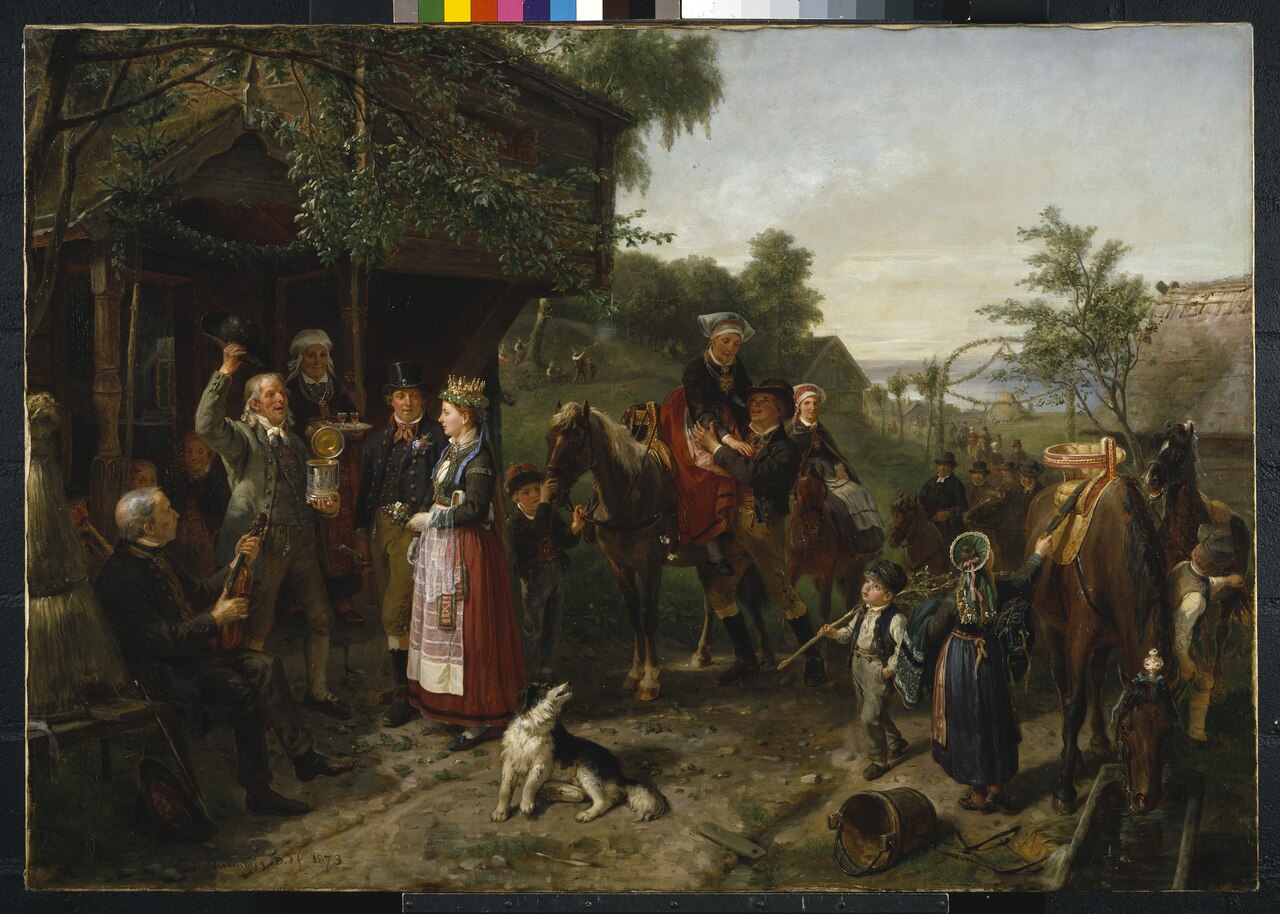
Major works Among Nordenberg’s most celebrated paintings is **A Värend Wedding** (1873). This composition portrays a bridal procession in the Dalarna region, with richly embroidered folk dress, a brass band, and a rustic inn as the backdrop. The work exemplifies his skill in rendering intricate textiles and his ability to convey collective celebration through careful grouping of figures.
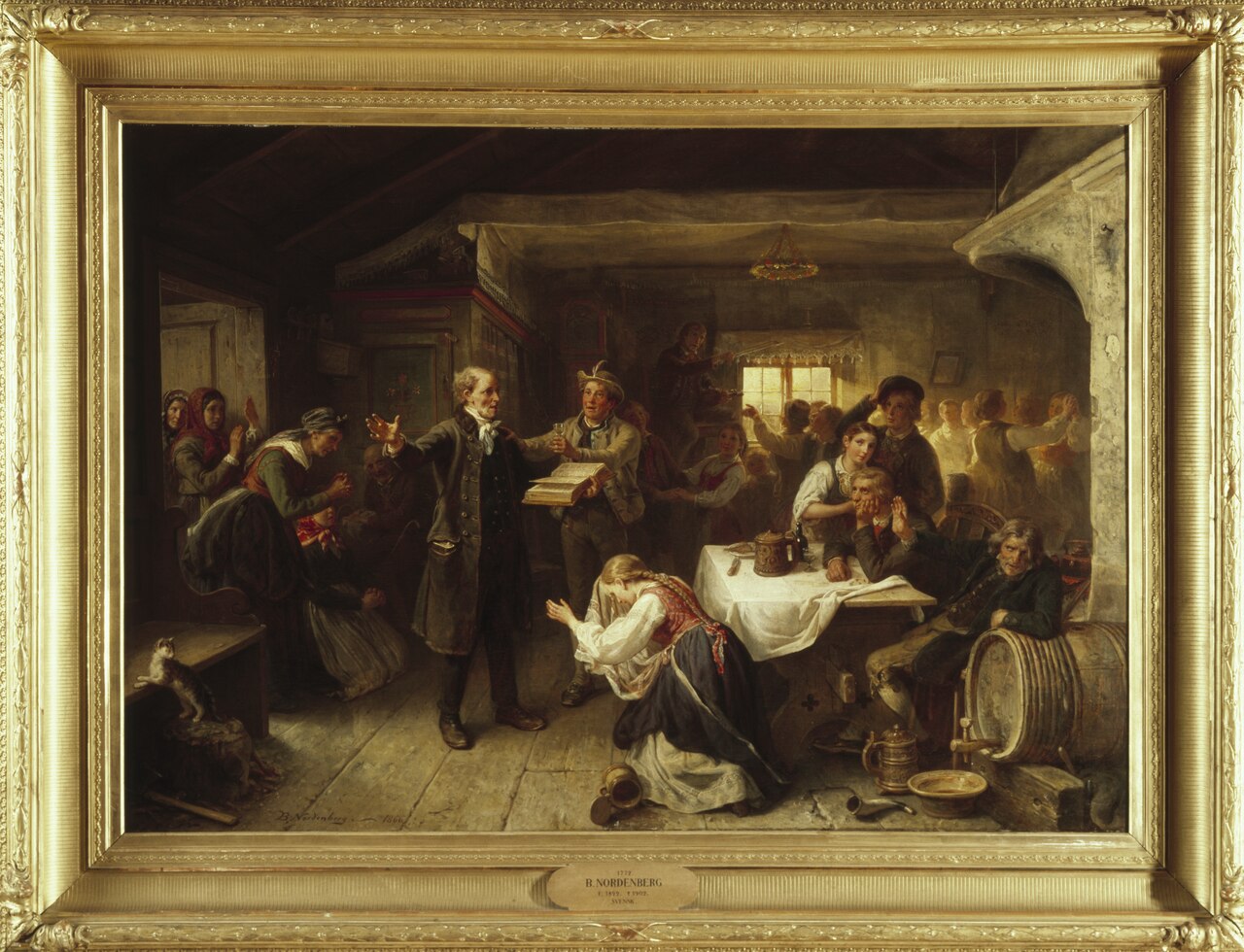
A Revivalist Disturbs the Merrymaking (1866) captures a more ambiguous narrative: a travelling preacher, rendered in austere black, interrupts a village feast. The contrast between the preacher’s solemn expression and the jovial revelers underscores Nordenberg’s interest in moralising themes without sacrificing visual charm.
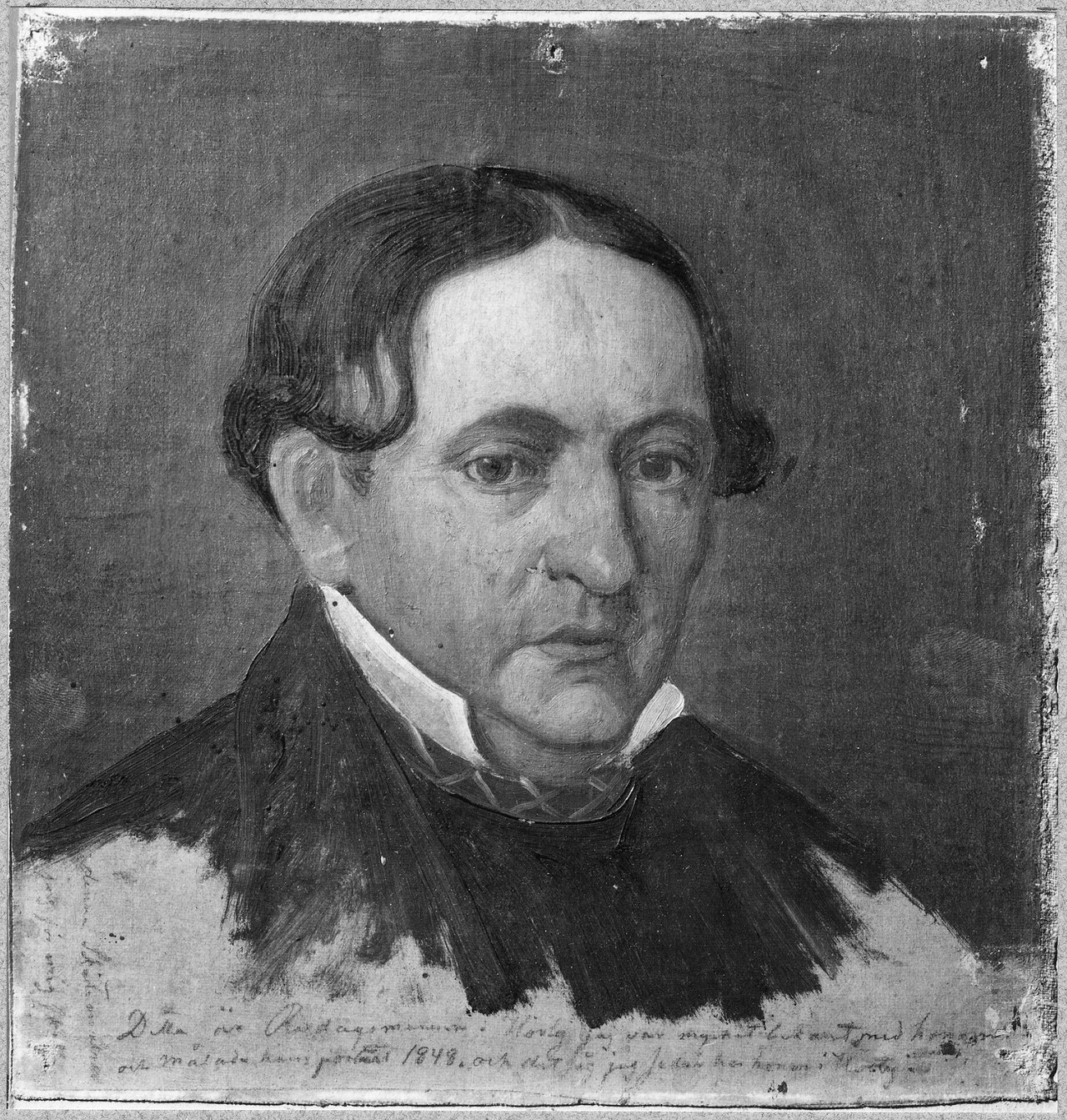
In Nils Jeppsson in Hörby, member of parliament (1848), Nordenberg presents a portrait of a local political figure seated amid a modest interior. The painting combines formal portraiture with genre elements, as the subject is surrounded by symbols of his constituency, hinting at the intersection of personal identity and public duty.
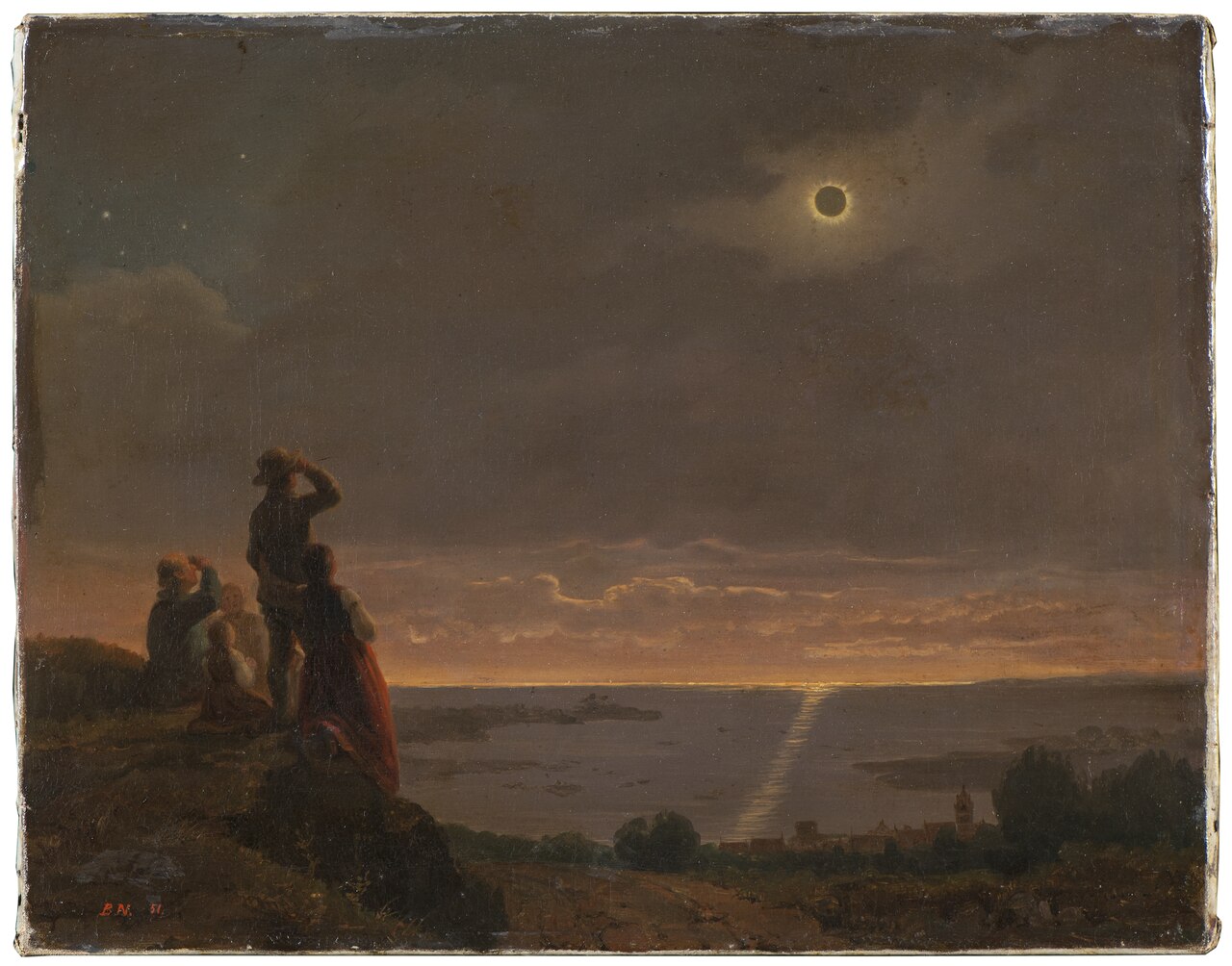
Solar Eclipse (1851) demonstrates Nordenberg’s willingness to tackle dramatic natural phenomena. The canvas shows a rural crowd looking up as the sun is obscured, the darkness rendered with a deep, velvety tone that heightens the sense of awe. The work reflects contemporary scientific curiosity and the popular fascination with celestial events.
Finally, Tithe Collection in Skåne (1865) depicts peasants delivering a portion of their harvest to a local official. The scene is composed with a clear line of sight leading the viewer’s eye from the foreground laborers to the distant administrative building, illustrating Nordenberg’s command of perspective and his interest in social customs.
Together, these works illustrate the breadth of Nordenberg’s subject matter—from festive rites to solemn civic duties—while maintaining a consistent visual language rooted in the Düsseldorf tradition.
Influence and legacy Bengt Nordenberg’s legacy rests on his role as a cultural bridge between German academic painting and Swedish folk representation. By locating the Düsseldorf school’s technical rigour within Swedish subject matter, he helped forge a visual vocabulary that later Swedish artists would adopt and adapt. His paintings were widely reproduced as prints, allowing a broader audience to engage with scenes of rural Swedish life during a period of rapid industrialisation.
In the decades after his death in 1902, Nordenberg’s work continued to be displayed in regional museums across Sweden and Germany. Art historians regard him as a pivotal figure in the development of Swedish genre painting, noting how his meticulous documentation of costume, architecture and customs provides valuable insight for scholars of cultural history. Though his name is less prominent than some of his contemporaries, his paintings remain sought after by collectors interested in 19th‑century Nordic art, and they continue to inform exhibitions exploring the cross‑national exchange of artistic ideas in the nineteenth century.
Overall, Nordenberg exemplifies the capacity of academic training to serve regional storytelling, and his body of work endures as a testament to the enduring appeal of everyday narratives rendered with technical excellence.
Frequently asked questions
Who was Bengt Nordenberg?
Bengt Nordenberg (1822–1902) was a Swedish painter of the Düsseldorf school, best known for genre scenes depicting everyday life in Sweden’s Dalarna, Skåne and Blekinge regions.
What artistic style or movement is he associated with?
He worked within the Düsseldorf school of painting, combining its academic precision with a focus on Swedish folk subjects and narrative genre painting.
What are his most famous works?
His most noted paintings include A Värend Wedding (1873), A Revivalist Disturbs the Merrymaking (1866), Nils Jeppsson in Hörby, member of parliament (1848), Solar Eclipse (1851) and Tithe Collection in Skåne (1865).
Why is he important in art history?
Nordenberg bridges German academic techniques and Swedish cultural themes, providing valuable visual records of 19th‑century rural life and influencing later Swedish genre painters.
How can I recognise a Bengt Nordenberg painting?
Look for meticulous underdrawings, layered glazes, clear narrative composition, warm earth tones, detailed folk costumes and a blend of academic realism with Swedish rural settings.