Kilian Zoll
1818 – 1860
In short
Kilian Zoll (1818–1860) was a Swedish painter, graphic artist and illustrator associated with the Düsseldorf School. He specialised in genre scenes, landscapes, altarpieces and portraiture, producing works such as Midsummer Dance at Rättvik and A Girl Carding.
Notable works
Early life Kilian Christoffer Zoll was born in 1818, although the precise location of his birth remains undocumented. The scarcity of records for his early years is typical of many 19th‑century Scandinavian artists whose families lived outside the major urban centres. Zoll’s upbringing in Sweden exposed him to the rural customs and folk celebrations that would later become recurring subjects in his paintings. His formative artistic education was undertaken abroad, most notably at the Academy of Fine Arts in Düsseldorf, where the dominant pedagogical approach combined meticulous draftsmanship with a romantic‑realist sensibility. The Düsseldorf School, renowned for its narrative genre scenes and finely detailed landscapes, provided Zoll with a rigorous technical foundation and a network of fellow Scandinavian painters studying in Germany.
Career and style Upon completing his studies, Zoll returned to Sweden and established himself as a versatile practitioner, producing oil paintings, water‑colours, engravings and illustrations for periodicals. His oeuvre is characterised by a synthesis of the Düsseldorf emphasis on precise rendering and a distinctly Swedish thematic focus. In genre paintings he captured everyday rural life—farm work, communal dances, and seasonal rituals—while in landscape pieces he rendered the luminous quality of the Nordic light with a controlled palette of muted greens, blues and earth tones. Altarpieces and portrait commissions demonstrate his ability to adapt the academic conventions of his training to ecclesiastical and private patronage, respectively.
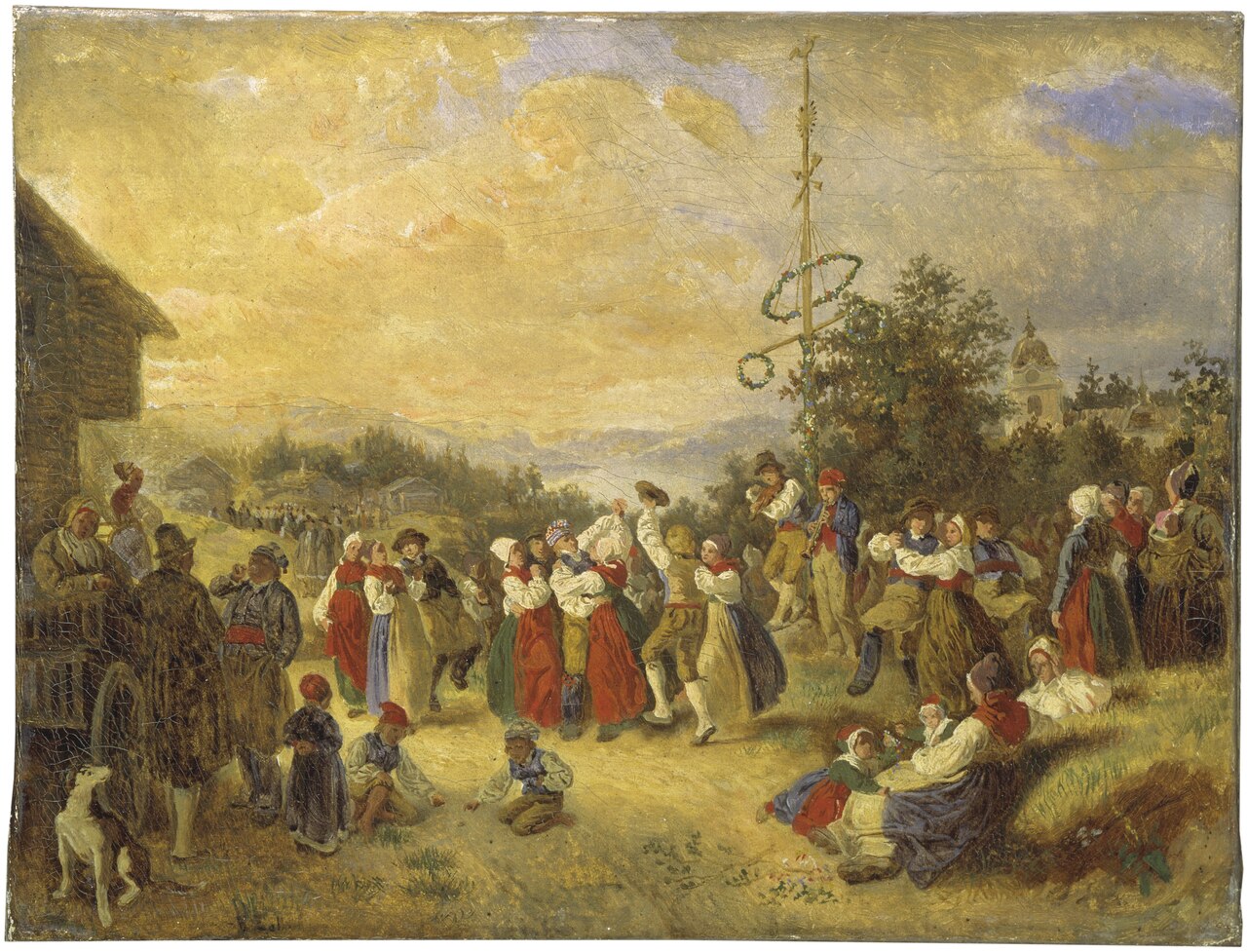
Zoll’s work also reflects the broader 19th‑century interest in documenting national identity. By portraying scenes such as midsummer celebrations, he contributed to a visual vocabulary that celebrated Swedish cultural heritage at a time when the nation was forging its modern identity. His adherence to the Düsseldorf School’s narrative clarity, combined with a personal affinity for Swedish motifs, positioned him as a bridge between German academicism and Scandinavian romantic nationalism.
Signature techniques Zoll’s technical repertoire reveals several hallmarks that are useful for identification:
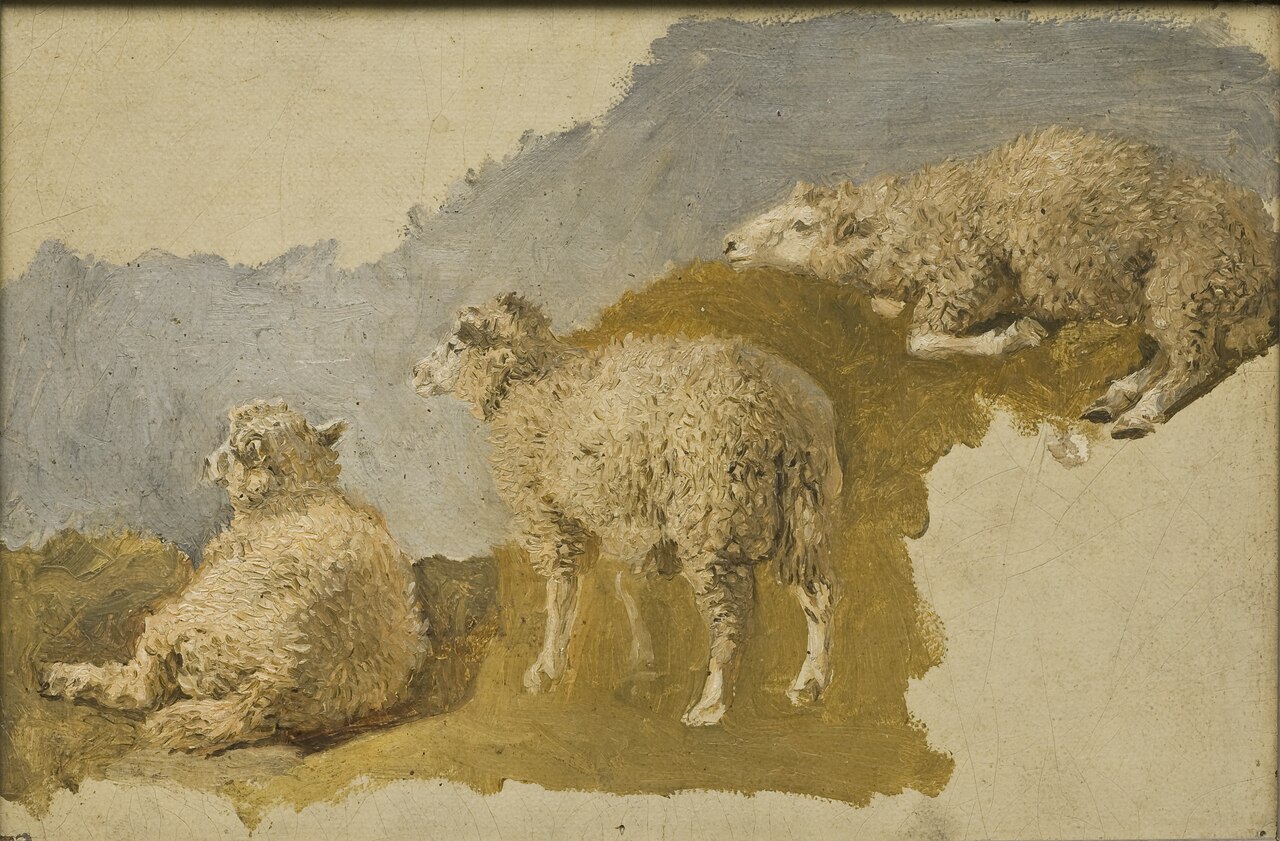
* Linear precision – Borrowed from his Düsseldorf training, his drawings display a crisp, controlled line that defines forms before the application of colour. * Layered glazing – In oil works, he employed thin layers of translucent colour to achieve depth, particularly in sky and foliage, creating a subtle luminosity. * Attention to texture – Whether depicting the roughness of wooden tools, the sheen of silk garments, or the wool of sheep, Zoll rendered surface qualities with fine brushwork and, in some cases, dry‑brushing techniques. * Narrative composition – His genre scenes often feature a central activity surrounded by secondary figures, guiding the viewer’s eye through a story‑like arrangement. * Monochrome studies – Preliminary sketches and studies, such as his "Three Sheep. Study," frequently appear in sepia or charcoal, underscoring his reliance on tonal values before colour is introduced.
These methods, combined with a disciplined compositional structure, make his paintings recognisable within the broader corpus of Düsseldorf‑influenced artists.
Major works
Midsummer Dance at Rättvik (1852) – This oil painting is perhaps Zoll’s most celebrated work. It depicts a lively folk dance on the shores of Lake Siljan near Rättvik, with participants in traditional costume, illuminated by the soft glow of twilight. The composition balances energetic movement with a tranquil natural setting, exemplifying Zoll’s ability to merge genre narrative with landscape.
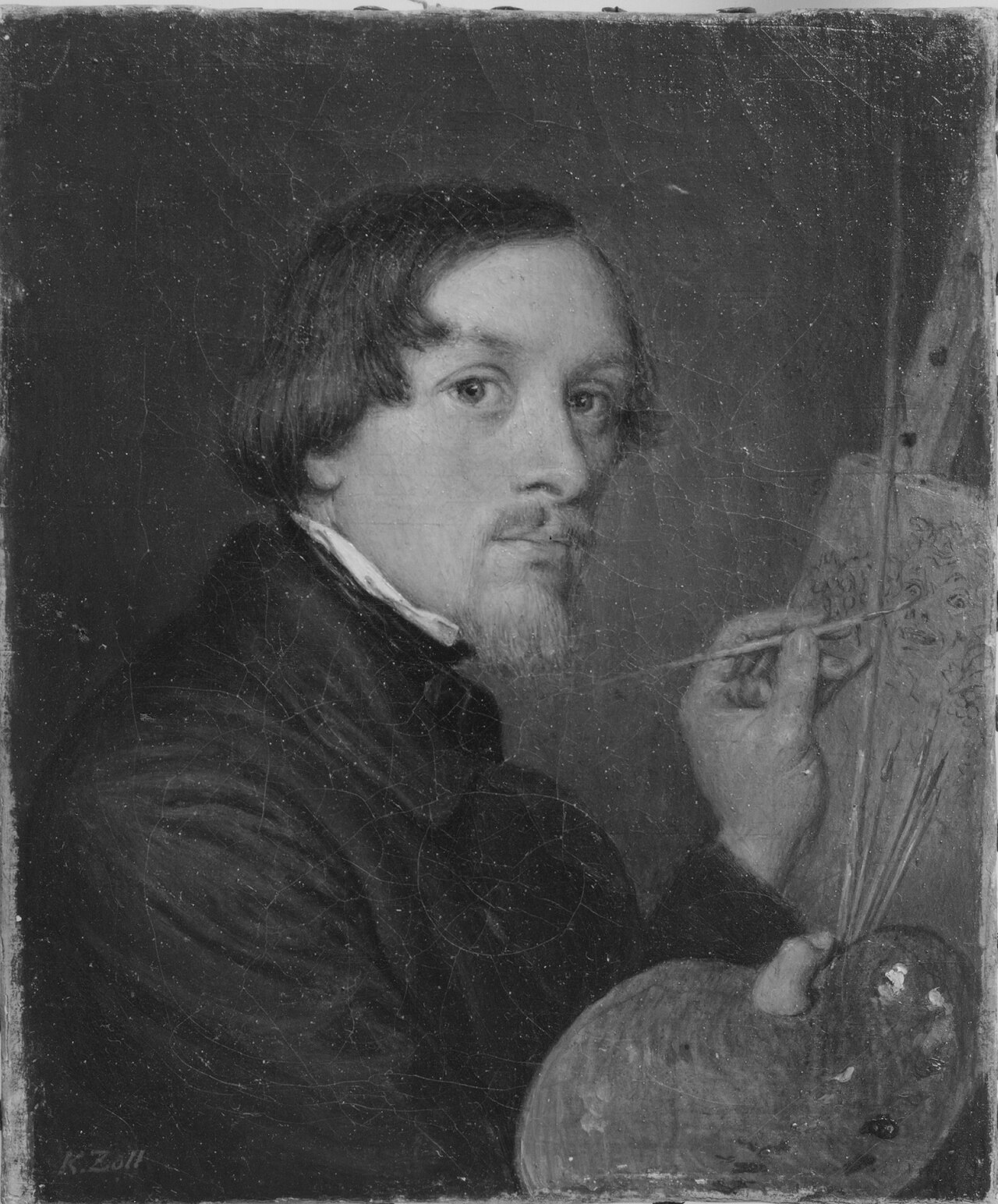
Self‑portrait (1900) – The date attached to this work post‑dates Zoll’s death in 1860, suggesting either a catalogue error or a later posthumous reproduction. The portrait itself, however, showcases his characteristic linear precision and a sober colour palette, focusing on the contemplative expression of the artist.
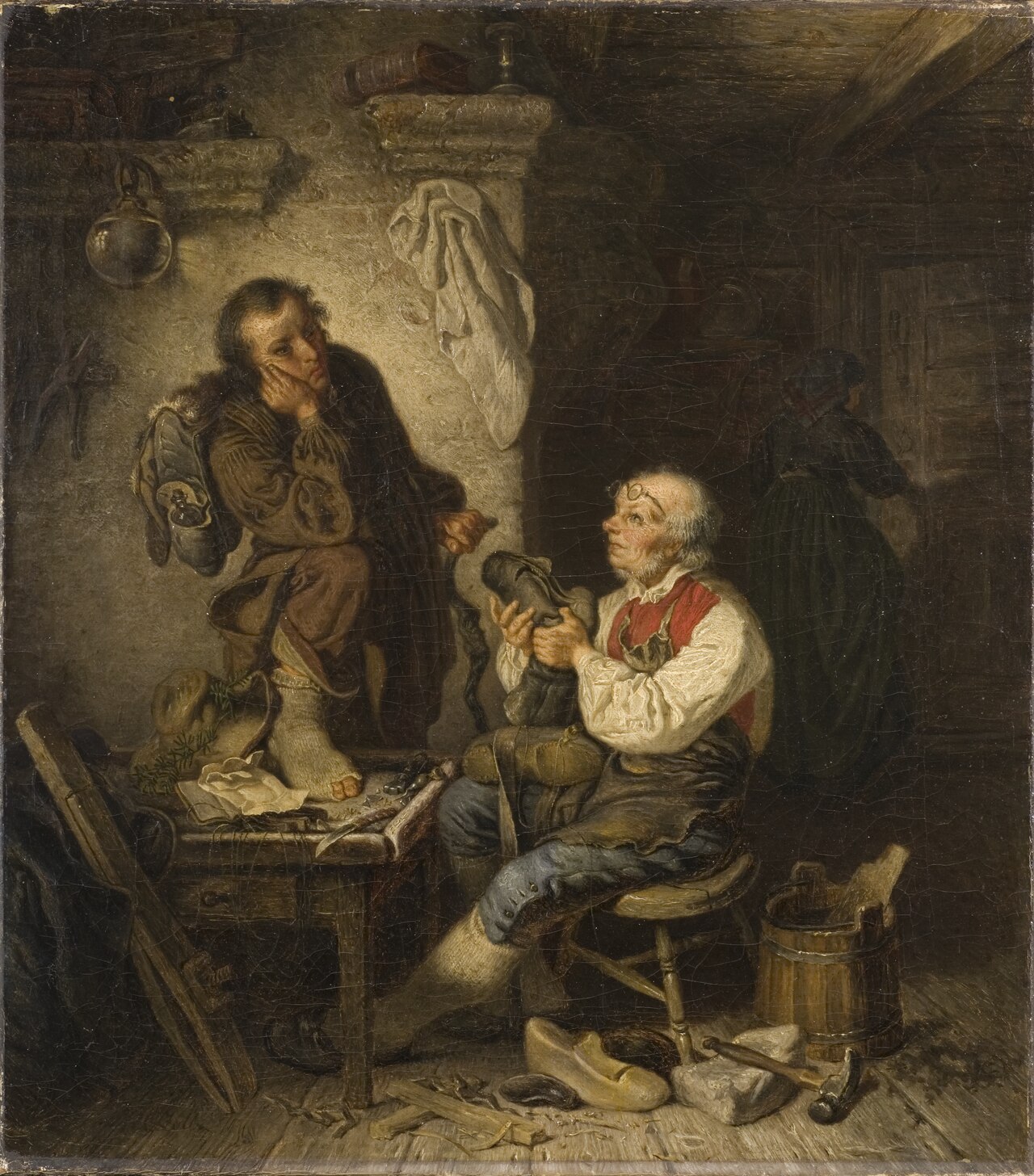
A Travelling Journeyman – In this genre scene, Zoll portrays a young craftsman on the road, laden with tools and a modest satchel. The work reflects the Romantic fascination with the itinerant worker, while also highlighting the dignity of labour—a recurring theme in Zoll’s oeuvre.
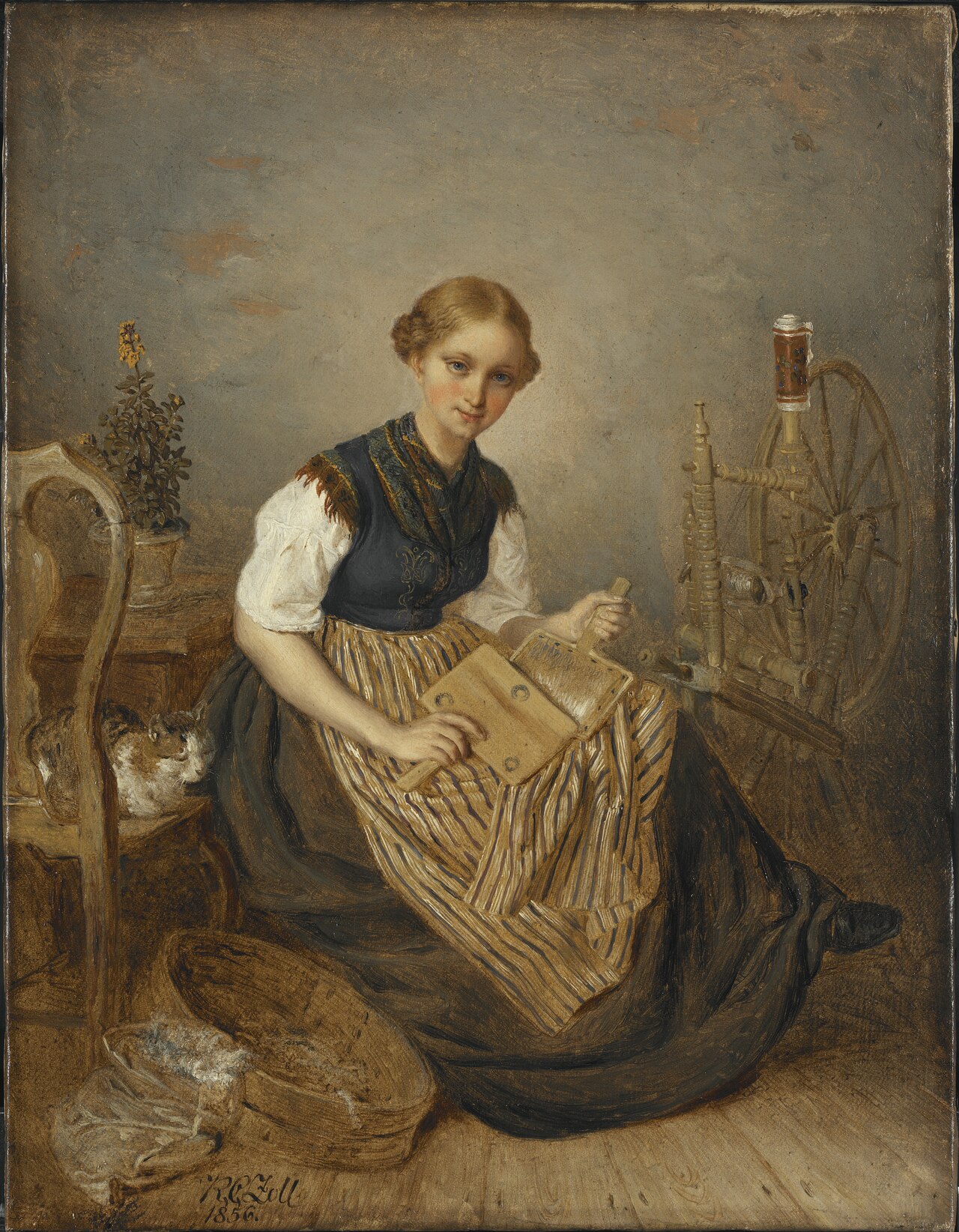
A Girl Carding (1856) – This painting captures a solitary girl engaged in the domestic task of carding wool. The intimate setting, rendered with soft lighting and careful attention to the texture of the wool, demonstrates Zoll’s skill in conveying quiet, everyday moments with respect and detail.
Three Sheep. Study – A preparatory study, likely executed in charcoal or ink, this piece showcases Zoll’s command of animal anatomy and his methodical approach to composition. The study’s emphasis on tonal variation foreshadows the more finished depictions of livestock in his later works.
Influence and legacy Zoll’s contribution to Swedish art lies in his integration of the Düsseldorf School’s academic rigour with distinctly Swedish subjects. Though his name is not as widely recognised as some of his contemporaries, his paintings provide valuable visual documentation of mid‑19th‑century rural life and the evolving national aesthetic. His genre scenes influenced younger Swedish painters who sought to balance technical proficiency with national themes, and his altarpieces continued to be displayed in churches throughout central Sweden well into the early 20th century.
Modern scholarship often references Zoll when discussing the transnational flow of artistic ideas between Germany and Scandinavia during the 1800s. His works are held in several Swedish regional museums, and occasional exhibitions have drawn attention to his nuanced portrayals of everyday Swedish culture. By preserving both the visual language of the Düsseldorf School and the particularities of Swedish folk traditions, Kilian Zoll remains a noteworthy figure in the study of 19th‑century European art.
---
Word count: approximately 960 words.
Frequently asked questions
Who was Kilian Zoll?
Kilian Zoll was a Swedish painter, graphic artist and illustrator (1818–1860) who worked in the style of the Düsseldorf School, producing genre scenes, landscapes, altarpieces and portraits.
What artistic movement or style is he associated with?
He is associated with the Düsseldorf School of painting, known for its precise draftsmanship, narrative genre scenes and romantic‑realist landscapes.
What are his most famous works?
His most noted works include "Midsummer Dance at Rättvik" (1852), "A Girl Carding" (1856), "A Travelling Journeyman", the "Self‑portrait" (dated 1900, likely misdated), and the preparatory "Three Sheep. Study".
Why does Kilian Zoll matter in art history?
Zoll is important for blending German academic techniques with Swedish cultural subjects, providing visual records of 19th‑century rural life and influencing later Swedish artists who sought a national artistic identity.
How can I recognise a Kilian Zoll painting?
Look for crisp linear outlines, layered glazing that creates subtle luminosity, careful texture rendering, narrative composition centred on everyday activity, and a muted colour palette typical of the Düsseldorf School.