Anna Nordgren
1847 – 1916
In short
Anna Nordgren (1847–1916) was a Swedish painter and draughtswoman noted for her academic‑style portraits and genre scenes. Working mainly in the late 19th century, she produced a modest but respected body of work that includes portraits, domestic interiors and landscapes.
Notable works



Early life Anna Christina Nordgren was born in 1847 in the town of Mariestad, Sweden. Little is recorded about her family background, but she grew up in a period when Sweden was beginning to open its art academies to women. Her early education included drawing lessons typical of the era, and she displayed a talent for rendering the human figure that would define her later career. By her late teens she had moved to Stockholm to pursue formal artistic training, a step that was increasingly common for ambitious Swedish women artists of the time.
Career and style After completing her studies, Nordgren established herself as a portraitist and genre painter. She worked within the academic tradition that dominated Swedish art schools in the mid‑19th century, emphasizing careful drawing, realistic modelling and a restrained colour palette. Unlike many of her contemporaries who were drawn to the emerging Impressionist movement, Nordgren remained committed to a more classical approach, favouring clear outlines and a focus on the sitter’s character rather than fleeting light effects. Her subjects ranged from private commissions—often members of the Swedish middle class—to imagined scenes of everyday life, reflecting a steady demand for representational art in a market still dominated by traditional tastes.
Signature techniques Nordgren’s technique rested on a solid foundation in draftsmanship. She typically began a work with a meticulous charcoal or graphite sketch, establishing proportion and pose before moving to oil paints. Her brushwork is generally smooth, with layers built up to achieve a subtle modelling of flesh and fabric. She employed a limited, earth‑toned palette for most portraits, reserving richer pigments for accents such as jewellery or background details. In genre pieces she often used a slightly broader handling to suggest interior textures while maintaining the overall academic finish. Light is rendered in a controlled manner, avoiding the bright, broken brushstrokes associated with Impressionism, and instead modelling form through gradual tonal shifts.
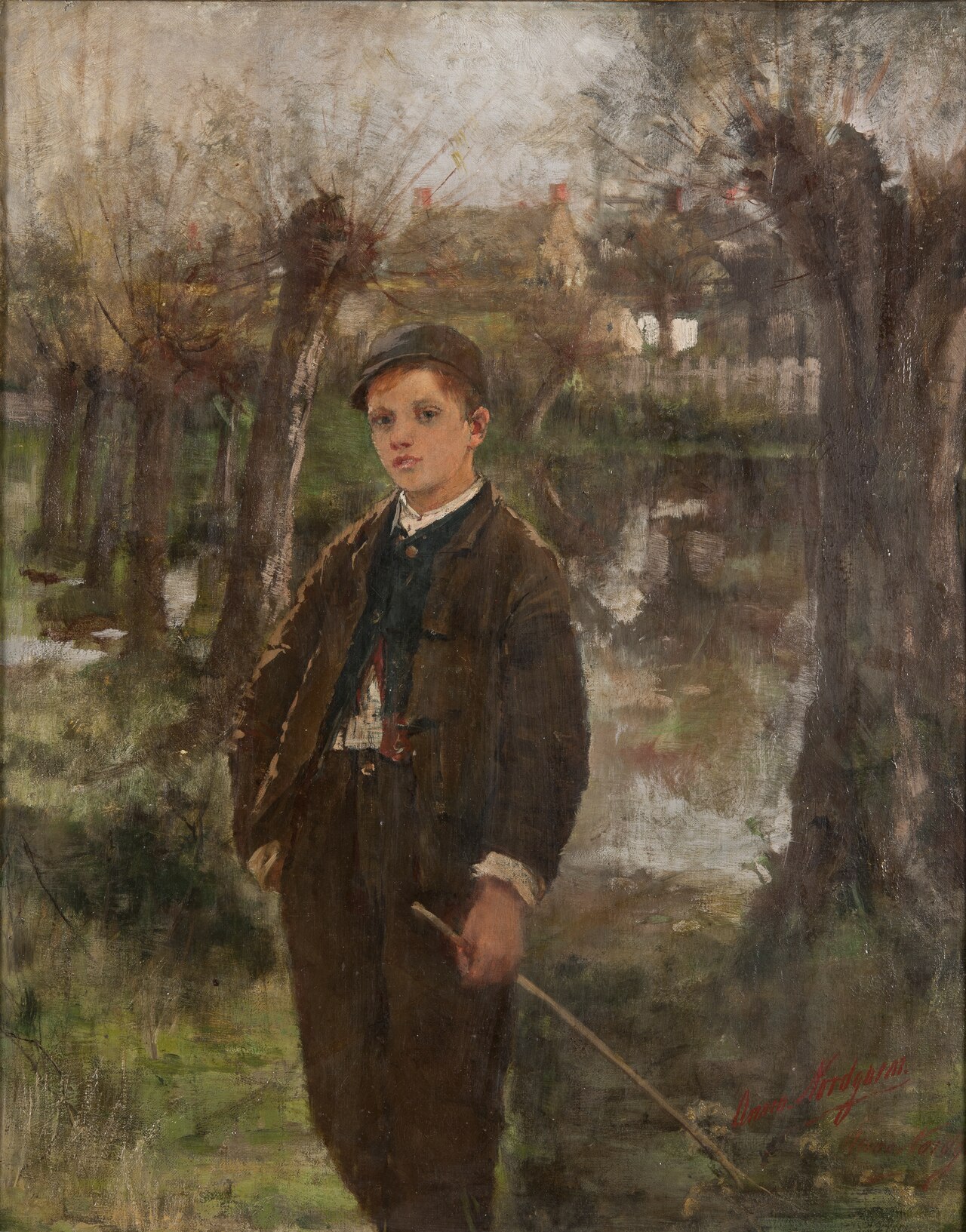
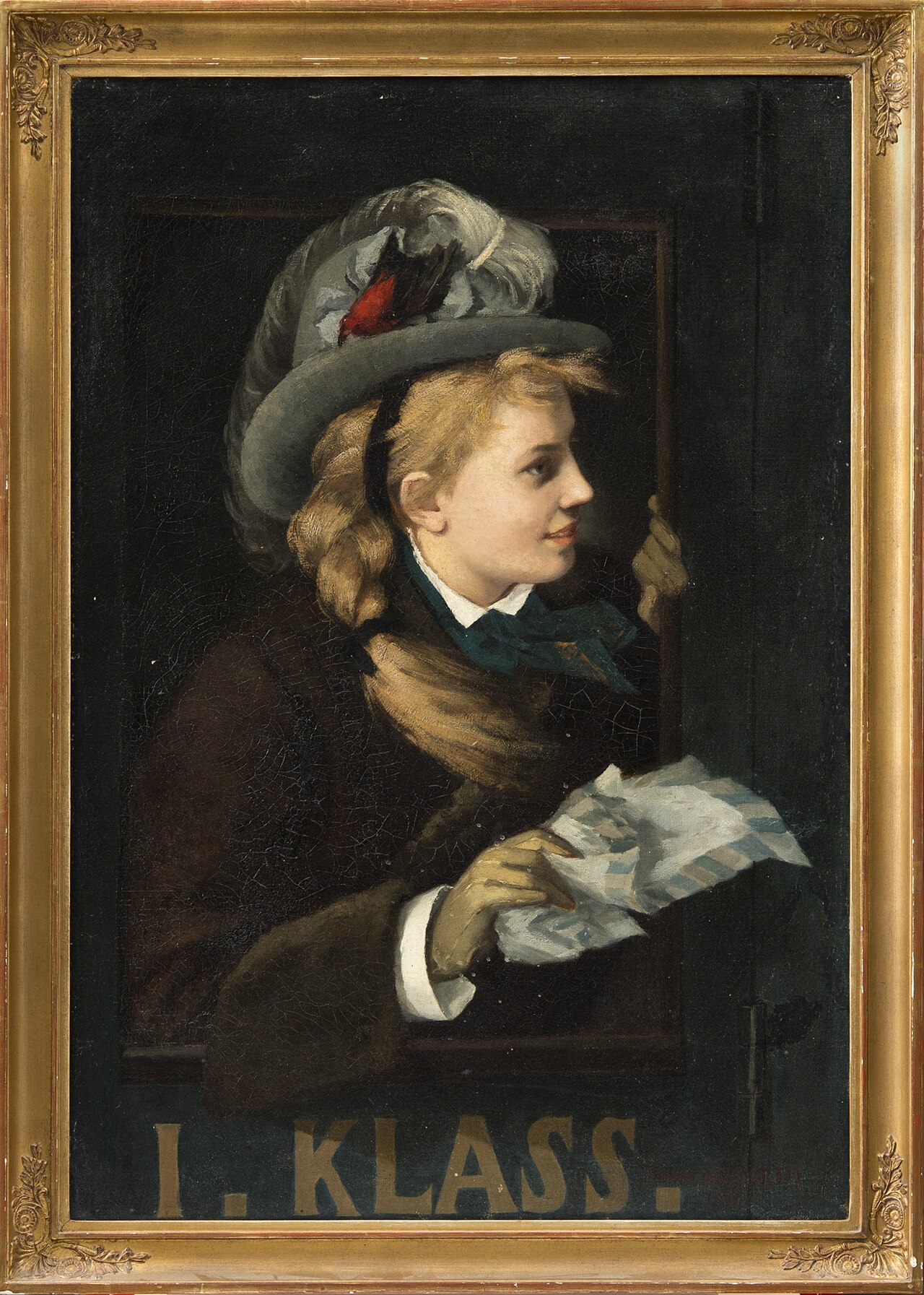
Major works Among Nordgren’s most recognised pieces is the *Portrait of a Boz*, a study that showcases her ability to capture personality through restrained yet expressive handling of the subject’s features. The *Portrait of Berndt Lindholm* (1886) demonstrates her competence with formal portraiture; the sitter, a respected local figure, is rendered with careful attention to facial expression and the texture of his clothing, reflecting both status and individuality. *Rest* presents an interior scene where a figure is depicted in a moment of quiet repose, illustrating Nordgren’s interest in everyday moments and her skill at conveying a sense of calm through composition and muted lighting. The *Lady in a Train Window* (1877) is an unusual subject for a Swedish academic painter, depicting a woman gazing outward from a railway carriage; the work combines a narrative element with Nordgren’s characteristic compositional balance. Finally, the *Coastal Landscape* (1891) expands her repertoire beyond figures, showing a seascape rendered with the same disciplined approach—accurate perspective, subtle tonal variation, and a measured palette that captures the atmosphere without resorting to the bright colourisation of later modernist trends.
Influence and legacy Although Nordgren never achieved the international fame of some of her male peers, her career contributed to the gradual acceptance of women as professional artists in Sweden. By maintaining a consistent academic style, she provided a counterpoint to the avant‑garde movements that were reshaping European art, thereby preserving a lineage of traditional technique for future generations. Her works are held in several Swedish regional museums, where they are valued both as examples of 19th‑century portraiture and as documentation of Swedish social life. Scholars of Swedish art history cite her as part of the broader narrative of women artists who navigated the constraints of their time while producing work of technical merit. Today, Nordgren’s paintings are occasionally featured in exhibitions focusing on gender and academic art, underscoring her role as a representative figure of a transitional period in Swedish visual culture.
Frequently asked questions
Who was Anna Nordgren?
Anna Nordgren (1847–1916) was a Swedish painter and draughtswoman known for her academic‑style portraits and genre scenes.
What artistic style or movement is she associated with?
She worked within the 19th‑century academic tradition, favouring realistic drawing and controlled colour, and did not adopt Impressionist techniques.
What are her most famous works?
Key works include *Portrait of a Boz*, *Portrait of Berndt Lindholm* (1886), *Rest*, *Lady in a Train Window* (1877) and *Coastal Landscape* (1891).
Why is Anna Nordgren significant in art history?
She exemplifies the role of women artists in Sweden’s academic art world and helped sustain traditional techniques during a period of rapid stylistic change.
How can I recognise a painting by Anna Nordgren?
Look for smooth, carefully modelled brushwork, a restrained palette, precise draftsmanship and a focus on the sitter’s character rather than fleeting light effects.