Carl d'Unker
1828 – 1866
In short
Carl d'Unker (1828–1866) was a Swedish genre painter associated with the Düsseldorf school, recognised for socially engaged scenes such as railway waiting rooms and pawnshops.
Notable works


Early life
Carl Henrik Lützow d'Unker was born in Stockholm in 1828 into a family that valued education and the arts. Little is known about his childhood, but archival records indicate that he received a solid foundation in drawing and classical studies at the Royal Swedish Academy of Arts. By his early twenties he had demonstrated a keen interest in contemporary life, favouring subjects drawn from everyday urban environments rather than mythological or historical themes.
Career and style
In the early 1850s d'Unker moved to Düsseldorf, the centre of a vibrant expatriate community of Scandinavian artists. The city’s academy, under the direction of Wilhelm von Schadow, promoted a disciplined approach to painting that combined rigorous draftsmanship with a subtle, often sentimental, treatment of light and colour. d'Unker quickly absorbed these principles, yet he distinguished himself by turning his gaze toward the social realities of the rapidly industrialising world.
His work belongs to the Düsseldorf school of painting, a movement characterised by narrative clarity, detailed observation, and a preference for genre scenes that conveyed moral or didactic messages. d'Unker’s canvases display a restrained palette of muted earth tones, punctuated by occasional splashes of brighter hues to highlight focal points. The compositions are carefully balanced, often employing a central figure or group to anchor the viewer’s eye while the surrounding architecture or interior space creates a sense of depth.
Signature techniques
d'Unker’s brushwork is distinguished by a fine, almost linear handling of form, especially in the rendering of fabrics and wooden surfaces. He favoured a layered glazing technique, applying thin translucent layers of colour over a muted underpainting to achieve a luminous surface that subtly reveals the texture of the subject. Light is typically introduced from a single, off‑centre source, casting soft shadows that enhance the three‑dimensionality of objects while also suggesting a particular time of day.
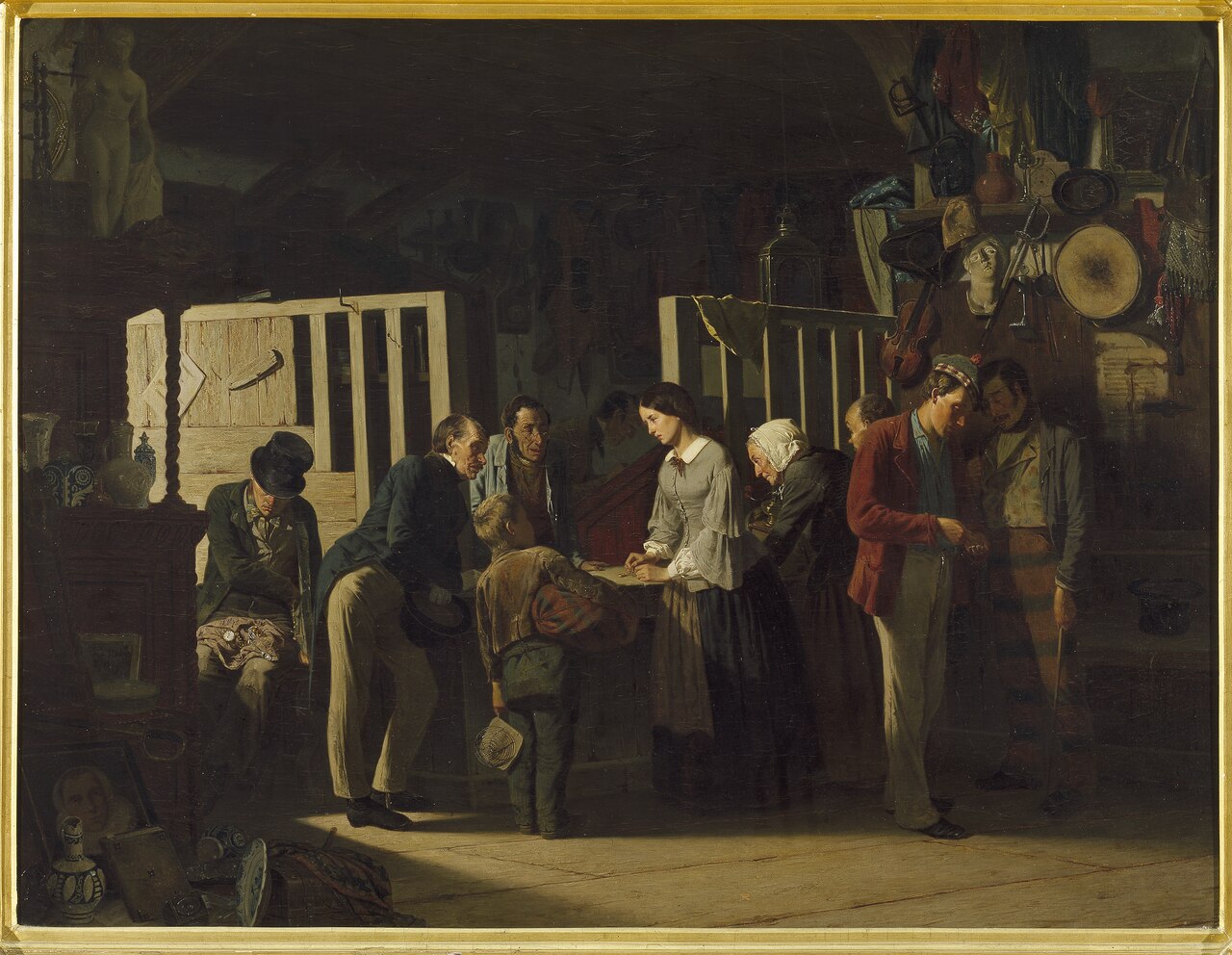
Another hallmark of his technique is the precise rendering of interior details—counters, ticket windows, and pawn‑shop ledgers—paired with a compassionate observation of his figures. He often placed his subjects in moments of quiet contemplation or idle waiting, allowing the narrative to emerge from the gestures and expressions rather than overt symbolism.
Major works
- From Palais Royal (1847) – Although painted before his Düsseldorf period, this early work demonstrates d'Unker’s fascination with public spaces. The canvas captures the bustling interior of a Parisian arcade, with careful attention to the interplay of light on marble columns and the varied attire of passers‑by.
- Painting (1853) – A modestly sized canvas that earned him early recognition in Sweden. The piece depicts an artist’s studio, a self‑referential nod to the act of creation, and showcases his developing skill in modelling form through subtle tonal shifts.
- The Pawn Shop II (1859) – One of his most celebrated genre scenes, this painting portrays a cramped pawnshop interior where a weary woman negotiates with a stern clerk. The composition is framed by shelves laden with objects, each rendered with meticulous detail, underscoring the economic pressures of the era.
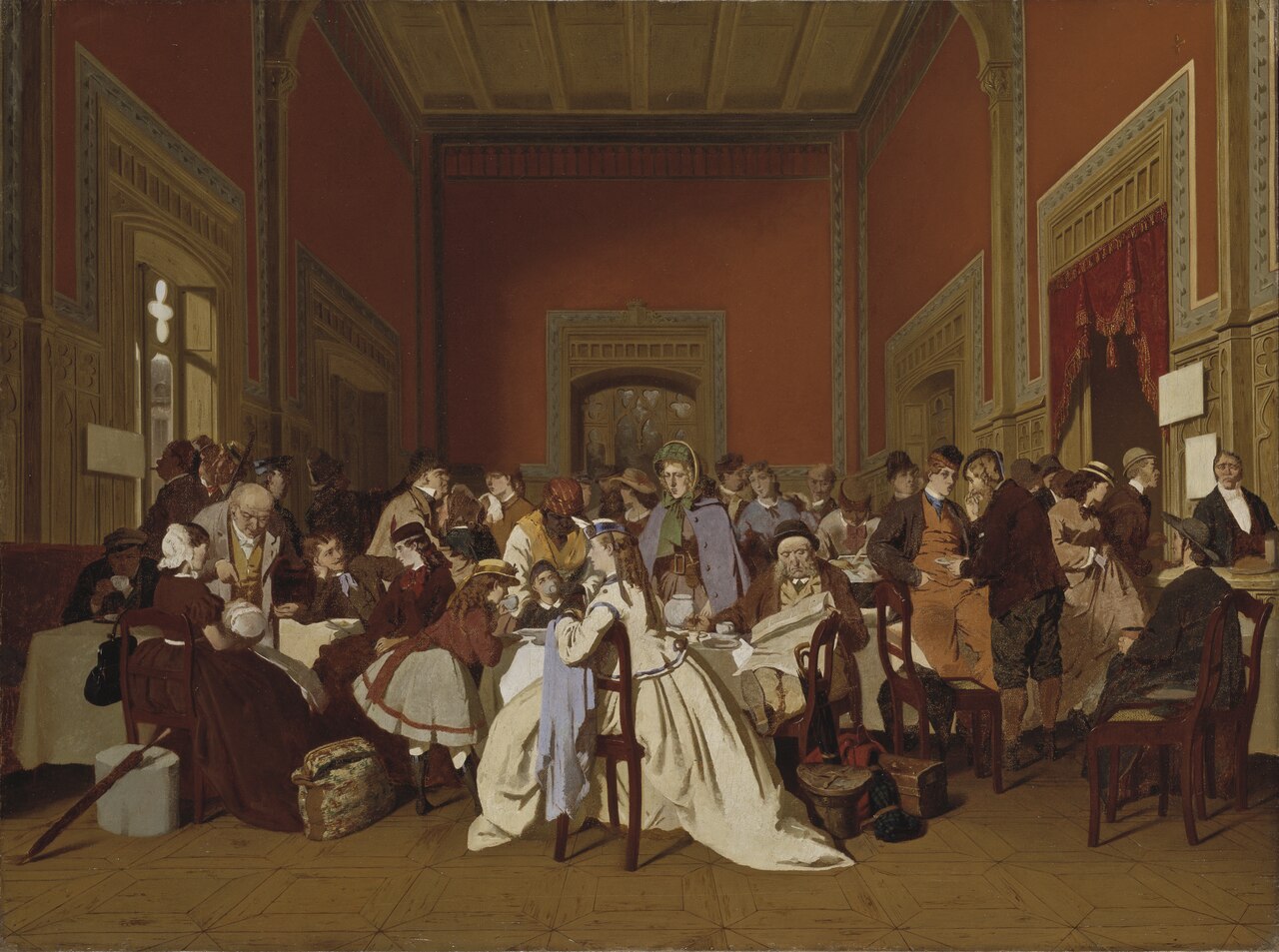
- Second Class Waiting‑Room (1865) – Executed during the height of railway expansion, the work presents a second‑class railway waiting room filled with travellers of varied ages. d'Unker captures the atmosphere of anticipation and fatigue through the muted colour scheme and the careful positioning of luggage and benches.
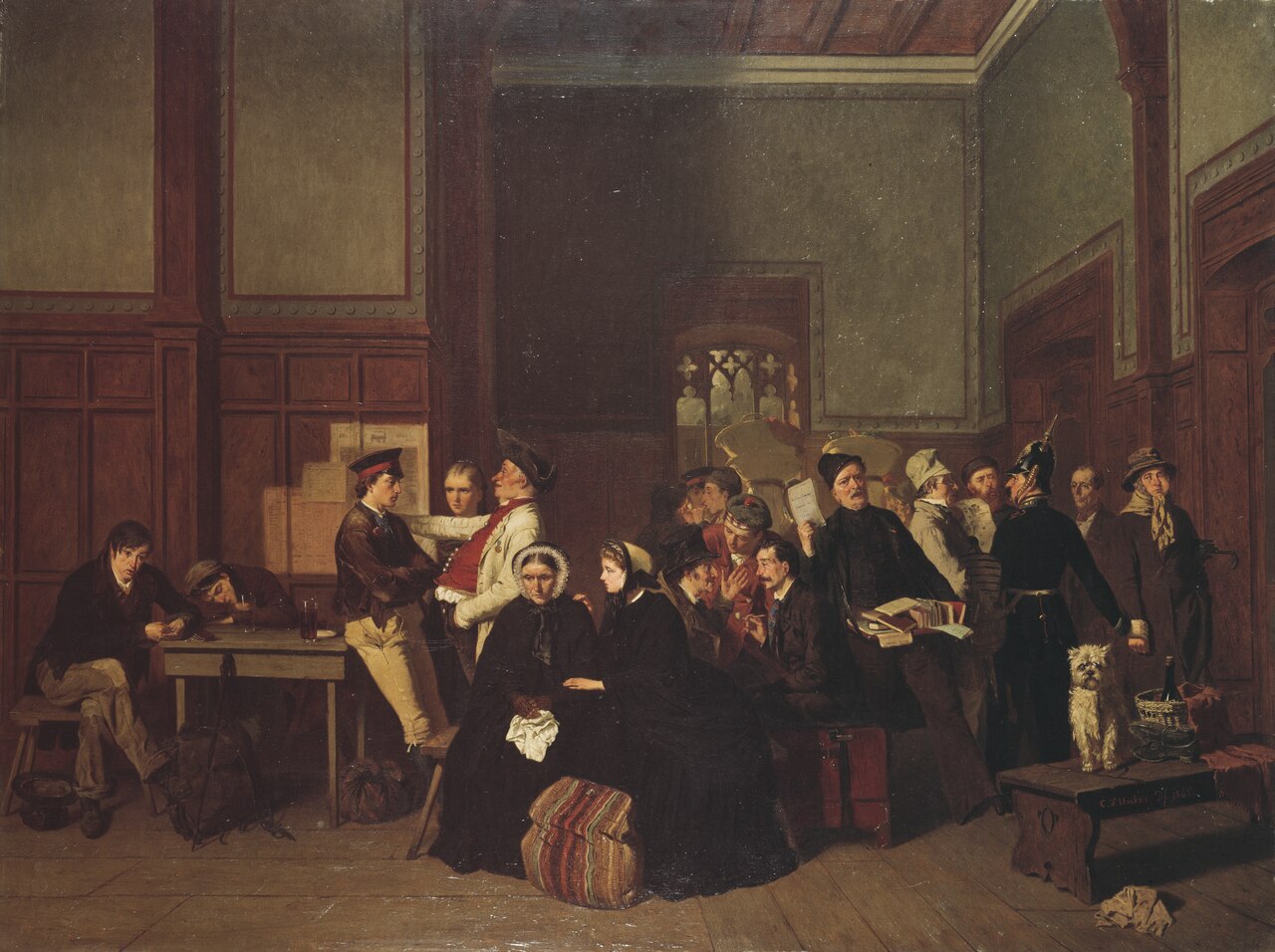
- Third‑Class Waiting‑Room II (1865) – A companion piece to the previous canvas, this painting shifts focus to a third‑class compartment where passengers are seated on wooden benches. The artist emphasizes the stark conditions of lower‑rank travel, using chiaroscuro to highlight the faces of the occupants and the worn texture of the surroundings.
These works collectively illustrate d'Unker’s dedication to portraying the lived experiences of ordinary people, a theme that resonated with contemporary audiences and continues to inform scholarly assessments of 19th‑century social realism.
Influence and legacy
Carl d’Unker was the first of a substantial cohort of Swedish painters who sought training in Düsseldorf between 1850 and 1870. His successful integration of the school’s technical rigour with a socially conscious subject matter set a precedent for younger artists such as Anders Zorn and Hanna Pauli, who later travelled to the German city for study.
Although his career was cut short by his untimely death in Düsseldorf in 1866, his paintings remain valuable documentary records of mid‑19th‑century urban life. Museums in Sweden and Germany regularly exhibit his works, and art historians cite his genre scenes as early examples of a realist approach that pre‑figured the later Naturalist movements. d’Unker’s legacy endures in the way he demonstrated that the quotidian could be rendered with both artistic excellence and moral depth, influencing subsequent generations of Scandinavian artists who sought to depict the social conditions of their time.
---
In summary, Carl d’Unker’s contribution lies not only in his technical skill but also in his pioneering focus on the everyday experiences of the working class, a perspective that helped broaden the thematic scope of European art in the mid‑nineteenth century.
Frequently asked questions
Who was Carl d'Unker?
Carl d'Unker (1828–1866) was a Swedish genre painter who studied in Düsseldorf and became known for socially oriented scenes of everyday life.
What artistic movement is he associated with?
He is linked to the Düsseldorf school of painting, which combined precise draftsmanship with narrative genre scenes.
What are his most famous works?
His best‑known paintings include The Pawn Shop II (1859), Second Class Waiting‑Room (1865), Third‑Class Waiting‑Room II (1865), Painting (1853), and From Palais Royal (1847).
Why does Carl d'Unker matter in art history?
He pioneered the depiction of contemporary social subjects within a rigorous academic style, influencing later Swedish artists and expanding the thematic range of 19th‑century European painting.
How can I recognise a Carl d'Unker painting?
Look for finely detailed interiors, muted earth tones with selective bright accents, a single off‑centre light source, and compassionate portrayals of ordinary people in settings such as pawnshops or railway waiting rooms.