Alexander Roslin
1718 – 1793
In short
Alexander Roslin (1718–1793) was a Swedish Rococo portrait painter who gained fame across Europe for his psychologically incisive depictions of aristocratic patrons, working from Sweden to Paris, Italy, Warsaw and St. Petersburg.
Notable works
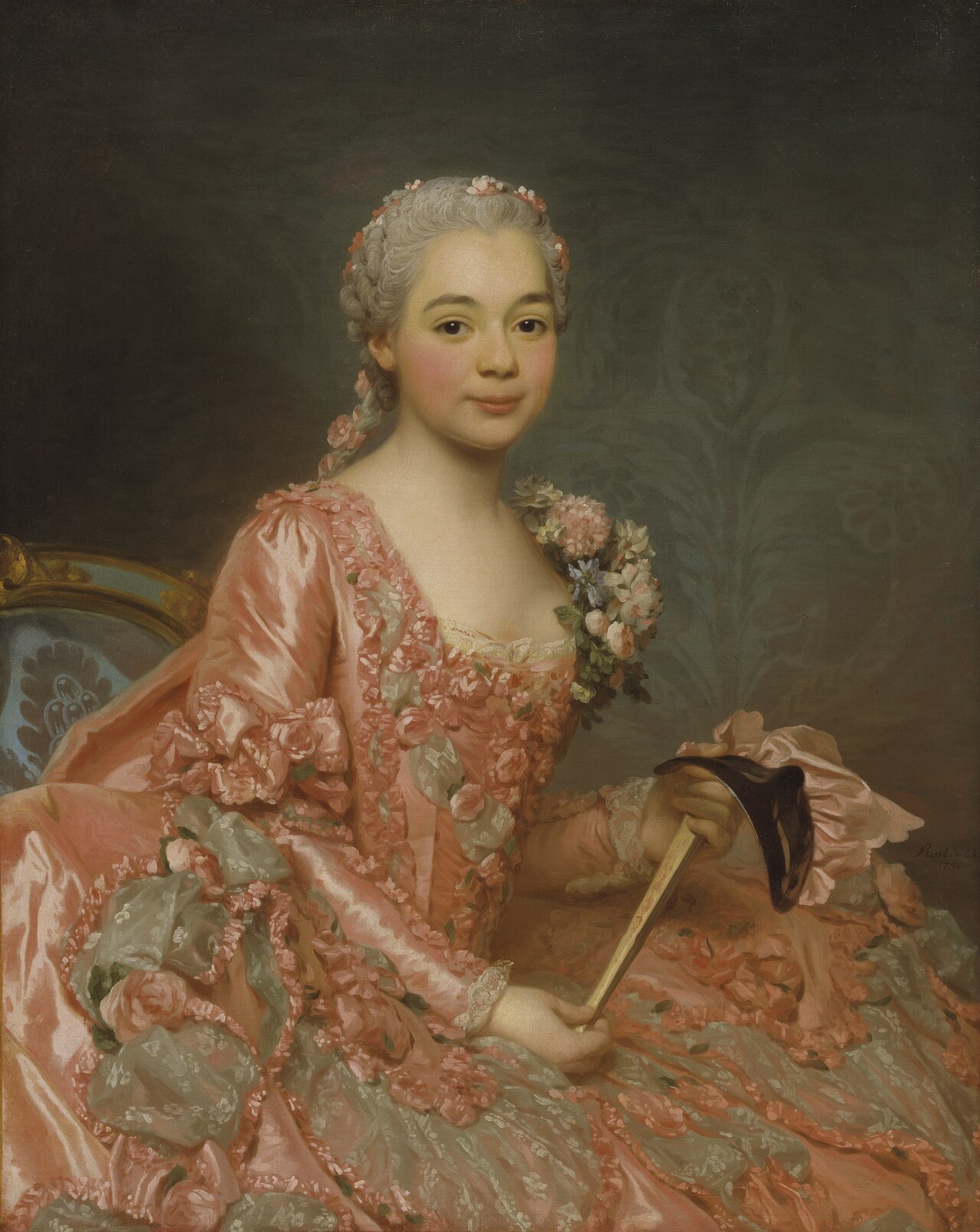
Early life Alexander Roslin was born in 1718 in the parish of Sankt Petri, Malmö, in the southern Swedish province of Scania. His family was modest; his father worked as a carpenter, and young Alexander showed an early aptitude for drawing. He received his first formal instruction at the local drawing academy, where the emphasis on drawing from life and the study of classical sculpture laid a foundation for his later focus on the human figure. In his teenage years Roslin travelled to nearby Copenhagen to study under the Danish court painter Johann Salomon Wahl, an experience that exposed him to the prevailing Rococo taste for elegant, decorative portraiture.
In 1740, Roslin secured a scholarship that allowed him to continue his training in the artistic centres of Southern Germany. He spent several formative months in Bayreuth, where the court of Margrave Frederick of Brandenburg-Bayreuth was a hub for French-influenced decorative arts. This period deepened his appreciation for the delicate colour palette and fluid brushwork that would become hallmarks of his mature style.
Career and style Returning to Sweden in the early 1740s, Roslin quickly attracted commissions from the Swedish aristocracy, particularly from families in Scania and Stockholm. His early works display a synthesis of French Rococo elegance with a northern sensibility for naturalistic detail. By the mid‑1740s he had established a reputation as a portraitist capable of rendering both the sumptuous fabrics of the elite and the subtle psychological nuance of his sitters.
In 1750, seeking broader patronage, Roslin moved to Paris, the epicentre of the European art market. There he joined the Académie Royale, gaining official recognition that opened doors to royal and diplomatic commissions. While in Paris he absorbed the French court's taste for lavish staging, yet he retained a distinctive Scandinavian restraint that set his portraits apart from those of his French contemporaries. Throughout his career Roslin travelled extensively, spending periods in Italy, where he studied the works of Titian and the Venetian colourists, and in Warsaw and St. Petersburg, where he painted members of the Polish and Russian nobility. These journeys enriched his palette and introduced a greater variety of cultural motifs into his work.
Roslin’s style remained firmly rooted in Rococo aesthetics: asymmetrical compositions, soft pastel tones, and an emphasis on decorative detail. However, he also introduced a heightened psychological depth, often capturing a fleeting expression or a particular gesture that hinted at the sitter’s character. This blend of surface elegance and inner insight made his portraits highly sought after among the European elite.
Signature techniques Roslin’s technical repertoire combined meticulous underdrawing with a layered glazing technique. He began each portrait with a precise charcoal or graphite sketch, ensuring accurate proportion and pose. Over this foundation he applied thin, translucent layers of oil paint, a method that allowed him to achieve luminous skin tones and the subtle sheen of silk and satin. His handling of light was particularly refined: he often illuminated the face from a single, off‑centre source, creating a gentle chiaroscuro that emphasised the three‑dimensionality of the head while leaving the surrounding drapery in softer focus.
Another hallmark of Roslin’s practice was his attention to the texture of fabrics and jewellery. He employed fine, almost stippled brushstrokes to render the intricate patterns of lace, brocade and fur, while using a slightly thicker impasto for the sparkle of pearls, diamonds and gold leaf. This contrast of smooth and textured surfaces contributed to a tactile realism that was prized by his aristocratic clients.
Roslin also made frequent use of compositional devices drawn from the French portrait tradition, such as the inclusion of symbolic objects (e.g., books, musical instruments) that alluded to the sitter’s virtues or achievements. Yet he often placed these items in a subdued manner, allowing the sitter’s expression to remain the focal point.
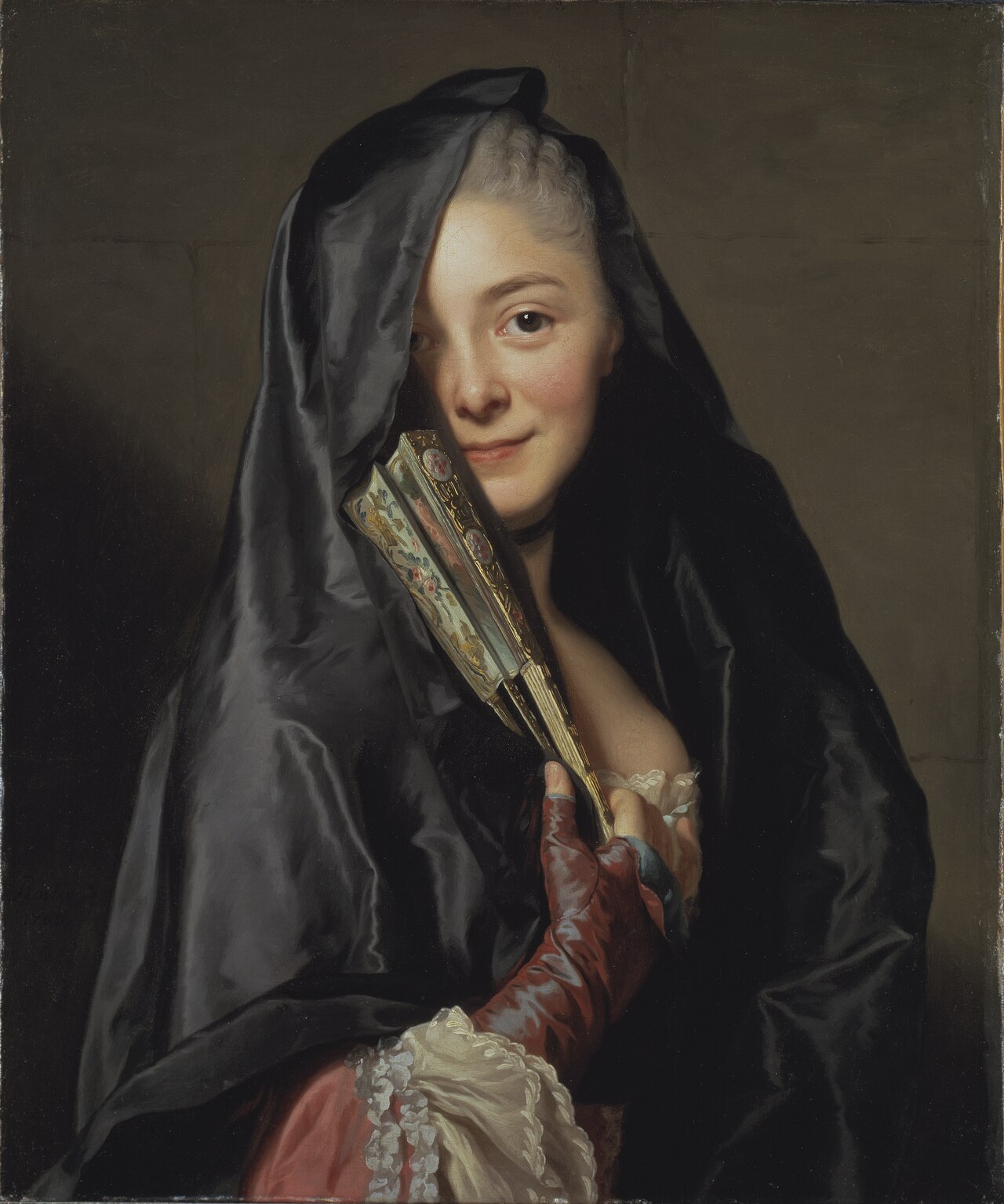
Major works Among Roslin’s most celebrated portraits is **The Lady with a Fan, The Artist’s Wife (1768)**. This painting portrays Roslin’s wife, Marie, holding a delicate fan that partially obscures her face, creating an aura of mystery. The work exemplifies his skill in rendering translucent fabrics and the subtle play of light on skin.
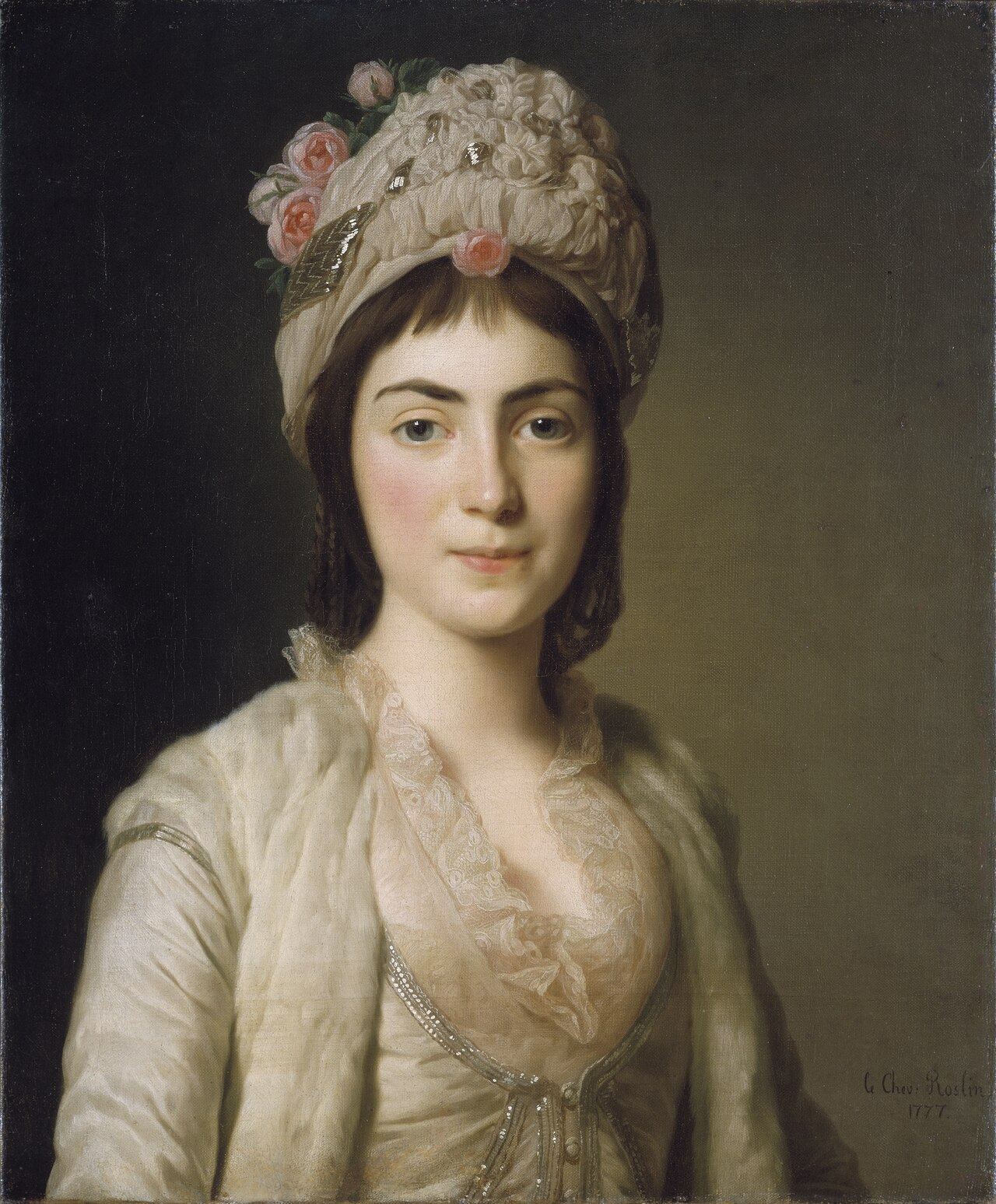
Another notable piece is Zoie Ghika, Moldavian Princess (1777), a portrait of the Romanian aristocrat Zoie Ghika. Here Roslin captures the exoticism of Eastern European court dress, with richly embroidered silk and a backdrop of gilt ornaments. The painting demonstrates his adaptability to diverse cultural contexts while maintaining his Rococo aesthetic.
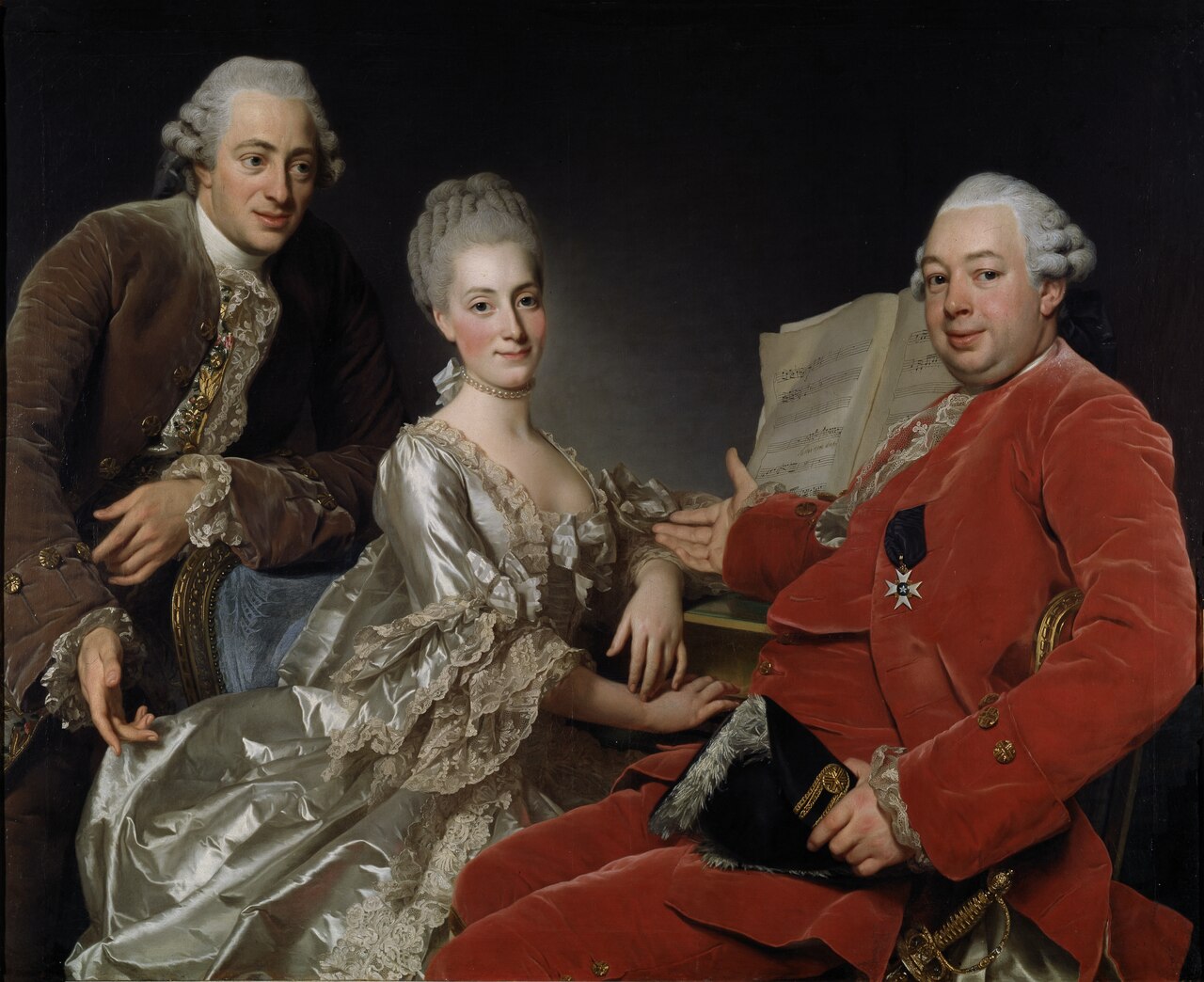
The group portrait John Jennings Esq., his Brother and Sister‑in‑Law (1769) showcases Roslin’s ability to orchestrate multiple figures within a harmonious composition. Each subject is rendered with individualized expression, yet the three are united by a shared lighting scheme and a balanced arrangement of drapery.
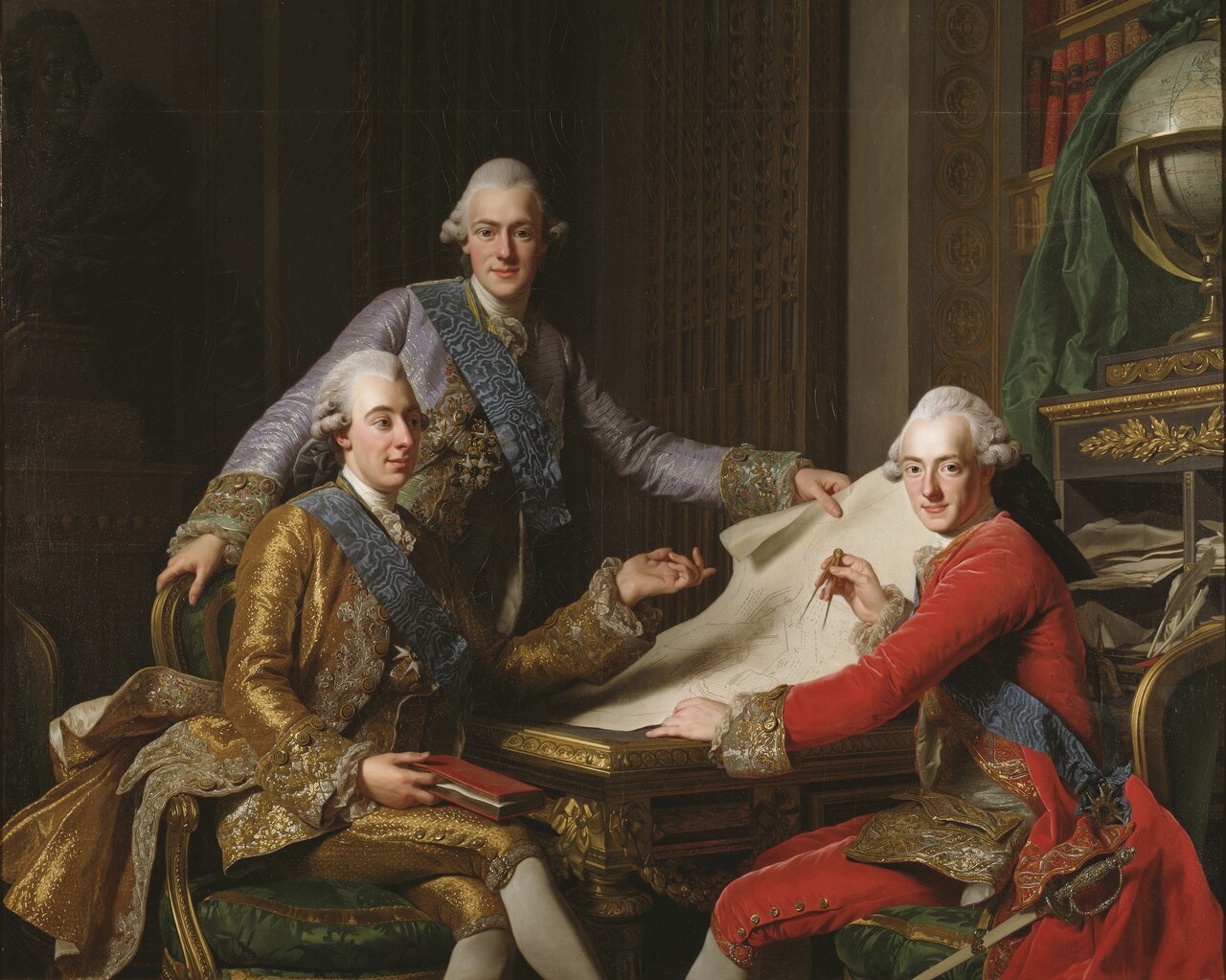
Roslin’s royal commissions include King Gustav III of Sweden and his Brothers (1771). In this work the Swedish monarch is depicted alongside his brothers in regal attire, each figure illuminated with a soft, golden light that highlights their jeweled insignia and the sumptuousness of their garments. The portrait was praised for its dignified representation of the royal family and its subtle conveyance of political unity.
Finally, the portrait Unknown Lady, called Baroness de Neubourg‑Cromière (1756) remains an example of Roslin’s early mastery. Though the sitter’s identity is uncertain, the painting’s elegant composition, the delicate rendering of lace, and the introspective gaze of the subject illustrate Roslin’s early command of Rococo portraiture.
These works, together with numerous other portraits of diplomats, merchants and members of the aristocracy, cement Roslin’s reputation as a portraitist who could blend opulent surface detail with a penetrating psychological insight.
Influence and legacy Alexander Roslin’s career spanned the latter half of the eighteenth century, a period when the Rococo style was gradually giving way to Neoclassicism. Yet his meticulous approach to portraiture continued to influence Swedish and European painters well into the nineteenth century. In Sweden, his legacy is evident in the works of later portraitists such as Carl Gustaf Hellqvist, who adopted Roslin’s emphasis on psychological depth.
Roslin also contributed to the cross‑cultural exchange of artistic ideas. By working in courts across Europe—from Paris to St. Petersburg—he disseminated a Swedish interpretation of Rococo aesthetics, blending northern restraint with southern flamboyance. His portraits are now held in major museum collections, including the Nationalmuseum in Stockholm, the Louvre in Paris and the Hermitage in St. Petersburg, confirming his lasting importance.
Scholars regard Roslin as a pivotal figure who elevated portraiture beyond mere documentation, turning it into a medium for exploring the inner lives of the elite. His paintings continue to serve as primary visual sources for historians studying eighteenth‑century aristocratic culture, fashion and diplomatic networks. Today, his work is celebrated for its technical brilliance, its elegant style, and its enduring capacity to convey the humanity of its subjects.
Frequently asked questions
Who was Alexander Roslin?
Alexander Roslin (1718–1793) was a Swedish Rococo portrait painter who achieved international fame for his psychologically insightful depictions of aristocratic patrons.
What artistic movement did Roslin belong to?
Roslin worked within the Rococo movement, characterised by elegant composition, pastel colours, and decorative detail, while also infusing his portraits with subtle psychological depth.
What are his most famous works?
His most celebrated paintings include *The Lady with a Fan, The Artist’s Wife* (1768), *Zoie Ghika, Moldavian Princess* (1777), *John Jennings Esq., his Brother and Sister‑in‑Law* (1769), *King Gustav III of Sweden and his Brothers* (1771), and *Baroness de Neubourg‑Cromière* (1756).
Why is Roslin important in art history?
Roslin is important for elevating portraiture to a psychological art form, for his masterful rendering of fabrics and jewels, and for spreading a Swedish interpretation of Rococo across Europe’s courts.
How can I recognise a Roslin painting?
Look for a Rococo palette of soft pastels, meticulous rendering of silk and jewellery, a delicate glow on the sitter’s face, and a subtle, often introspective expression that hints at the subject’s personality.