Eva Bonnier
1857 – 1909
In short
Eva Bonnier (1857–1909) was a Swedish Impressionist painter and philanthropist, born in Stockholm and later active in Paris before dying in Copenhagen. She is remembered for intimate interior scenes and portraits that blend Swedish sensibility with French Impressionist light.
Notable works


Early life Eva Fredrika Bonnier was born in Stockholm in 1857 into a family that valued education and the arts. Her upbringing in Sweden’s capital exposed her to a thriving cultural milieu, and she received early encouragement to pursue drawing. The Bonnier family, known for their publishing and philanthropic activities, provided Eva with the financial independence to travel abroad for artistic training, a rare opportunity for women of her era.
Career and style In the 1880s Eva relocated to Paris, the epicentre of avant‑garde painting, where she enrolled in ateliers that welcomed foreign students. Immersed in the bustling cafés and studios of Montmartre, she absorbed the principles of Impressionism—particularly the emphasis on fleeting light, colour modulation, and everyday subjects. Bonnier’s work reflects a synthesis of Swedish narrative restraint and the French fascination with atmosphere, resulting in paintings that are both intimate and luminous.
Signature techniques Bonnier’s technique is characterised by loose yet purposeful brushwork, allowing colour to suggest form rather than defining it with sharp outlines. She often employed a limited palette dominated by muted earth tones punctuated by vibrant blues or reds, a strategy that heightened the emotional resonance of domestic interiors. Her handling of reflections—most notably in works such as *Reflection in Blue*—demonstrates a keen observation of how light interacts with glass and water, a hallmark of Impressionist practice. Additionally, she favoured a slightly elevated perspective, inviting viewers to peer into private spaces as an unobtrusive observer.
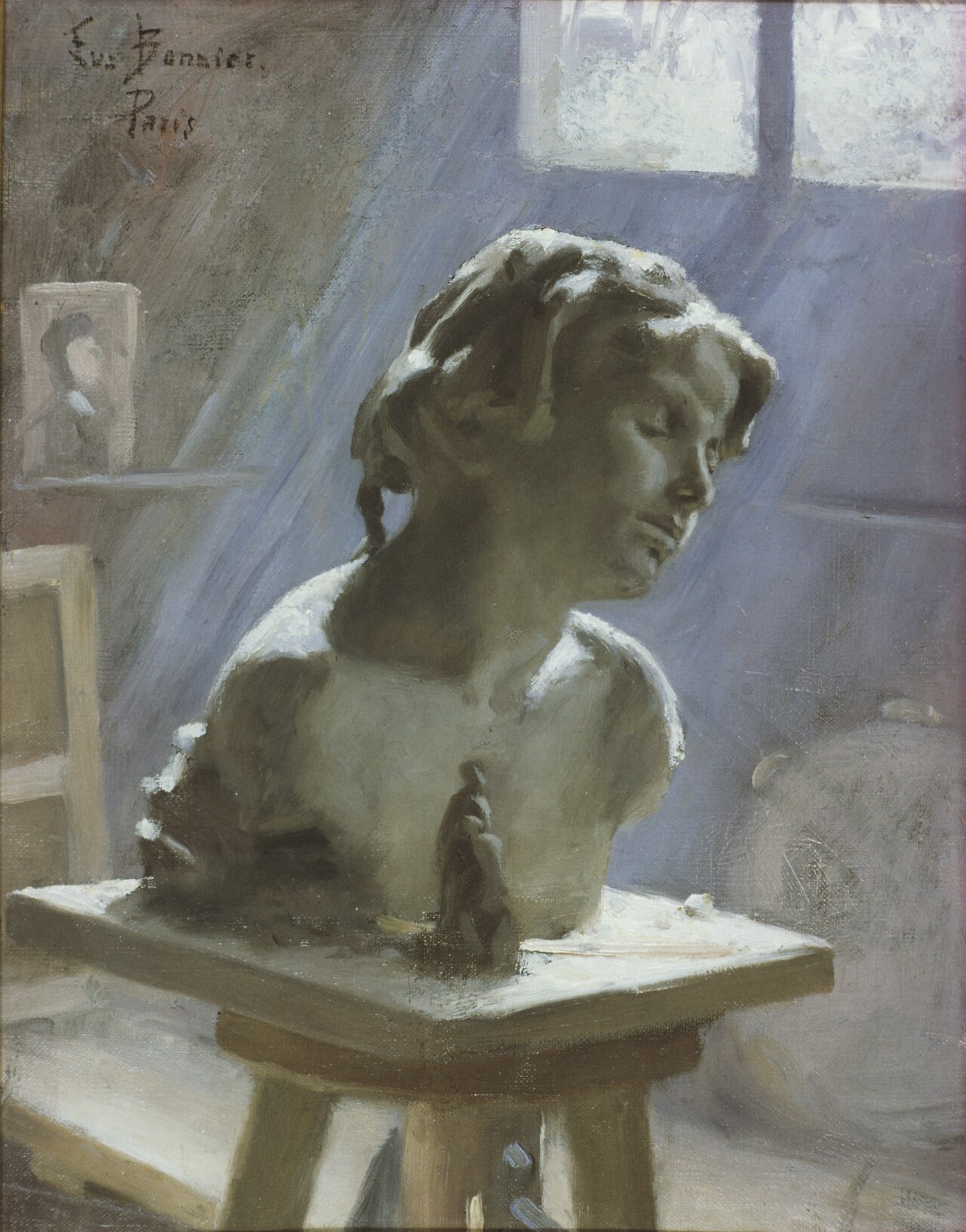
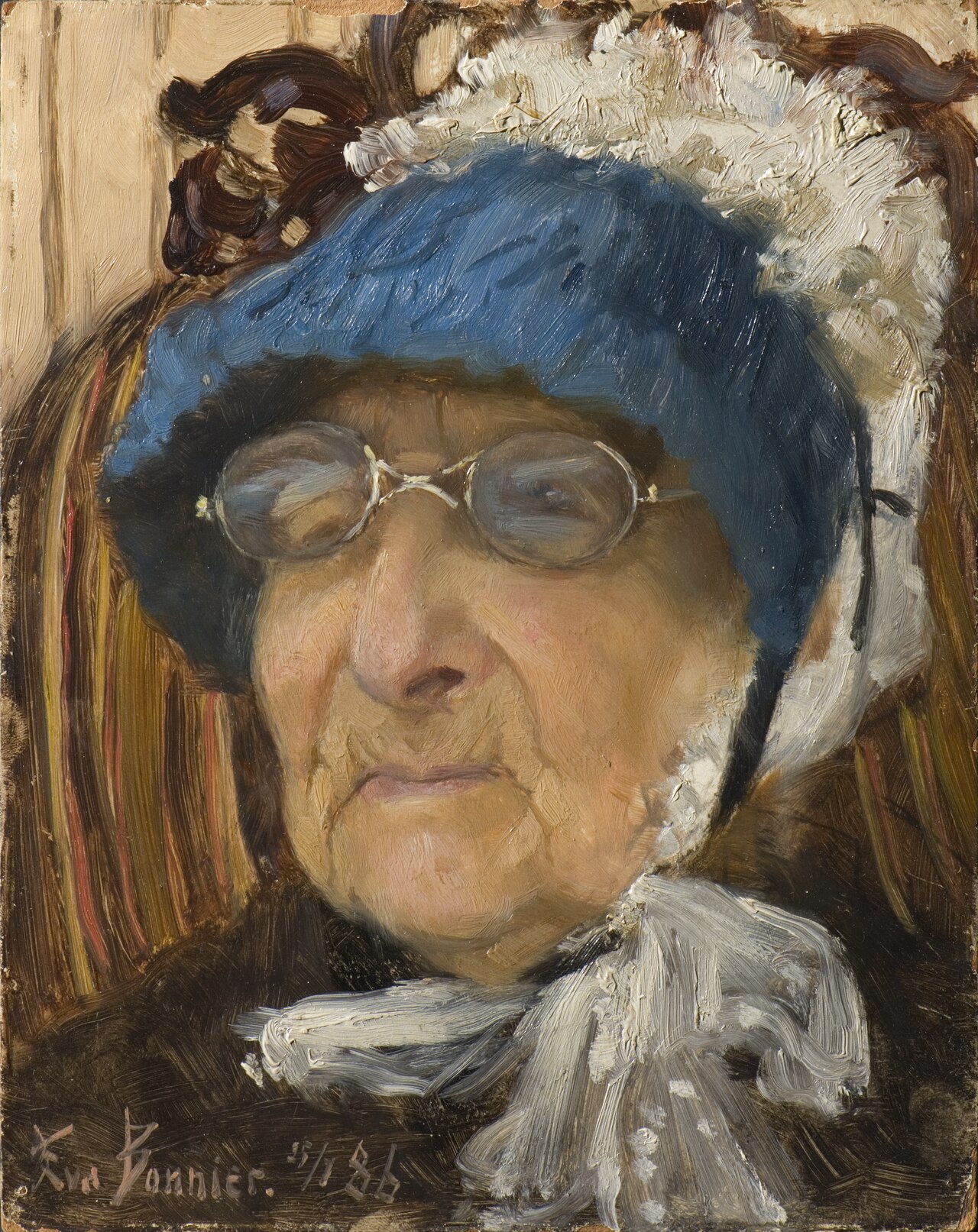
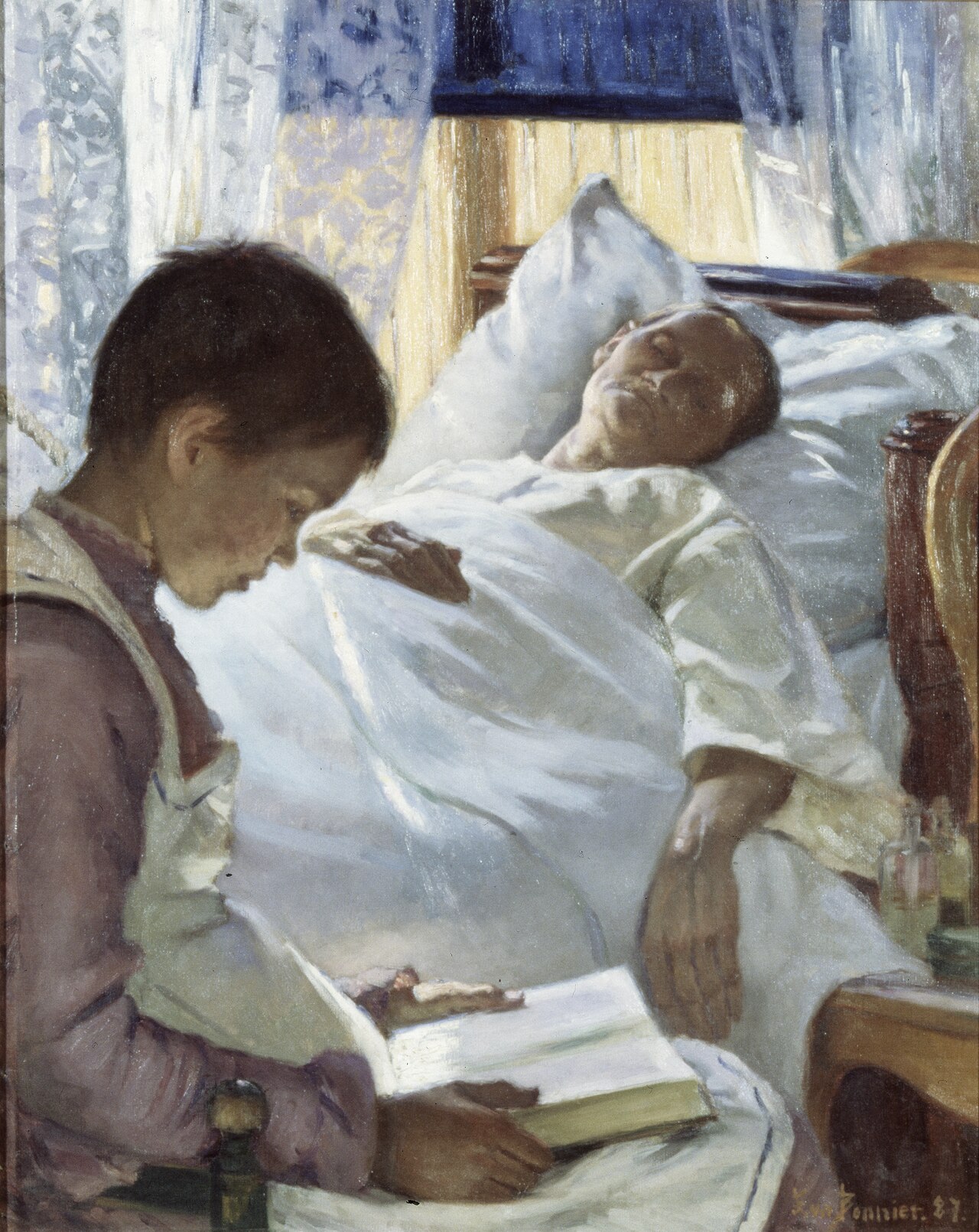
Major works - **Interior of a Studio in Paris (1886)** – This painting captures the quietude of a Parisian artist’s workspace, with light streaming through a high window onto scattered canvases and a lone easel. The composition balances the clutter of artistic tools with a sense of order, reflecting Bonnier’s own experience as a working painter in the city. - **Self‑portrait (1886)** – In her self‑portrait, Bonnier presents herself with a direct gaze, her features softened by delicate brushstrokes. The background is subdued, directing attention to the subtle play of light on her face, a technique that underscores both confidence and humility. - **Magdalena (1887)** – This work portrays a young woman in a contemplative pose, her expression rendered through a combination of soft colour washes and attentive detail to the folds of her garment. The painting exemplifies Bonnier’s ability to convey psychological depth within a modest setting. - **Old Grandmother (1886)** – Here, Bonnier turns her focus to an elderly subject, using warm, earthy tones to evoke the sitter’s life experience. The texture of the grandmother’s skin and the surrounding interior are rendered with a tender realism that aligns with the Impressionist interest in everyday humanity. - **Reflection in Blue (1887)** – The title work explores the phenomenon of reflected light, featuring a water surface that mirrors a blue sky and surrounding foliage. Bonnier’s treatment of the water’s surface showcases her skill in capturing transient visual effects, a central concern of the Impressionist movement.
Influence and legacy Although Eva Bonnier’s career was relatively brief—her life ended in Copenhagen in 1909—her contributions left a lasting imprint on Swedish art. She helped introduce the French Impressionist aesthetic to Scandinavian audiences, influencing a generation of Swedish painters who began to experiment with colour, light, and informal subject matter. Her philanthropic activities, rooted in the Bonnier family tradition, also supported cultural institutions that promoted artistic education for women. Today, her works are held in major Swedish museums and continue to be cited in studies of cross‑cultural artistic exchange in the late nineteenth century.
Frequently asked questions
Who was Eva Bonnier?
Eva Bonnier was a Swedish painter (1857–1909) who worked in the Impressionist style and was also known for her philanthropy.
What artistic movement did she belong to?
She painted in the Impressionist movement, adopting its focus on light, colour, and everyday subjects.
What are her most famous works?
Her most recognised paintings include *Interior of a Studio in Paris* (1886), *Self‑portrait* (1886), *Magdalena* (1887), *Old Grandmother* (1886) and *Reflection in Blue* (1887).
Why is Eva Bonnier important in art history?
She introduced French Impressionist techniques to Sweden, influencing local artists and expanding opportunities for women in the visual arts.
How can I recognise an Eva Bonnier painting?
Look for intimate interior scenes or portraits rendered with loose brushwork, a muted palette punctuated by vivid blues or reds, and a subtle emphasis on reflected light.