Carl Larsson
1853 – 1919
In short
Carl Olof Larsson (1853–1919) was a Swedish painter associated with the Arts and Crafts movement, renowned for his watercolours of domestic life and historic scenes. His most celebrated work, the large canvas Midwinter's Sacrifice (1915), is displayed in the Nationalmuseum in Stockholm.
Notable works
_-_Nationalmuseum_-_edited.jpg)


Early life Carl Olof Larsson was born on 18 March 1853 in the parish of Storkyrkoförsamlingen, a district of Stockholm, Sweden. His father, a civil servant, encouraged his early interest in drawing, and young Carl attended local schools before enrolling at the Royal Swedish Academy of Arts in 1870. At the Academy he received a classical training that included life drawing, anatomy and composition, but he was also exposed to emerging ideas about design and craftsmanship that would later shape his artistic outlook.
Career and style After completing his studies, Larsson worked as a decorative painter, producing murals and frescoes for public buildings and private residences. The influence of the Arts and Crafts movement, which advocated a return to hand‑crafted quality and the integration of art into everyday life, became evident in his approach. He combined a clear, linear drawing style with a bright, pastel palette, favouring watercolours as his primary medium.
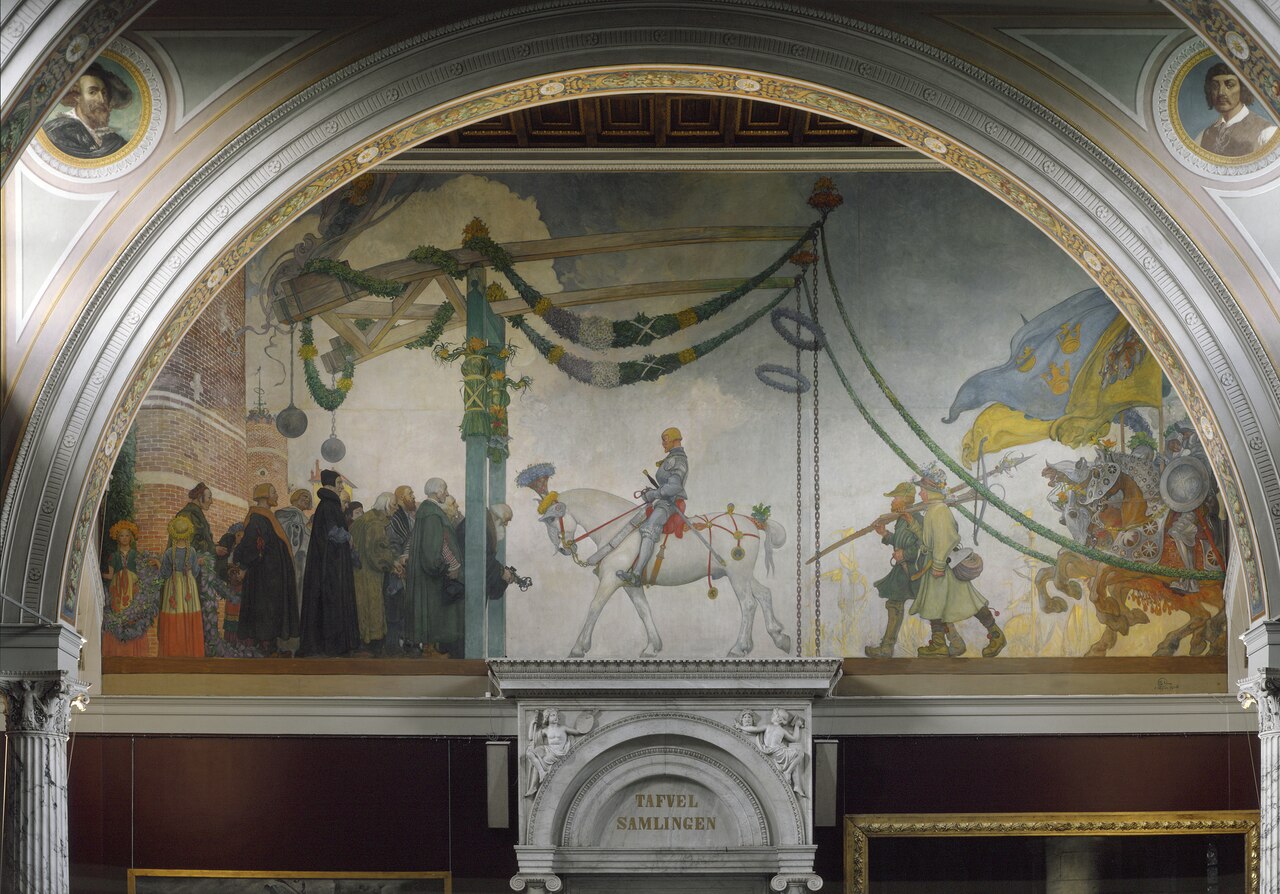
Larsson’s subjects were often drawn from his own family and surroundings. He painted his wife Karin and their children in intimate, domestic settings, capturing moments of everyday routine with a sense of warmth and humour. At the same time, he produced larger historical compositions that reflected national pride, such as his depiction of Gustav Vasa’s entry into Stockholm. Throughout his career he maintained a balance between personal, genre scenes and grand, narrative works, a duality that contributed to his broad appeal.
Signature techniques Larsson’s technique is characterised by several recurring elements:
* Watercolour mastery – He employed the medium with a fluid confidence, layering washes to achieve luminous skin tones and atmospheric effects. * Simplified composition – Scenes are often arranged with a clear foreground‑background hierarchy, guiding the viewer’s eye through the narrative without clutter. * Domestic detail – Everyday objects – a teapot, a wooden chair, a patterned rug – are rendered with meticulous care, reinforcing the sense of intimacy. * Soft, muted colour palette – Pastel blues, gentle greens and warm ochres dominate his canvases, creating a harmonious, almost idyllic ambience. * Integration of design motifs – Influences from Swedish folk art and the broader Arts and Crafts aesthetic appear in border patterns and interior décor within his paintings.
These techniques together give Larsson’s work a recognisable, comforting visual language that bridges fine art and decorative design.
Major works
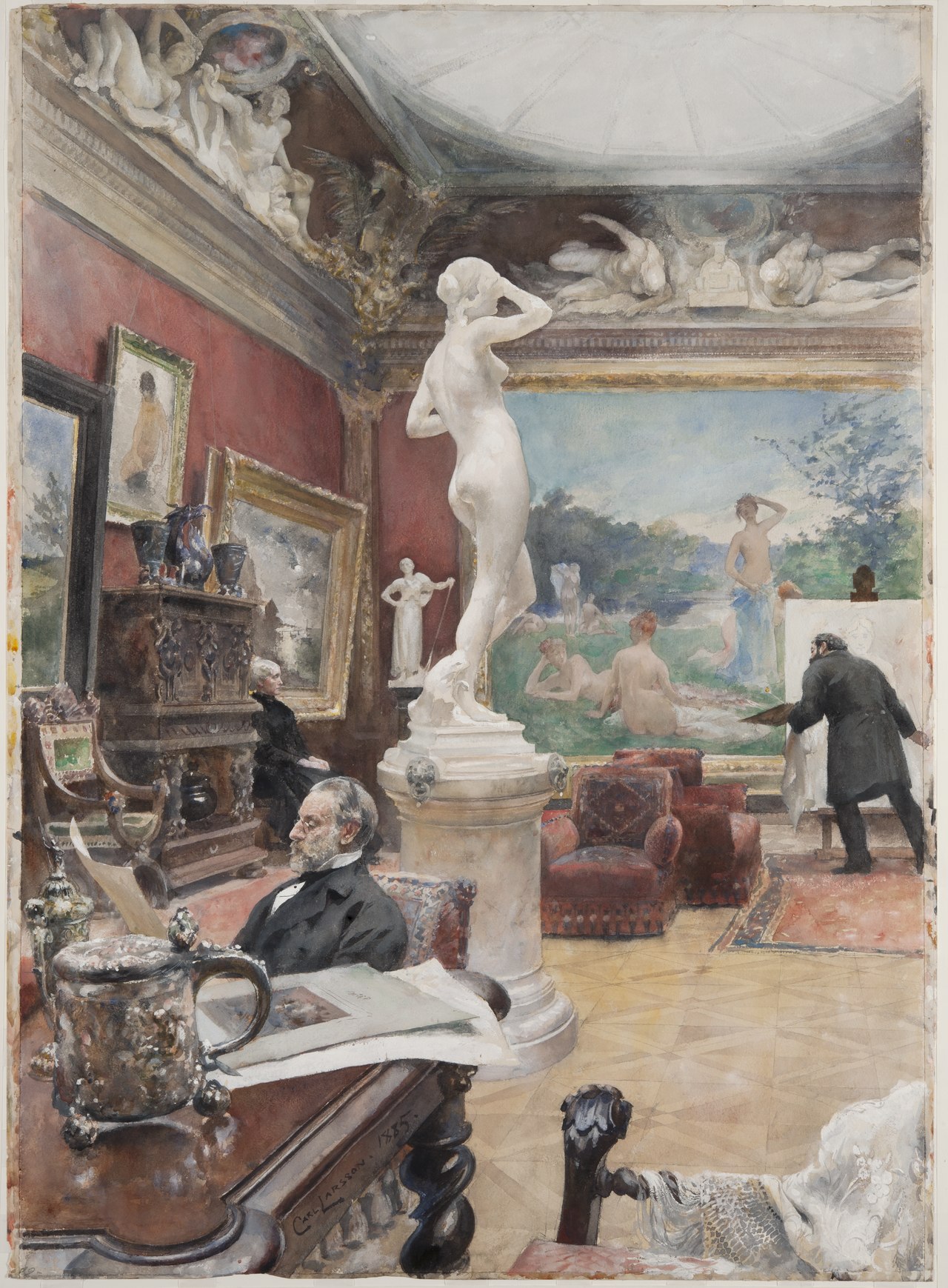
* Midwinter's Sacrifice (1915) – Also known as *Midvinterblot*, this large oil painting depicts a historic ritual scene from early Swedish history. Larsson considered it his most important work, and it now hangs in the Nationalmuseum in Stockholm. The composition combines detailed historical research with his characteristic luminous colour scheme. * Karin by the Shore (1908) – A watercolour of his wife, Karin, standing on a summer shoreline, bathed in soft sunlight. The piece exemplifies his skill in capturing light on water and the subtle interplay of figure and landscape. * Gustav Vasas intåg i Stockholm 1523 (1908) – This historic canvas portrays King Gustav Vasa’s triumphant entry into Stockholm. Larsson rendered the crowd with a blend of documentary precision and decorative flourish, reflecting his interest in national history. * Interior of the Fürstenberg Gallery (1885) – One of his early interior scenes, this work showcases a richly decorated gallery space, rendered in a restrained colour palette. It illustrates his capability in architectural rendering and decorative detail. * Christmas Eve Dinner (1904) – A watercolour that captures a festive family gathering around a table laden with traditional Swedish fare. The painting is celebrated for its warm atmosphere and the way it conveys the rituals of domestic life.
These works together demonstrate the breadth of Larsson’s oeuvre, ranging from intimate family moments to grand historical narratives, all united by his consistent visual approach.
Influence and legacy Carl Larsson’s paintings helped shape the visual identity of early twentieth‑century Sweden. By portraying everyday life with clarity and charm, he contributed to a popular image of the Swedish home that resonated with both national and international audiences. His watercolours were reproduced in books, magazines and decorative items, influencing interior design trends and inspiring subsequent generations of artists interested in the synthesis of fine art and applied arts.
The Arts and Crafts movement, with its emphasis on craftsmanship and the integration of art into daily surroundings, found a practical exemplar in Larsson’s work. Museums worldwide continue to exhibit his paintings, and his legacy is evident in contemporary Scandinavian design, which often echoes his muted palette and emphasis on functional beauty. Moreover, his depictions of family life remain a reference point for discussions of genre painting, gender roles and domesticity in art history.
Overall, Carl Larsson stands as a pivotal figure whose blend of technical skill, narrative interest and decorative sensibility secured his place in the canon of European art.
Frequently asked questions
Who was Carl Larsson?
Carl Olof Larsson (1853–1919) was a Swedish painter linked to the Arts and Crafts movement, best known for his watercolours of family life and historic scenes.
What artistic style or movement is he associated with?
He worked within the Arts and Crafts movement, combining fine‑art painting with decorative design and a focus on handcrafted quality.
What are his most famous works?
His most celebrated pieces include *Midwinter's Sacrifice* (1915), *Karin by the Shore* (1908), *Gustav Vasas intåg i Stockholm 1523* (1908), *Interior of the Fürstenberg Gallery* (1885) and *Christmas Eve Dinner* (1904).
Why is Carl Larsson important in art history?
He helped define a visual language for Swedish domesticity, influenced early twentieth‑century design, and exemplified the Arts and Crafts ideal of integrating art into everyday life.
How can I recognise a painting by Carl Larsson?
Look for watercolours with a pastel palette, meticulous domestic detail, clear composition, and a gentle, almost nostalgic atmosphere that often depicts family scenes or historic events.