Lambert van Noort
1510 – 1571
In short
Lambert van Noort (1510–1571) was a Flemish Renaissance painter from the Habsburg Netherlands, born in Amersfoort and active mainly in Antwerp. He is noted for religious and mythological works, especially a series of Sibyl paintings from 1565.
Notable works



Early life Lambert van Noort was born in 1510 in the town of Amersfoort, which at the time lay within the Habsburg Netherlands. Little is recorded about his family background, but contemporary practice suggests he would have begun an apprenticeship in his early teens, likely under a local master familiar with the emerging Flemish Renaissance style. Amersfoort, situated near the major artistic centres of Utrecht and Haarlem, offered exposure to both local devotional art and the broader currents flowing from the Low Countries. By the mid‑1520s van Noort had acquired the foundational skills in drawing, composition and the handling of oil paint that would define his later career.
Career and style In the early 1540s van Noort relocated to Antwerp, the commercial and artistic hub of the Habsburg Netherlands. Antwerp’s bustling market for religious commissions and its thriving guild system provided the young painter with opportunities to work for churches, private patrons and the emerging merchant class. His style reflects the synthesis of Northern realism with the classical ideals that characterised the Flemish Renaissance. Van Noort favoured balanced compositions, clear narrative content and a restrained colour palette, often employing warm earth tones punctuated by vivid reds or blues. While his oeuvre does not fit neatly into a single movement, it aligns closely with the broader currents of late‑Renaissance Flemish painting, where devotional subjects coexist with mythological allegories.
Signature techniques Van Noort’s technique is distinguished by meticulous underdrawing, a practice common among his contemporaries that ensured precise placement of figures before the application of oil layers. He employed a layered glazing method, building transparent colour washes over a dense underpainting to achieve depth and luminosity. His handling of landscape elements—particularly foliage and distant horizons—demonstrates an early understanding of atmospheric perspective, lending his scenes a sense of spatial recession. Light often falls from a top‑right source, creating gentle chiaroscuro that models the bodies of saints and sibyls alike. The subtle modulation of skin tones and the careful rendering of drapery are hallmarks of his mature work.
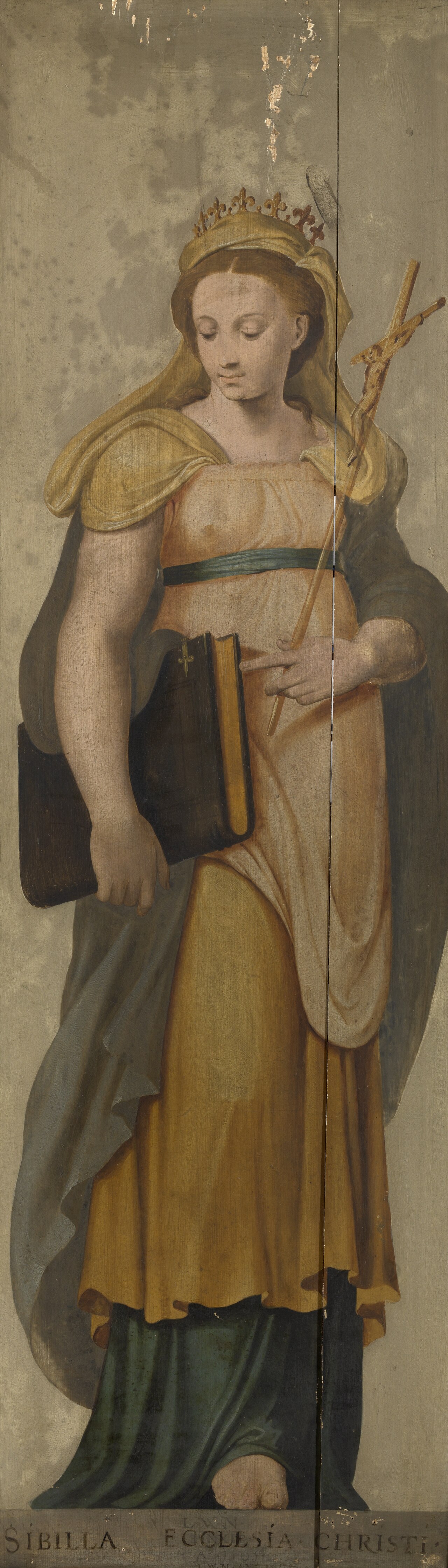
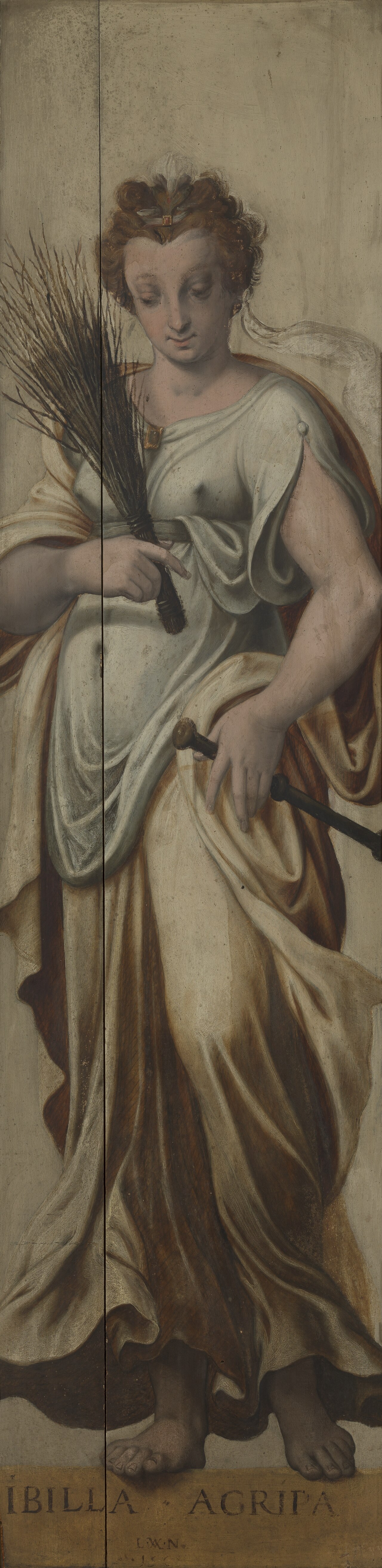
Major works The surviving catalogue of van Noort’s paintings is limited, yet several works from 1565 stand out for their thematic cohesion. *The Sibyl and the Church* (1565) juxtaposes a classical sibyl with a modest ecclesiastical façade, symbolising the continuity between pagan prophecy and Christian salvation. In the same year he produced three individual sibyl portraits—*Sibyl Agrippina*, *Sibyl from Hellespont* and *Sibyl from Delphi*—each rendered with a contemplative pose and a richly detailed background that hints at the sibyl’s geographic origin. These pieces reflect a fascination with the prophetic women of antiquity, a subject that resonated with Counter‑Reformation patrons seeking to merge classical erudition with biblical themes. A later work, *Saint Jerome in a Landscape* (dated 1600 in some sources), is problematic because it post‑dates van Noort’s death; scholars suggest it may be a misattributed copy or a posthumous workshop piece that continued his compositional motifs. Nonetheless, the painting’s serene landscape and the saint’s scholarly demeanor echo van Noort’s established visual vocabulary.
Influence and legacy Lambert van Noort died in Antwerp in 1571, leaving a modest but respected body of work. Though he never achieved the fame of contemporaries such as Pieter Bruegel the Elder, his contributions to the integration of classical allegory within a Northern devotional framework helped pave the way for later Flemish painters who explored similar themes. His sibyl series, in particular, influenced a generation of artists who employed mythological figures to convey moral and theological ideas. Van Noort’s meticulous technique and balanced compositions continue to be studied by scholars interested in the transitional period between early Netherlandish realism and the more ornate Baroque sensibility that followed. Today his works are held in regional museums and private collections, valued for their quiet elegance and the insight they provide into mid‑16th‑century artistic practice in the Habsburg Netherlands.
Frequently asked questions
Who was Lambert van Noort?
Lambert van Noort (1510–1571) was a Flemish Renaissance painter from the Habsburg Netherlands, born in Amersfoort and active mainly in Antwerp.
What style or movement is he associated with?
He worked within the Flemish Renaissance, combining Northern realism with classical motifs and a balanced, restrained compositional style.
What are his most famous works?
His best‑known paintings are the 1565 sibyl series—*The Sibyl and the Church*, *Sibyl Agrippina*, *Sibyl from Hellespont* and *Sibyl from Delphi*—and the later attributed *Saint Jerome in a Landscape*.
Why does Lambert van Noort matter in art history?
He contributed to the integration of classical prophetic figures into Northern religious art, influencing later Flemish painters who explored similar allegorical themes.
How can I recognise a painting by Lambert van Noort?
Look for careful underdrawing, layered glazing, subtle chiaroscuro, and a calm, balanced composition that often pairs a figure with a detailed landscape or symbolic architectural element.