Oskar Emil Törnå
1842 – 1894
In short
Oskar Emil Törnå (1842–1894) was a Swedish painter, illustrator and graphic artist noted for his landscapes. He worked mainly in the late 19th century, producing scenes of Swedish countryside and French locales, and died in the Klara Church Parish.
Notable works
Early life Oskar Emil Törnå was born in 1842 in Sweden, although the exact place of his birth is not recorded in surviving archives. Little is known about his family background or formal education, but contemporary records indicate that he pursued artistic training typical of the period, which often involved apprenticeships and attendance at local art schools. By the mid‑1860s he had begun to develop a professional identity as a visual artist, aligning himself with the broader Scandinavian tradition of landscape painting that celebrated the natural world.
Career and style Törnå’s career unfolded during a time when Swedish artists were increasingly travelling abroad to refine their techniques and broaden their artistic horizons. He spent several years in France, a common destination for Northern European painters seeking exposure to the academic and naturalist schools of the day. The experience of working in the French countryside, especially around the artists’ colonies of Fontaine‑bleau and Grez‑sur‑Loing, left a clear imprint on his oeuvre.
Stylistically, Törnå combined a disciplined compositional approach with a lyrical treatment of light and atmosphere. His works rarely venture into the overtly romantic or the starkly realist; instead they occupy a middle ground that emphasizes subtle tonal variation and a restrained colour palette. This measured handling of colour and form reflects the influence of the Barbizon school, while his choice of subject matter—rural scenes, riverbanks, and gently rolling hills—echoes the Swedish tradition of national romanticism.
Signature techniques Törnå was proficient across several media, including oil painting, watercolour, illustration and graphic printmaking. In his landscapes he often employed a layered brushwork technique, beginning with a thin underpainting to establish tonal values before building up more detailed foliage and sky. This method allowed him to capture atmospheric depth, particularly in works that depict early morning or late‑day light.
His graphic work, which includes pen‑and‑ink drawings and etchings, is characterised by fine, cross‑hatching lines that convey texture without overwhelming the composition. The balance between line and wash in his drawings demonstrates a disciplined hand, and his illustrative pieces frequently served as visual accompaniments to travel literature and natural history publications of the era.
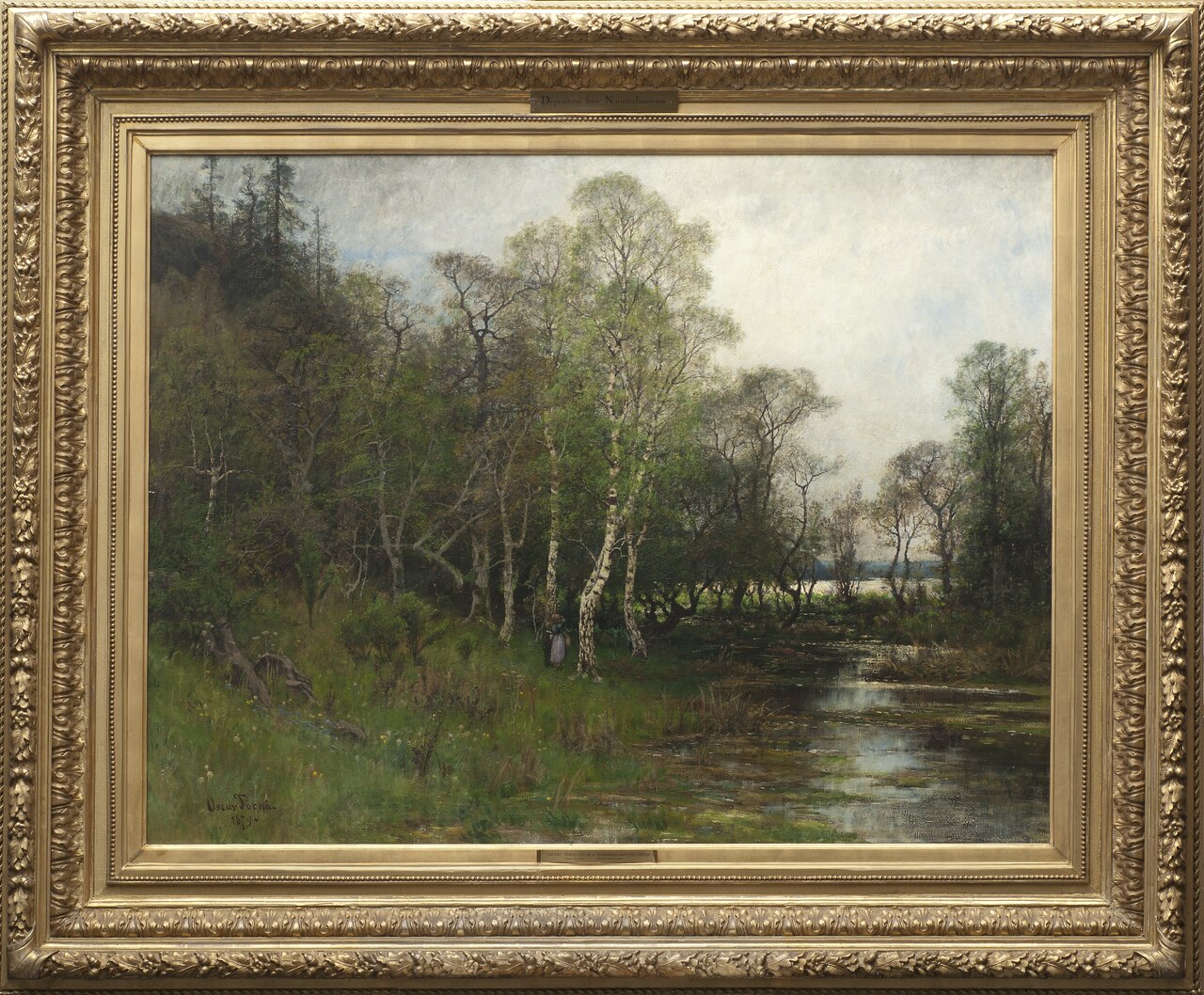
Major works The surviving catalogue of Törnå’s paintings highlights several key pieces that exemplify his range. **"Spring Landscape. Motif from Tullinge in Södermanland" (1879)** captures the thawing countryside of his native region, with delicate birch leaves and a misty horizon that suggests both renewal and quiet contemplation.
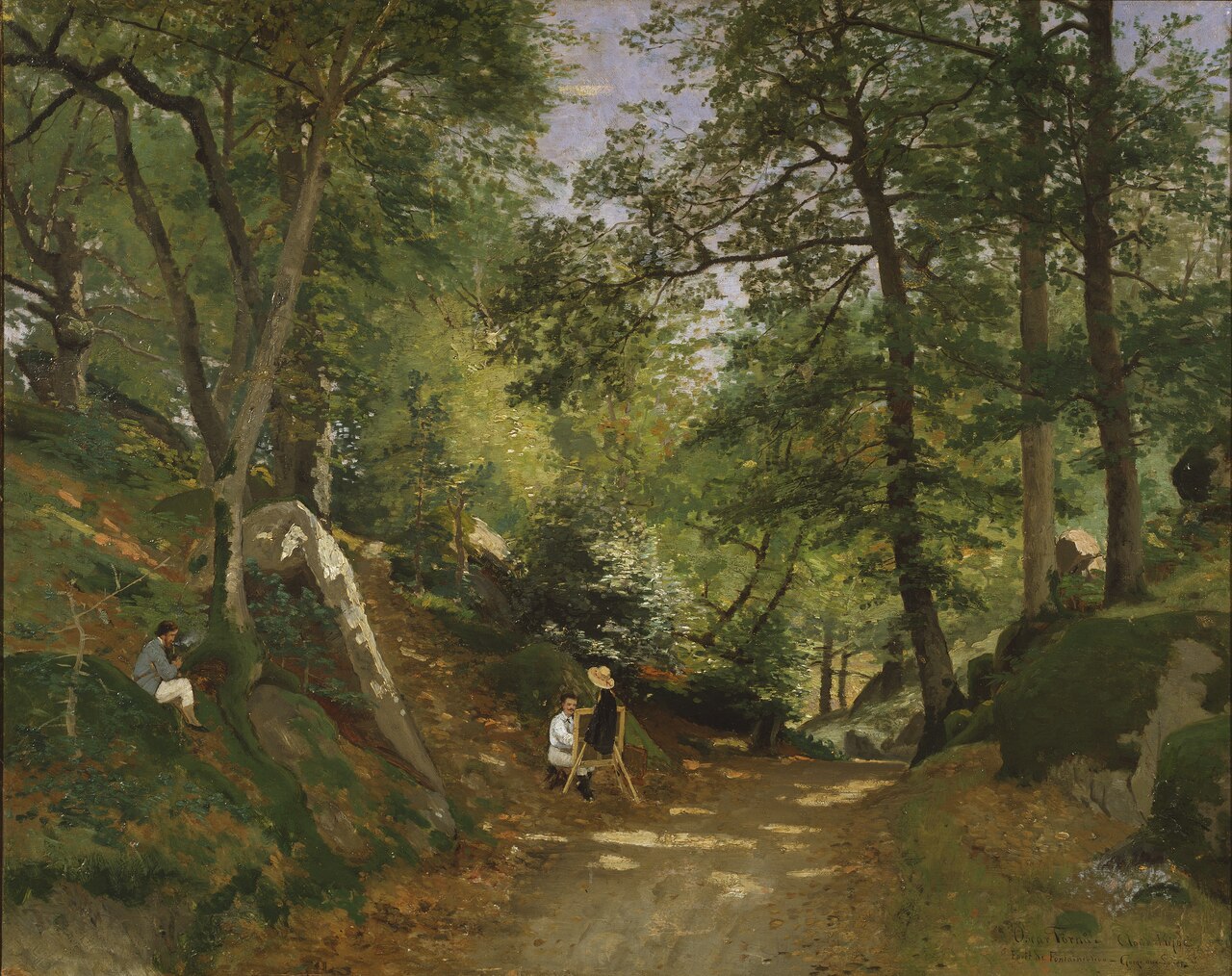
In "Summer Landscape near Fontainebleau" (1876), Törnå translates the dense, sun‑dappled forest of the French plateau into a scene of measured tranquility. The work demonstrates his ability to render the interplay of light through foliage, a hallmark of the Barbizon influence.
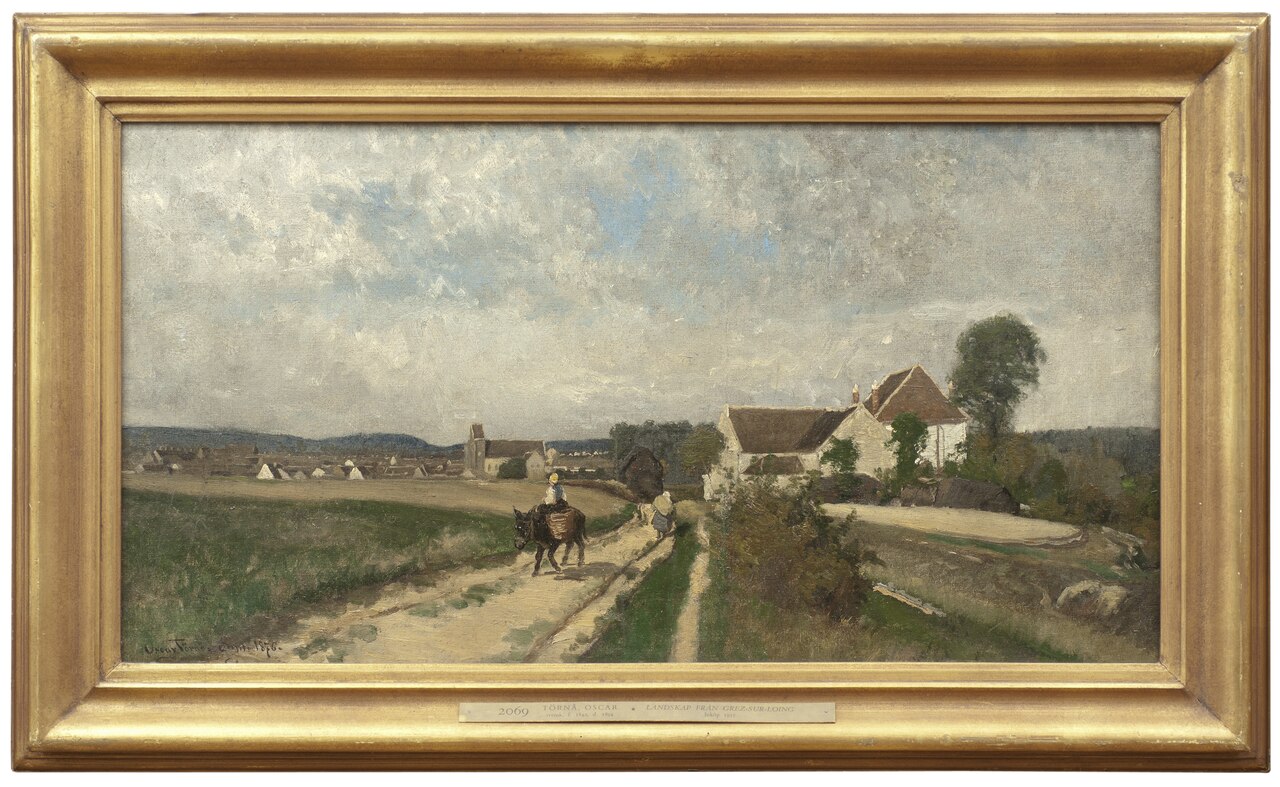
A companion piece, "Landscape near Grez‑sur‑Loing" (1876), portrays a riverside setting bathed in soft, diffused light. Here Törnå’s handling of water reflections reveals his technical skill in rendering subtle colour shifts, while the composition remains anchored by a solitary figure strolling along the bank.
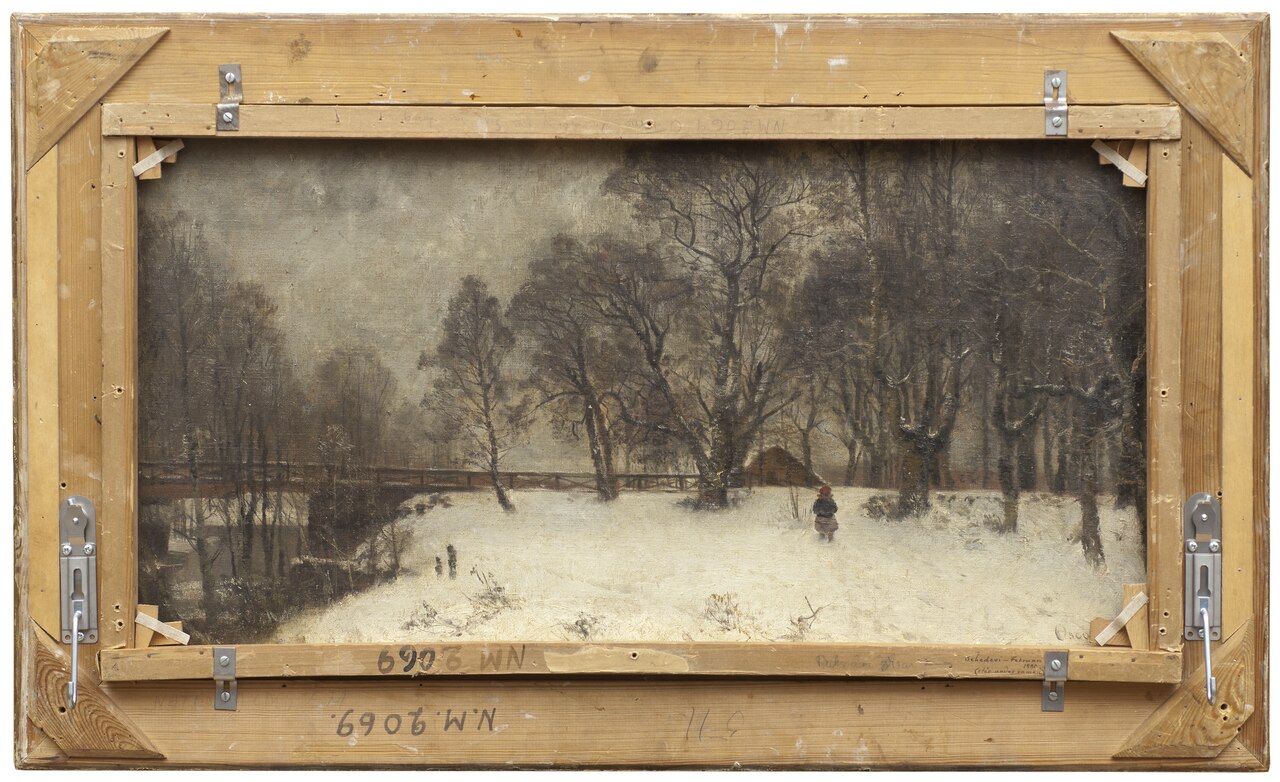
Finally, "Landscape at Skedevi" (1880) returns to Swedish terrain, depicting a pastoral vista with rolling fields and a distant church spire. The painting’s restrained palette and careful attention to atmospheric perspective illustrate Törnå’s consistent approach to landscape, irrespective of geographic location.
Influence and legacy Although Oskar Emil Törnå never achieved the fame of some of his contemporaries, his work contributed to the diffusion of a balanced, observational style within Swedish landscape painting. By integrating French naturalist techniques with a distinctly Scandinavian sensibility, he helped bridge two artistic cultures during a period of increasing mobility among European artists.
His illustrations and graphic works, often used in travel guides and scientific texts, provided visual documentation of both Swedish and French environments, supporting the era’s growing interest in geography and natural history. Modern scholars regard his paintings as valuable visual records of 19th‑century rural life, while collectors appreciate the subtle elegance of his brushwork.
Törnå’s legacy persists in the continued study of cross‑cultural artistic exchange in the late 1800s, and his paintings remain part of museum collections that aim to illustrate the breadth of Swedish art beyond the most celebrated figures. His ability to capture light and atmosphere with restraint continues to inspire contemporary landscape painters who seek a measured, contemplative approach.
Frequently asked questions
Who was Oskar Emil Törnå?
Oskar Emil Törnå was a Swedish painter, illustrator and graphic artist active in the late 19th century, known for his landscape works.
What style or movement is he associated with?
He worked within a balanced landscape tradition that blended Swedish national romanticism with influences from the French Barbizon school.
What are his most famous works?
His best‑known paintings include "Spring Landscape. Motif from Tullinge in Södermanland" (1879), "Summer Landscape near Fontainebleau" (1876), "Landscape near Grez‑sur‑Loing" (1876) and "Landscape at Skedevi" (1880).
Why does he matter in art history?
Törnå exemplifies the cultural exchange between Sweden and France in the 19th century, and his measured treatment of light and atmosphere contributed to the development of Swedish landscape painting.
How can I recognise a painting by Oskar Emil Törnå?
Look for calm compositions, subtle colour palettes, careful handling of light, and fine, layered brushwork that conveys atmosphere without dramatic contrast.