Unkoku Tōgan
1547 – 1618
In short
Unkoku Tōgan (1547–1618) was a Japanese painter of the Unkoku school, born in Nogomi and active until his death in Yamaguchi. He is noted for his ink‑wash portraits of Buddhist and literary figures, including a celebrated Bodhidharma and a series featuring Su Shi and Pan Lang.
Notable works

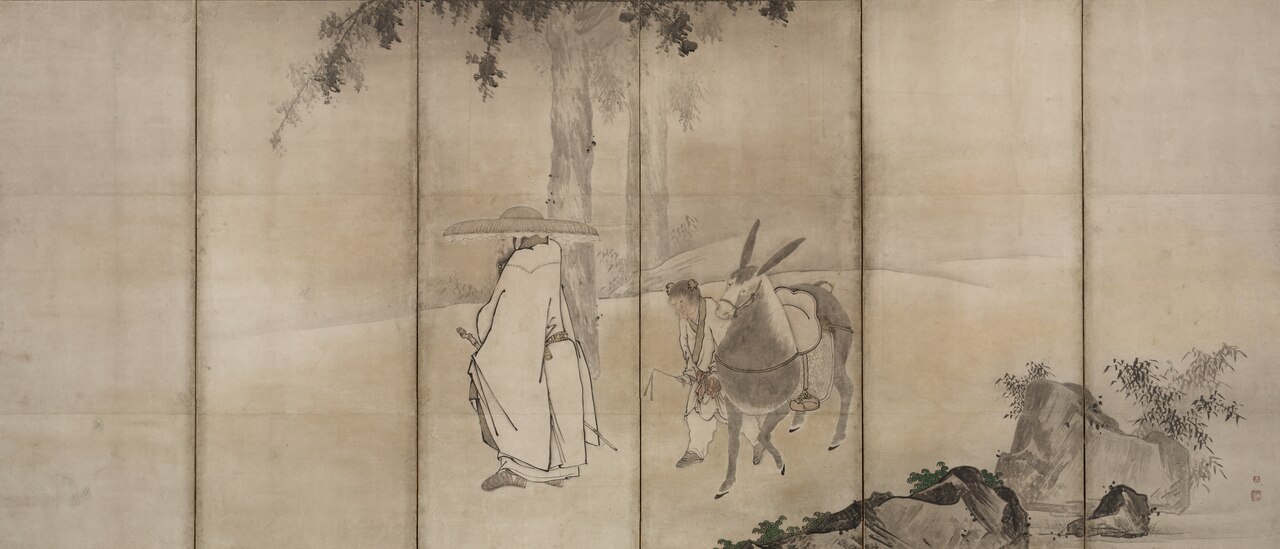
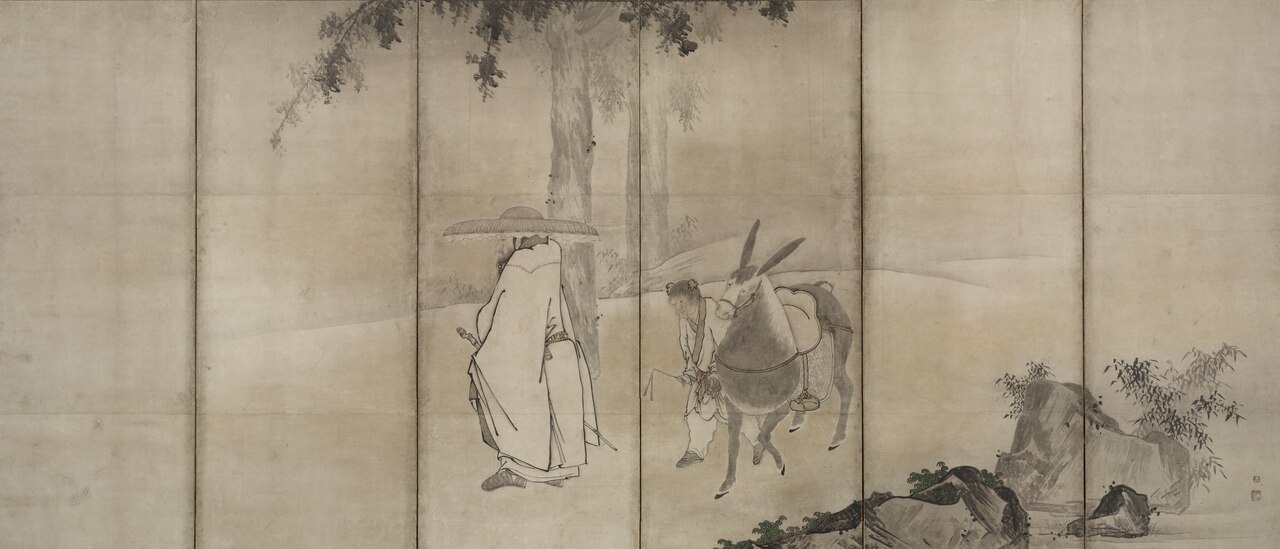
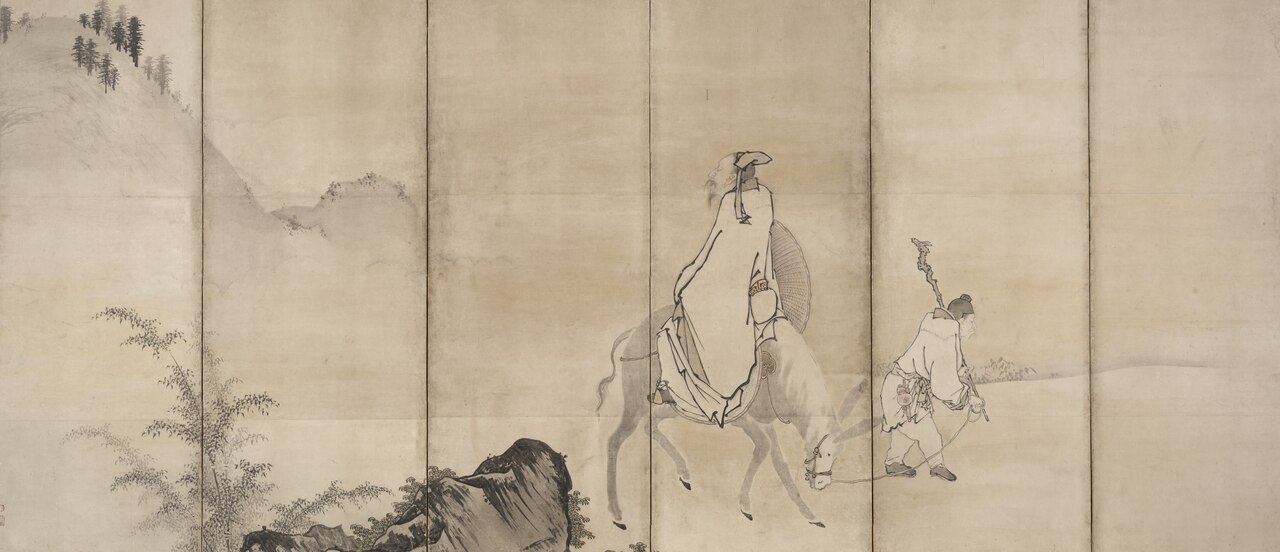

Early life Unkoku Tōgan was born in 1547 in the town of Nogomi, located in the northern part of Kyushu, Japan. Little is recorded about his family background, but contemporary sources suggest he was introduced to painting at a young age, likely through a local temple where Buddhist iconography was a central part of visual culture. The mid‑Sixteenth Century in Japan was a period of political fragmentation and cultural flourishing, providing a fertile environment for emerging artists to absorb both native traditions and imported influences, especially from Chinese ink‑painting.
Career and style Tōgan’s professional career unfolded during the Azuchi‑Momoyama period, a time when the tea ceremony and the aesthetics of wabi‑sabi were shaping artistic sensibilities. He aligned himself with the Unkoku school, a lineage that traced its inspiration to the Chinese master Wang Xizhi and emphasized monochrome ink work, spontaneous brushwork, and a philosophical engagement with Zen Buddhism. Tōgan travelled extensively, working in the courts of regional daimyō and in temple workshops. His itinerant lifestyle brought him to the cultural hubs of Kyoto and Osaka before he settled in Yamaguchi, where he spent his final years.
His paintings are characterised by a restrained palette, typically limited to black ink and subtle washes of grey. He favoured a loose, calligraphic brushstroke that conveyed both the physical presence of his subjects and an intangible spiritual quality. The compositions often balance negative space with densely rendered forms, creating a sense of depth and contemplation. Tōgan’s work reflects a synthesis of Japanese aesthetic restraint and the more expressive, literati traditions of Ming‑dynasty China.
Signature techniques Unkoku Tōgan employed several techniques that became hallmarks of his oeuvre:
* Fuki‑haku (blown ink) – a method of applying ink with a swift, sweeping motion, allowing the brush to glide across the paper and produce fluid, almost ethereal lines. * Katsura‑guri (layered washes) – multiple translucent layers of ink that build tonal depth without sacrificing the immediacy of the initial brushstroke. * Monochrome contrast – strategic use of stark black against softened greys to highlight focal points, especially in portraiture. * Negative‑space framing – deliberate omission of detail in background areas to centre the viewer’s attention on the subject’s expression and posture.
These techniques combined to give his paintings a meditative quality, resonating with the Zen principles that informed much of his subject matter.
Major works Tōgan’s extant catalogue is modest but includes several pieces that exemplify his mastery of ink‑wash portraiture.
* Bodhidharma (1600) – This work portrays the legendary founder of Zen Buddhism seated in a meditative pose. The figure is rendered with a stark black outline that dissolves into soft washes, suggesting both the solidity of the monk’s presence and the transience of his spiritual insight. The background is almost entirely void, reinforcing the contemplative atmosphere.
* Portrait of Daruma (1609) – In this painting, Tōgan captures the iconic image of Daruma, the Japanese incarnation of Bodhidharma, with a direct, unadorned gaze. The brushwork is vigorous yet controlled, and the use of layered ink creates a subtle gradation that conveys the monk’s inner vigor.
* Su Shi (So Shoku) and Pan Lang (Han Rō) (1610) – This pair of portraits, sometimes exhibited as a single diptych, depicts two celebrated Chinese literary figures. Su Shi, a renowned poet and calligrapher, is rendered with a relaxed posture and a faint smile, while Pan Lang, famed for his loyalty, appears more solemn. Both figures are painted with the same fuki‑haku technique, yet Tōgan differentiates them through nuanced variations in ink density and the treatment of their clothing folds.
* Su Shi (So Shoku) (1610) – A stand‑alone version of the Su Shi portrait, this work emphasizes the scholar’s intellectual demeanor. The composition places the subject against a minimal background, allowing the viewer to focus on the delicate expression captured by Tōgan’s brush.
* Pan Lang (Han Rō) (1610) – Similarly, this isolated portrait of Pan Lang accentuates his stoic character. The use of darker washes around the shoulders creates a sense of weight, contrasting with the lighter treatment of the surrounding space.
These works demonstrate Tōgan’s ability to convey personality and spiritual depth through restrained visual means.
Influence and legacy Unkoku Tōgan’s contribution to Japanese ink painting helped cement the Unkoku school’s reputation as a conduit for Chinese literati aesthetics within a distinctly Japanese context. His emphasis on spontaneous brushwork and the spiritual resonance of negative space influenced later Edo‑period painters who sought to balance technical skill with philosophical expression. Scholars credit Tōgan with advancing the notion that portraiture could serve as a vehicle for moral and contemplative reflection, a concept that resonated with the Zen‑oriented cultural currents of his time.
Although the surviving body of his work is limited, the pieces that remain are frequently cited in art‑historical surveys of Japanese monochrome painting. Modern exhibitions of early modern Japanese art often include his Bodhidharma and Daruma portraits as exemplars of the period’s synthesis of native and continental influences. In academic circles, Tōgan is regarded as a bridge between the disciplined brushwork of the Muromachi period and the more expressive, individualistic approaches that emerged in the 17th century.
His legacy endures in the continued study of ink‑wash techniques, and his paintings are held in several Japanese museum collections, where they are used as teaching models for students of traditional Japanese painting. The enduring relevance of his work underscores the timeless appeal of simplicity, meditation, and the power of a single brushstroke to convey profound meaning.
Frequently asked questions
Who was Unkoku Tōgan?
Unkoku Tōgan (1547–1618) was a Japanese painter of the Unkoku school, known for his ink‑wash portraits of Buddhist and literary figures.
What style or movement did he belong to?
He worked within the Unkoku school, a Japanese interpretation of Chinese literati painting that emphasizes monochrome ink, spontaneous brushwork, and Zen‑inspired minimalism.
What are his most famous works?
His most celebrated pieces include the Bodhidharma (1600), Portrait of Daruma (1609), and a series of portraits from 1610 featuring Su Shi (So Shoku) and Pan Lang (Han Rō).
Why is Unkoku Tōgan important in art history?
He helped bridge Chinese ink‑painting traditions with Japanese aesthetics, influencing later Edo‑period artists and reinforcing the role of portraiture as a medium for spiritual and moral expression.
How can I recognise a painting by Unkoku Tōgan?
Look for monochrome ink with layered washes, fluid fuki‑haku brushstrokes, strong contrast between dark outlines and softened grey tones, and a spacious use of negative space that focuses attention on the subject’s expression.