Axel Törneman
1880 – 1925
In short
Axel Törneman (1880–1925) was a Swedish painter who became one of the country’s first modernist and expressionist artists. He is best known for the night‑café series created in Paris in the early 1900s, works that are now regarded as milestones of Swedish modernism.
Notable works
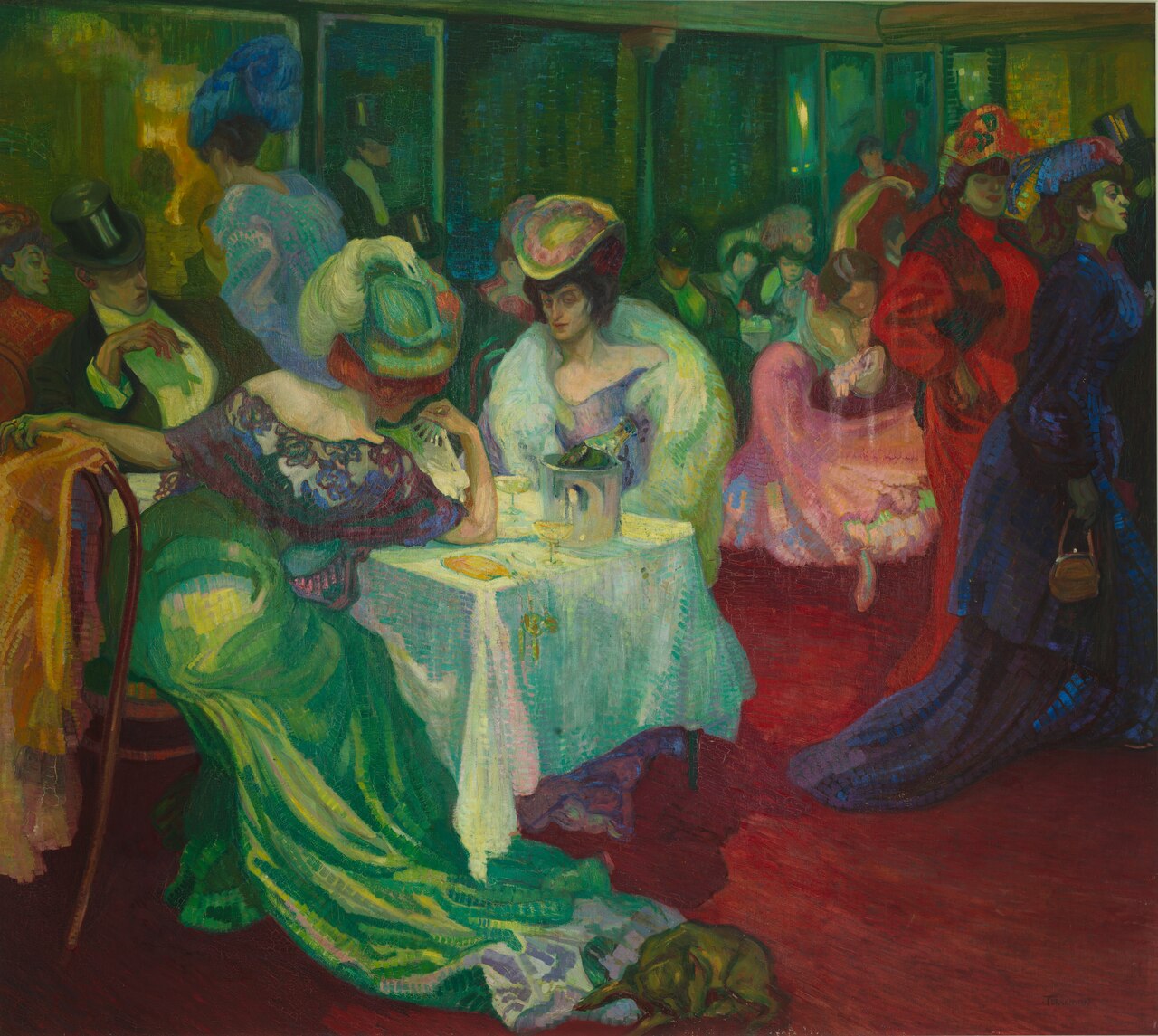
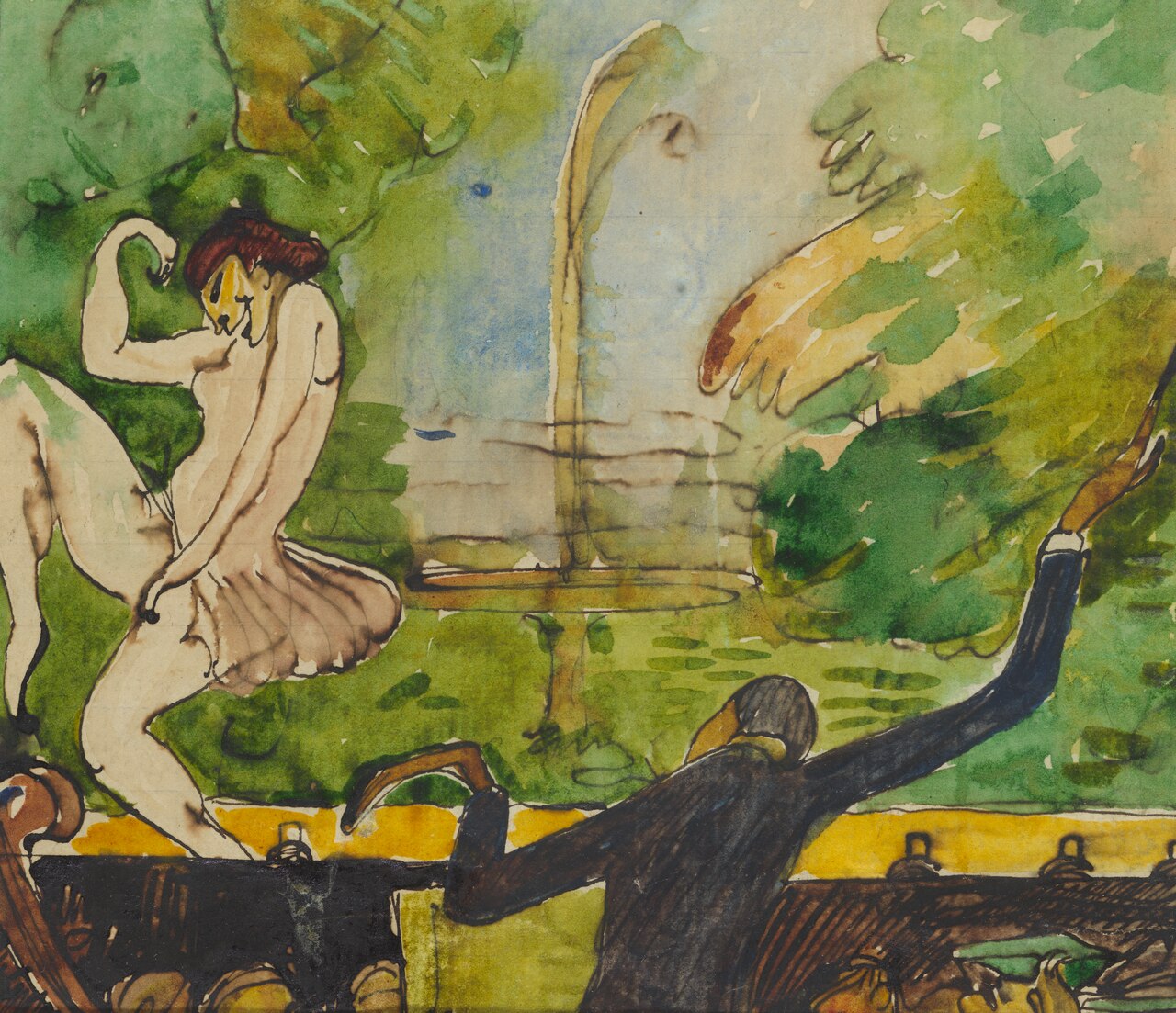


Early life Johan Axel Gustaf Törneman was born in 1880 in Persberg, a small town in Värmland, Sweden. Little is recorded about his family background, but his upbringing in a rural environment gave him early exposure to the stark colours of the Swedish landscape. As a teenager he showed a talent for drawing, and after completing basic schooling he moved to Stockholm to pursue formal artistic training. The capital’s art academies offered him a grounding in traditional techniques, yet his curiosity soon led him beyond the academic conventions of the time.
Career and style In the early 1900s Törneman travelled to Germany and France, where the avant‑garde was reshaping the visual language of painting. He encountered the work of the Fauves, German Expressionists, and the emerging abstraction of artists such as Kandinsky. These encounters encouraged him to abandon the naturalist style favoured by many of his Swedish contemporaries and to experiment with more daring colour palettes, simplified forms and emotive brushwork. By 1905 he was living in Paris, working in cafés that were popular meeting places for artists, writers and musicians. It was here that he produced his most celebrated night‑café paintings, drawing on the atmospheric lighting of places like the Place Pigalle and the Café du Rat Mort. The resulting works combined a loose, almost sketch‑like handling of paint with a vivid, sometimes jarring, chromatic intensity—a hallmark of early Swedish expressionism.
After returning to Sweden, Törneman continued to explore abstraction while maintaining a personal connection to his native motifs. He painted scenes of rural life, such as Breton villagers, and later in his career turned to more introspective subjects, evident in works created shortly before his death. Throughout his career he remained a bridge between the international avant‑garde and the emerging Swedish modernist movement, helping to introduce new ideas to a domestic audience that was still largely accustomed to academic realism.
Signature techniques Törneman’s paintings are distinguished by several recurring technical approaches. First, his use of colour is unapologetically bold; he often juxtaposed complementary hues to heighten emotional impact, a technique that aligns him with the Fauvist emphasis on colour as an expressive force. Second, his brushwork tends toward rapid, gestural strokes that convey movement and atmosphere rather than meticulous detail. This approach is especially evident in his night‑café series, where the interplay of light and shadow is suggested rather than rendered with precise modelling. Third, Törneman frequently employed a flattened pictorial space, reducing depth in favour of decorative patterning. This flattening, combined with a strong outline, gives his figures a graphic quality that anticipates later developments in modernist illustration. Finally, his later works demonstrate a subtle shift toward abstraction, where forms become increasingly simplified and the emphasis moves from narrative content to pure visual rhythm.
Major works - **Night Café I (1905)** – Created during his Parisian period, this canvas captures the dim interior of a café illuminated by a single electric bulb. The composition is built around a strong vertical axis, while the surrounding walls dissolve into patches of deep blue and orange, evoking the nocturnal ambience of the city. The work is considered a breakthrough for Swedish modernism because it translates a distinctly French urban scene into a language of colour and gesture that was unfamiliar to Swedish audiences. - **Night Café (1906)** – A companion piece to the 1905 canvas, this painting expands the same motif with a broader perspective. Törneman deepens the contrast between illuminated surfaces and surrounding darkness, employing broader brushstrokes that convey a sense of movement. Critics have noted that the piece reflects an evolution in his handling of light, moving from a literal depiction toward a more symbolic use of illumination. - **Variété** – Though the exact date is uncertain, this work belongs to the same period of experimentation. It depicts a bustling variety theatre, with performers and audience members rendered in loose, energetic strokes. The painting showcases Törneman’s fascination with contemporary entertainment venues as sites of modern life, and his ability to capture their kinetic energy. - **Bretons oder Breton villagers (1905)** – This piece returns to a rural subject, portraying Breton peasants in a landscape rendered with muted, earthy tones. While the subject matter is traditional, Törneman’s treatment displays his modernist sensibility: the figures are simplified, the background is flattened, and the colour palette is deliberately restrained, highlighting his capacity to merge folk themes with avant‑garde technique. - **Shadows (1925)** – Completed shortly before his death, this work exemplifies his later turn toward abstraction. The canvas is dominated by dark, ambiguous shapes that suggest silhouettes rather than fully formed figures. The limited palette of greys and deep blues creates a contemplative mood, indicating an artist reflecting on the passage of time and the fleeting nature of visual memory.
Influence and legacy Axel Törneman occupies a pivotal place in the history of Swedish art. By introducing the visual vocabulary of French modernism to Sweden, he helped lay the groundwork for subsequent generations of Swedish expressionists and abstract painters. His night‑café series, in particular, is frequently cited by art historians as the first major Swedish works to embrace the radical colour and emotional intensity of early twentieth‑century European avant‑garde. Museums in Stockholm, including the Nationalmuseum, hold several of his paintings, and his work continues to be exhibited in retrospectives that examine the development of modernism in Scandinavia. Contemporary Swedish artists often reference Törneman’s blend of bold colour, gestural brushwork and an interest in urban nightlife, seeing him as a precursor to later explorations of pop culture and street scenes. Though his career was relatively short—he died in Stockholm in 1925—his contributions endure as a catalyst that propelled Swedish painting into the modern era.
Frequently asked questions
Who was Axel Törneman?
Axel Törneman (1880–1925) was a Swedish painter recognized as one of the country’s first modernist and expressionist artists.
Which artistic movement or style is he associated with?
He is linked to early Swedish modernism and expressionism, drawing on Fauvism, German Expressionism and nascent abstraction.
What are his most famous works?
His best‑known paintings are the night‑café series—Night Café I (1905) and Night Café (1906)—along with works such as Variété, Bretons oder Breton villagers (1905) and Shadows (1925).
Why does Axel Törneman matter in art history?
He introduced avant‑garde colour and technique to Sweden, making his night‑café paintings landmark works that helped launch Swedish modernism.
How can I recognise an Axel Törneman painting?
Look for bold, contrasting colours, rapid gestural brushwork, flattened space and subjects that range from nocturnal cafés to simplified rural figures.