Anna Nordlander
1843 – 1877
In short
Anna Nordlander (1843–1877) was a Swedish painter noted for her portraits and vivid depictions of everyday life, especially the customs of the Forest Sami in northern Sweden.
Notable works

Early life Anna Catharina Nordlander was born in 1843 in the town of Skellefteå, situated in the northern part of Sweden. Little is recorded about her family background, but the remote, forest‑rich environment of her birthplace left a lasting imprint on her artistic sensibility. Growing up amid a landscape dominated by pine woods and the traditional livelihoods of the local Sami population, she developed an early fascination with the people and the natural world that surrounded her. Formal artistic training in the mid‑19th century Sweden was limited for women, yet Nordlander managed to acquire the necessary skills through a combination of private instruction and self‑directed study, a path shared by several pioneering female artists of her generation.
Career and style By the late 1860s Nordlander had begun to exhibit her work in regional salons, quickly gaining a reputation for her ability to capture both the psychological depth of portraiture and the atmospheric qualities of genre scenes. Her style reflects the realist tendencies that were gaining prominence across Europe, tempered by a distinctly Nordic sensibility that emphasises muted colour palettes, careful observation of light, and an almost documentary attention to folk customs. While she is not formally aligned with a single art movement, her paintings echo the naturalist and social‑realist currents that characterised Swedish art in the decades following the Great Exhibition of 1865. Nordlander’s subjects range from intimate interior scenes—such as a sickbed or a humble family dwelling—to outdoor depictions of the Forest Sami engaged in traditional activities like skiing and reindeer herding.
Signature techniques Nordlander’s technical repertoire centres on a disciplined handling of oil on canvas and preparatory studies in charcoal or pencil. She favoured a layered approach, beginning with a thin underpainting to establish tonal values before building up richer colour and detail. This method allowed her to render subtle shifts in skin tone and foliage alike. Her brushwork is generally restrained; fine, controlled strokes convey texture in clothing and fur, while broader, softer passages suggest atmospheric background. Light is often rendered from a diffused northern sky, creating a gentle chiaroscuro that highlights the emotional resonance of her subjects. In her studies, she employed rapid sketching to capture movement, especially evident in works that depict the dynamic posture of skiers or the delicate tension of a suspended cradle.
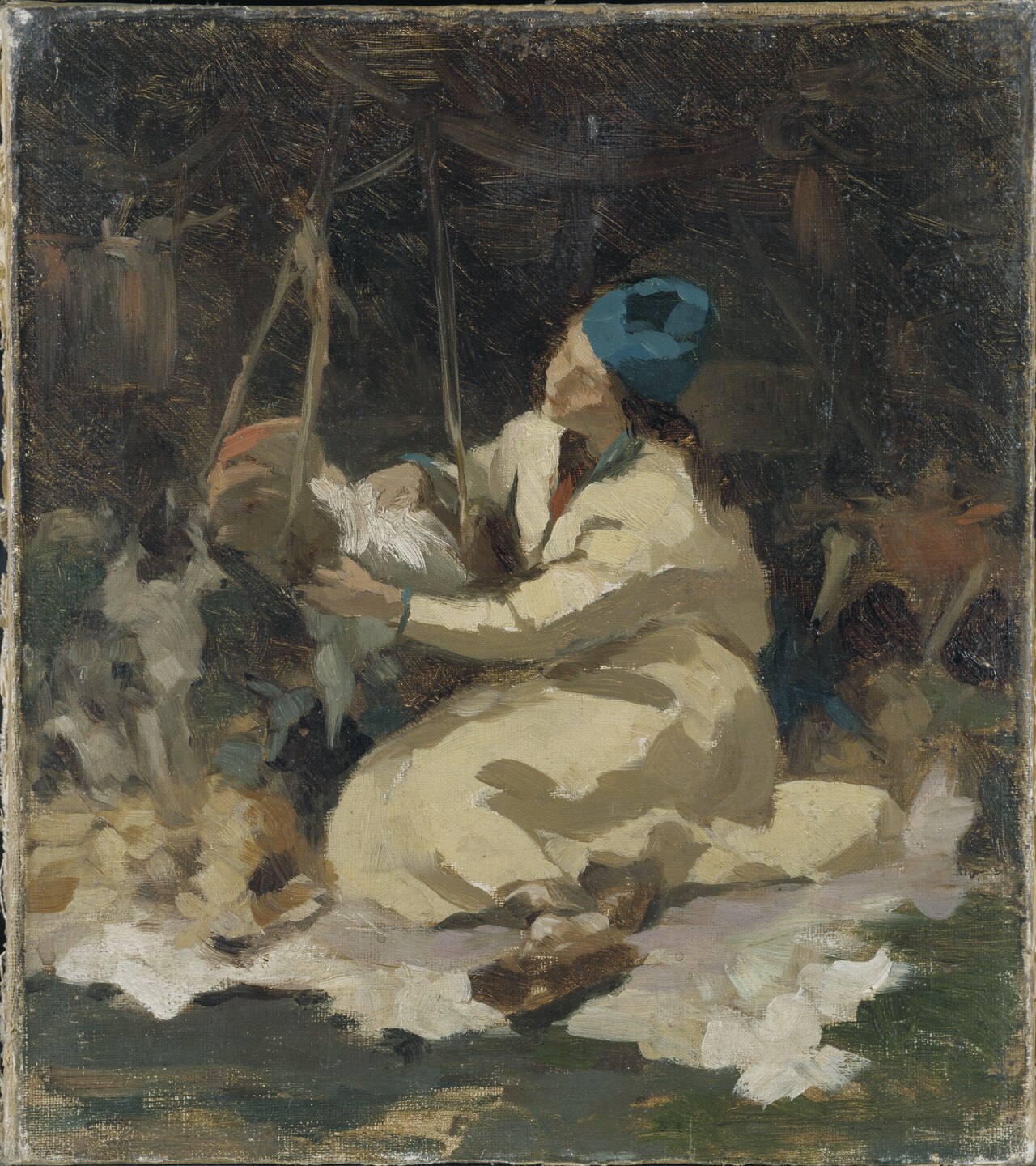
Major works **At the Suspended Cradle. Study (1870)** – This preparatory drawing illustrates Nordlander’s interest in domestic ritual. The composition focuses on a cradle hanging from a simple wooden beam, with a mother’s hands poised to lower a newborn. The study showcases her skill in rendering fabric folds and the interplay of light and shadow within a confined interior space.
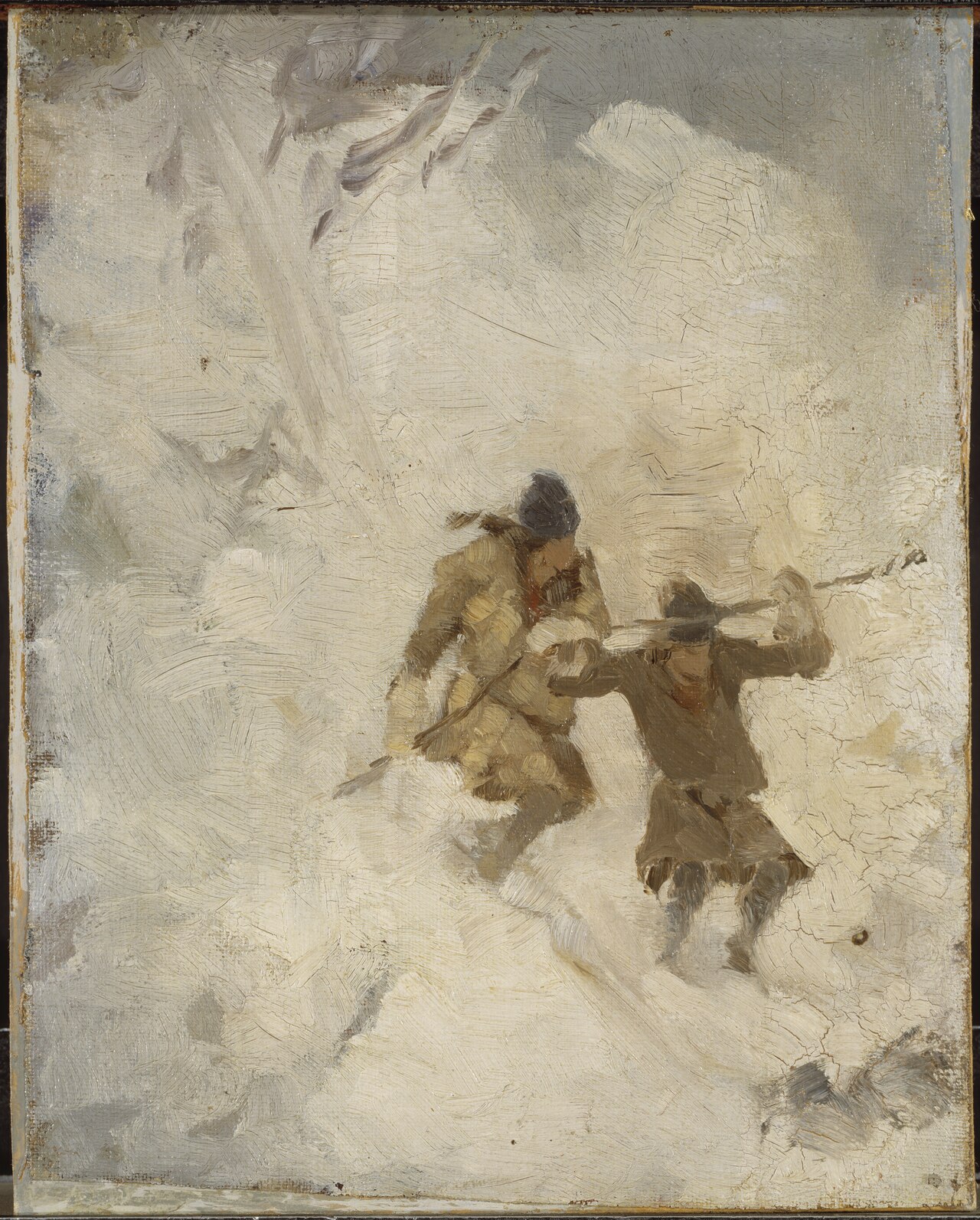
Two Skiing Sami. Study – Though undated, this sketch captures a fleeting moment of motion as two members of the Forest Sami glide across snow‑covered terrain. The dynamic diagonal lines and the stark contrast between the dark silhouettes and the bright snow surface demonstrate her ability to convey speed and the harsh northern climate.
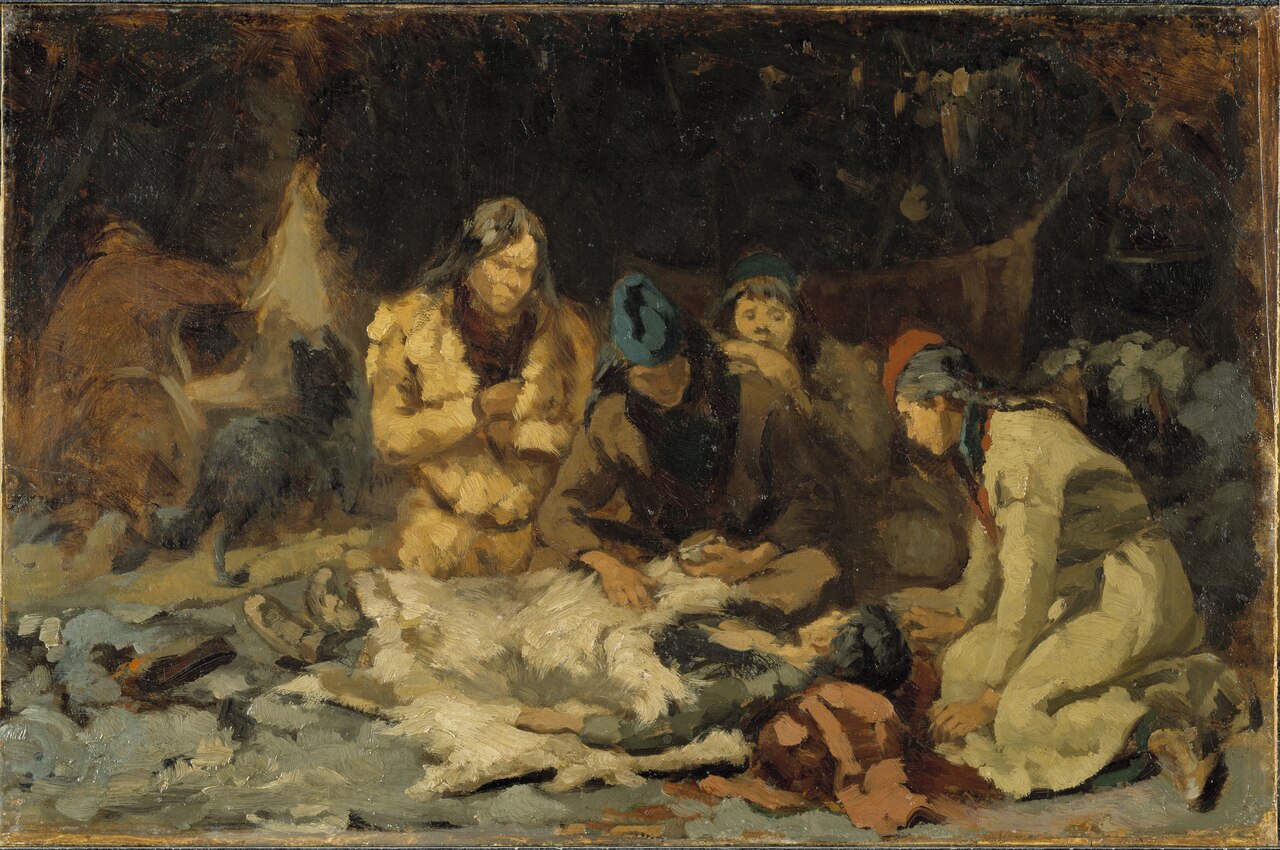
By a Sickbed (1870) – In this intimate genre painting, a figure lies in a modest bed while a caretaker tends to them. The muted palette and careful rendering of the wooden interior convey a sense of quiet compassion. The work reflects Nordlander’s empathy for everyday hardships and her capacity to infuse a domestic scene with narrative depth.
Poor Boys (1872) – This composition presents a group of rag‑clad youths gathered on a rural path. Their expressions, combined with the rough texture of their clothing, reveal a compassionate yet unflinching portrayal of poverty in northern Sweden. The piece aligns with the social‑realist impulse to document the lives of the marginalised.
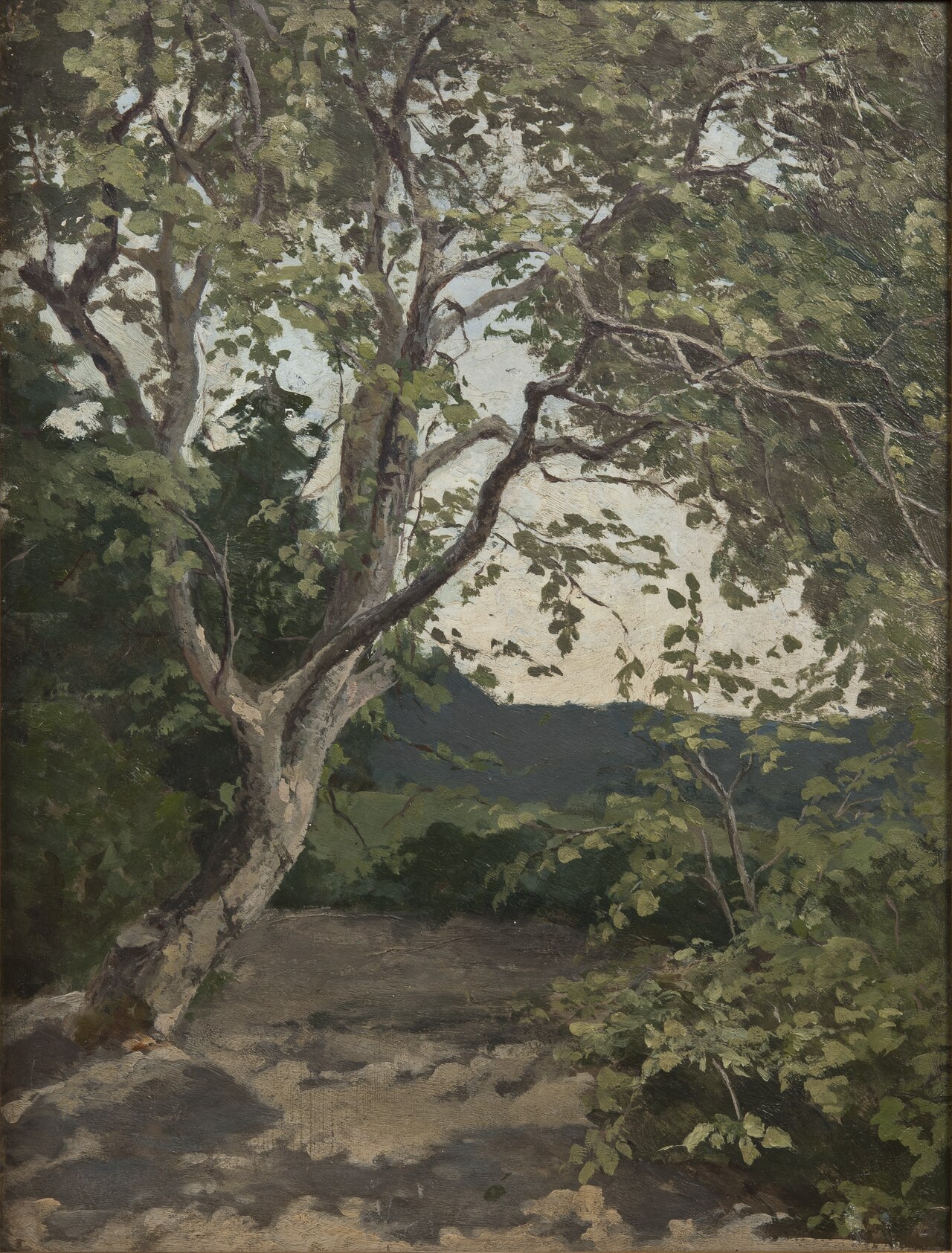
A Tree. Study – A solitary study of a pine tree, rendered in charcoal, highlights Nordlander’s reverence for the natural environment that shaped her upbringing. The careful attention to bark texture and the subtle gradations of shadow illustrate her observational precision.
These works collectively underline Nordlander’s commitment to portraying authentic aspects of northern Swedish life, from the private sphere of illness and childbirth to the public sphere of labour and play.
Influence and legacy Anna Nordlander died relatively young in 1877 in the parish of Jakob and Johannes, but her legacy endures through the visual record she left of a region and a culture that were rarely depicted in mainstream Swedish art of her time. By foregrounding the Forest Sami, she contributed to a broader awareness of indigenous customs within Sweden and provided future scholars with valuable ethnographic visual material. Her realist approach influenced subsequent generations of Swedish painters who sought to document social realities without romanticising them. Although she never achieved the fame of her male contemporaries, Nordlander is now recognised as a pioneering female artist whose work bridges fine art and cultural documentation, offering a nuanced perspective on 19th‑century northern Scandinavian life.
Frequently asked questions
Who was Anna Nordlander?
Anna Nordlander (1843–1877) was a Swedish painter renowned for her portraits and vivid genre scenes that often depicted the lives of the Forest Sami in northern Sweden.
What artistic style or movement is she associated with?
She worked within a realist and naturalist framework, reflecting mid‑19th‑century Swedish tendencies rather than belonging to a single defined movement.
What are her most famous works?
Key works include *At the Suspended Cradle. Study* (1870), *Two Skiing Sami. Study*, *By a Sickbed* (1870), *Poor Boys* (1872) and *A Tree. Study*.
Why is Anna Nordlander important in art history?
She is celebrated as a pioneer in portraying the Forest Sami, combining artistic skill with ethnographic insight, and she helped broaden the visual narrative of Swedish rural life.
How can I recognise an Anna Nordlander painting?
Look for restrained brushwork, muted northern colour palettes, careful light handling, and subjects that capture everyday domestic or folk scenes, especially those featuring Sami people or northern landscapes.