Alfred Wahlberg
1834 – 1906
In short
Alfred Wahlberg was a Swedish landscape painter born in 1834 in Stockholm and died in 1906 in Tranås. He is known for his landscape paintings that often depicted Swedish scenery. Wahlberg's work provides a glimpse into the country's natural beauty during the 19th century.
Notable works


Early life Alfred Wahlberg was born in 1834 in Stockholm, Sweden. While specific details about his early life are scarce, it is known that he developed an interest in art from a young age. The cultural and artistic environment of Stockholm likely influenced his decision to pursue a career in painting.
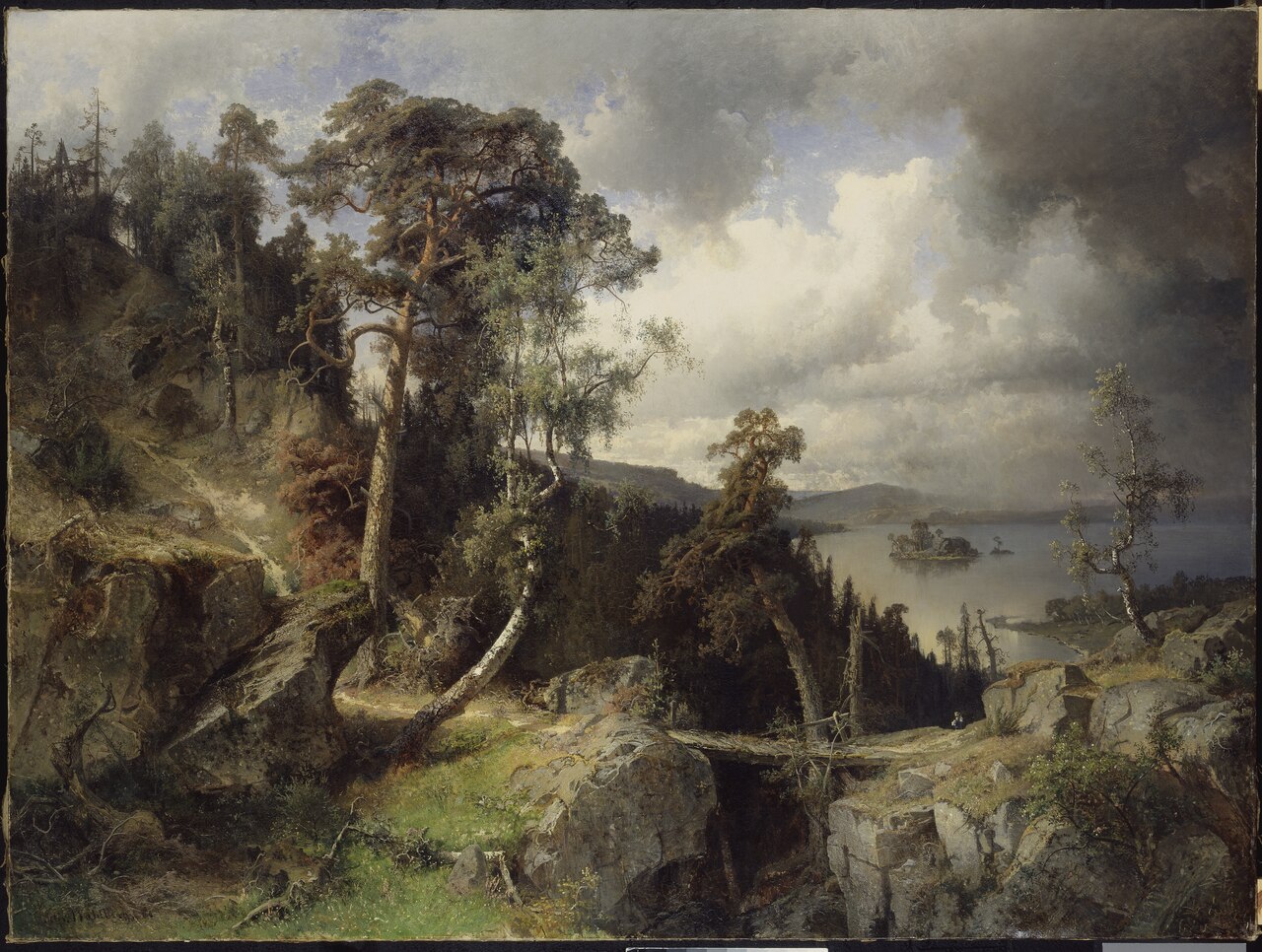
Career and style Wahlberg's career as a landscape painter spanned several decades, during which he developed a unique style that captured the essence of the Swedish landscape. His paintings often featured serene and idyllic scenes, showcasing the country's natural beauty. Although the specific art movement he belonged to is unknown, his work is characteristic of the landscape painting tradition that was popular during the 19th century.
Signature techniques Wahlberg's signature techniques are not well-documented, but his paintings demonstrate a strong sense of composition and attention to detail. He was skilled at capturing the play of light on water and the textures of the natural world. His use of color was also notable, as he often employed a muted palette to convey the subtleties of the Swedish landscape.
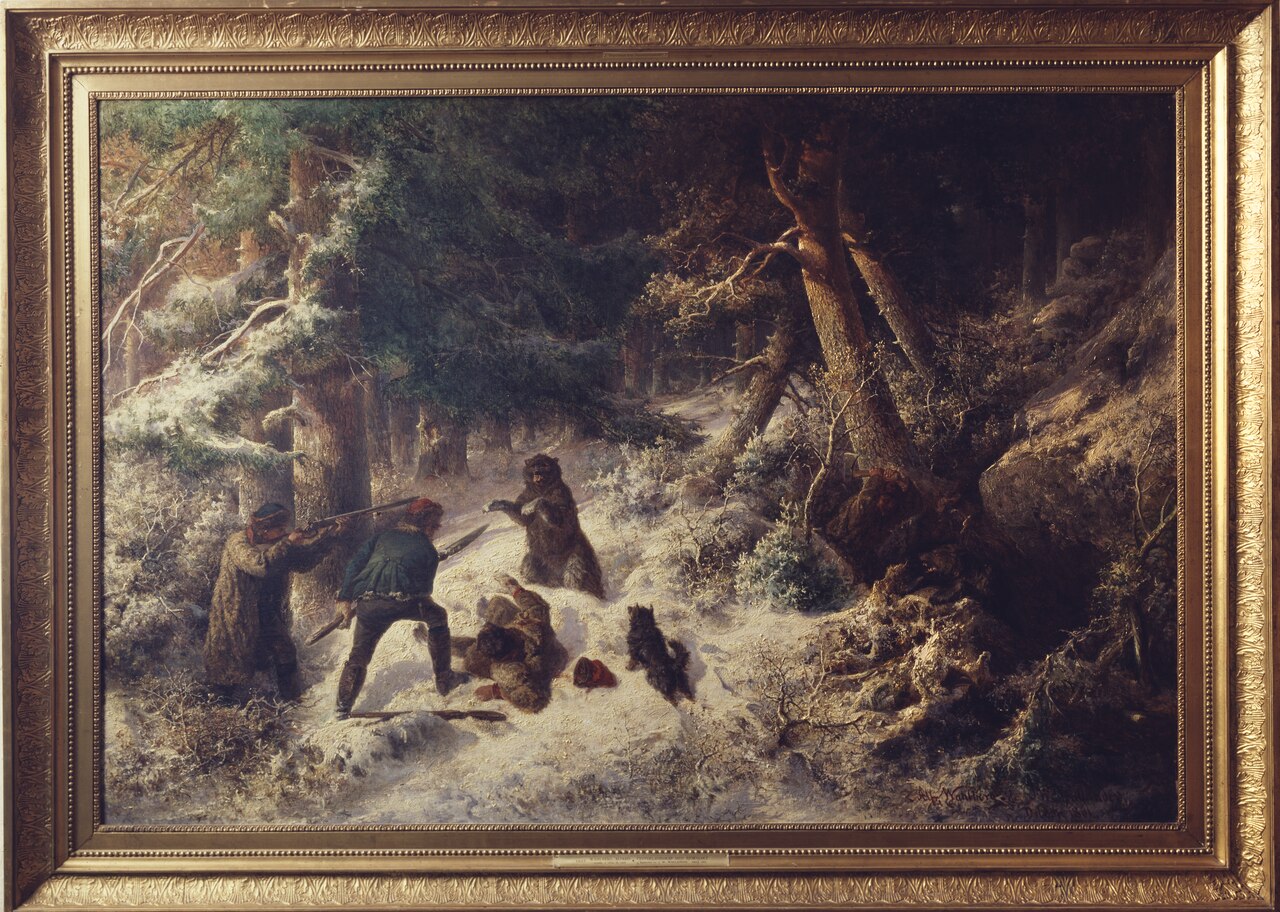
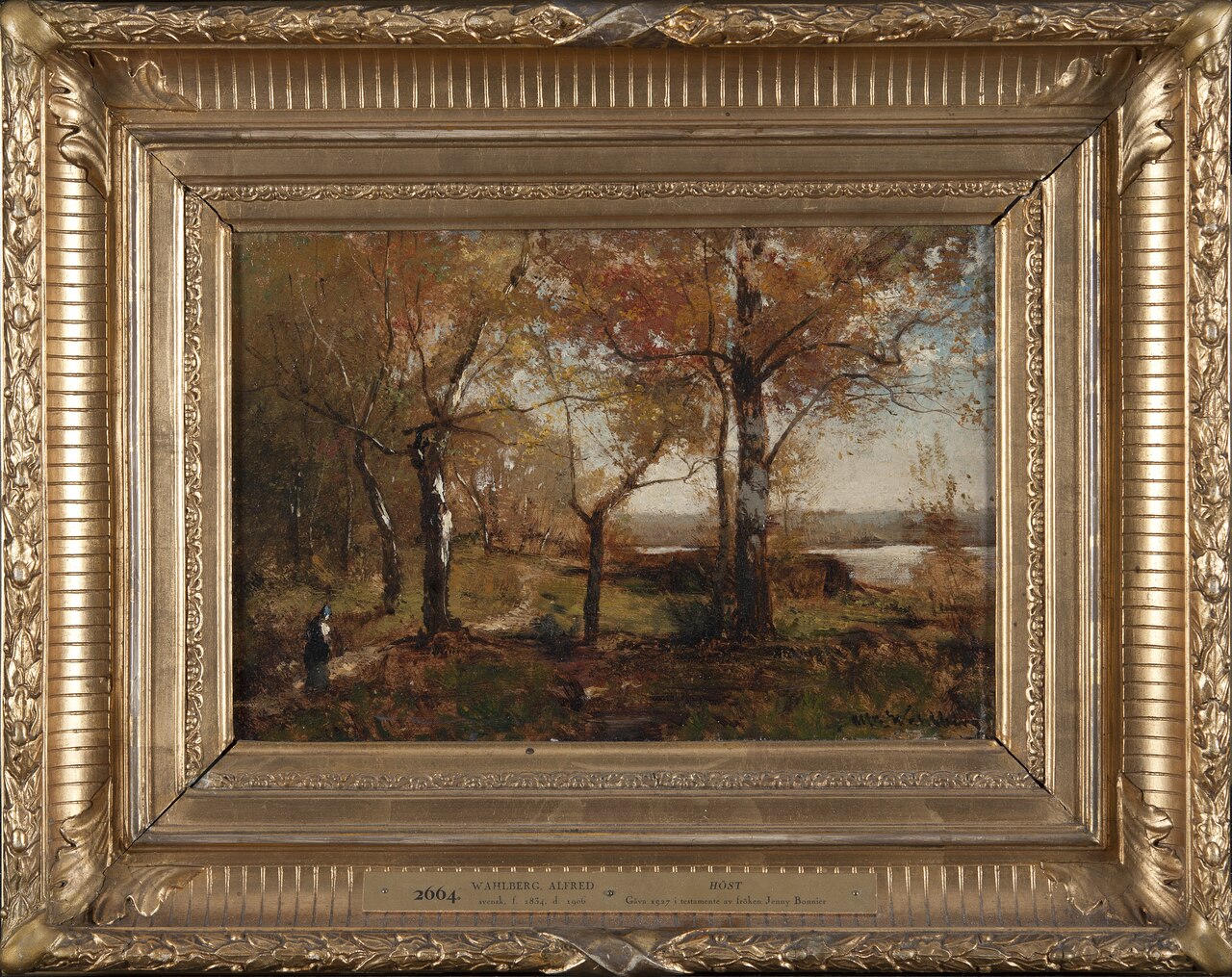
Major works Some of Wahlberg's most notable works include 'A Day in October, near Waxholm, Sweden' (1873), 'Swedish Landscape. Motif from Kolmården' (1866), 'Bear-Hunting in the Winter' (1861), 'View near Waxholm' (1872), and 'Autumn'. These paintings showcase his ability to capture the beauty of the Swedish landscape in various seasons and settings. 'A Day in October, near Waxholm, Sweden' is a prime example of his skill in depicting the interplay of light and water, while 'Bear-Hunting in the Winter' demonstrates his ability to convey the drama and action of a winter scene.
Influence and legacy Wahlberg's influence on the development of Swedish landscape painting is uncertain, but his work provides valuable insights into the country's natural beauty during the 19th century. His paintings continue to be appreciated for their serene and idyllic depictions of the Swedish landscape, offering a glimpse into a bygone era. As a landscape painter, Wahlberg's legacy is rooted in his ability to capture the essence of the natural world, and his work remains a testament to the enduring power of landscape painting.
Frequently asked questions
Who was Alfred Wahlberg?
Alfred Wahlberg was a Swedish landscape painter born in 1834 in Stockholm and died in 1906 in Tranås.
What style or movement was Alfred Wahlberg associated with?
The specific art movement or style associated with Alfred Wahlberg is unknown, but his work is characteristic of the landscape painting tradition that was popular during the 19th century.
What are some of Alfred Wahlberg's most famous works?
Some of his most notable works include 'A Day in October, near Waxholm, Sweden', 'Swedish Landscape. Motif from Kolmården', 'Bear-Hunting in the Winter', 'View near Waxholm', and 'Autumn'.
Why is Alfred Wahlberg's work important?
Wahlberg's work is important because it provides a glimpse into the natural beauty of Sweden during the 19th century and offers a unique perspective on the country's landscape.
How can I recognize Alfred Wahlberg's work?
You can recognize Alfred Wahlberg's work by looking for serene and idyllic depictions of the Swedish landscape, often featuring water, trees, and subtle lighting effects.