Carl Wahlbom
1810 – 1858
In short
Carl Wahlbom (1810–1858) was a Swedish painter, illustrator and sculptor who specialised in historical and genre scenes, most famously depicting King Gustav II Adolf; he was born in Kalmar and died in London.
Notable works


Early life Johan Wilhelm Carl Wahlbom was born in 1810 in the coastal town of Kalmar, Sweden. Little is recorded about his family background, but contemporary sources indicate that he displayed an early aptitude for drawing. As a teenager he moved to Stockholm to pursue formal artistic training, enrolling at the Royal Swedish Academy of Arts where he received instruction in drawing, painting and sculpture. This early education grounded him in the academic traditions of the time and introduced him to the burgeoning interest in historical painting that characterised much of mid‑19th‑century Swedish art.
Career and style After completing his studies, Wahlberg established himself as a versatile visual artist. He worked as a painter, creating large‑scale canvases for public exhibitions, and as an illustrator, producing drawings for books and periodicals. His oeuvre reflects a strong interest in national history, particularly the heroic narrative of King Gustav II Adolf, a figure celebrated for his role in the Thirty Years' War. Wahlbom’s style is rooted in the academic realism of the era, with careful attention to anatomical accuracy and a muted palette that conveys the seriousness of his subjects. While he is not formally linked to a specific avant‑garde movement, his work aligns with the broader Romantic‑historicist trend that sought to revive national mythologies through visual art.
Signature techniques Wahlbom’s paintings are distinguished by several recurring technical approaches. First, he employed a meticulous underdrawing, often executed in charcoal or graphite, to define the composition before applying paint. This preparatory stage allowed him to achieve precise anatomical proportions, particularly in the depiction of military figures and horses. Second, his handling of light and shadow follows a chiaroscuro model that emphasizes the three‑dimensionality of his subjects, lending a sculptural quality to the painted figures. Third, his colour choices tend toward earth tones—ochres, umbers and deep reds—interrupted by strategic highlights of brighter hues to draw focus to key narrative elements such as a flag, a weapon, or a royal insignia. In his illustrations, Wahlbom favoured fine line work and cross‑hatching to convey texture and depth, a technique that translated well to printed media.
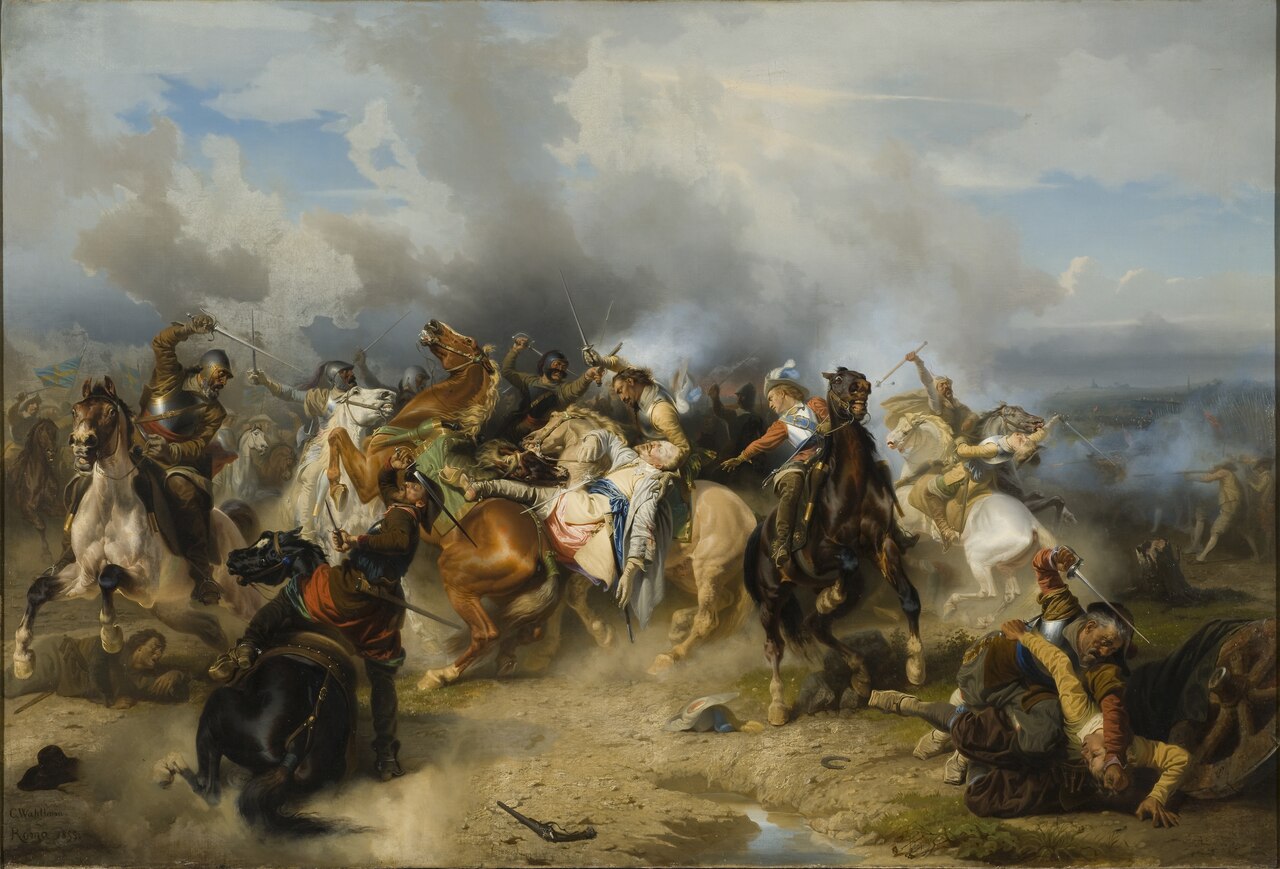
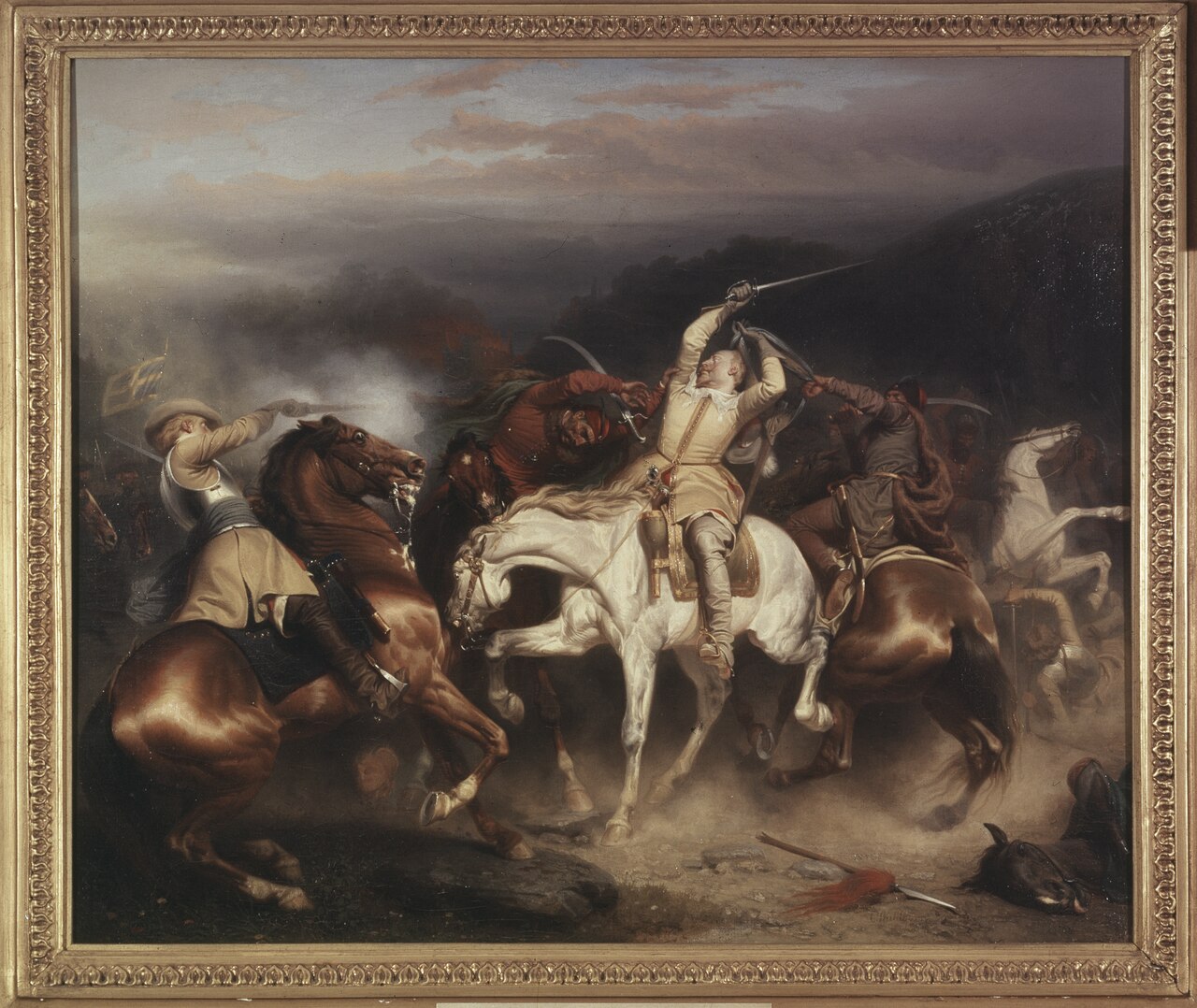
Major works Wahlbom’s most celebrated pieces centre on the life and death of King Gustav II Adolf. In **"Death of King Gustav II Adolf of Sweden at the Battle of Lützen" (1855)**, he portrays the monarch’s final moments on the battlefield with a stark realism that underscores the tragedy of war. The composition places the king at the centre of a chaotic melee, his armour glinting against a smoky sky, while surrounding soldiers react with a mixture of shock and resolve. The following year, he completed **"King Gustav II Adolf of Sweden at Stuhm" (1854)**, a work that captures a more triumphant episode from the king’s military career. Here, Wahlbom balances the regal poise of the monarch with dynamic movement, using a bright, open landscape to convey a sense of victory.
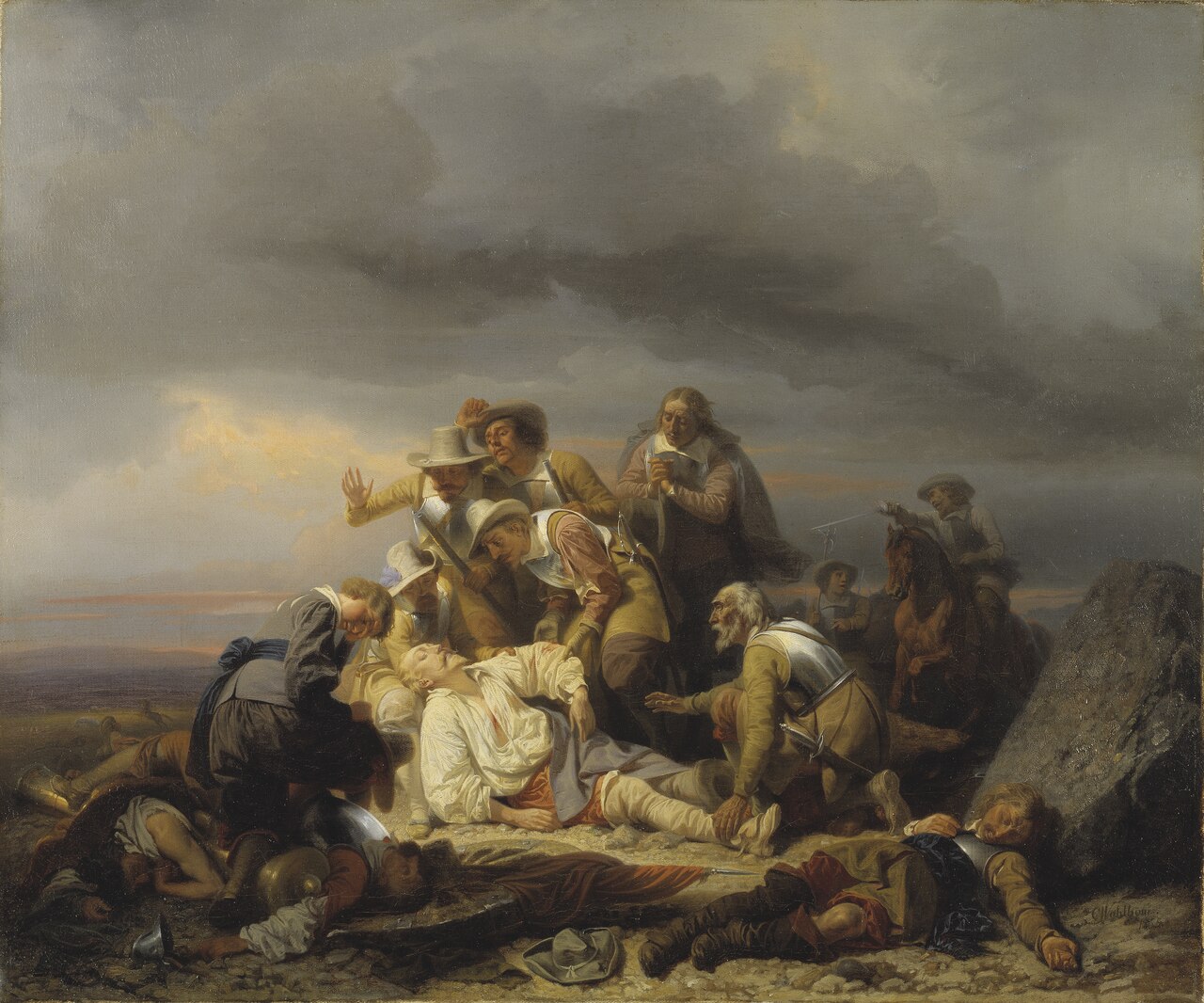
In "Finding the Body of King Gustav II Adolf of Sweden after the Battle of Lütze" (1855), Wahlbom returns to the somber theme of loss, depicting a group of soldiers discovering their fallen leader. The painting’s muted palette and careful rendering of facial expressions highlight the emotional weight of the scene. Beyond these historically themed canvases, Wahlbom explored genre subjects. "Kvinna med två flickor spelar fiol utanför fängelsefönster" (Woman with Two Girls Playing Violin Outside a Prison Window) offers a poignant glimpse into everyday life, juxtaposing music and confinement. The figures are rendered with a gentle tenderness, and the composition subtly comments on the restorative power of art. Finally, "Orvar Odd höglägger de slagne på Samsö" (Orvar Odd Lays the Fallen on Samsö) draws from Norse legend, depicting the hero Orvar Odd arranging the bodies of his comrades. This work reflects Wahlbom’s interest in mythic narratives and his ability to convey heroic melancholy.
Influence and legacy Although Carl Wahlbom never achieved the same international fame as some of his contemporaries, his contributions to Swedish visual culture are noteworthy. His historical paintings reinforced a 19th‑century fascination with national identity, providing visual anchors for educational texts and public commemorations. As an illustrator, his detailed drawings supported the growing market for illustrated books and periodicals, helping to popularise literary works that drew on Swedish history and folklore. Wahlbom’s technical proficiency, particularly his disciplined drawing practice and his nuanced handling of light, influenced a generation of Swedish artists who sought to combine academic rigour with narrative depth.
Wahlbom spent his later years in London, where he continued to work as an artist and maintain contacts with Scandinavian expatriate circles. He died in the city in 1858, leaving behind a modest but respected body of work. Modern scholars view his paintings as valuable documentary sources that capture the visual imagination of mid‑19th‑century Sweden, while his illustrations remain of interest to collectors of historic prints. Though his name may not dominate contemporary art histories, Carl Wahlbom’s oeuvre offers insight into the ways art served as a conduit for national storytelling during a pivotal era of cultural development.
Frequently asked questions
Who was Carl Wahlbom?
Carl Wahlbom (1810–1858) was a Swedish painter, illustrator and sculptor best known for his historical scenes of King Gustav II Adolf.
What artistic style or movement is he associated with?
He worked within the academic realism of the mid‑19th century, aligning with the Romantic‑historicist interest in national history rather than a specific avant‑garde movement.
What are his most famous works?
His most celebrated pieces include "Death of King Gustav II Adolf at the Battle of Lützen" (1855), "King Gustav II Adolf at Stuhm" (1854), and "Finding the Body of King Gustav II Adolf after the Battle of Lütze" (1855).
Why is Carl Wahlbom important in art history?
Wahlbom helped visualise Swedish national history, influencing how 19th‑century Sweden remembered its past, and his detailed illustrations contributed to the rise of illustrated publishing.
How can I recognise a Carl Wahlbom painting?
Look for meticulous underdrawings, a restrained colour palette, careful chiaroscuro, and subjects that often depict historical or mythic Swedish themes with a realistic, academic approach.