Johann Salomon Wahl
1689 – 1765
In short
Johann Salomon Wahl (1689–1765) was a German painter who worked as a court artist in Denmark, producing portraits of royalty and notable figures. He is remembered for his refined portraiture, including works such as the portrait of King Christian VI and the self‑portrait of 1755.
Notable works



Early life Johann Salomon Wahl was born in 1689 in Chemnitz, a town in the Electorate of Saxony, part of what is now Germany. Little is recorded about his family background or early artistic training, but the city’s vibrant craft traditions and proximity to Dresden—a centre of Baroque art—suggest that he received a solid grounding in drawing and painting. By the turn of the 18th century, Wahl had begun to develop a reputation as a competent portraitist, a genre that was in high demand among the emerging bourgeois and aristocratic patrons of the Holy Roman Empire.
Career and style Around the 1720s Wahl’s career took a decisive turn when he entered the service of the Danish court. The Danish monarchy, under King Frederick IV and later Christian VI, was actively recruiting artists from across Europe to enrich its cultural institutions, including the royal Kunstkammer (cabinet of curiosities). Wahl’s appointment as a court painter placed him at the heart of this artistic exchange. While the precise details of his move to Copenhagen remain sparse, his presence in the Danish capital is documented by a series of official commissions and by his inclusion in the court’s administrative records.
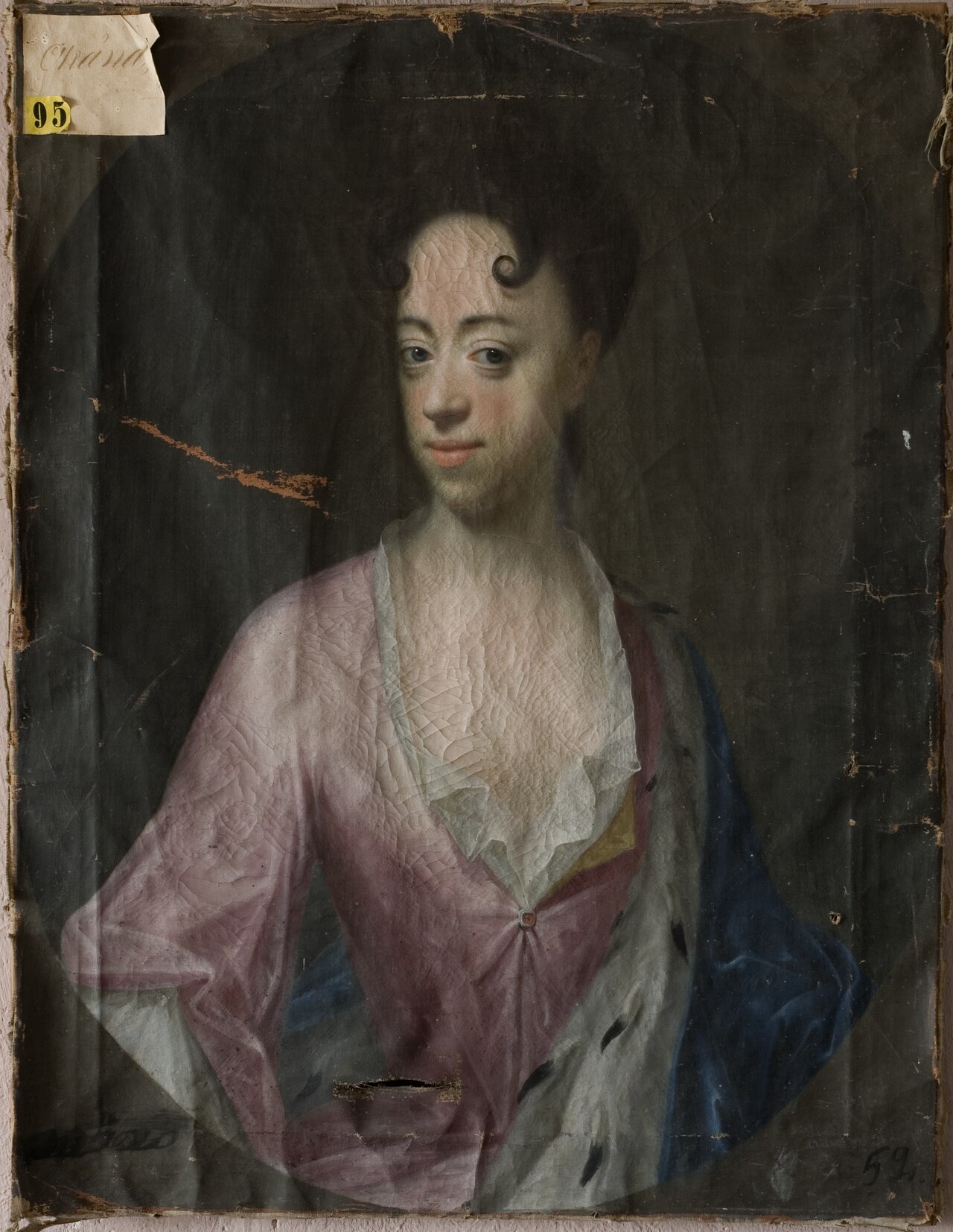
Wahl’s style aligns with the late‑Baroque and early‑Rococo sensibilities that dominated northern European portraiture in the first half of the 18th century. His works display a careful balance between realism and idealisation: sitters are rendered with accurate physiognomy, yet set within composed, often subtly theatrical settings that convey status and refinement. The palette tends toward muted earth tones punctuated by richer hues in clothing and background details, a choice that enhances the dignified atmosphere of his portraits.
Signature techniques Wahl’s technique is characterised by several recurring elements:
* Layered glazing – He employed thin layers of translucent oil paint to build depth, particularly in skin tones, resulting in a luminous, almost porcelain quality. * Controlled brushwork – Fine, precise strokes define facial features, while broader, softer brushstrokes suggest fabric textures and background elements, creating a clear hierarchy of focus. * Subtle chiaroscuro – Light is used to model the face and hands, often originating from an implied window or candle, which adds three‑dimensionality without overwhelming drama. * Attention to detail in attire – Wahl meticulously reproduced the intricate patterns of court dress, lace, and insignia, underscoring the sitter’s rank and the artist’s technical skill.
These techniques combine to produce portraits that are both lifelike and polished, reflecting the expectations of a court audience that valued both accuracy and the visual reinforcement of hierarchy.
Major works Wahl’s surviving oeuvre is limited but includes several notable pieces that illuminate his role within the Danish court.
1. Gerhard Morell, Keeper of the Royal Danish Kunstkammer (1765) – This portrait, executed shortly before Wahl’s death, depicts Gerhard Morell, the curator of the royal collection. The work is notable for its restrained composition: Morell is shown seated, surrounded by objects hinting at his curatorial responsibilities, while the background remains subdued, focusing attention on the subject’s dignified expression.
2. Okänd kvinna (1712) – Translating to “Unknown Woman,” this early work demonstrates Wahl’s skill in rendering a solitary female figure with a sense of introspection. The portrait’s anonymity suggests it may have been a private commission, and its execution reveals Wahl’s capacity to convey personality without relying on overt symbols of status.
3. Self‑Portrait (1755) – In this introspective self‑portrait, Wahl presents himself at the height of his mature style. He is depicted in a modest attire, holding the tools of his trade, a subtle nod to the artist’s identity. The work is valuable for art historians as a reference point for his technique and self‑perception.
4. Christian VI (1734) – One of Wahl’s most prestigious commissions, this portrait of King Christian VI showcases the monarch in regal regalia, complete with scepter and royal insignia. The composition adheres to the conventions of royal portraiture, emphasizing sovereign authority while maintaining a realistic portrayal of the king’s features.
5. En olding med baret (1734) – The title, roughly “A Lady with a Hat,” reflects a genre‑type portrait common in the period. The sitter is elegantly dressed, with a finely rendered hat that demonstrates Wahl’s skill in depicting textiles and accessories. The work’s intimate scale and attention to decorative detail highlight the artist’s versatility beyond formal court portraiture.
Collectively, these works illustrate Wahl’s adaptability: he could navigate the formal expectations of royal portraiture while also producing more personal, nuanced images.
Influence and legacy Johann Salomon Wahl’s career bridges German and Danish artistic traditions at a time when the two cultures were increasingly intertwined through courtly patronage. Though he never founded a distinct school or movement, his presence in Copenhagen contributed to the diffusion of German Baroque techniques within Danish art circles. By training and collaborating with local artists, Wahl helped raise the technical standards of portrait painting in Denmark, a legacy that can be traced in the works of later Danish painters such as Jens Juel.
Wahl’s portraits also serve as valuable documentary records of the Danish court’s visual culture in the early‑to‑mid‑18th century. They provide insight into fashion, regalia, and the sociopolitical hierarchy of the period. While his name is not as widely recognised as some of his contemporaries, scholars of Northern European art continue to reference his oeuvre when discussing the cross‑national exchange of artistic practices in the Baroque era.
In modern times, Wahl’s paintings are held in Danish museum collections, including the National Gallery of Denmark, where they are displayed alongside works by both foreign and native artists of the era. Their continued exhibition underscores the enduring relevance of his contribution to portraiture and to the visual documentation of Denmark’s royal history.
--- Johann Salomon Wahl remains a figure of quiet significance: a German painter who successfully integrated into the Danish court, producing refined portraits that blend realism with the decorative elegance characteristic of his time.
Frequently asked questions
Who was Johann Salomon Wahl?
Johann Salomon Wahl (1689–1765) was a German painter who served as a court artist in Denmark, best known for his refined portraiture of royal and noble figures.
What artistic style or movement is Wahl associated with?
Wahl’s work reflects the late‑Baroque to early‑Rococo style prevalent in northern Europe, combining realistic detail with elegant, idealised composition.
What are Johann Salomon Wahl’s most famous works?
His most notable works include the portrait of King Christian VI (1734), the self‑portrait of 1755, the portrait of Gerhard Morell (1765), and genre pieces such as ‘En olding med baret’ (1734).
Why is Wahl important in art history?
Wahl helped transmit German Baroque techniques to Denmark, raising the standard of portrait painting at the Danish court and providing valuable visual records of 18th‑century Danish royalty.
How can I recognise a painting by Johann Salomon Wahl?
Look for meticulous rendering of facial features, layered glazing for luminous skin, restrained but rich colour palettes, and detailed depiction of court dress and accessories.