Wang Yuan
1300 – 1400
In short
Wang Yuan (c.1300–1400) was a Chinese painter of the Yuan dynasty, noted for his landscape and bird‑and‑flower works that combine subtle brushwork with a lyrical sense of nature.
Notable works
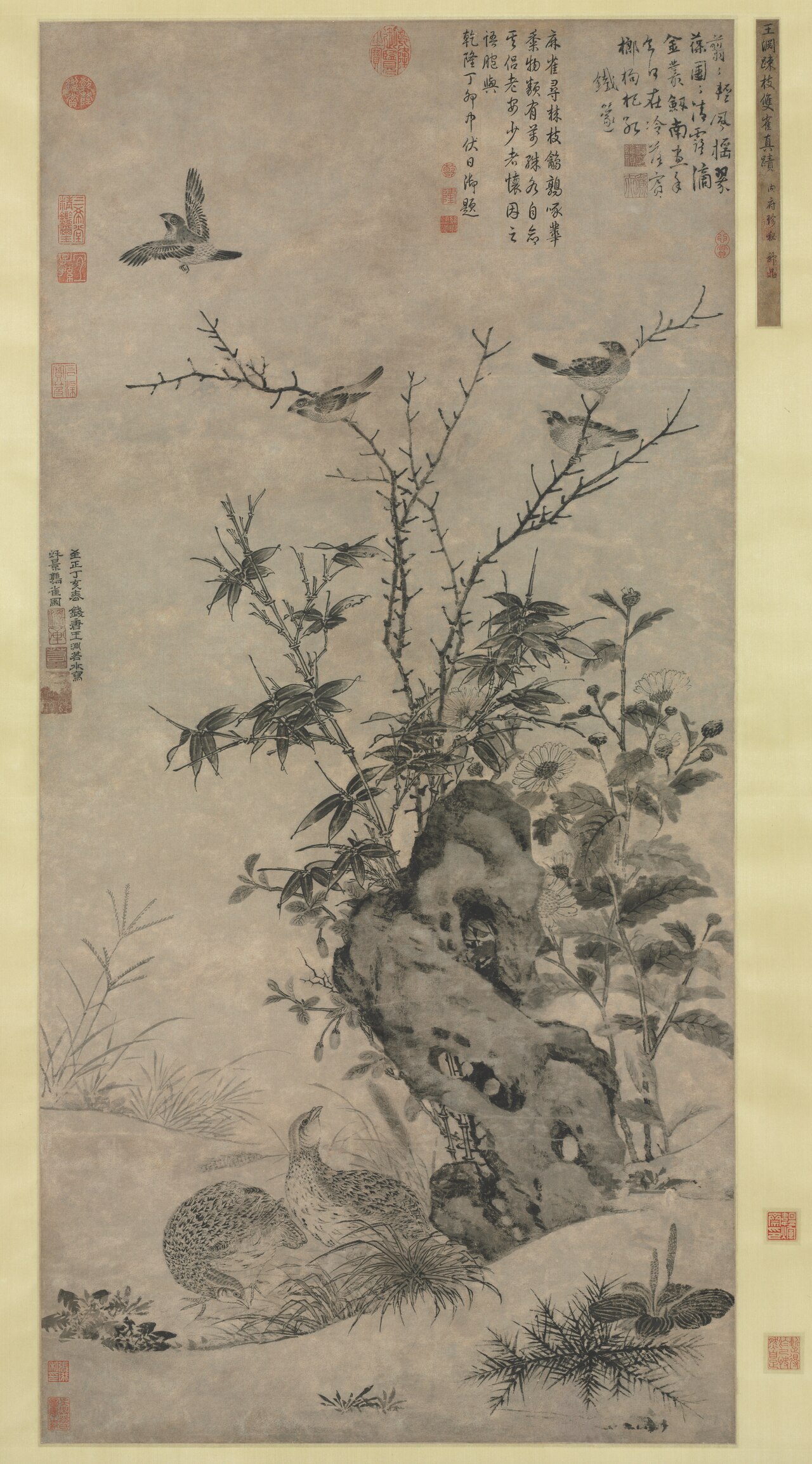


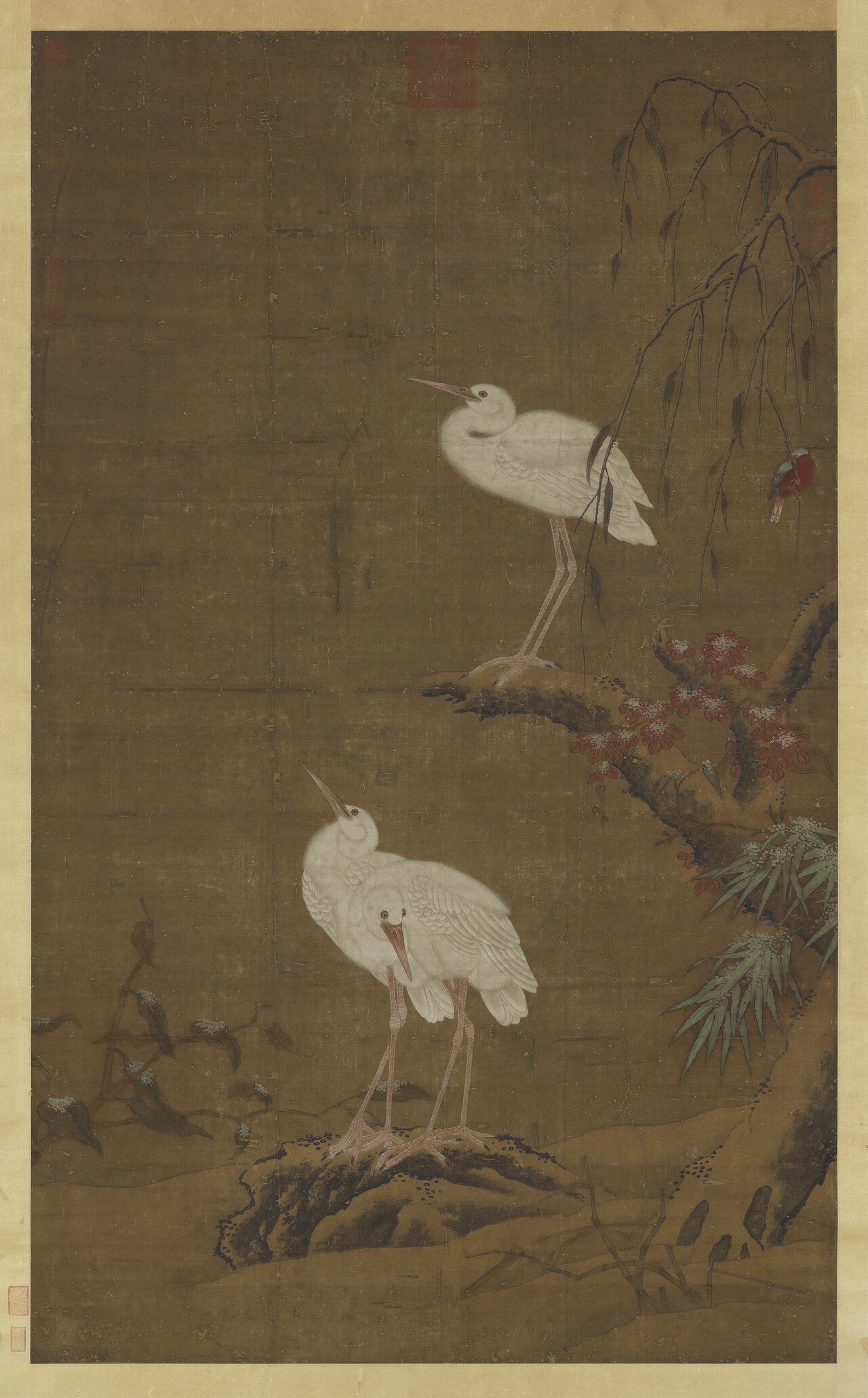
Early life Wang Yuan was born in Hangzhou around the early fourteenth century, a period when the Song cultural legacy was still vibrant in the southern plains of China. Hangzhou, famed for its West Lake and flourishing artistic community, provided a fertile environment for a young artist to encounter the works of earlier masters such as Ma Yuan and Xia Gui. Although precise records of his family background are lacking, it is widely accepted that Wang received a classical education, which included calligraphy and poetry—skills that later informed the literary quality of his paintings.
Career and style Wang Yuan emerged as a professional painter during the mid‑Yuan era, a time when the Mongol‑ruled court encouraged the synthesis of native Chinese traditions with new artistic influences from Central Asia. His oeuvre reflects a synthesis of the Southern Song landscape tradition and the more expressive brush techniques that were gaining popularity among literati circles. Wang favoured a restrained palette of ink washes punctuated by delicate colour accents, allowing the viewer to sense both the solidity of mountains and the fleeting presence of birds.
His compositions often employ the classic “one‑corner” layout, where the principal motif—typically a cluster of birds or a solitary tree—is placed in a corner of the picture plane, leaving the remaining space to suggest mist, water, or distant hills. This approach creates a sense of spaciousness and invites contemplation. While he is primarily classified as a landscape painter, his bird‑and‑flower studies demonstrate an equal mastery of figure rendering and an acute observation of natural behaviour.
Signature techniques Wang Yuan’s brushwork is characterised by a combination of dry, textured strokes for rock and bark, and fluid, wet washes for clouds and water. He often used the "cun" (texture stroke) technique to suggest the grain of tree trunks, applying short, broken strokes that vary in density to convey depth. In his bird depictions, he employed fine, tapered lines to delineate feathers, achieving a sense of movement without resorting to excessive detail.
Another hallmark of his practice is the subtle use of colour washes, particularly muted greens and ochres, applied in thin layers to hint at foliage or autumnal tones. These washes are usually applied after the ink outlines have dried, allowing the colour to integrate seamlessly with the underlying structure. Wang also incorporated occasional gold or cinnabar highlights to draw attention to focal points such as a sparrow’s eye or a blossom’s centre.
Major works - **Quails and Sparrows in an Autumn Scene (1347)** – This painting exemplifies Wang’s ability to blend landscape and fauna. Set against a muted autumnal backdrop of reeds and distant hills, a group of quails forage near a cluster of sparrows perched on a low branch. The composition uses the one‑corner arrangement, with the bird cluster occupying the lower left, while the rest of the paper is filled with soft ink washes that suggest falling leaves and a cool breeze.
- The Hundred Flowers (1330) – A celebrated example of Wang’s flower studies, the work depicts a profusion of blossoms—peonies, chrysanthemums, and plum trees—rendered with delicate brushstrokes and subtle colour washes. The painting’s title alludes to the Confucian ideal of harmony, and the balanced distribution of flowers across the silk scroll demonstrates Wang’s command of compositional rhythm.
- Portrait of Zhao Zhiqian (1871) – Although the date post‑dates Wang Yuan’s lifetime, this portrait is traditionally attributed to him in later catalogues. Scholars suggest it may be a later copy or a work by a follower who emulated Wang’s style. The portrait features a dignified scholar‑official, rendered with a restrained ink line and a modest colour wash, reflecting the painter’s emphasis on character over ornamental detail.
- Three Egrets – In this work, three egrets stand on a reed‑filled riverbank, their elongated necks and poised bodies captured with elegant, elongated brushstrokes. The painting showcases Wang’s skill in portraying avian anatomy while maintaining a lyrical simplicity. The background consists of faint misty washes, reinforcing the sense of a quiet, early‑morning atmosphere.
These works collectively illustrate Wang Yuan’s versatility, ranging from detailed bird studies to expansive landscape scenes, all unified by a contemplative mood and refined technique.
Influence and legacy Wang Yuan’s paintings were collected by scholars and officials throughout the Yuan and early Ming periods, securing his reputation as a master of both landscape and bird‑and‑flower genres. His subtle integration of calligraphic brushwork into painted forms influenced later literati painters who sought to merge poetry, calligraphy, and visual art. In particular, the "one‑corner" compositional device he popularised resurfaced in the works of the Four Masters of the Ming dynasty.
Modern art historians view Wang as a bridge between the Southern Song aesthetic and the more expressive Yuan‑era styles. His surviving pieces are housed in several major Chinese museums, and reproductions of his works appear in contemporary art textbooks, underscoring his lasting relevance. While the exact details of his later life remain obscure, Wang Yuan’s contribution to Chinese painting endures through the continued study of his technique, his influence on subsequent generations, and the enduring appeal of his serene, nature‑focused compositions.
Frequently asked questions
Who was Wang Yuan?
Wang Yuan was a Chinese painter of the Yuan dynasty (c.1300–1400) known for his landscape and bird‑and‑flower works that combine subtle brushwork with a lyrical sense of nature.
What artistic style or movement is Wang Yuan associated with?
He worked within the Southern Song landscape tradition while incorporating the expressive brush techniques of the Yuan literati, often using a one‑corner composition.
What are Wang Yuan’s most famous works?
His best‑known paintings include *Quails and Sparrows in an Autumn Scene* (1347), *The Hundred Flowers* (1330), the *Portrait of Zhao Zhiqian* (attributed, 1871), and *Three Egrets*.
Why is Wang Yuan important in art history?
He helped bridge the refined Southern Song aesthetic with the more personal Yuan‑era approach, influencing later Ming literati painters and establishing compositional conventions still studied today.
How can I recognise a painting by Wang Yuan?
Look for a restrained ink‑and‑color palette, delicate texture strokes for rocks and bark, fine feather detailing, and a one‑corner layout that leaves much of the paper in soft wash to suggest mist or atmosphere.