Sheng Mao
1310 – 1360
In short
Sheng Mao (c.1310–1360) was a Chinese landscape painter of the Yuan dynasty, renowned for his atmospheric autumn scenes and innovative fan‑shaped compositions. His works, such as Autumn Boating on a Maple River, exemplify the literati tradition of expressive brushwork and poetic subject matter.
Notable works

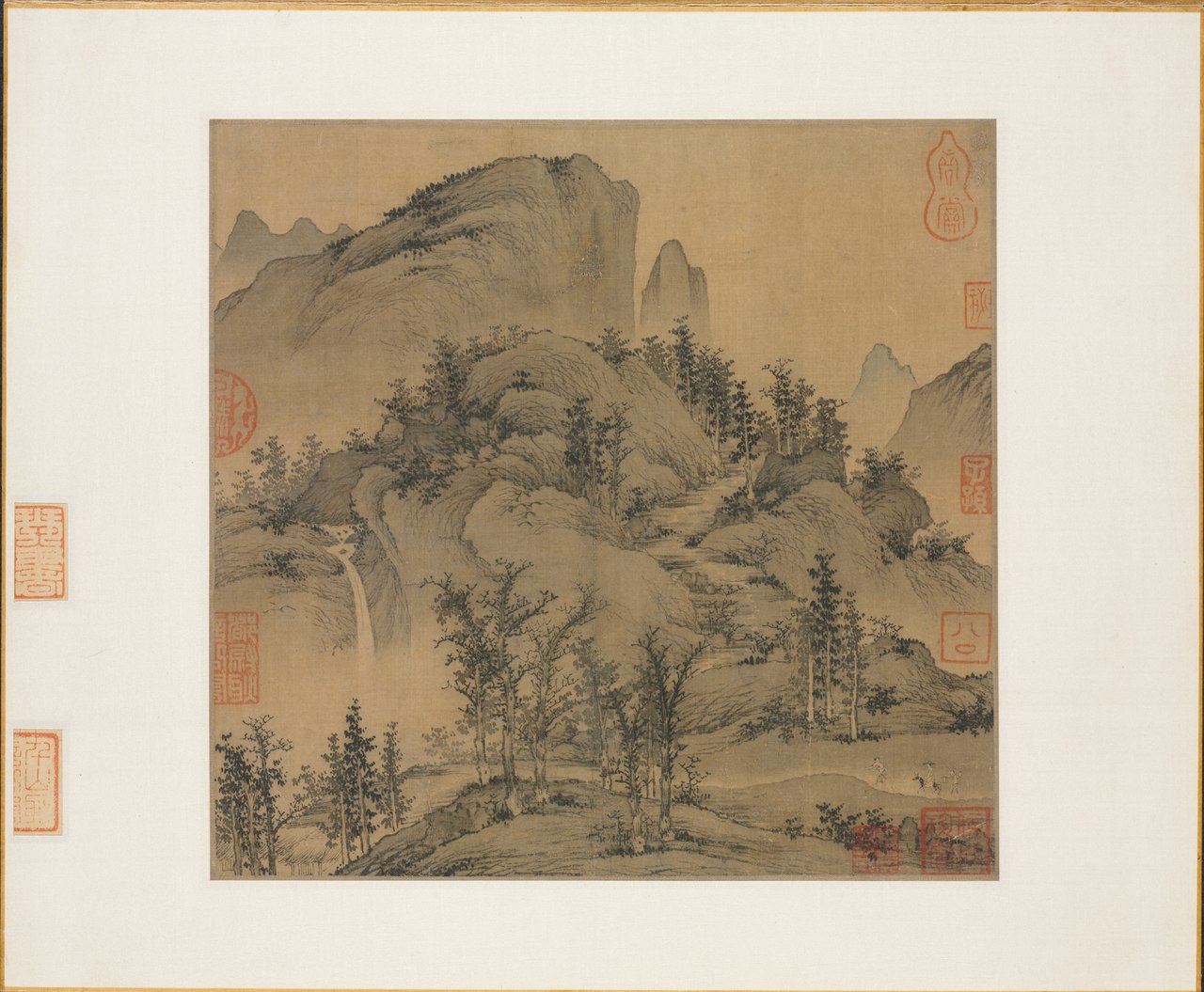


Early life Sheng Mao was born around 1310 in the Yuan dynasty, a period marked by the rule of the Mongol Empire over China. Precise details of his birthplace and family background are not recorded, which is common for many artists of the era whose lives were documented primarily through their works and later scholarly references. The Yuan period saw the rise of scholar‑officials who turned to painting and calligraphy as avenues for personal expression, a cultural climate that would shape Sheng Mao's artistic development. He likely received his initial training within a literati circle, studying classical Chinese painting manuals and copying the works of earlier masters such as Du Fu and Huang Gongwang.
Career and style Sheng Mao emerged as a landscape painter during the mid‑14th century, a time when Yuan artists increasingly valued personal expression over formal court patronage. His style aligns with the literati tradition, emphasizing spontaneity, brushstroke economy, and an appreciation for the natural world as a conduit for philosophical reflection. Autumn motifs dominate his oeuvre, reflecting both the seasonal symbolism prevalent in Chinese poetry and a personal affinity for the subdued colour palette of late‑year scenery. While his work does not fit neatly into a later‑named movement, it shares affinities with the Southern Song revivalist tendencies that characterised many Yuan painters, blending meticulous observation with an expressive, almost calligraphic handling of ink.
Signature techniques Sheng Mao's paintings are distinguished by several recurring technical approaches. He employed a restrained yet varied brushwork, alternating between dry, textured strokes for rocky outcrops and smooth, flowing washes to render mist‑filled valleys. Ink density is modulated to create depth; lighter tones suggest distant mountains, while darker, concentrated ink conveys foreground foliage and human figures. A hallmark of his practice is the strategic use of negative space, allowing the paper’s whiteness to suggest clouds or water, thereby enhancing the sense of atmospheric perspective. In works such as his fan‑shaped landscapes, he experimented with unconventional formats, arranging composition around a central axis that mimics the opening of a hand‑fan, a format that both challenges and expands traditional scroll conventions.
Major works - **Autumn Boating on a Maple River (1350)** – This painting captures a solitary boat gliding beneath a canopy of maple trees turning crimson and gold. The composition balances the delicate curvature of the river with the vertical thrust of the trees, while a subtle mist softens the horizon. The work exemplifies Sheng Mao’s mastery of atmospheric effects and his skill in integrating human activity within a vast natural setting.
- Travelers in Autumn Mountains (1330) – One of his earlier dated pieces, it depicts a small group of scholars traversing a rugged mountain pass amidst falling leaves. The painting’s muted palette and restrained brushwork convey a contemplative mood, reflecting the scholar‑artist’s reverence for nature as a source of inspiration and moral reflection.
- Recluse Fisherman, Autumn Trees (1349) – In this composition, a lone fisherman is shown casting his line beneath a stand of autumn‑coloured trees. The figure is rendered with minimal detail, allowing the surrounding foliage and the reflective water surface to dominate the visual narrative. The work underscores the theme of solitary retreat that recurs throughout Sheng Mao’s career.
- Recluse Fishing by Autumn Trees (1350) – Often confused with the 1349 piece, this later work refines the earlier composition by adding a more pronounced sense of depth through layered ink washes. The fisherman’s posture is slightly altered, suggesting a moment of quiet contemplation rather than active fishing, thereby highlighting Sheng Mao’s evolving interest in mood over narrative action.
- Landscape Painting in the Shape of a Fan – Though undated, this experimental piece demonstrates Sheng Mao’s willingness to explore format. Rendered on a fan‑shaped surface, the landscape unfolds in a semi‑circular progression, guiding the viewer’s eye from foreground to distant peaks. The unconventional shape accentuates the dynamic flow of ink and colour, reinforcing the poetical quality of his landscapes.
Influence and legacy Sheng Mao’s contributions, while not as widely recognised as those of some court painters, have earned him a respected place among Yuan literati artists. His autumnal landscapes influenced later Ming painters who sought to emulate the melancholic ambience and restrained brushwork characteristic of his style. The fan‑shaped composition anticipated later experimental formats in Chinese painting, foreshadowing the flexible approaches of early modern artists. Contemporary scholarship values his surviving works for their insight into the personal expression of Yuan scholars, and they are frequently cited in studies of seasonal symbolism and the evolution of landscape painting. Although the precise number of his extant pieces remains uncertain, the paintings attributed to Sheng Mao continue to be exhibited in major Chinese art museums and are the subject of ongoing research, ensuring his legacy endures within the broader narrative of Chinese art history.
Frequently asked questions
Who was Sheng Mao?
Sheng Mao was a Chinese landscape painter of the Yuan dynasty, active in the mid‑14th century and known for his evocative autumn scenes.
What style or movement is Sheng Mao associated with?
He worked within the literati tradition, emphasizing personal expression, subtle brushwork and poetic subject matter rather than a formal school or movement.
What are Sheng Mao's most famous works?
His best‑known paintings include Autumn Boating on a Maple River (1350), Travelers in Autumn Mountains (1330), Recluse Fisherman, Autumn Trees (1349) and the fan‑shaped Landscape Painting in the Shape of a Fan.
Why does Sheng Mao matter in art history?
He exemplifies the Yuan‑era shift toward introspective landscape painting, influencing later Ming artists and contributing to the development of experimental formats such as fan‑shaped compositions.
How can I recognise a Sheng Mao painting?
Look for muted autumnal colour schemes, delicate ink washes that create misty atmospheres, sparse human figures, and occasional use of unconventional formats like fan‑shaped canvases.