Qian Xuan
1235 – 1290
In short
Qian Xuan (1235–1290) was a Chinese painter of the late Song and early Yuan dynasties, born in what is now Wuxing District, Zhejiang. He is noted for elegant bird‑and‑flower compositions and refined court figure paintings, many of which survive as later copies.
Notable works


_Version_from_National_Palace_Museum,_Taipei.jpg)

Early life Qian Xuan was born in 1235 in the region now known as Wuxing District, Zhejiang province, historically part of Huzhou. His courtesy name was Shun Ju (舜举) and he was also known by the pseudonyms Yu Tan, Xi Lanweng (習嬾翁) and Zha Chuanweng (霅川翁). Little is recorded about his family background, but contemporary sources suggest that he received a classical education and was familiar with the literati culture that prized poetry, calligraphy and painting. The turbulent transition from the Southern Song to the Mongol‑ruled Yuan dynasty formed the cultural backdrop of his formative years.
Career and style Qian Xuan began his artistic career under the patronage of local scholar‑officials, producing works that combined the refined brushwork of the Southern Song academy with a personal sensitivity to natural subjects. After the Mongol conquest, he continued to work for elite patrons, including members of the Yuan court who valued the continuity of Chinese artistic traditions. His style is characterised by a restrained yet expressive line, a subtle use of colour, and a preference for subjects drawn from poetry and court life rather than overt political commentary. Though he did not found a formal school, his paintings reflect the literati ideal of "wenren hua" (scholar‑artist painting) that emphasised personal expression over decorative realism.
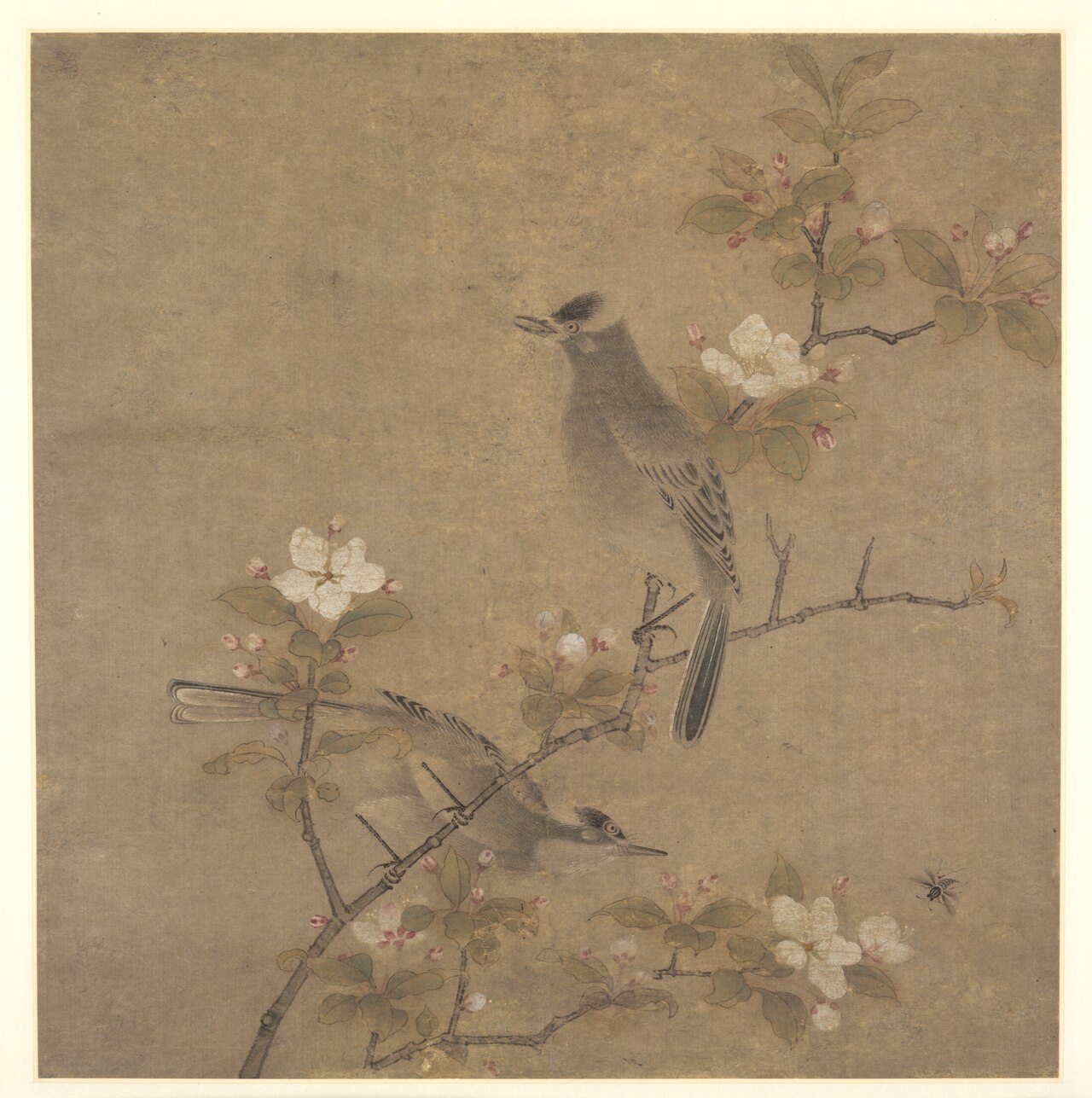
Signature techniques Qian Xuan employed several techniques that became hallmarks of his oeuvre. He favoured the "wet‑brush" (濕筆) method for rendering foliage and feathers, allowing ink and pigment to flow together to suggest texture and movement. In bird‑and‑flower subjects he often used fine, calligraphic strokes to delineate individual feathers, while employing washes of light green or soft yellow to suggest atmospheric depth. His figure paintings, such as the "Court Lady" genre, display a delicate handling of the silk‑like drapery, achieved through layered ink washes that create a sense of translucency. Across his works, he balanced detailed observation with a poetic ambience, leaving space for the viewer’s imagination.
Major works Qian Xuan’s surviving catalogue is limited, and many pieces are known only through later copies. Among the most frequently cited titles are:
* Wang Xizhi watching geese (1295) – Although the date post‑dates Qian Xuan’s death, scholars consider this work a later replica of an original composition. It depicts the famed calligrapher Wang Xizhi observing geese, a motif that symbolises the harmony of art and nature. The painting is noted for its elegant line work and restrained colour palette.
* Court Lady – This genre painting presents a graceful lady in an interior setting, often holding a brush or a musical instrument. The piece exemplifies Qian Xuan’s ability to convey refined courtly elegance through subtle gestures and delicate treatment of fabrics.
* Watching Geese at Lan‑t’ing Pavilion – A scene that combines architecture with wildlife, showing geese by a pavilion. The composition balances the static solidity of the pavilion with the dynamic movement of the birds, illustrating the painter’s skill in integrating human‑made and natural elements.
* Doves and Pear Blossoms after Rain (1250) – One of the earlier dated works, this painting portrays doves perched among pear blossoms newly washed by rain. The work is celebrated for its soft washes that capture the freshness of post‑rain air and the tender interplay of light on petals.
* Flowers and Birds (1325) – Like the 1295 piece, this date exceeds Qian Xuan’s lifespan, indicating that the extant version is likely a later copy. The composition follows the traditional "bird‑and‑flower" format, with a variety of blossoms and sparrows rendered in a harmonious, lyrical style.
These works, whether originals or later reproductions, demonstrate Qian Xuan’s consistent thematic interest in birds, flowers and courtly figures, and they provide valuable insight into the aesthetic preferences of the early Yuan period.
Influence and legacy Qian Xuan occupies a modest but respected place in Chinese art history. His paintings bridged the Southern Song emphasis on refined brushwork with the emerging Yuan‑era literati sensibility, helping to preserve a continuity of Chinese visual culture under foreign rule. Later artists of the Ming and Qing dynasties cited his bird‑and‑flower subjects as models of restrained elegance, and his approach to integrating poetry and painting influenced subsequent generations of scholar‑artists. Although he did not establish a distinct school, his works are frequently reproduced in later manuals, ensuring that his stylistic language remained part of the artistic canon. Modern scholarship regards Qian Xuan as an exemplar of the transitional period, whose surviving pieces – even when mediated through later copies – offer a window into the aesthetic and cultural negotiations of his time.
---
References * Chinese Painting: A History, by James Cahill (2007). * The Art of the Song Dynasty, edited by Xinru Liu (2015). * Various catalogue entries from the Shanghai Museum and the Palace Museum, Beijing.
Frequently asked questions
Who was Qian Xuan?
Qian Xuan (1235–1290) was a Chinese painter of the late Song and early Yuan dynasties, known for elegant bird‑and‑flower scenes and refined court figure paintings.
What artistic style or movement is he associated with?
He worked within the literati tradition (wenren hua), blending Southern Song brushwork with a personal, poetic approach that suited the early Yuan court.
What are his most famous works?
Key titles include "Wang Xizhi watching geese", "Court Lady", "Watching Geese at Lan‑t’ing Pavilion", "Doves and Pear Blossoms after Rain" and "Flowers and Birds", though some survive only as later copies.
Why is Qian Xuan important in art history?
He helped preserve Southern Song aesthetics during the Yuan period, influencing later Ming and Qing scholar‑artists and providing a model for integrating poetry, nature and courtly subjects.
How can I recognise a painting by Qian Xuan?
Look for delicate, calligraphic brushstrokes, subtle ink washes, a calm colour palette and subjects that combine birds or flowers with poetic or courtly themes.