Yi Yuanji
1000 – 1064
In short
Yi Yuanji (1000–1064) was a Northern Song dynasty painter celebrated for his highly realistic animal depictions, especially of gibbons. His works are valued for their observational precision and continue to influence Chinese wildlife art.
Notable works


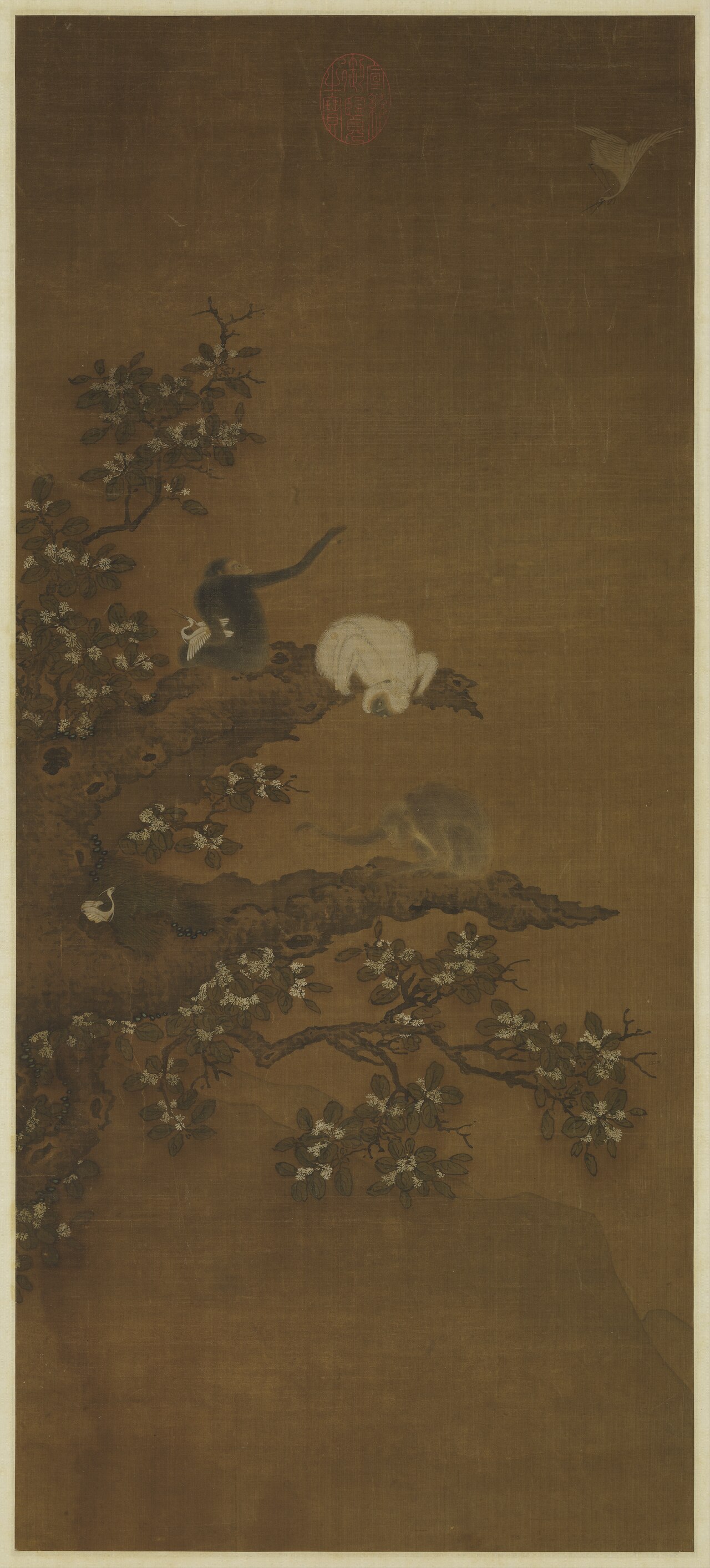
Early life Yi Yuanji was born in the early years of the Northern Song dynasty, a period marked by significant developments in Chinese painting and scholarship. Precise details of his birthplace and family background are not recorded in surviving historical sources. Like many artists of his era, he likely received his initial artistic training within the court or a scholarly environment that emphasized classical brush techniques and the study of nature. The Song dynasty placed great value on the accurate rendering of the natural world, a cultural attitude that shaped Yi’s lifelong interest in animal subjects.
Career and style Yi Yuanji’s career unfolded during a time when the imperial court actively patronised painters who could combine technical skill with an intellectual engagement with nature. He is best known for his meticulous observations of wildlife, which he translated into paintings that combine lifelike detail with a restrained, literati aesthetic. While the specifics of his official appointments are uncertain, his reputation as an animal painter spread through the scholarly circles of the capital, and his works were collected by both officials and private patrons.
His style reflects the Northern Song emphasis on realism (寫實) and the use of fine, controlled brushwork (細筆). Yi employed a restrained colour palette, often relying on ink washes to suggest form and texture rather than vivid pigments. This approach allowed him to capture the subtle movements and anatomical accuracy of his subjects without resorting to decorative embellishment. His paintings are characterised by a calm compositional balance, where each animal is rendered in a natural pose within a spare landscape or a simple background, underscoring the artist’s focus on observation over dramatisation.
Signature techniques Yi Yuanji’s technique can be identified by several recurring elements:
* Close observation – Yi is recorded as having spent extensive time watching animals in their habitats, a practice that gave his works a documentary quality. This is evident in the precise rendering of fur, musculature, and the characteristic gestures of the creatures he painted. * Ink wash layering – He applied multiple translucent layers of ink to build depth, particularly in the rendering of fur and feathers. This method creates a sense of three‑dimensionality while maintaining the fluidity of the brushstroke. * Minimalist composition – Yi often placed his subjects against a muted background, using negative space to focus attention on the animal. The simplicity of the setting highlights the subject’s form and movement. * Use of brush marks to suggest texture – Short, rapid strokes suggest the roughness of a monkey’s fur, while longer, flowing lines convey the sleekness of a gibbon’s coat. These brush marks are executed with a controlled pressure that varies the thickness of the line.
These techniques collectively distinguish Yi’s work from more decorative or idealised animal paintings of earlier periods.
Major works Yi Yuanji’s surviving catalogue is limited, but several works attributed to him are frequently cited in art historical literature:
* Monkey and Cats (1050) – This painting pairs a mischievous monkey with a calm cat, illustrating Yi’s skill in capturing distinct animal personalities within a single composition. The work demonstrates his careful observation of posture and interaction, as the monkey reaches for a branch while the cat watches attentively. * Gibbons Playing in Tree Branches (1050) – Celebrated by later scholars such as Robert van Gulik, the piece showcases three gibbons in dynamic poses among slender branches. Yi’s rendering of the gibbons’ elongated limbs and the delicate balance they maintain on the twigs reflects his deep familiarity with primate anatomy. * Three Gibbons Capturing Egrets – Though the exact date is not documented, this composition depicts gibbons in a playful hunt of egrets, a narrative that underscores the artist’s ability to blend natural observation with subtle storytelling. The work is noted for its lively brushwork and the contrasting textures of the birds’ feathers against the gibbons’ fur. * Twelve Designs for Circular Mirror (1639) – The date associated with this piece post‑dates Yi’s life by several centuries, indicating that the work is either a later copy or a misattribution. Nonetheless, the design series reflects the enduring influence of Yi’s animal motifs, which were reproduced in decorative arts long after his death.
These works collectively illustrate Yi’s focus on realistic animal depiction, his refined brush technique, and his contribution to the visual vocabulary of Chinese wildlife painting.
Influence and legacy Yi Yuanji’s reputation as a master of realistic animal painting endured throughout the Song dynasty and into later periods. His meticulous approach set a standard for subsequent generations of Chinese artists who sought to combine scholarly brushwork with accurate natural observation. The gibbon, in particular, became a recurring subject in Chinese art, often evoking themes of elegance and intellectual solitude; Yi’s early portrayals contributed to this symbolic development.
Later scholars and collectors, including the Ming‑Qing antiquarian Robert van Gulik, praised Yi’s gibbon paintings for their lifelike quality, establishing him as a benchmark for primate representation. In the broader context of Chinese art history, Yi is frequently cited alongside other Song naturalists such as Li Gonglin and Xu Daoning, whose landscapes also emphasize careful study of the natural world.
In contemporary art historical research, Yi’s works are examined for their role in the emergence of a scientific approach to animal depiction, predating the more systematic naturalist traditions of the Ming and Qing eras. Museums and collections that house his attributed paintings use his oeuvre to illustrate the Song dynasty’s sophisticated integration of observation, technique, and aesthetic restraint.
Overall, Yi Yuanji remains a pivotal figure whose realistic animal paintings not only exemplify the artistic values of his time but also continue to inform the appreciation and study of Chinese wildlife art today.
Frequently asked questions
Who was Yi Yuanji?
Yi Yuanji (1000–1064) was a Northern Song dynasty painter renowned for his realistic depictions of animals, especially gibbons.
What artistic style or movement is Yi Yuanji associated with?
He worked within the Northern Song tradition of realistic, observation‑based painting, employing fine brushwork and restrained ink washes.
What are Yi Yuanji’s most famous works?
His best‑known pieces include *Monkey and Cats* (1050), *Gibbons Playing in Tree Branches* (1050), and *Three Gibbons Capturing Egrets*.
Why does Yi Yuanji matter in art history?
Yi set a high standard for animal realism in Chinese painting, influencing later artists and establishing the gibbon as a symbolic subject in Chinese art.
How can I recognise a Yi Yuanji painting?
Look for meticulous animal detail, layered ink washes, minimal backgrounds, and brush strokes that convey texture—especially the delicate rendering of fur and feathers.