Victor Forssell
1846 – 1931
In short
Victor Forsell (1846–1931) was a Swedish painter known for his landscapes, animal scenes, and genre works. Born in Sala and later based in Stockholm, he produced notable pieces such as Spring Landscape (1884) and At the City Toll Gate (1892).
Notable works

Early life Victor Reinhold Forsell was born in 1846 in the small town of Sala, situated in central Sweden. Little is recorded about his family background, but the region’s natural scenery—forests, lakes and rolling hills—left a lasting impression on the young artist. He received his first formal instruction in drawing at a local school, where teachers recognised his aptitude for rendering the natural world. In his teenage years Forsell moved to Stockholm to pursue further artistic training, a common path for provincial talent in the 19th‑century Swedish art world.
Career and style After arriving in the capital, Forsell enrolled at the Royal Swedish Academy of Arts, where he was exposed to the academic traditions that dominated Swedish painting at the time. While the Academy emphasized historical and mythological subjects, Forsell gravitated toward the more immediate subjects of landscape, animal life and everyday genre scenes. His work shows a clear affinity with the naturalist tendencies that were spreading across Europe in the late 1800s, though he never aligned himself with a formal movement such as Impressionism or Symbolism. Instead, his paintings combine careful observation of light and atmosphere with a modest, narrative quality that reflects the daily rhythms of Swedish life.
Throughout the 1870s and 1880s Forsell built a reputation as a dependable exhibitor at the Academy’s annual shows. Critics praised his ability to capture the subtle tonal shifts of the Swedish countryside, and his paintings began to appear in the collections of both private patrons and municipal museums. By the 1890s he had secured a modest studio on Kvastmakarbacken in Stockholm, a neighbourhood that offered direct views of the city’s historic skyline and the surrounding archipelago. The location proved inspirational for a number of his later works.
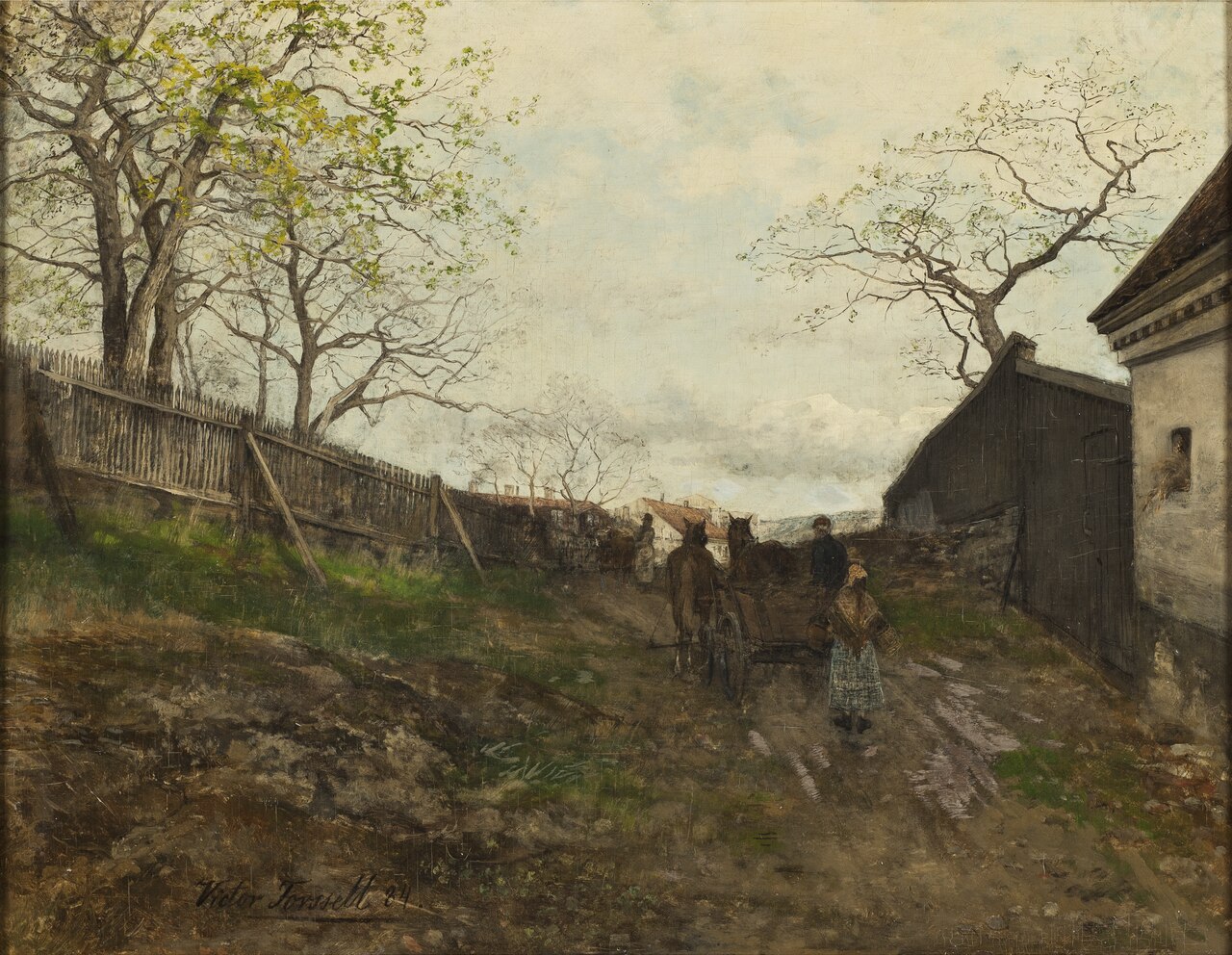
Signature techniques Forsell’s technique rests on a restrained palette of earth tones, muted greens and soft blues, which he layered to convey depth without resorting to overt dramatism. He employed a disciplined brushwork that balanced fine detail—particularly in the rendering of animal fur or foliage—with broader, more gestural strokes for sky and water. This approach allowed him to suggest atmospheric conditions, such as the diffused light of a spring morning or the crisp shadows of an autumn evening, while maintaining a sense of realism.
His compositional choices often feature a low horizon line, giving prominence to the sky and allowing clouds to become a narrative element in themselves. When depicting human activity, Forsell placed figures at the periphery of the frame, integrating them into the landscape rather than foregrounding them as heroes. This subtle integration underscores his belief that people are part of, rather than separate from, the natural environment.
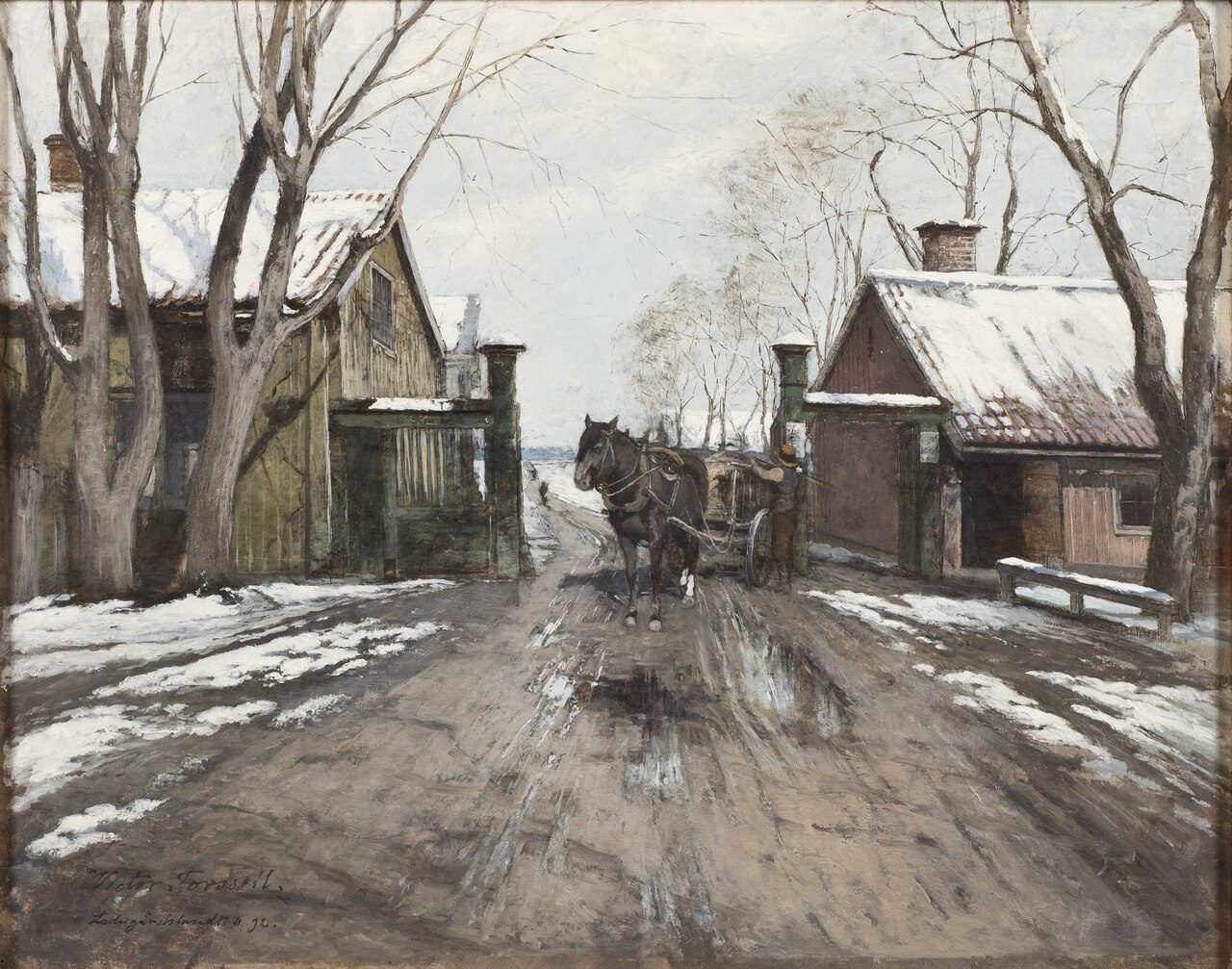
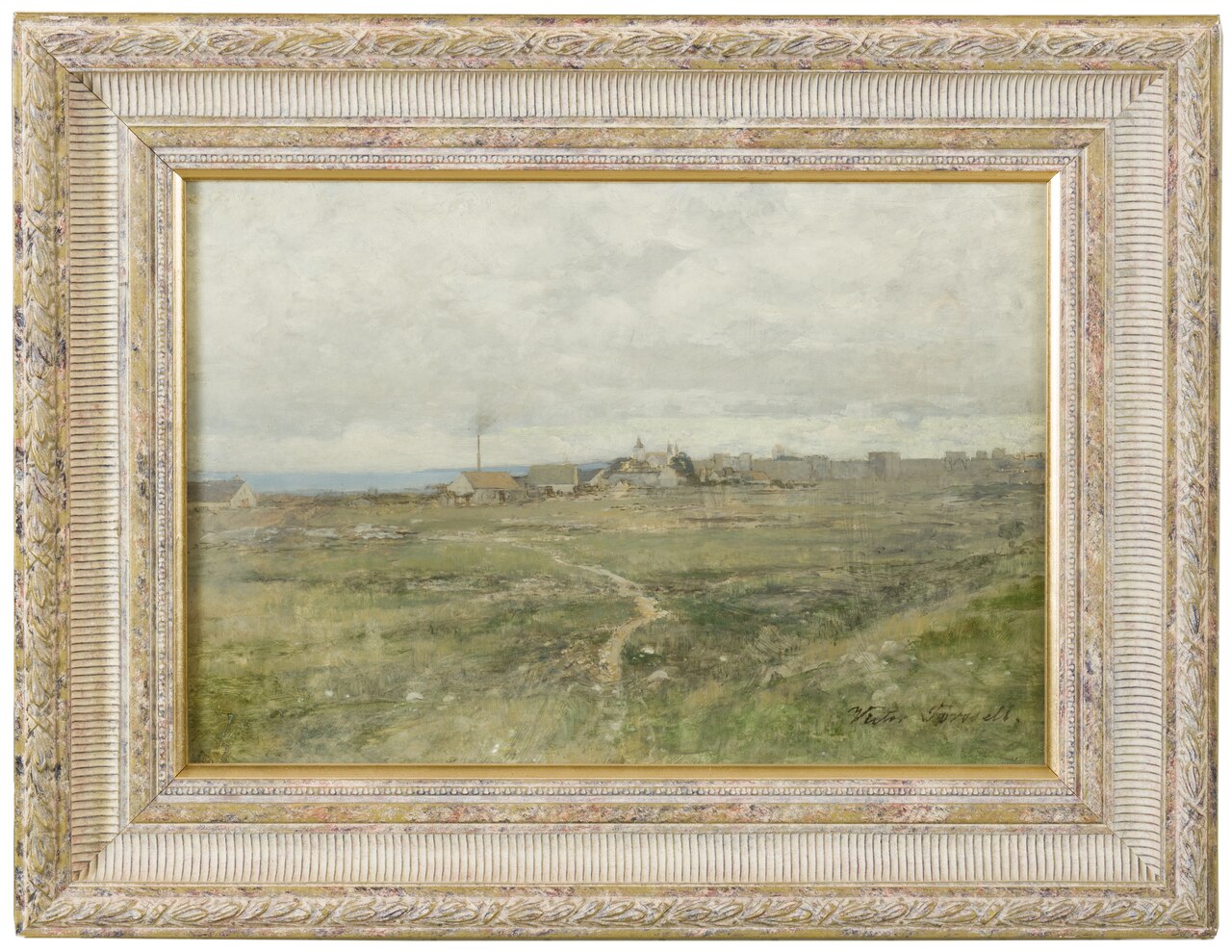
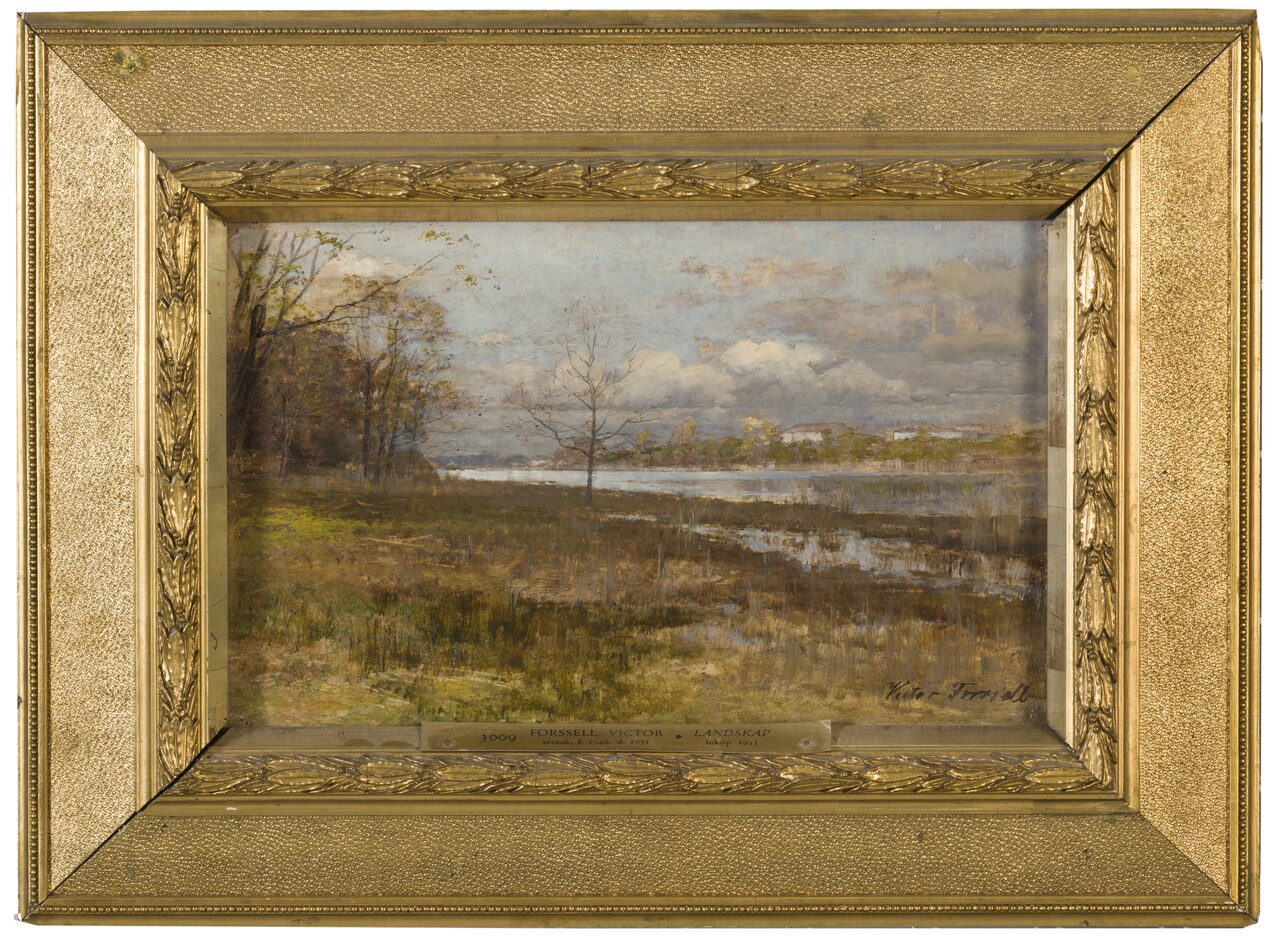
Major works - **Spring Landscape (1884)** – One of Forsell’s earliest recognised pieces, this painting captures a verdant meadow awash in the gentle light of early spring. The composition is anchored by a winding path that leads the eye toward a distant treeline, while delicate blossoms punctuate the foreground. Critics of the time noted the work’s faithful rendering of seasonal colour and its tranquil mood. - **At the City Toll Gate (1892)** – This genre scene depicts a bustling toll gate on the outskirts of Stockholm, where traders, travelers and horses converge. Forsell’s attention to the varied textures of stone, wood and animal hide demonstrates his skill in handling complex, multi‑figure compositions. The painting also serves as a historical snapshot of urban expansion in late‑19th‑century Sweden. - **Utsikt mot Visby ringmur** – Translating to “View towards Visby’s city wall,” this work presents a panoramic vista of the medieval fortifications on the island of Gotland. The piece emphasizes the interplay of light on stone and sea, showcasing Forsell’s capacity to convey both architectural detail and atmospheric depth. - **Landscape** – Though the title is generic, this canvas is representative of Forsell’s mature style: a quiet river winding through a forested valley, rendered with a muted palette and a focus on the reflective quality of water. The painting exemplifies his belief that the landscape itself can convey narrative without human presence. - **Kvastmakarbacken, Stockholm** – A cityscape that captures the hill‑top neighbourhood where Forsell lived and worked. The work balances urban elements—rooftops, chimneys, narrow streets—with the surrounding natural hills, illustrating his ongoing dialogue between the built environment and the Swedish countryside.
Influence and legacy Victor Forsell never achieved the international fame of some of his contemporaries, yet his contribution to Swedish art remains significant. By consistently portraying the everyday landscape and its inhabitants, he helped cement a visual vocabulary that celebrated the ordinary aspects of Swedish life. His paintings are held in several Swedish regional museums, where they are used to illustrate the development of naturalist landscape painting in the late 19th and early 20th centuries.
Later generations of Swedish artists, particularly those working in the early modernist period, referenced Forsell’s balanced approach to composition and his restrained colour schemes. While the avant‑garde moved toward abstraction, many still regarded Forsell’s work as a benchmark for technical proficiency and an authentic representation of national scenery. In recent years, his paintings have experienced renewed interest from collectors and scholars seeking to understand the broader context of Scandinavian naturalism.
Overall, Victor Forsell embodies the diligent, observation‑driven painter whose oeuvre offers a window into the visual culture of Sweden during a period of rapid social and industrial change. His legacy endures as a testament to the power of quietly rendered landscapes to convey both place and feeling.
Frequently asked questions
Who was Victor Forsell?
Victor Forsell (1846–1931) was a Swedish painter noted for his landscapes, animal studies, and genre scenes, active mainly in Stockholm.
What style or movement is he associated with?
Forsell is generally linked to naturalist landscape painting rather than a specific formal movement, reflecting the realistic observation of Swedish scenery.
What are his most famous works?
His best‑known pieces include *Spring Landscape* (1884), *At the City Toll Gate* (1892), *Utsikt mot Visby ringmur*, *Landscape*, and *Kvastmakarbacken, Stockholm*.
Why does Victor Forsell matter in art history?
He helped define a visual language for everyday Swedish life, influencing later artists who valued accurate, atmospheric depictions of the natural environment.
How can I recognise a Victor Forsell painting?
Look for muted earth tones, low horizons, careful detail in foliage or animal fur, and a calm, narrative atmosphere that integrates figures subtly into the landscape.