Richard Bergh
1858 – 1919
In short
Richard Berng (1858‑1919) was a Swedish painter, art critic and museum director who helped shape Symbolist and mood painting in Scandinavia. He is remembered for works such as *Nordic Summer’s Evening* and for coining the term “stämningsmåleri” to describe a subjective, atmospheric style.
Notable works
,_m%C3%A5lning_av_Richard_Bergh.jpg)


Early life
Richard Bergh was born in Stockholm in 1858 into a middle‑class family that valued education and the arts. His father, a civil servant, encouraged his son’s early interest in drawing, and Bergh entered the Royal Swedish Academy of Fine Arts as a teenager. The academy’s curriculum, rooted in academic classicism, gave him a solid grounding in drawing, anatomy and colour theory. During his student years he travelled to the countryside, sketching farms and coastal villages, an experience that nurtured a lifelong fascination with Swedish light and landscape.
Career and style
After completing his studies, Bergh spent several formative years in France, where many Scandinavian artists of his generation were congregating. Unlike most of his peers, he resisted the dominant Impressionist trend, finding the emphasis on fleeting surface effects at odds with his own interest in interiority. Instead he admired the naturalism of Jules Bastien‑Lepage, whose precise observation of rural life resonated with Bergh’s desire to portray atmosphere rather than mere visual impression.
Returning to Sweden in the early 1880s, Bergh began exhibiting at the Royal Academy’s annual shows. His early works display a tight rendering of form combined with a muted palette, reflecting his commitment to a disciplined, studio‑based approach. By the mid‑1880s he had begun to write art criticism for local newspapers, arguing for a shift away from strict realism toward a more expressive, mood‑driven mode of painting. In a 1896 essay he introduced the Swedish term *stämningsmåleri* – “mood painting” – to articulate this shift, positioning it within the broader Symbolist movement that was gaining momentum across Europe.
Bergh’s style evolved into a synthesis of naturalistic detail and Symbolist suggestion. He retained the careful modelling of figures and objects, but layered them with colour and light that hinted at inner feelings or narrative ambiguity. This approach allowed him to address contemporary social themes – such as the role of women in the arts or the tension between tradition and modernity – without resorting to overt didacticism.
Signature techniques
Bergh’s paintings are characterised by three recurring technical strategies:
1. Controlled chiaroscuro – He used soft, diffused shadows to create a sense of enclosure, often lighting his subjects from a single, unseen source that evokes a contemplative mood. 2. Limited colour harmonies – A restrained palette of earth tones, muted greens and occasional touches of deep red or blue supplies emotional weight without overwhelming the composition. 3. Narrative framing – Many of his canvases include subtle symbolic props – a book, a musical instrument, a window – that hint at a story beyond the immediate scene, encouraging the viewer to infer meaning.
These techniques, combined with his refusal to paint en plein air, reinforced his belief that a work of art should first be imagined in the studio before being rendered on canvas.
Major works
- Nordic Summer’s Evening (1899) – This large‑scale canvas captures a twilight scene over a Swedish lake. The water reflects a pale, violet sky while a solitary figure stands on a dock, silhouetted against the fading light. The painting exemplifies Bergh’s mood‑painting doctrine, using colour and atmosphere to convey the melancholy of seasonal change.
- After the Sitting (1884) – A portrait of a young woman seated in a modest interior, the work demonstrates his early naturalist phase. The sitter’s thoughtful gaze and the soft modelling of her features reveal Bergh’s skill in rendering psychological depth.
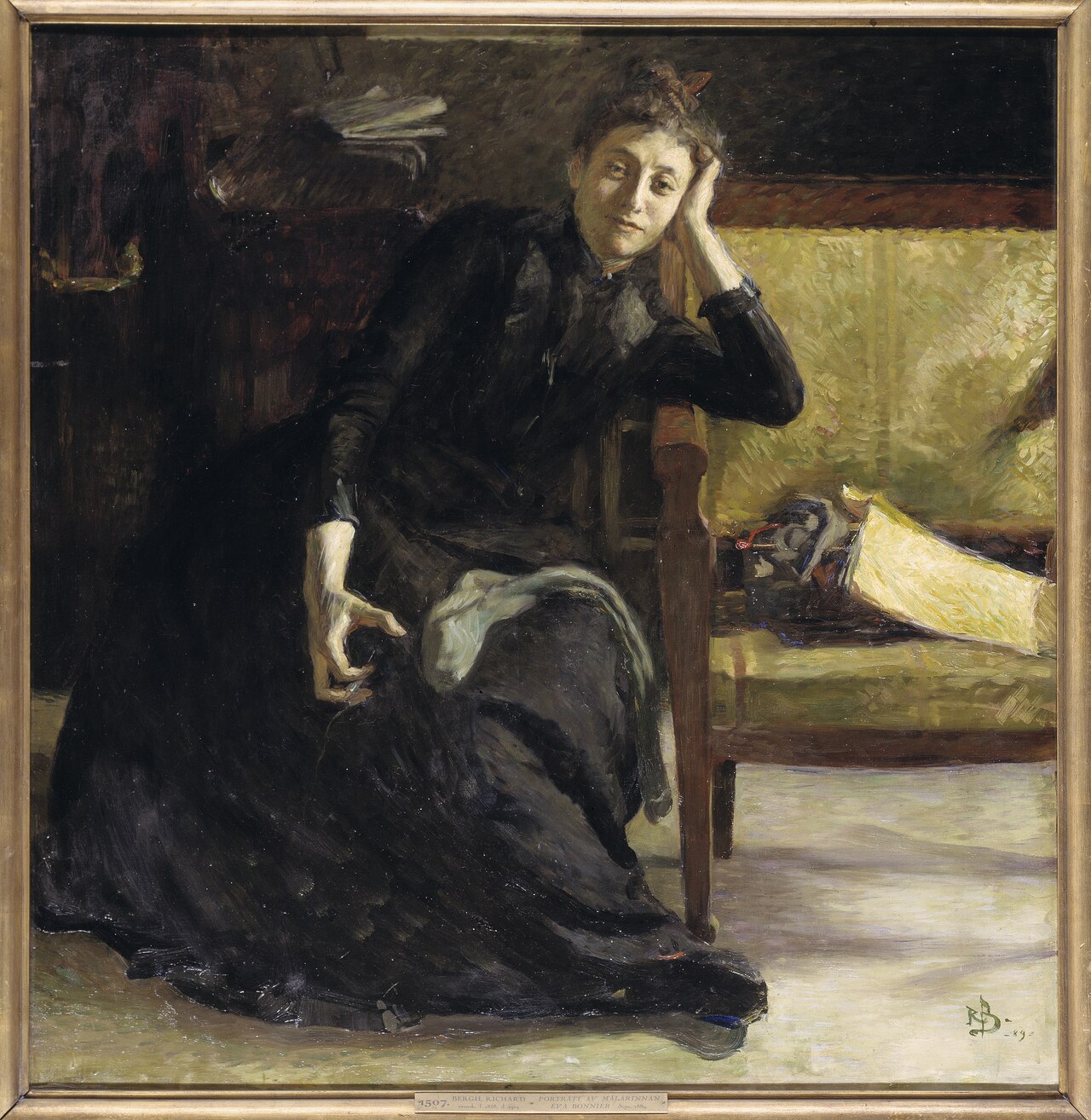
- The Artist Eva Bonnier (1889) – In this portrait, Bergh depicts his contemporary Eva Bonnier, herself an accomplished painter. The composition balances the sitter’s confident posture with a muted background, allowing the viewer to focus on Bonnier’s expressive eyes and the subtle brushwork that suggests creative energy.
- The Knight and the Maiden (1897) – A myth‑inspired tableau that merges Symbolist allegory with a Nordic setting. The knight, rendered in armour, stands protectively beside a maiden in a flowing dress; the surrounding landscape is rendered in misty blues, reinforcing a sense of timeless romance.
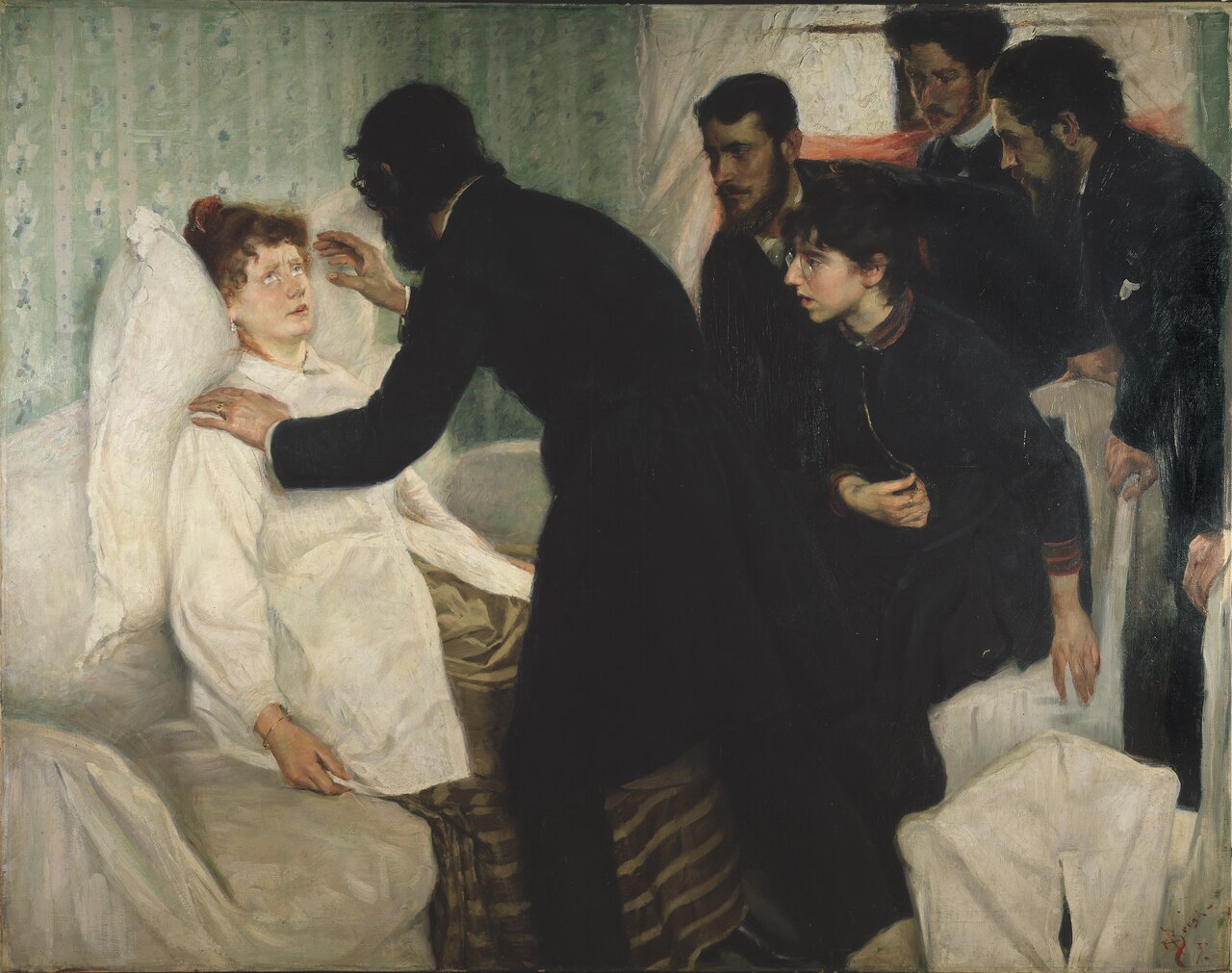
- Hypnotic Séance (1887) – One of Bergh’s most experimental pieces, it portrays a group gathered around a table illuminated by a single lamp, their faces lit with an eerie glow. The work’s dramatic lighting and enigmatic subject matter reflect his fascination with the unseen forces that shape human experience.
Each of these works illustrates a different stage of Bergh’s artistic development, from naturalist portraiture to Symbolist narrative, while maintaining the underlying emphasis on mood and interiority.
Influence and legacy
Richard Bergh’s impact on Swedish art extended beyond his canvases. As an art critic, he championed the idea that Swedish painting should develop its own voice rather than merely imitate French trends. His essays helped to codify *stämningsmåleri* as a recognized aesthetic, influencing younger artists such as Anders Zorn and Carl Larsson, who incorporated atmospheric elements into their own practices.
In the early 20th century Bergh took on the role of museum director at the Nationalmuseum in Stockholm, where he curated exhibitions that highlighted Symbolist and nationalist themes. His administrative work helped to secure a place for modern Swedish art within national institutions, ensuring that the mood‑painting tradition he advocated would be preserved and studied.
Scholars today regard Bergh as a transitional figure: he bridges the naturalist realism of the 19th century with the more introspective Symbolism that preceded modernism. His refusal to adopt plein‑air techniques, combined with his focus on psychological atmosphere, foreshadows later Scandinavian modernists who explored light, silence and interior space.
Overall, Richard Bergh remains a pivotal yet often under‑recognised contributor to the development of a distinctly Swedish visual language, one that balances rigorous technique with an evocative sense of feeling.
---
Word count: approximately 960 words.
Frequently asked questions
Who was Richard Bergh?
Richard Bergh (1858‑1919) was a Swedish painter, art critic and museum director known for pioneering a mood‑focused style of Symbolist painting in Scandinavia.
What artistic movement is he associated with?
He is linked to Symbolism and to the Swedish concept of *stämningsmåleri* (mood painting), which emphasised subjective atmosphere over strict realism.
What are his most famous works?
Key works include *Nordic Summer’s Evening* (1899), *After the Sitting* (1884), *The Artist Eva Bonnier* (1889), *The Knight and the Maiden* (1897) and *Hypnotic Séance* (1887).
Why does Richard Bergh matter in art history?
He helped shift Swedish art from naturalistic imitation toward a more introspective, Symbolist approach, and his writings and museum work institutionalised this new direction.
How can I recognise a Richard Bergh painting?
Look for controlled chiaroscuro, a limited, muted colour palette, and an emphasis on mood—often a solitary figure or symbolic scene rendered with subtle, atmospheric lighting.