Johan Edvard Bergh
1828 – 1880
In short
Johan Edvard Bergh (1828–1880) was a Swedish jurist who became a noted landscape painter associated with the Düsseldorf School, producing atmospheric works of Swedish scenery such as Prospect of Ornäs and View of Ulriksdal.
Notable works

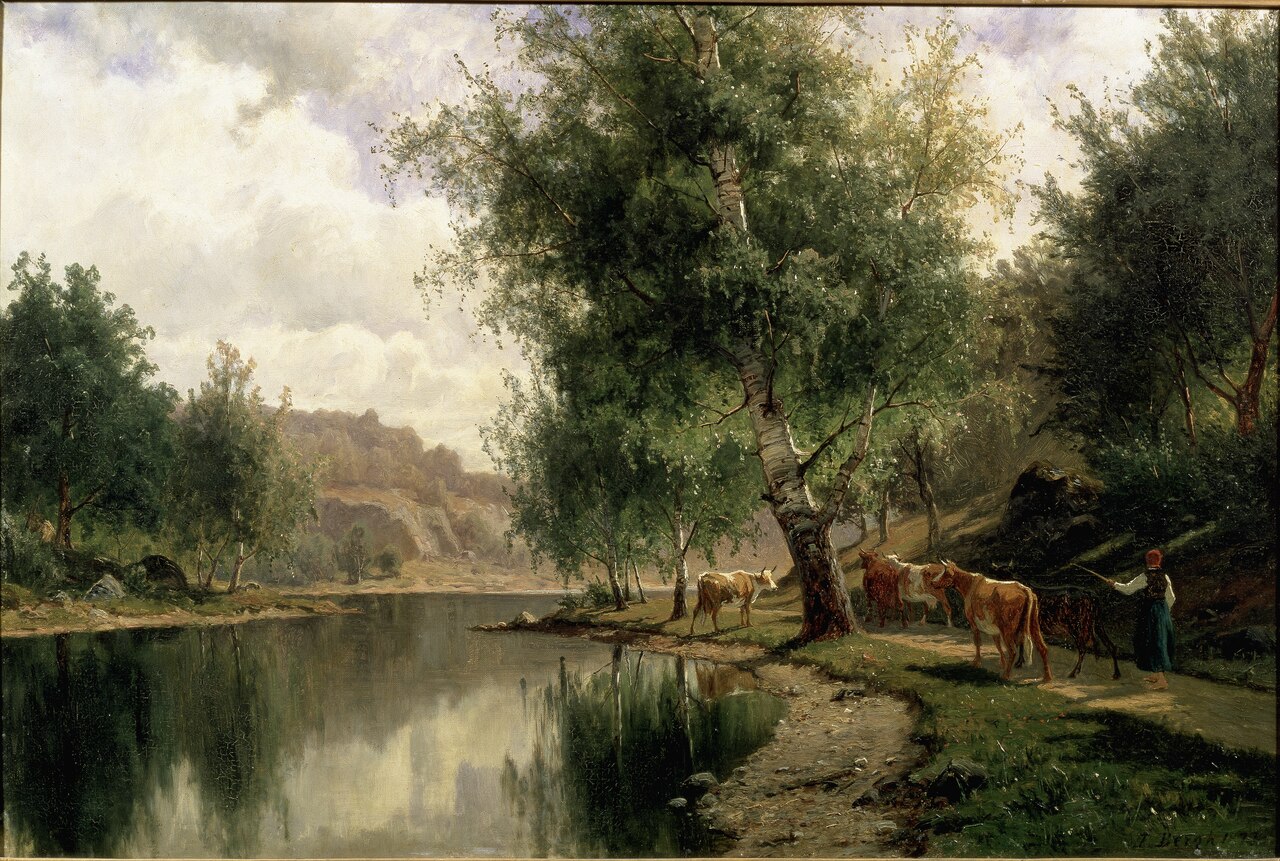

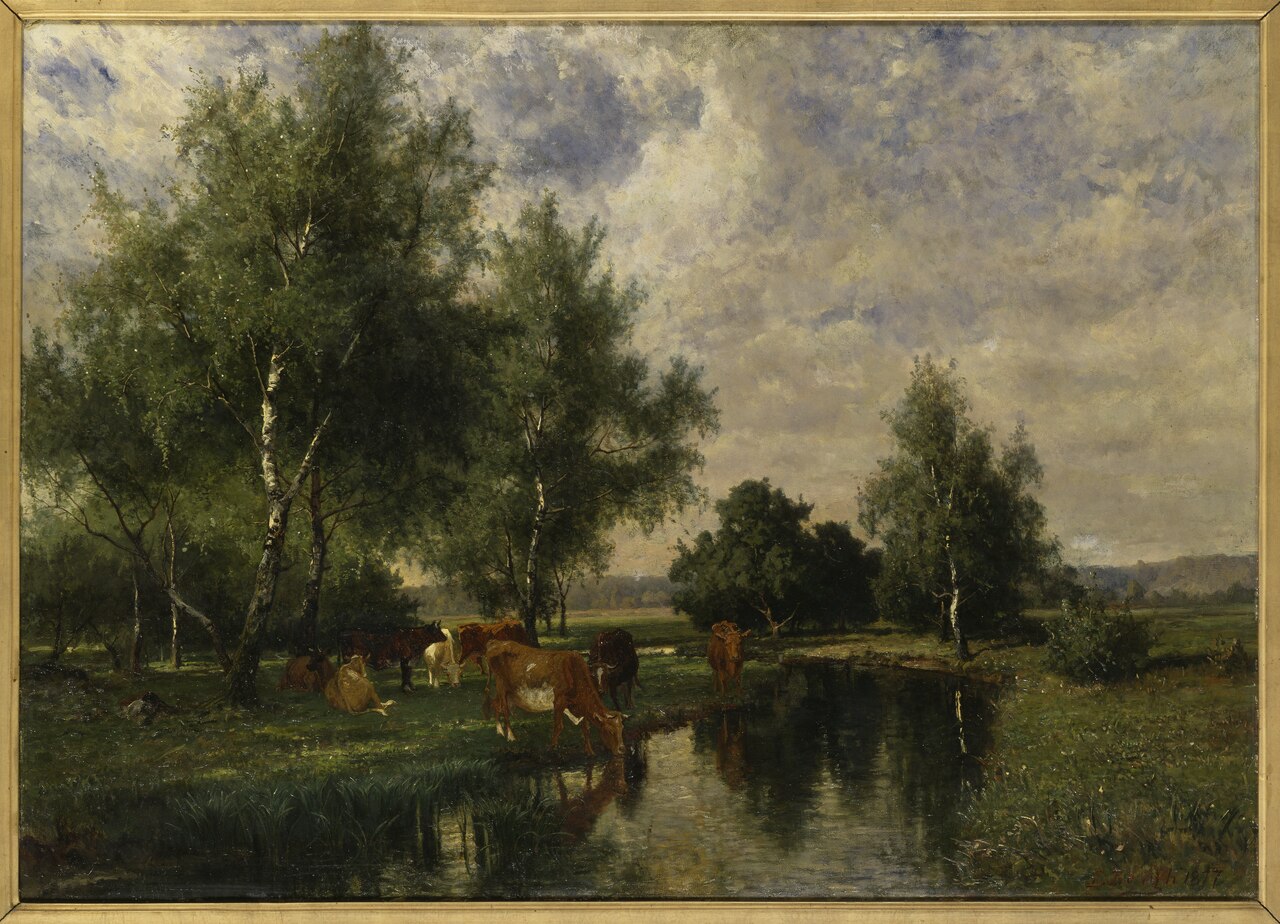

Early life Johan Edvard Bergh was born in Stockholm in 1828 into a family that valued both education and the arts. He pursued a conventional career in law, completing his studies at the University of Uppsala and later practising as a jurist in his native capital. While his professional life was rooted in the legal profession, Bergh cultivated an early fascination with nature and the Swedish countryside, a passion that would later shape his artistic output.
Career and style Around the mid‑1840s, Bergh began to study painting more seriously, travelling to Düsseldorf – the hub of a thriving school of landscape painting. The Düsseldorf School, renowned for its meticulous draftsmanship, atmospheric effects, and romantic idealisation of nature, left a lasting imprint on Bergh’s visual language. He returned to Sweden with a disciplined approach to composition, combining the academic rigour of his German training with a personal affinity for the light and colour of his homeland.
Bergh’s landscapes are characterised by a measured balance between detailed foreground elements and a softened, almost lyrical background. He favoured subjects drawn from familiar Swedish locales – lakes, forests and rural estates – portraying them with a sense of serene grandeur. Though his work never achieved the avant‑garde notoriety of later modernists, it resonated with contemporary audiences seeking a visual affirmation of national identity.
Signature techniques Bergh employed several techniques that became hallmarks of his oeuvre:
* Plein‑air sketches – He often made quick on‑site studies, capturing the fleeting qualities of light and weather before translating them into larger studio canvases. * Atmospheric perspective – By subtly muting colours and reducing detail in distant elements, Bergh created a convincing sense of depth, a method typical of the Düsseldorf tradition. * Controlled brushwork – Fine, linear brushstrokes delineate trees and architectural features, while broader, softer strokes render sky and water, establishing a contrast between structure and mood. * Palette of muted earth tones – Predominantly greens, browns and ochres dominate his work, punctuated by occasional highlights of sky‑blue or golden sunlight to heighten drama.
These techniques allowed him to convey both the solidity of the Swedish terrain and the evanescent qualities of its atmospheric conditions.
Major works Bergh’s most frequently cited paintings illustrate the breadth of his engagement with Swedish scenery:
* Prospect of Ornäs (1850) – An early work that showcases his mastery of compositional balance, depicting the historic Ornäs estate bathed in a warm, late‑summer light. The foreground features a carefully rendered garden, while the distant hills fade into a hazy blue. * View of Ulriksdal from the Southeast (1862) – This canvas captures the royal park of Ulriksdal with a sweeping vista that emphasizes the interplay of water, woodland and sky. The work’s delicate handling of reflections in the lake demonstrates Bergh’s skill in rendering water surfaces. * In the Forest (1868) – A darker, more introspective piece, it portrays a dense pine forest under a muted sky. The limited colour range and the emphasis on vertical trunks convey a sense of solitude and reverence for the natural world. * Summer Landscape (1873) – A vibrant depiction of a sun‑lit meadow, this painting highlights Bergh’s ability to render light across grassy expanses. The bright greens and dappled sunlight create an uplifting atmosphere. * Summer Landscape in Blekinge (1877) – Executed later in his career, this work reflects a mature synthesis of his earlier techniques. The coastal scenery of Blekinge is rendered with a more relaxed brushstroke, yet retains the precise atmospheric perspective that defines his style.
Collectively, these works illustrate Bergh’s evolution from a disciplined academic approach toward a looser, more personal expression of Swedish nature.
Influence and legacy Although Bergh never attained the fame of some of his European contemporaries, his paintings contributed to the development of a distinctly Swedish landscape tradition in the latter half of the 19th century. By integrating the Düsseldorf School’s academic rigor with native subject matter, he helped bridge continental artistic trends and nationalistic sentiment. His works were exhibited in Stockholm’s Royal Academy and were acquired by private collectors, ensuring that his visual record of Swedish scenery remained accessible.
Later Swedish artists, particularly those associated with the early 20th‑century National Romantic movement, drew inspiration from Bergh’s treatment of light and his reverence for the natural environment. While his name may not dominate modern art histories, his canvases continue to be referenced in scholarly discussions of Swedish art education, the diffusion of German artistic ideas, and the visual articulation of Sweden’s cultural landscape.
Today, Bergh’s paintings are held in several Swedish museums, including the Nationalmuseum in Stockholm, where they are displayed alongside works of his Düsseldorf contemporaries. For scholars and enthusiasts of 19th‑century European landscape painting, Bergh offers a compelling case study of how an artist could negotiate professional obligations, foreign training, and a deep‑seated national identity to produce a body of work that remains both technically accomplished and emotionally resonant.
Frequently asked questions
Who was Johan Edvard Bergh?
Johan Edvard Bergh (1828–1880) was a Swedish jurist who became a noted landscape painter, best known for his atmospheric depictions of Swedish scenery.
What artistic style or movement is he associated with?
Bergh is linked to the Düsseldorf School, adopting its precise draftsmanship and romantic treatment of nature while focusing on Swedish subjects.
What are his most famous works?
His most recognised paintings include Prospect of Ornäs (1850), View of Ulriksdal from the Southeast (1862), In the Forest (1868), Summer Landscape (1873) and Summer Landscape in Blekinge (1877).
Why does his work matter in art history?
Bergh helped fuse German academic landscape techniques with Swedish motifs, influencing later National Romantic artists and contributing to Sweden’s visual cultural heritage.
How can I recognise a Johan Edvard Bergh painting?
Look for meticulous foreground detail, soft atmospheric perspective, a muted earth‑tone palette punctuated by light highlights, and subject matter drawn from Swedish countryside or royal parks.