Per Ekström
1844 – 1935
In short
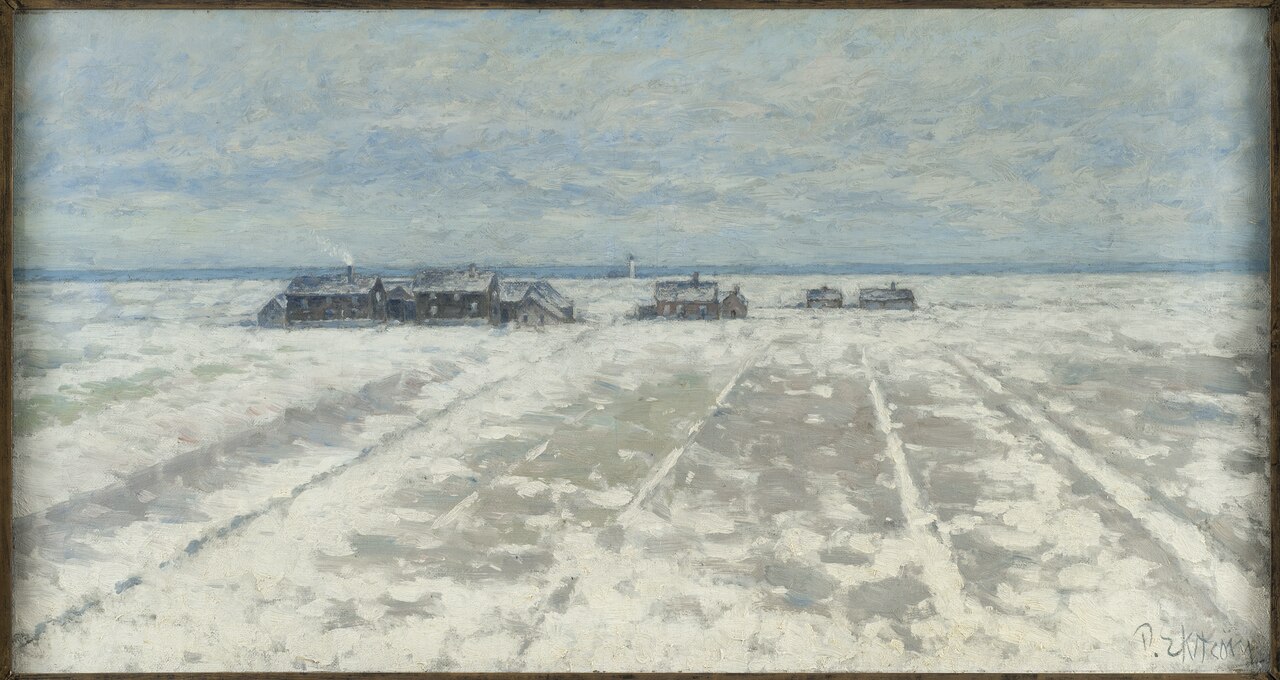
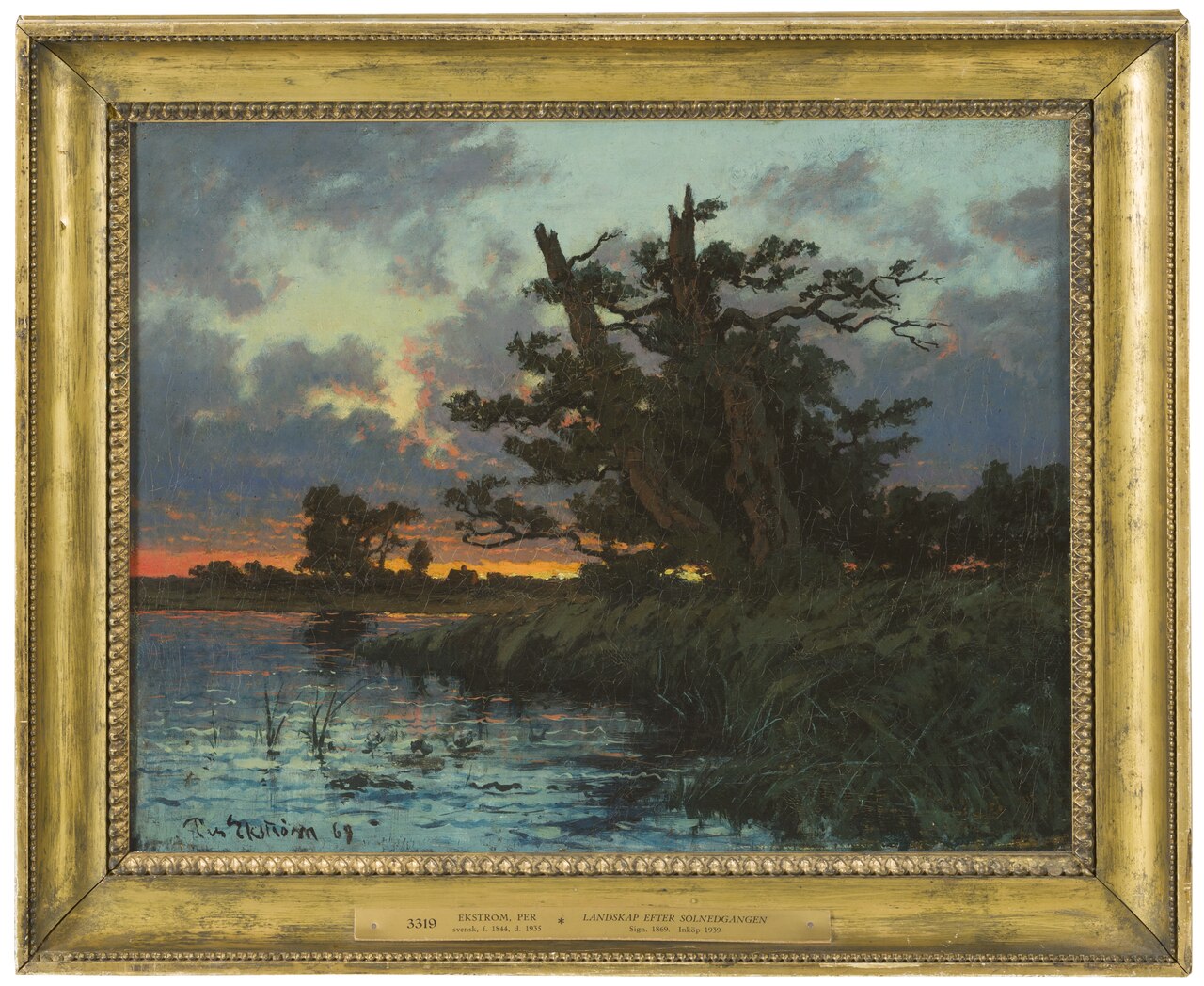
Per Ekström (1844–1935) was a Swedish landscape painter noted for his atmospheric depictions of barren and deserted scenes, often illuminated by striking sunsets. His work, which includes pieces such as Winter Landscape. Öland Scene (1890) and Landscape after Sunset (1869), remains valued for its quiet, introspective mood.
Notable works
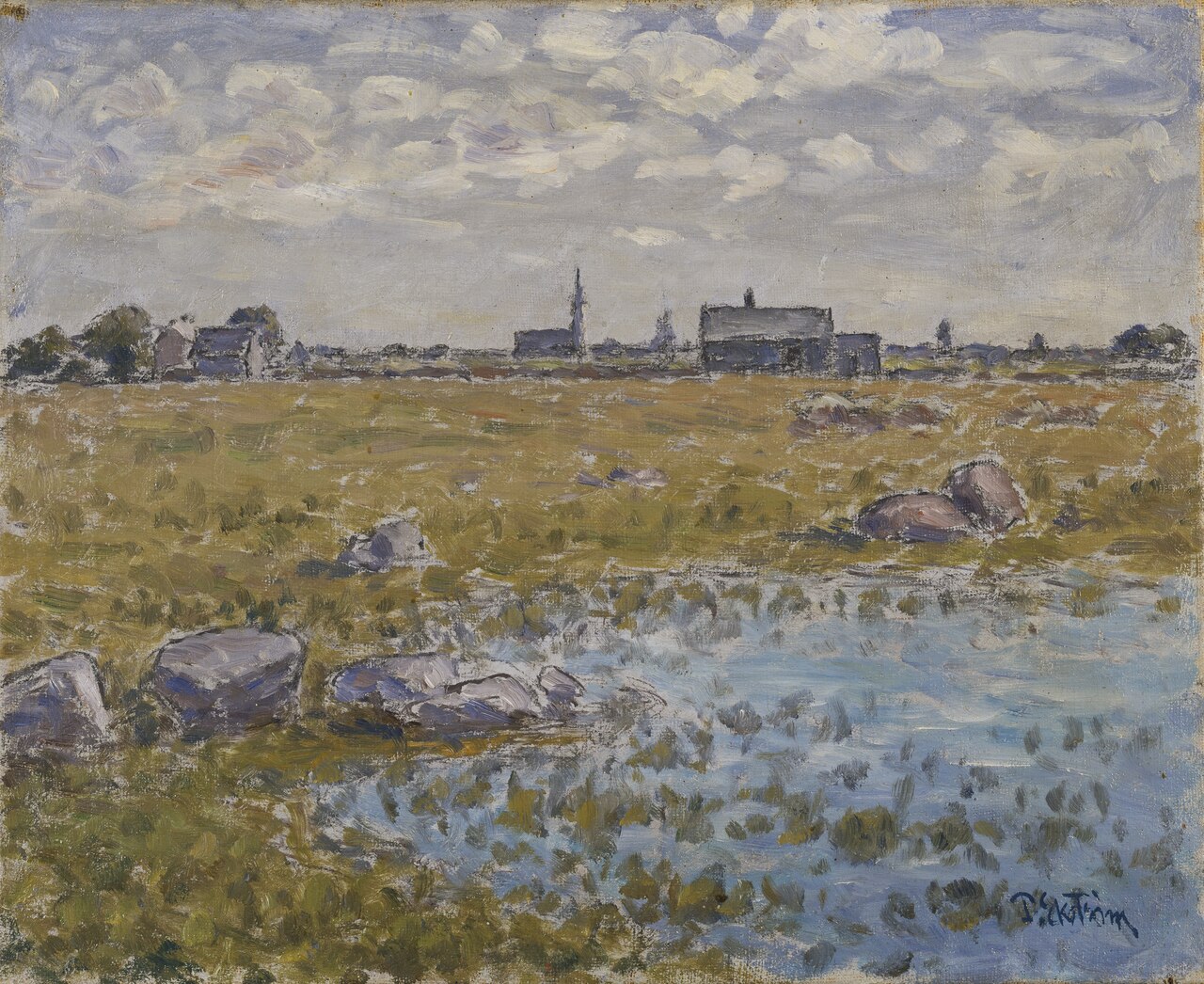
Early life Per Ekström was born in 1844, though the precise location of his birth remains undocumented in the historical record. He grew up during a period when Swedish art was increasingly influenced by the broader European Romantic and Realist movements, yet his early artistic education appears to have been rooted in the local traditions of landscape painting. Little is known about his family background or formal training, but the prevailing cultural climate of mid‑19th‑century Sweden—characterised by a fascination with the natural world and an emerging national identity—provided a fertile ground for a future painter drawn to the quiet, open spaces of the countryside.
Career and style Ekström’s artistic career unfolded over the latter half of the 19th century and into the early decades of the 20th. He established himself as a landscape painter whose work is distinguished by a restrained palette and a keen sensitivity to light. While he did not align himself with a specific avant‑garde movement, his paintings echo the tonal subtlety of the Barbizon school and the atmospheric concerns of the Nordic Romantic tradition. Ekström favoured scenes that were either barren or seemingly deserted, using these settings to explore the interplay between land and sky, especially at twilight or dawn. His compositions often convey a sense of stillness, inviting viewers to contemplate the quiet dignity of uninhabited nature.
Signature techniques Ekström’s technique is characterised by several recurring elements. First, he employed a muted colour scheme dominated by earth tones, greys, and soft blues, which allowed the occasional burst of warm sunlight to become the focal point. Second, his brushwork was generally smooth and controlled, producing a seamless surface that emphasised atmosphere over texture. Third, he frequently used a limited perspective, positioning the horizon low in the frame to heighten the expansiveness of the sky. Finally, his handling of light—particularly the subtle gradations at sunset—demonstrates a sophisticated understanding of chiaroscuro, where the fading light creates a gentle transition between illuminated and shadowed areas.
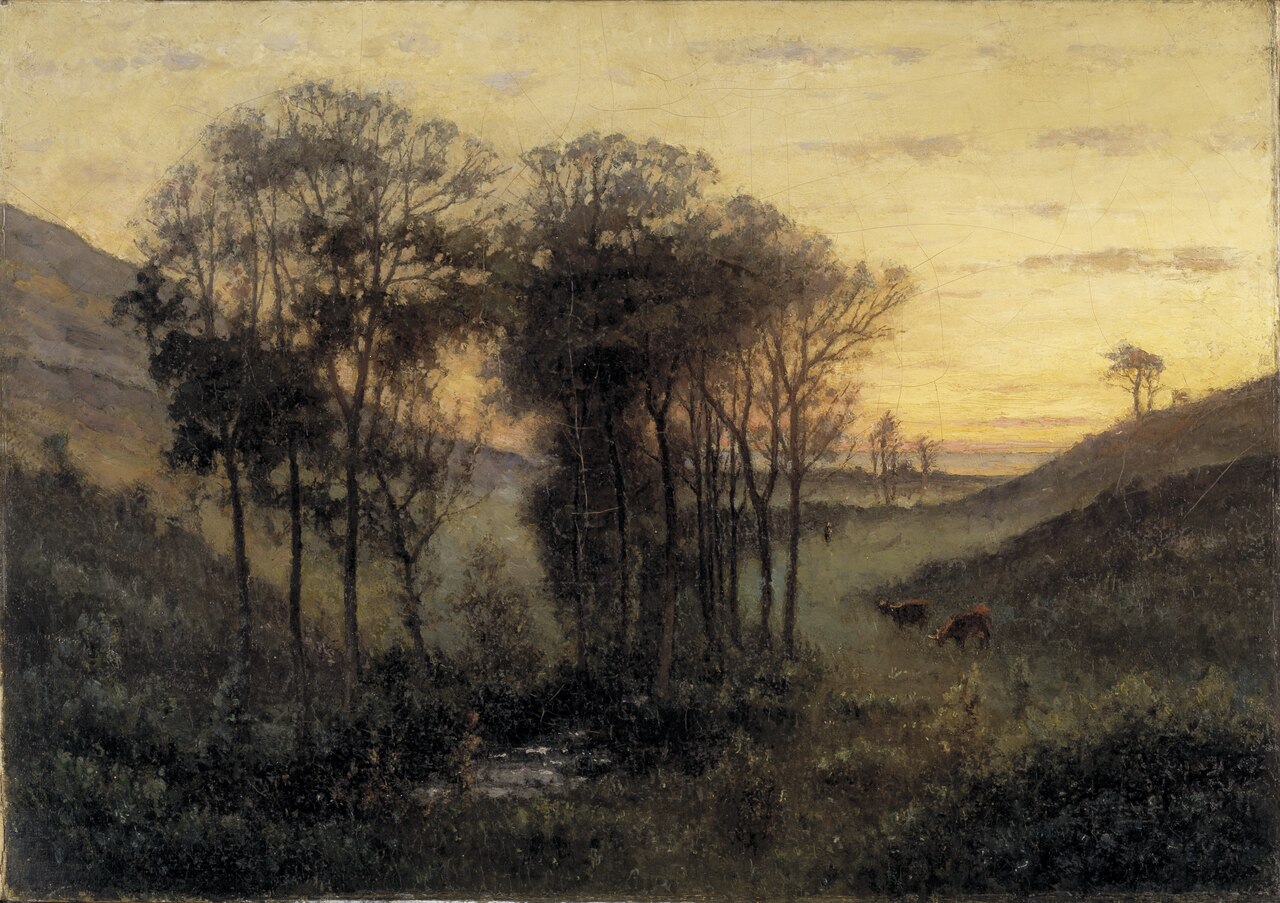
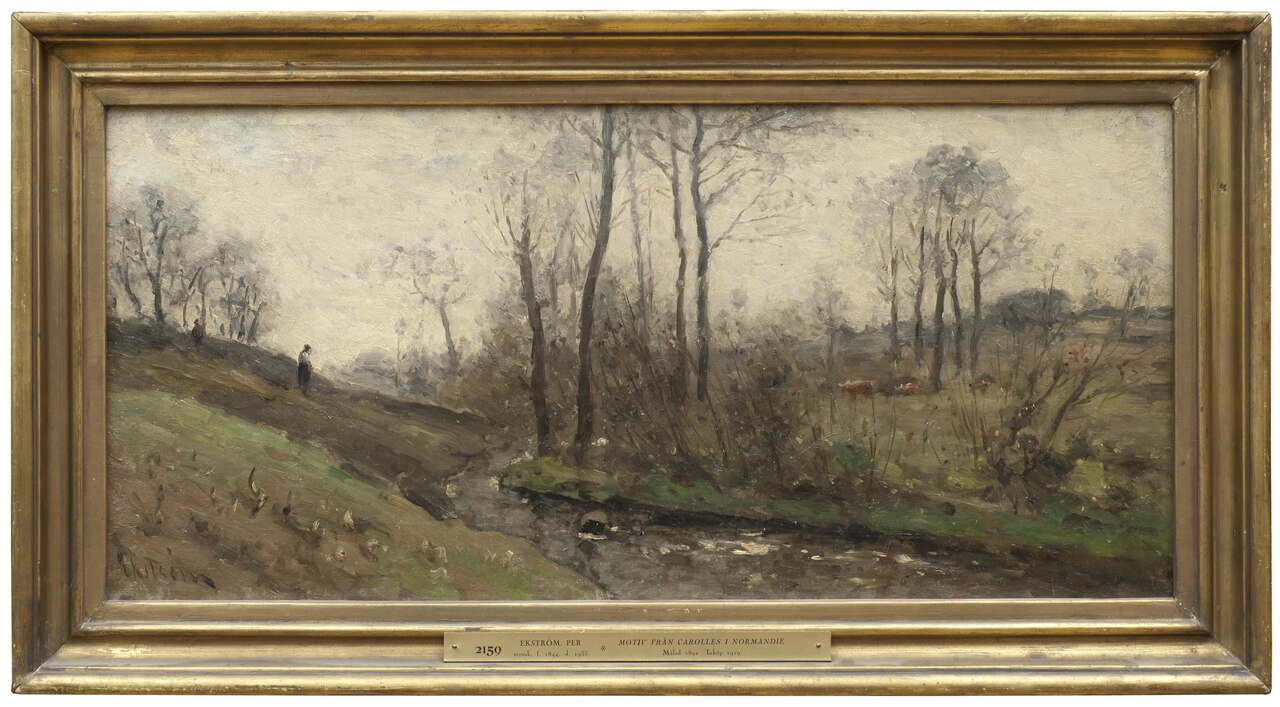
Major works Ekström’s oeuvre includes several notable works that exemplify his thematic preoccupations and technical skill. *Winter Landscape. Öland Scene* (1890) captures the stark, wind‑blown plains of the Swedish island of Öland under a cold, pale sky, with the distant horizon suggesting both isolation and continuity. *French Landscape* reflects his occasional travels abroad; the piece depicts a quiet French countryside, yet retains his signature subdued palette and focus on atmospheric light. *Landscape with a Running Brook. Scene from the Carolles in Normandy* (1880) presents a gentle watercourse winding through a rocky coastal terrain, illuminated by a soft, late‑afternoon glow that accentuates the reflective quality of the water. *Landscape after Sunset* (1869) is an early example of his fascination with the moments following sunset, showing a field bathed in the lingering amber of twilight, while the sky deepens into dusky blues. Finally, *Gräsgård Church* (1922) stands out as a later work, where Ekström turns his attention to architecture within a natural setting; the modest church is rendered with the same reverent quietude that defines his landscapes, its silhouette framed against a muted sky.
Influence and legacy Although Per Ekström never achieved the fame of some of his Swedish contemporaries, his paintings have earned a respected place in the canon of Scandinavian landscape art. His emphasis on atmosphere and his ability to evoke mood through restrained composition influenced younger artists who sought to capture the Nordic environment without resorting to overt dramatism. Collections of his work are held in regional museums across Sweden, where they continue to be displayed as exemplars of late‑19th‑century landscape painting. Moreover, his paintings serve as visual documents of the Swedish and northern European countryside during a period of rapid industrialisation, preserving the visual memory of landscapes that have since been altered. Scholars of art history regard Ekström as a bridge between the Romantic reverence for nature and the more observational approach that would dominate early modernist landscape art. His legacy endures through continued exhibition, scholarly reference, and the quiet resonance his works evoke in viewers who appreciate the subtle beauty of untouched terrain.
Frequently asked questions
Who was Per Ekström?
Per Ekström (1844–1935) was a Swedish painter best known for his atmospheric landscapes of barren or deserted places, often illuminated by striking sunsets.
What artistic style or movement is Ekström associated with?
Ekström did not belong to a specific movement, but his work reflects the tonal subtlety of the Barbizon school and the Nordic Romantic tradition, focusing on light and mood.
What are his most famous works?
Key works include *Winter Landscape. Öland Scene* (1890), *Landscape after Sunset* (1869), *Landscape with a Running Brook* (1880), *French Landscape*, and *Gräsgård Church* (1922).
Why is Per Ekström important in art history?
He provides a quiet, contemplative perspective on Scandinavian nature, influencing later landscape painters and preserving visual records of pre‑industrial northern European scenery.
How can I recognise an Ekström painting?
Look for muted earth tones, a low horizon, smooth brushwork, and a focus on atmospheric light—especially the soft glow of sunrise or sunset in barren settings.