Emma Ekwall
1838 – 1925
In short
Emma Amalia Ekwall (1838–1925) was a Swedish painter noted for realist portraits and intimate domestic genre scenes, active in the late 19th and early 20th centuries.
Notable works


Early life Emma Amalia Ekwall was born in 1838 in the small parish of Säby, Sweden. Details of her family background are scarce, but the Ekwall name was already associated with a modestly educated middle class, which afforded her the opportunity to pursue artistic training—a rarity for women in mid‑19th‑century Sweden. From an early age she displayed a talent for drawing, copying religious icons and folk motifs that circulated in her rural surroundings. Recognising her promise, her parents enabled her to attend the Royal Swedish Academy of Fine Arts in Stockholm, where she entered the women’s drawing class in the early 1860s. The Academy, though still dominated by male students, provided a rigorous grounding in anatomy, perspective and the academic tradition of oil painting.
Career and style Ekwall emerged as a professional painter in the 1870s, a period when Swedish art was moving from Romantic historicism toward a more naturalistic representation of contemporary life. She specialised in portraiture, receiving commissions from the Swedish aristocracy and emerging bourgeoisie. Her work also encompassed genre scenes that depicted everyday domestic moments, a subject matter that resonated with the growing interest in national identity and the lives of ordinary Swedes. Although she never aligned herself with a formal avant‑garde movement, her paintings exhibit the hallmarks of late‑19th‑century realism: careful observation, subdued colour, and a focus on the psychological presence of the sitter.
Ekwall exhibited regularly at the Academy’s annual shows and at the prestigious Stockholm Art Society exhibitions. Her reputation earned her a place among the few women artists who were able to sustain a studio practice without reliance on patronage alone. By the early 1900s she had shifted toward larger, narrative‑type compositions that combined portraiture with storytelling, a transition that reflected the broader Scandinavian trend toward Symbolist undercurrents while retaining her realist foundation.
Signature techniques Ekwall’s technique is characterised by a delicate brushwork that renders skin tones with a luminous softness. She favoured a muted palette—ochres, warm greys and subdued blues—allowing the subjects’ expressions to dominate the visual field. Light in her interiors is often diffused, entering through a single window and creating a gentle chiaroscuro that highlights the contours of the figure without dramatic contrast. Her handling of fabrics, especially lace and silk, demonstrates an acute awareness of texture, achieved through layered glazing that builds depth over time. In genre works she employs a compositional balance that places the central figure slightly off‑centre, inviting the viewer’s eye to wander through surrounding objects that hint at the narrative context.
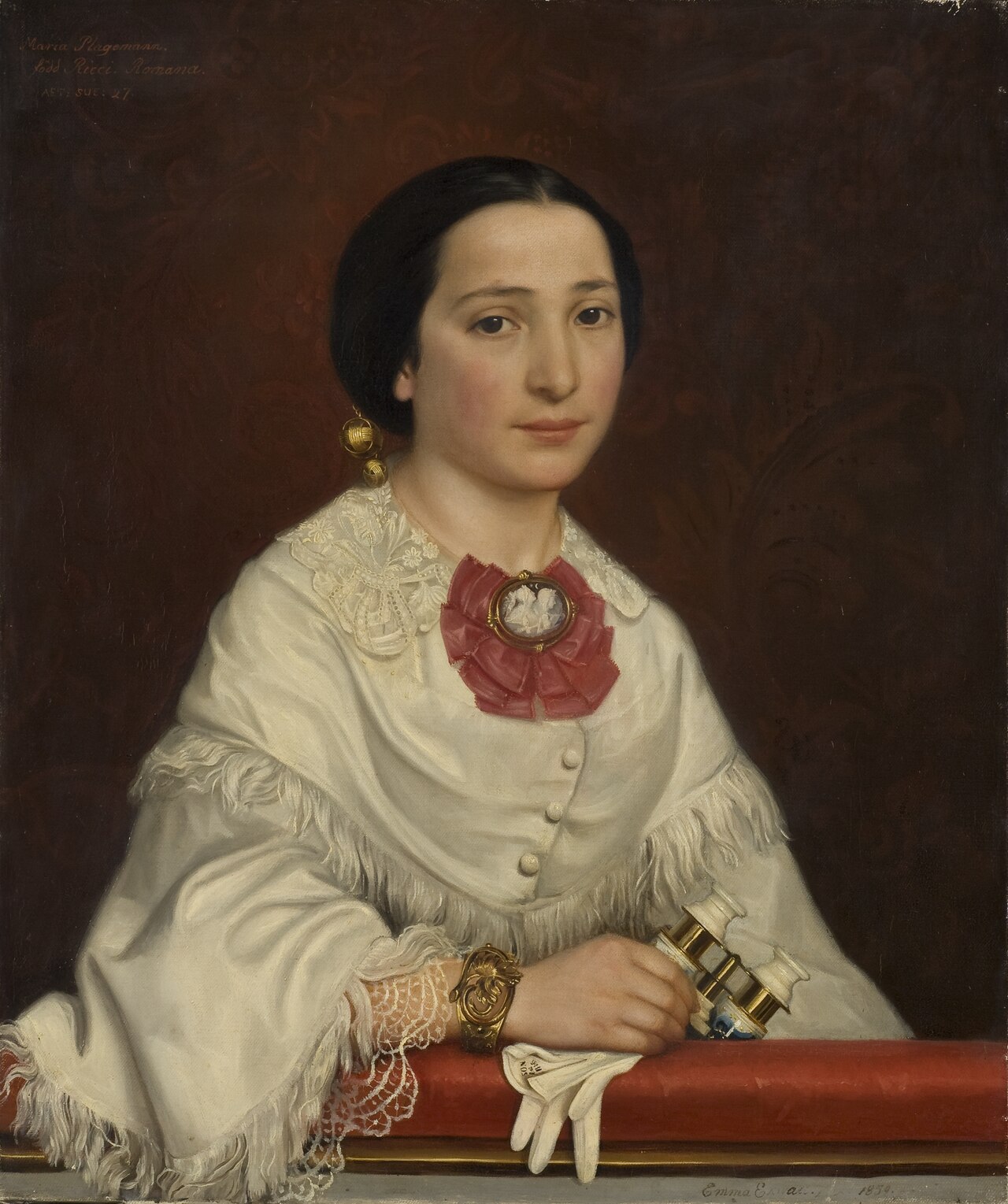
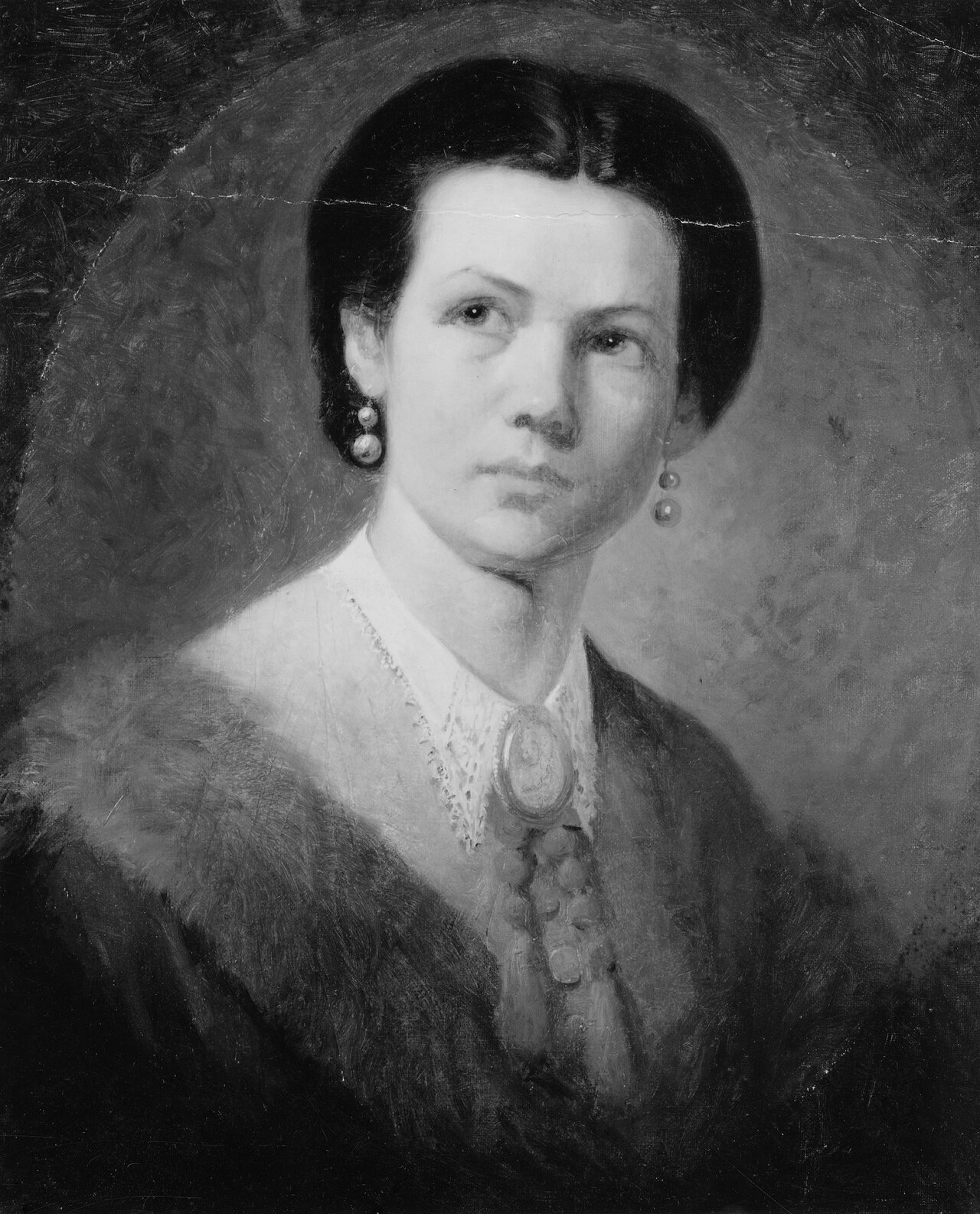
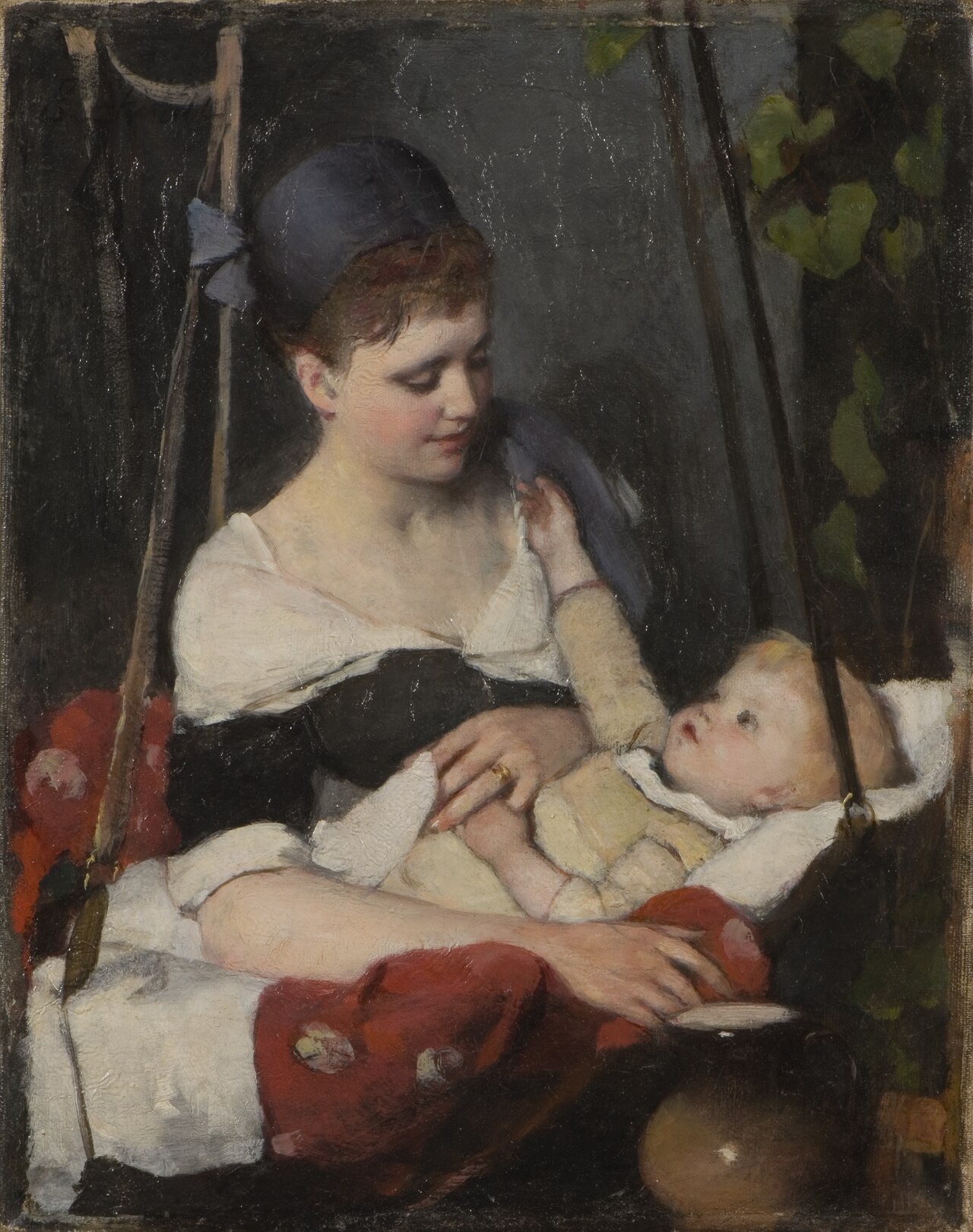
Major works - **Johan Gustaf Nils Samuel Åkerhielm (1833‑1900), friherre, statsminister, gift med grevinnan Ebba Aurora Ulrika Gyldenstolpe** – This formal portrait captures the former prime minister in full regalia, seated against a dark, studded backdrop. Ekwall renders the subject’s dignified bearing with restrained colour, allowing the subtle play of light on his facial features to convey both authority and humanity. - **Maria Ricci, g.m. konstnären Carl Gustaf Plagemann (1850)** – Though the commission originated from fellow artist Carl Gustaf Plagemann, Ekwall’s rendition of Maria Ricci is notable for its intimate atmosphere. The sitter is depicted in a modest, white dress, with a faint halo of light suggesting a contemplative interior. The painting exemplifies Ekwall’s skill in portraying women with empathy rather than idealisation. - **Amanda Sidvall (1844‑1892)** – This portrait of the young woman, whose life was cut short, is rendered in a softer tonal range. Ekwall emphasizes the sitter’s delicate features and the subtle melancholy that pervades the composition, employing a background of muted greens that hints at a garden setting. - **Children Playing at Weddings** – A genre scene that showcases Ekwall’s narrative sensibility. Small figures of children frolic among wedding decorations, their bright clothing providing a splash of colour against a restrained domestic interior. The work captures the joyous spontaneity of communal celebrations while maintaining a realistic depiction of texture and light. - **Young Mother Rocking Her Baby** – Perhaps her most widely reproduced image, this painting depicts a mother in a simple, white dress gently cradling her infant. The tender interaction is highlighted by a soft, diffused light that bathes both figures, reinforcing the theme of maternal affection. The composition’s calm rhythm and careful rendering of fabric folds have made it a reference point for studies of domestic realism.
Influence and legacy Emma Ekwall occupies a distinctive place in Swedish art history as one of the few women who achieved professional recognition in a male‑dominated field during the 19th century. Her portraits of aristocratic and middle‑class patrons provided a visual record of Sweden’s social elite, while her genre scenes contributed to a broader cultural narrative that celebrated everyday life. Although she never joined a formal artistic movement, her realistic approach and technical proficiency influenced younger Swedish women artists who sought to balance academic training with personal expression.
Posthumously, Ekwall’s works have been acquired by several Swedish public collections, including the Nationalmuseum in Stockholm, where they are displayed alongside contemporaries such as Carl Larsson and Anders Zorn. Scholarly interest in her oeuvre has risen in recent decades, reflecting a wider reassessment of women artists’ contributions to national art histories. Her paintings continue to serve as exemplars in art‑history curricula for their embodiment of late‑19tic realism, their nuanced treatment of light, and their empathetic portrayal of domestic subjects.
Ekwall’s legacy is also evident in the continued popularity of her domestic genre works, which are reproduced in textbooks and exhibition catalogues as iconic representations of Swedish cultural heritage. By navigating the expectations of portrait commissions and the creative possibilities of genre painting, she demonstrated that a woman artist could sustain both commercial viability and artistic integrity, paving the way for subsequent generations of Swedish painters.
--- *Emma Ekwall’s oeuvre remains a valuable resource for scholars examining the intersection of gender, class and artistic practice in 19th‑century Scandinavia.*
Frequently asked questions
Who was Emma Ekwall?
Emma Amalia Ekwall (1838–1925) was a Swedish painter best known for realist portraits and domestic genre scenes.
What style or movement is she associated with?
She worked within a realist tradition, combining academic portrait techniques with the naturalistic genre painting popular in late‑19th‑century Sweden.
What are her most famous works?
Key works include the portrait of Prime Minister Johan Gustaf Åkerhielm, the portrait of Maria Ricci, the portrait of Amanda Sidvall, the genre scenes ‘Children Playing at Weddings’ and ‘Young Mother Rocking Her Baby.’
Why does Emma Ekwall matter in art history?
She is an early example of a successful professional woman painter in Sweden, providing valuable visual records of her era and influencing later generations of female artists.
How can I recognise an Emma Ekwall painting?
Look for a muted colour palette, soft brushwork, careful rendering of light on skin, and intimate domestic subjects that convey a calm, realistic atmosphere.