Oscar Björck
1860 – 1929
In short
Oscar Björck (1860–1929) was a Swedish painter and professor at the Royal Swedish Academy of Arts, known for his naturalistic depictions of everyday life and for works such as Launching the Boat, Skagen (1884) and A Venetian Covered Market (1887).
Notable works

Early life Oscar Gustaf Björck was born in 1860 in Stockholm, the capital of Sweden. He grew up in a period when the Swedish art scene was beginning to open to influences from continental Europe, especially France. Björck showed an early aptitude for drawing, and after completing his basic schooling he entered the Royal Swedish Academy of Arts in Stockholm. The Academy provided a rigorous grounding in academic drawing, anatomy, and the study of classical models, which shaped his technical competence. During his student years he travelled to Copenhagen and later to Paris, where he was exposed to the realism of the French Barbizon school and the emerging Impressionist movement. These experiences broadened his artistic outlook while reinforcing his commitment to truthful representation of light and atmosphere.
Career and style Returning to Sweden in the early 1880s, Björck began exhibiting at the Academy’s annual salons. His early works displayed a restrained colour palette and a careful handling of form, reflecting the academic training he had received. However, his time abroad left an imprint: he adopted a more naturalistic approach, favouring scenes drawn from contemporary life rather than historical or mythological subjects. By the mid‑1880s he was recognised as a leading figure among a generation of Swedish artists who sought to portray the everyday with honesty and subtle emotional nuance.
Björck’s style can be described as naturalistic realism, characterised by clear, accurate observation, balanced composition, and a muted yet harmonious colour scheme. He often employed a loose brushwork that suggested form without over‑detailing, allowing light to define the edges of objects. While he never fully embraced the radical experimentation of the avant‑garde, his work shows a willingness to incorporate contemporary trends, particularly the emphasis on plein‑air painting and the study of atmospheric effects that were popular in France during his formative years.
In addition to his studio practice, Björck was appointed a professor at the Royal Swedish Academy of Arts in the 1890s. In that role he taught drawing and painting to a new generation of Swedish artists, advocating for rigorous observation and disciplined technique. His pedagogical influence helped to consolidate a tradition of naturalistic painting in Sweden that persisted well into the twentieth century.
Signature techniques Björck’s paintings display several recurring technical hallmarks:
1. Atmospheric colour modulation – He often rendered sky and water with delicate gradations, allowing subtle shifts in hue to convey time of day and weather. 2. Controlled brushstroke – While his brushwork is generally fluid, he retained enough precision to delineate architectural details and figures without losing overall cohesion. 3. Balanced composition – Björck favoured compositions in which the main subject is placed off‑centre, creating a sense of movement and narrative depth. 4. Narrative focus – Even in seemingly simple genre scenes, he incorporated small gestures or objects that hint at a broader story, inviting viewers to infer the context. 5. Use of chiaroscuro – Light and shadow are employed to model forms, especially in interior scenes, enhancing three‑dimensionality.
These techniques combined to give his work a calm, observational quality that was both academically sound and emotionally resonant.
Major works
- Launching the Boat, Skagen (1884) – Executed during a summer stay in the Danish fishing village of Skagen, this painting captures the moment a wooden boat is pushed into the sea. The composition is anchored by the boat’s hull, while the surrounding sky and sea are rendered with soft blues and greys, illustrating Björck’s skill at depicting water surface tension and wind‑driven clouds.
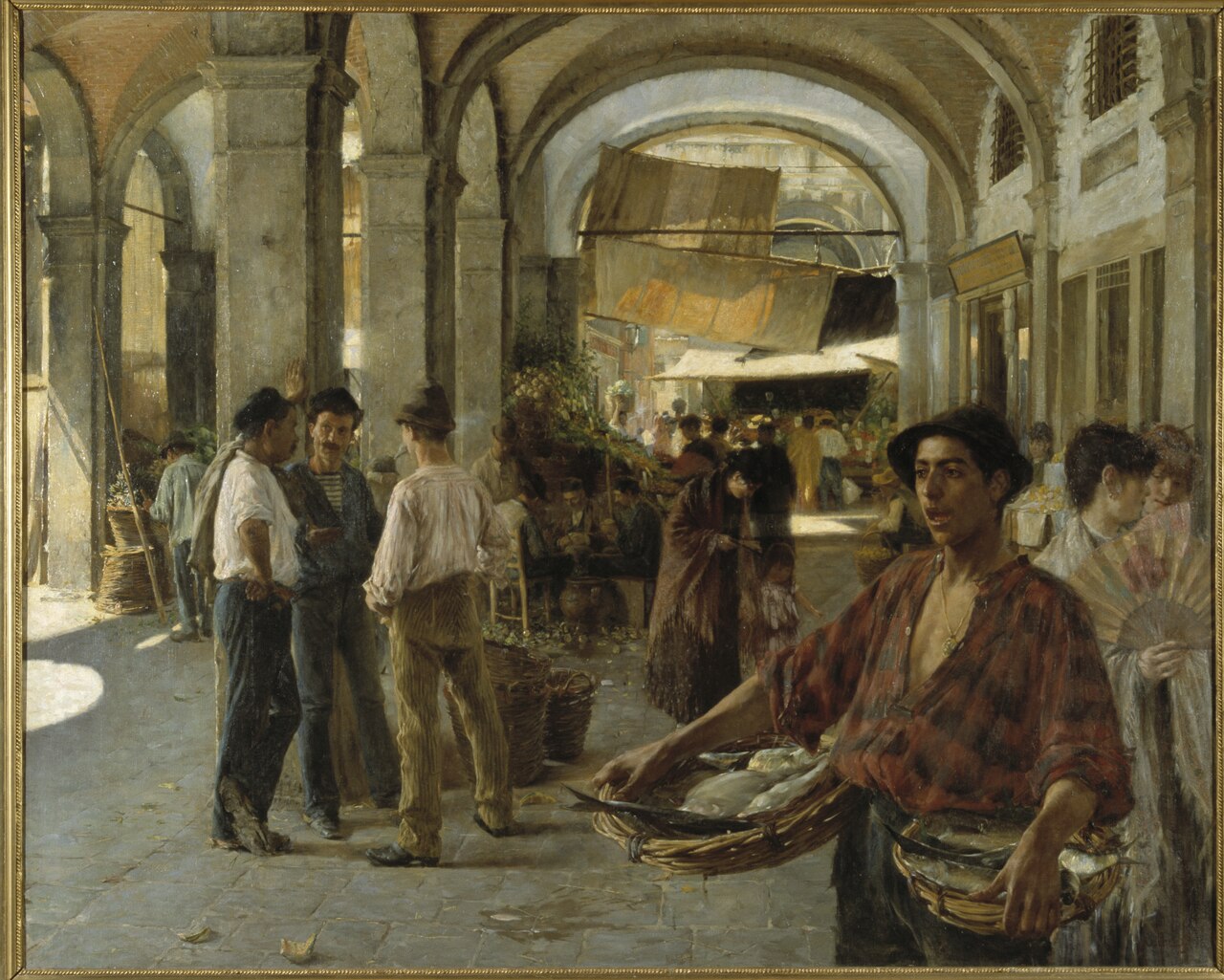
- A Venetian Covered Market (1887) – In this work Björck turns his eye to an interior market scene in Venice. The canvas is filled with stalls, merchants, and shoppers, all bathed in diffused daylight filtering through the market’s arches. The muted palette of ochres and muted greens reflects his naturalistic approach, while the careful placement of figures creates a bustling yet orderly atmosphere.
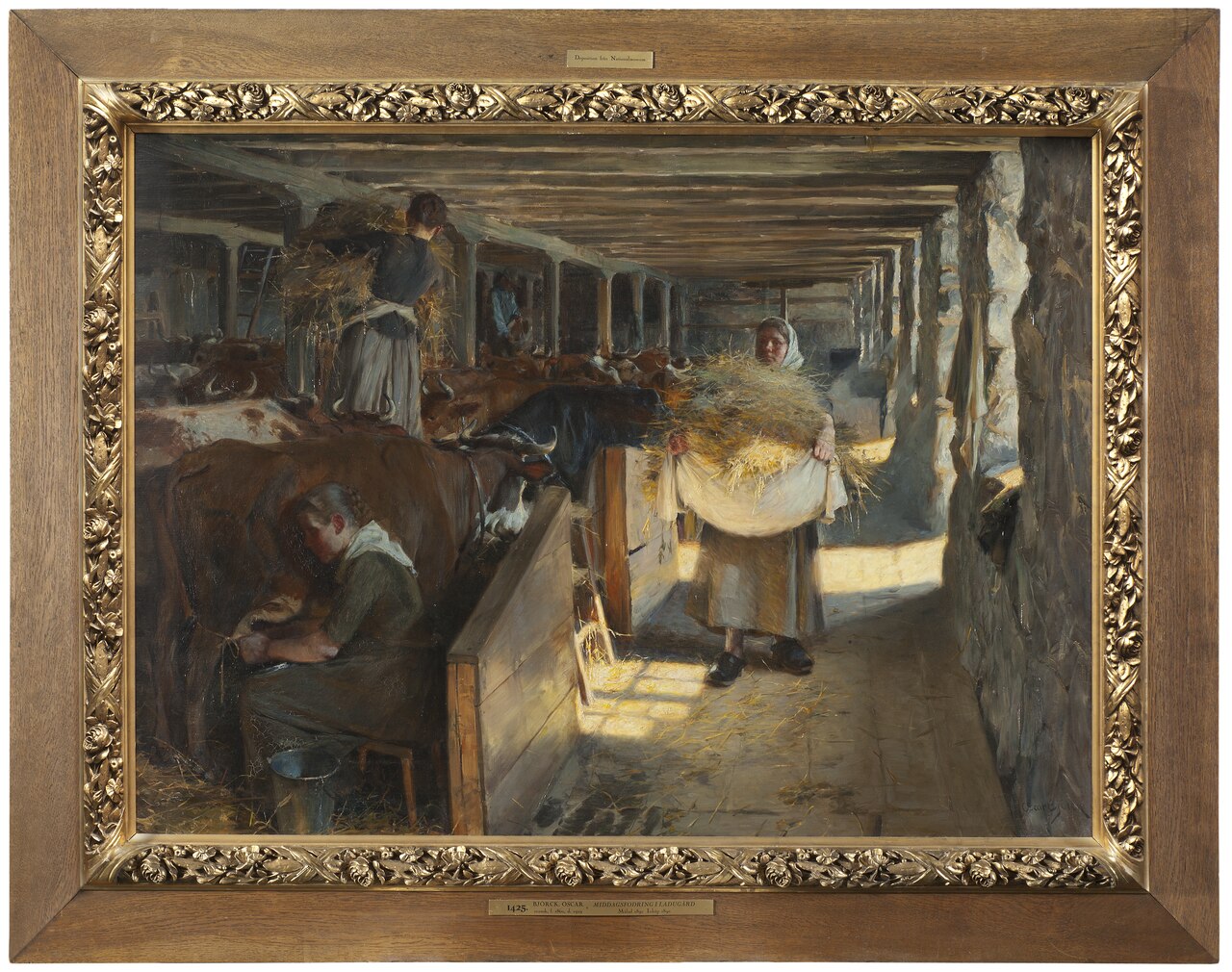
- Feeding Time in a Cow‑Shed (1890) – This genre painting portrays a rural interior where cows are being fed. Björck emphasizes the texture of straw and the warm glow of lamplight, employing chiaroscuro to model the animals and the farmer’s hands. The work exemplifies his interest in everyday labour and his ability to convey the tactile qualities of a humble setting.
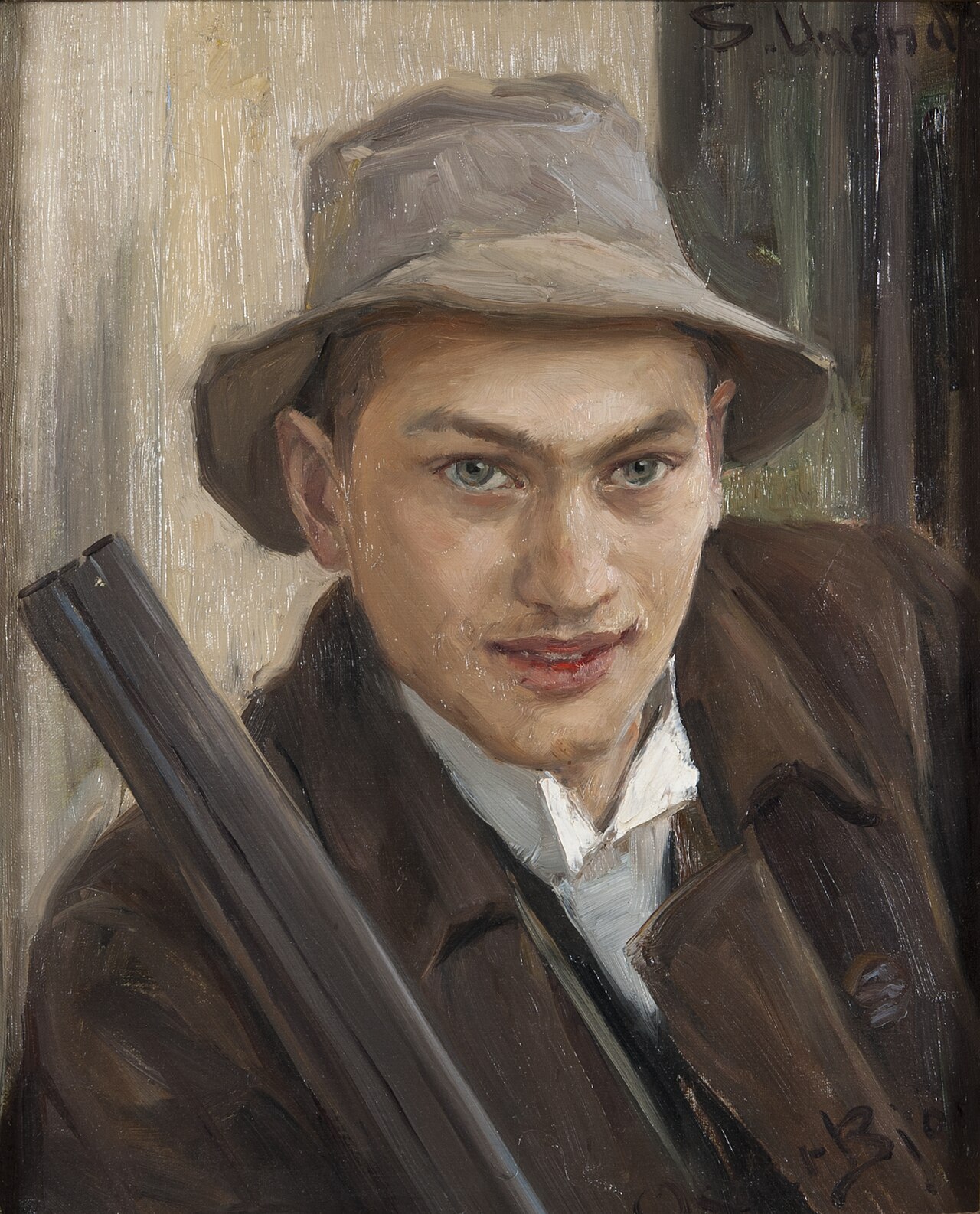
- Sven Unander (1891) – A portrait of the Swedish writer Sven Unander, this piece showcases Björck’s capacity for psychological insight. The sitter is rendered with a restrained colour scheme, and the subtle play of light across his face reveals a contemplative mood. The background is intentionally understated, keeping focus on the subject’s expression.
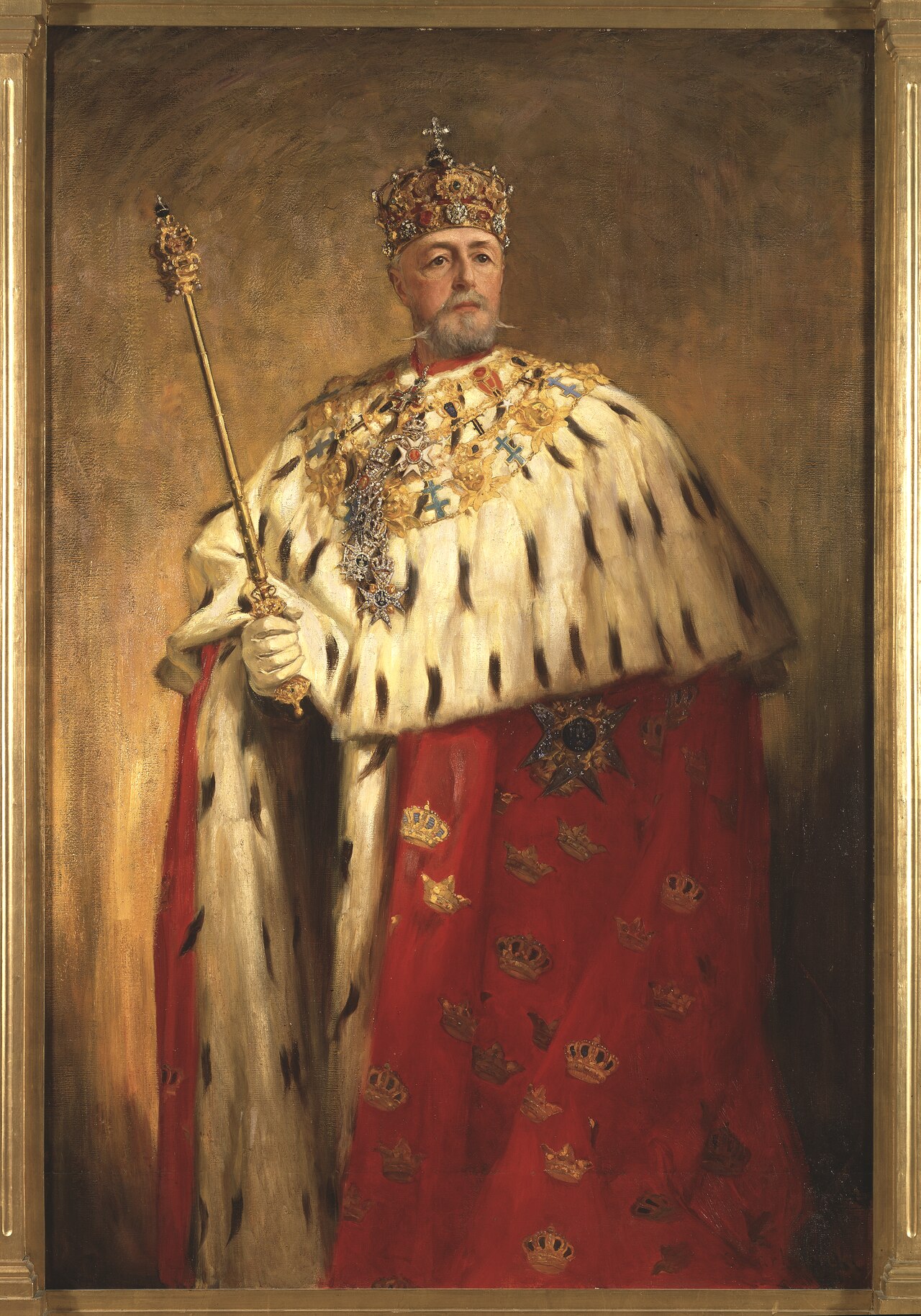
- Oskar II (Oskar Fredrik), 1829‑1907, King of Sweden 1872‑1905 (1897) – This official portrait of King Oscar II demonstrates Björck’s ability to work within the conventions of royal portraiture. The king is depicted in regal attire, seated against a dignified backdrop. While the composition adheres to formal expectations, Björck’s handling of texture—particularly the sheen of fabric and the subtle modelling of the monarch’s face—adds a degree of realism that distinguishes the work from more idealised court paintings.
These pieces collectively illustrate Björck’s versatility: he could move seamlessly between intimate genre scenes, bustling market interiors, and formal portraiture, always maintaining a consistent naturalistic sensibility.
Influence and legacy Oscar Björck’s influence on Swedish art is principally seen in the way he bridged academic training with a more modern, observational approach to subject matter. As a professor at the Royal Swedish Academy of Arts, he mentored numerous artists who would later become prominent figures in Swedish modernism. His emphasis on plein‑air observation and his willingness to depict contemporary life helped to shift the Academy’s curriculum away from strictly historical and mythological themes toward a broader, more inclusive representation of Swedish society.
Although Björck never achieved the international fame of some of his French contemporaries, his work remains a valuable record of late‑nineteenth‑century Scandinavian life. Museums in Sweden, such as the Nationalmuseum in Stockholm, continue to exhibit his paintings, and his pieces are frequently cited in studies of Nordic naturalism. Moreover, his portraits of notable figures like King Oscar II provide historical visual documentation that is still referenced by scholars.
In contemporary art‑historical discourse, Björck is recognised as a key figure who helped to lay the groundwork for the more experimental tendencies that would emerge in Swedish art during the early twentieth century. His balanced synthesis of academic technique and naturalistic observation endures as a model of disciplined yet empathetic painting.
---
Overall, Oscar Björck stands as a representative of the transitional generation that linked traditional Swedish academic art with the emerging modern sensibility of the late nineteenth century, leaving a legacy of technically proficient, quietly expressive works that continue to inform the narrative of Scandinavian art history.
Frequently asked questions
Who was Oscar Björck?
Oscar Björck (1860–1929) was a Swedish painter and professor at the Royal Swedish Academy of Arts, known for his naturalistic genre scenes and portraits.
What artistic style or movement is he associated with?
He is generally linked to naturalistic realism, blending academic training with the observational techniques of French realism and early Impressionism.
What are his most famous works?
Key works include Launching the Boat, Skagen (1884), A Venetian Covered Market (1887), Feeding Time in a Cow‑Shed (1890), the portrait Sven Unander (1891), and the royal portrait of King Oscar II (1897).
Why is Oscar Björck important in art history?
He helped modernise Swedish academic art by introducing naturalistic subjects and plein‑air observation, and as a professor he influenced a generation of Swedish artists who moved toward modernism.
How can I recognise an Oscar Björck painting?
Look for balanced compositions, muted yet harmonious colour palettes, careful modelling of light and shadow, and a focus on everyday scenes rendered with precise but fluid brushwork.