Nicodemus Tessin the Younger
1654 – 1728
In short
Nicodemus Tessin the Younger (1654–1728) was a Swedish Baroque architect, city planner and administrator, best known for his ambitious designs for royal and civic projects across Europe, including proposals for the Louvre and French garden parterres.
Notable works


Early life Nicodemus Tessin the Younger was born in 1654 in the town of Nyköping, Sweden, into a family already distinguished in the field of architecture. His father, Nicodemus Tessell the Elder, was a prominent architect who introduced him to the principles of classical and Baroque design. Growing up in a milieu that combined artistic ambition with royal patronage, Tessell the Younger received a thorough education in mathematics, engineering, and the visual arts, which later underpinned his architectural practice. By his early twenties he had completed an apprenticeship that included study trips to the Netherlands, Italy and France, where he absorbed the latest trends in European Baroque architecture.
Career and style Returning to Sweden in the early 1680s, Tessell the Younger quickly assumed a leading role in the royal building programme of King Charles XI and later Charles XII. He became the chief architect for a series of grand projects that sought to project Sweden’s growing power on the European stage. His style is firmly rooted in the Baroque idiom, characterised by dramatic spatial compositions, rich ornamentation and a sophisticated handling of light and shadow. Tessell combined the monumental scale favoured by French classicism with a distinctly Swedish sensibility—robust stone construction, restrained decorative schemes, and an emphasis on functional urban planning.
Throughout his career Tessell was also a skilled city planner. He oversaw the layout of new streets, public squares and waterworks, integrating architectural ensembles with the surrounding landscape. His approach was holistic: buildings were not isolated objects but parts of a broader visual and civic programme. This perspective is evident in his garden designs, where parterres, fountains and hydraulic devices are arranged to create theatrical vistas that extend the architecture into the surrounding terrain.
Signature techniques Tessell’s work displays several recurring technical and aesthetic strategies:
* Integration of architecture and landscape – He treated gardens as extensions of interior spaces, using axial alignments and perspective tricks to blur the boundary between built and natural environments. * Use of hydraulic engineering – His designs often incorporated water-driven features such as fountains and wheels, showcasing both technical prowess and decorative effect. * Classical ordering with Baroque dynamism – While adhering to classical columnar orders and proportion, he introduced movement through curved façades, ornamental scrolls and sculptural groups that animate the structures. * Rich yet disciplined ornament – Decorative motifs—such as shell forms, tritons and sirens—appear in a controlled manner, reinforcing the narrative of power without overwhelming the structural clarity.
These techniques allowed Tessell to produce works that were at once visually spectacular and structurally sound, a hallmark of late‑Baroque architecture.
Major works The surviving documentation of Tessell’s oeuvre includes several ambitious projects, many of which remained unrealised but nonetheless illustrate his creative range.
1. Proposal for a Library Pavilion for the Louvre, Paris – In this competition entry, Tessell presented a plan and interior elevation that combined a classical courtyard with a vaulted reading room. The design employed a central dome flanked by colonnades, echoing the French tradition while inserting a Swedish emphasis on robust stonework.
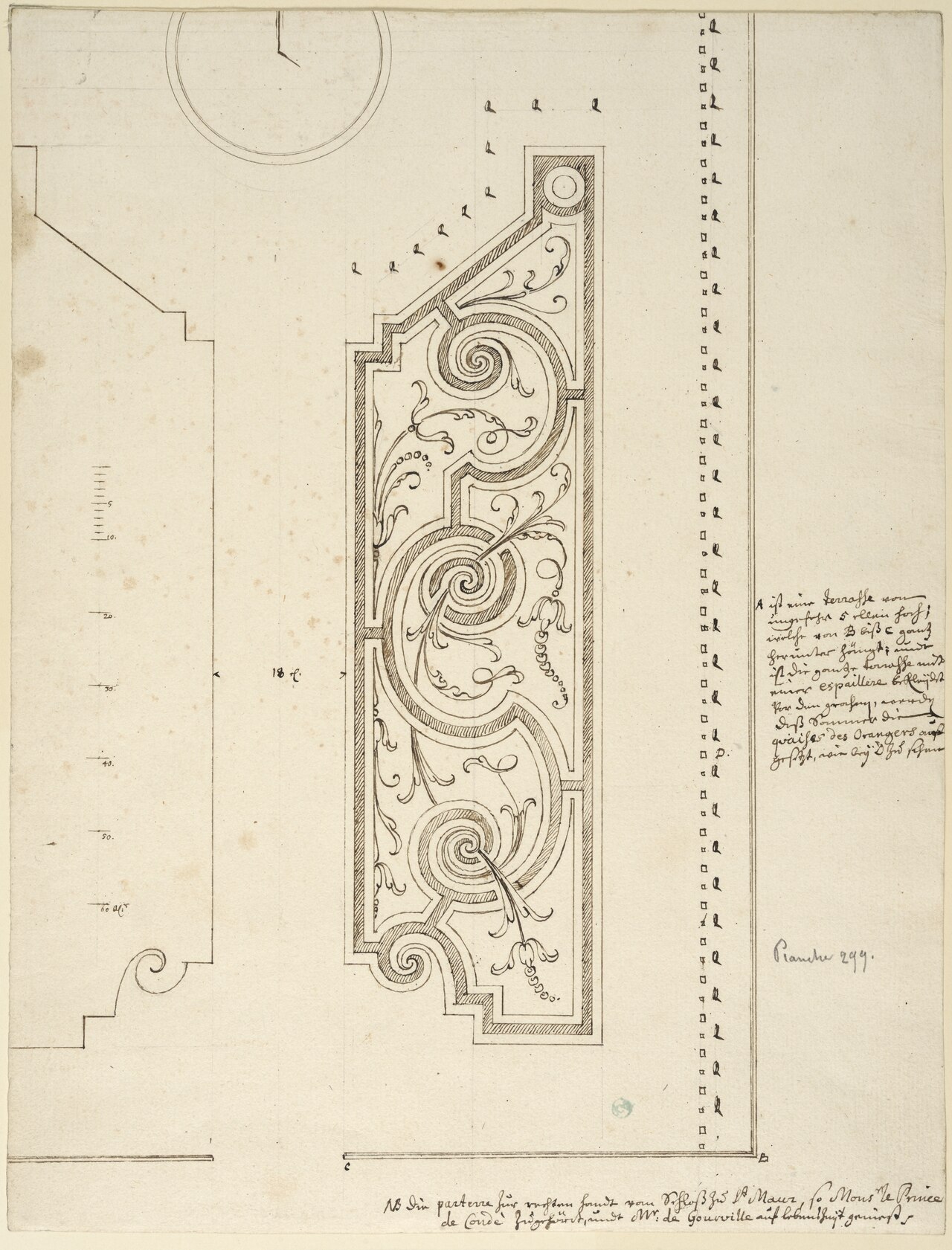
2. Parterre in the Gardens of the Château de Saint‑Maur – Tessell’s plan for this French estate featured a symmetrical layout of trimmed hedges, reflective pools and a series of axial pathways leading to a focal pavilion. The drawing demonstrates his skill in adapting the French formal garden model to suit a more restrained decorative vocabulary.
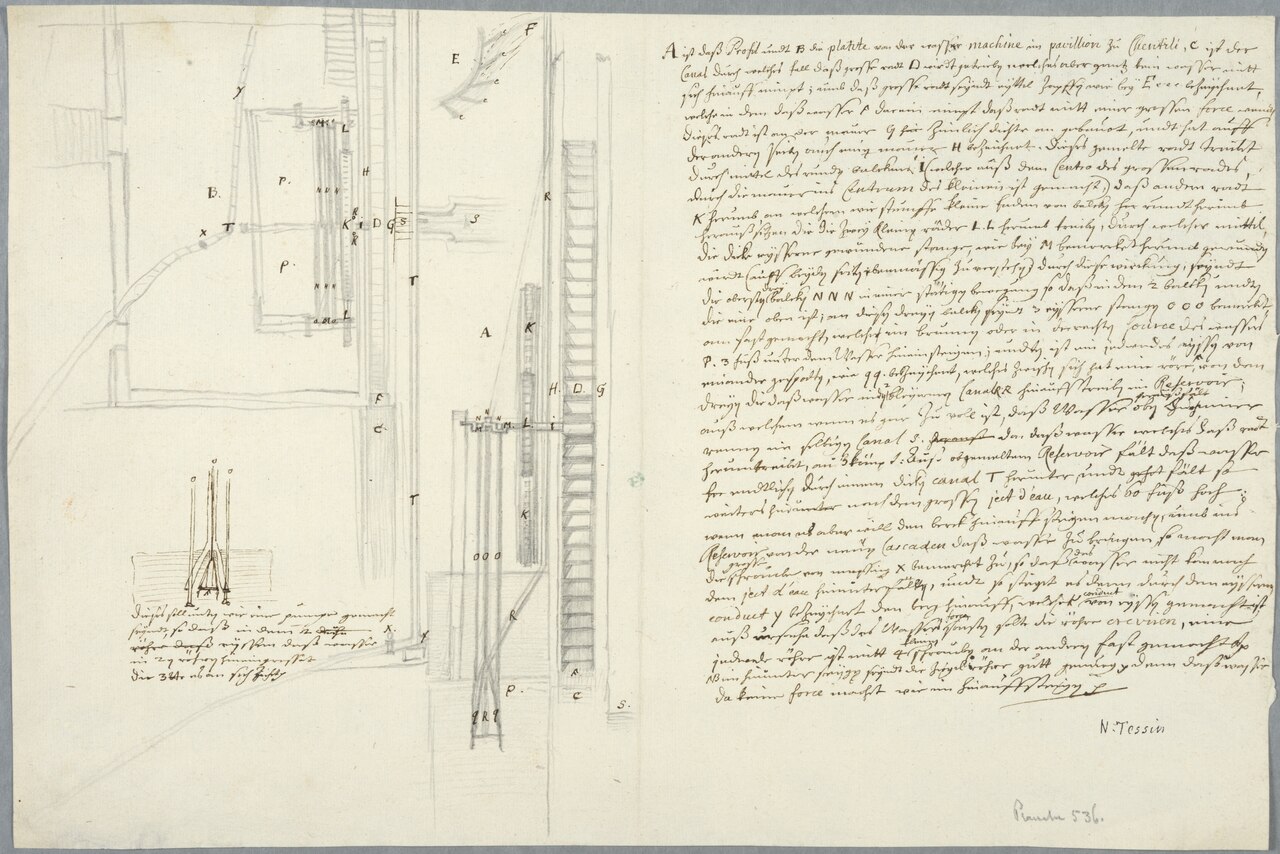
3. Hydraulic Wheel in Chantilly (1679) – This engineering‑driven feature, documented with a German explanatory text, illustrates Tessell’s fascination with water power. The wheel, driven by a concealed water source, was intended to animate a garden fountain, underscoring his belief that kinetic elements could enhance the theatricality of a landscape.
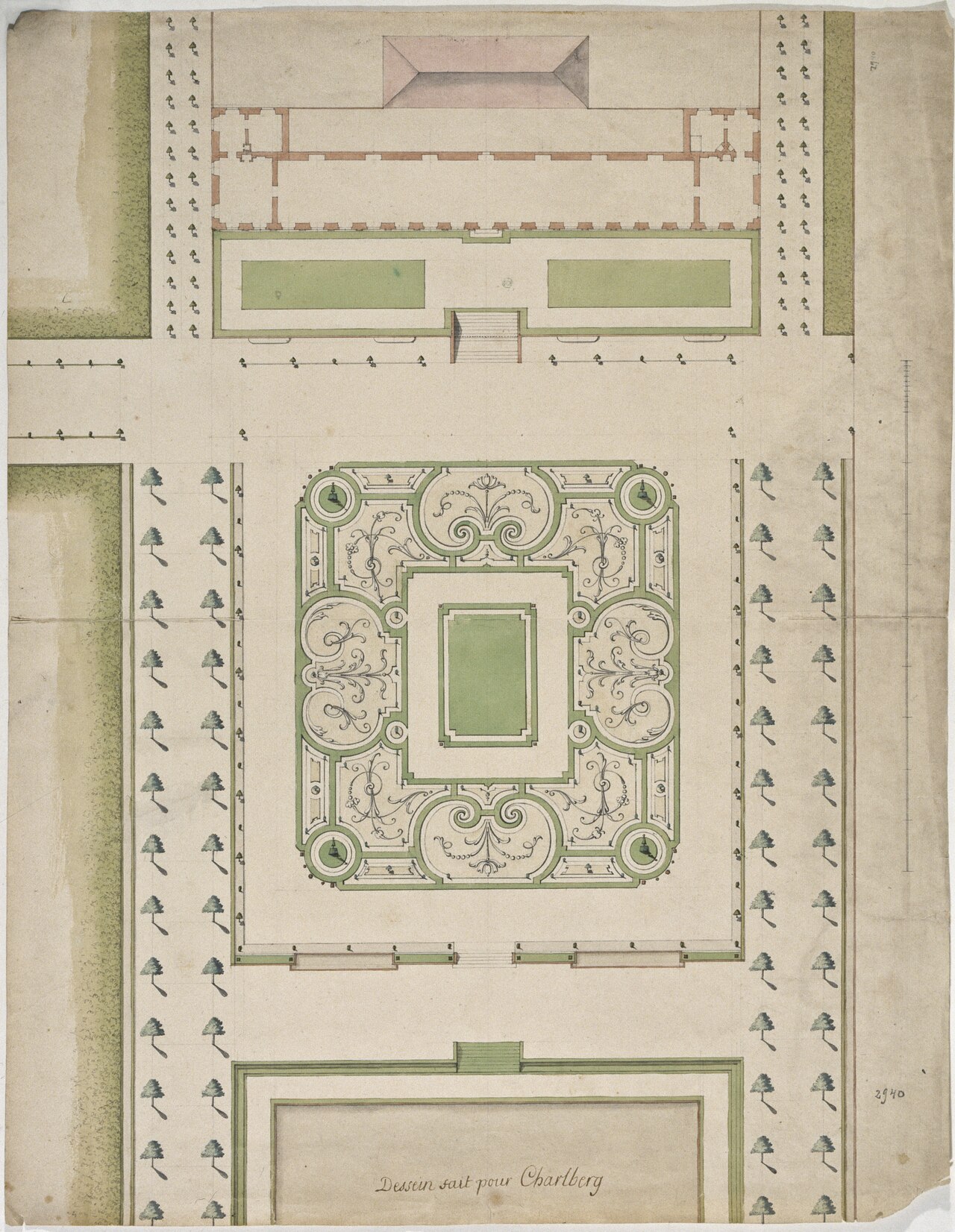
4. Project for a Parterre in front of the Orangery in the Gardens of Karlberg – The plan shows a series of terraced lawns, ornamental basins and a central sculpture ensemble. Tessell designed the parterre to frame the orangery, creating a visual dialogue between the building’s glass façade and the surrounding greenery.
5. Shell‑shaped Fountain Supported by Tritons with an Interlaced Triton and Siren – This sculptural fountain, with its marine motifs, epitomises the Baroque fascination with mythological subjects. The interlaced figures convey motion and narrative, while the shell‑shaped basin reflects the reflective quality of water as a decorative surface.
While some of these projects never progressed beyond the drawing board, they collectively reveal Tessell’s capacity to blend architectural rigor with imaginative scenography, a quality that placed him among the leading European designers of his time.
Influence and legacy Nicodemus Tessell the Younger left an indelible mark on Swedish architecture and urban planning. His most enduring built legacy is the Royal Palace in Stockholm, where he refined the Baroque aesthetic into a national symbol of authority. The palace’s grand façades, expansive courtyards and integrated gardens set a precedent for subsequent Swedish civic architecture.
Beyond individual buildings, Tessell’s planning principles informed the development of Stockholm’s city centre, influencing the layout of streets and public spaces well into the 19th century. His emphasis on the harmonious integration of architecture, water engineering and landscape design inspired later architects such as Carl Hårleman and later the Swedish National Romantic movement, which looked back to Baroque grandeur for inspiration.
Internationally, Tessell’s competition submissions for the Louvre and French châteaux demonstrate the cross‑cultural dialogue of the Baroque era. Though his designs were not built, they contributed to a wider exchange of ideas between Sweden and the continent, helping to position Swedish architecture within the broader European narrative.
Today, scholars consider Tessell a pivotal figure in the transition from late‑Renaissance classicism to full‑blown Baroque in the Nordic context. His surviving drawings are studied for their technical precision and artistic imagination, and his built works continue to attract visitors, reinforcing his reputation as one of Sweden’s foremost architects.
---