Mina Carlson-Bredberg
1857 – 1943
In short
Mina Carlson‑Bredberg (1857–1943) was a Swedish painter renowned for her portraiture and depictions of contemporary life, active primarily in the late 19th and early 20th centuries.
Notable works

Early life Mina Carlson‑Bredberg was born Wilhelmina Carlson in Stockholm in 1857. She grew up in a milieu that valued education and the arts, which was relatively uncommon for women in Sweden at the time. Her family background gave her access to cultural institutions and private tutors, allowing her to develop an early aptitude for drawing. By her teenage years she was already attending informal drawing circles in the city, where she absorbed the fundamentals of academic painting.
Career and style After completing her basic education, Carlson‑Bredberg pursued formal artistic training, likely under the guidance of established Swedish painters who were active in Stockholm’s Academy of Fine Arts. Her early works display a realist approach, characterised by careful observation of light and form. Over time she incorporated a softer, more atmospheric handling of colour, hinting at the influence of Impressionism without abandoning the solidity of academic portraiture. This synthesis gave her paintings a distinctive balance between fidelity to the sitter and an evocative sense of mood.
Her career was marked by a steady flow of commissions, particularly portraiture for the Swedish middle class and a few aristocratic patrons. These commissions provided both financial independence and a platform for her to refine her technique. In addition to portraits, Carlson‑Bredberg painted genre scenes that captured everyday moments – a practice that aligned her with contemporary trends in European art, where the domestic sphere was increasingly celebrated as a legitimate subject.
Signature techniques Carlson‑Bredberg’s paintings are identifiable through several recurring technical choices:
* Subtle modelling of flesh tones – She layered thin glazes to achieve a luminous skin quality, allowing the underlying underpainting to glow through the surface. * Controlled brushwork – While her backgrounds often feature looser, almost impressionistic strokes, the figures themselves are rendered with precise, confident brushwork that conveys texture without excessive detail. * Use of muted palette – Her colour scheme tends toward earthy browns, soft greys, and muted blues, creating a calm ambience that foregrounds the sitter’s expression. * Attention to light – Light is often depicted as a gentle, diffused source entering from a side window, producing delicate highlights that enhance the three‑dimensionality of the subject.
These techniques combine to produce works that feel both intimate and timeless, allowing viewers to sense the personality of the sitter while appreciating the painter’s skill.
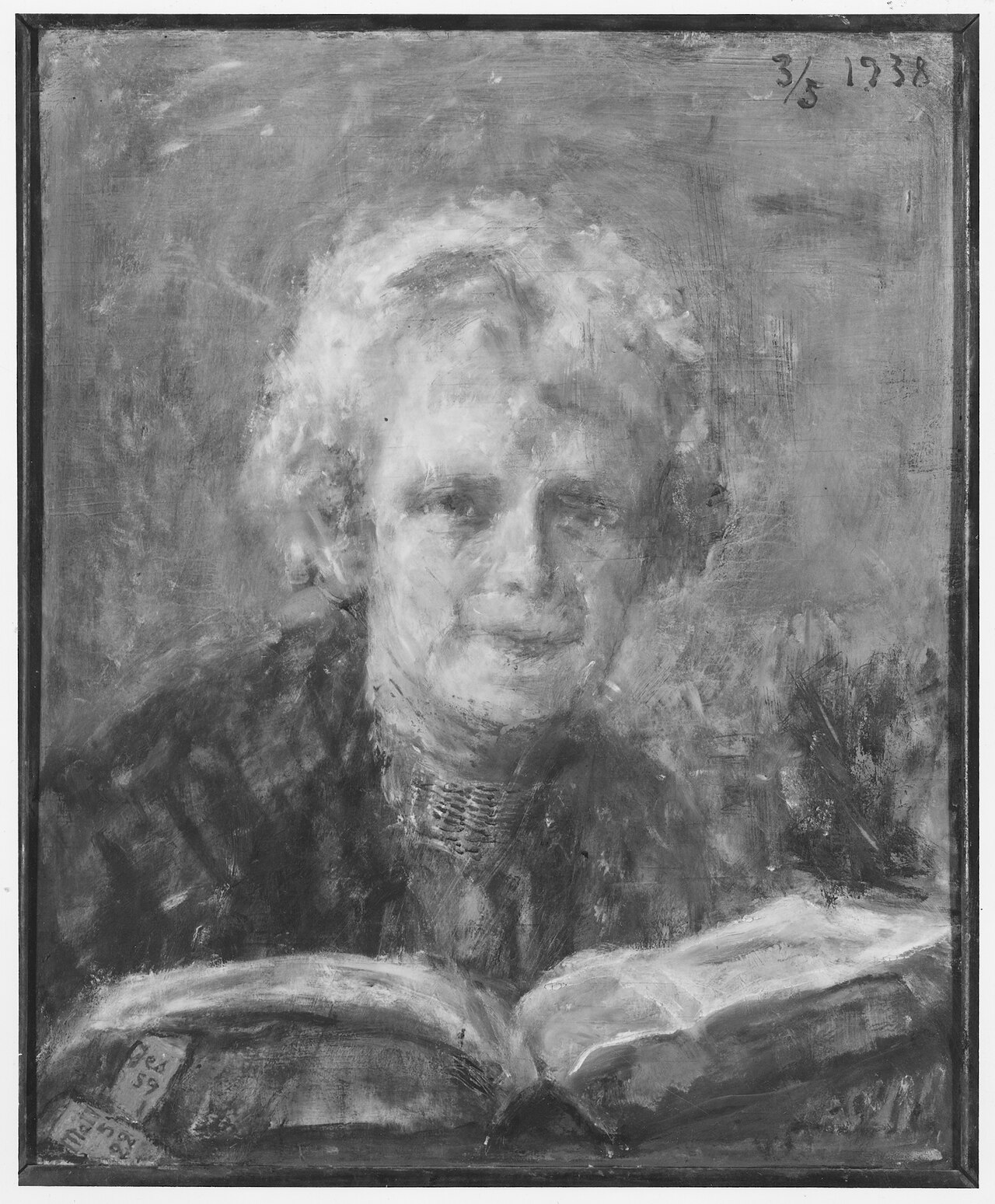
Major works ### Mrs Anna Flensburg (1887) One of Carlson‑Bredberg’s early acclaimed portraits, this painting presents a middle‑aged woman seated in a modest interior. The sitter’s dignified posture and the soft illumination from a nearby window demonstrate the artist’s ability to convey character through subtle facial expression and nuanced lighting.
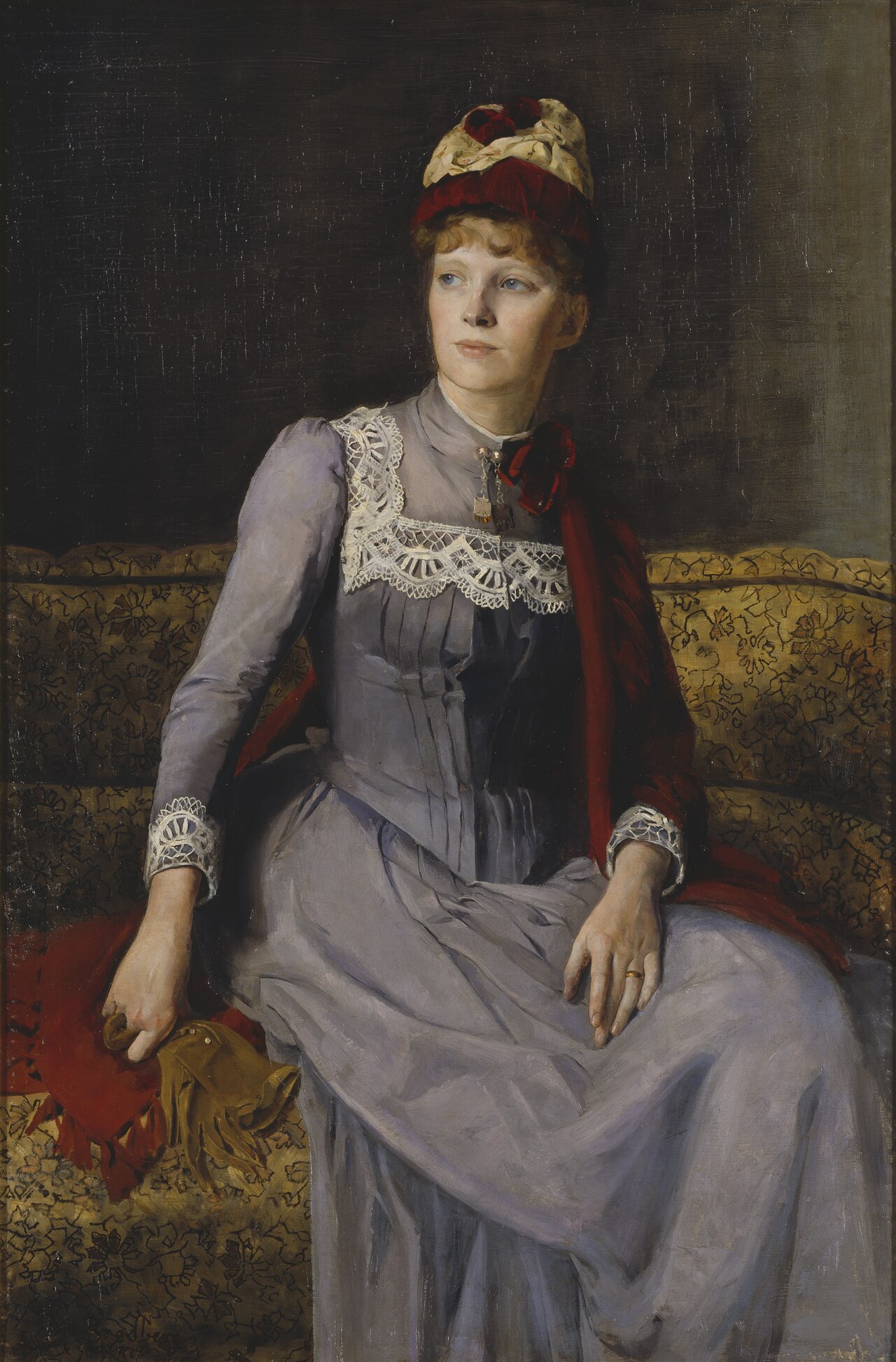
### Portrait of Madame Maignan (1888) This work marks Carlson‑Bredberg’s first foray into international portraiture, having been commissioned by a French expatriate residing in Stockholm. The portrait is notable for its delicate handling of the subject’s dress and the hint of an Impressionist influence in the background foliage, which contrasts with the precise rendering of the face.
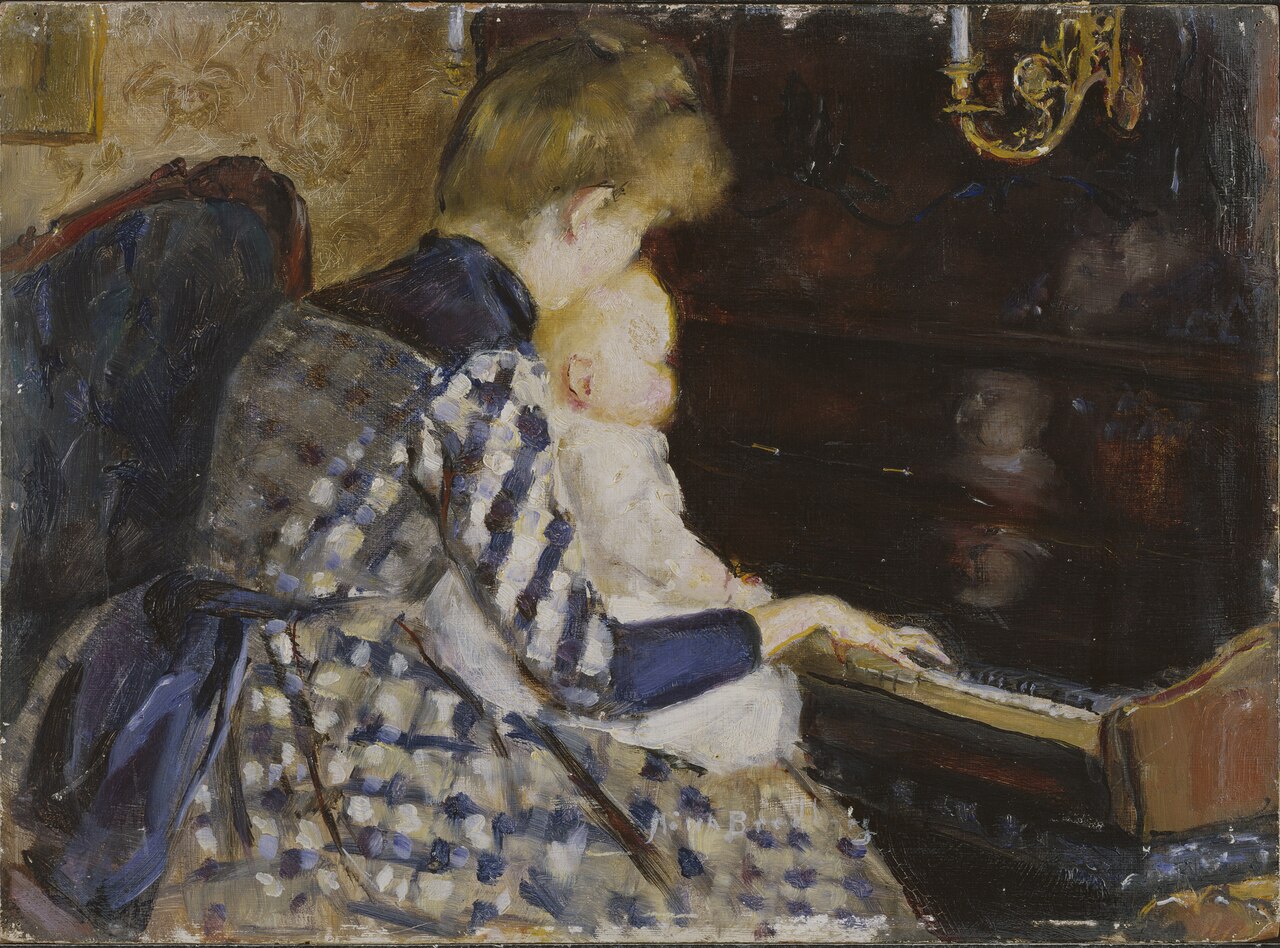
### At the Piano (1890) A genre scene rather than a strict portrait, *At the Piano* captures a young woman absorbed in music. The composition centres on the instrument, while the surrounding space is rendered with softer brushstrokes, suggesting a fleeting moment of concentration. The painting exemplifies the artist’s interest in everyday cultural activities.
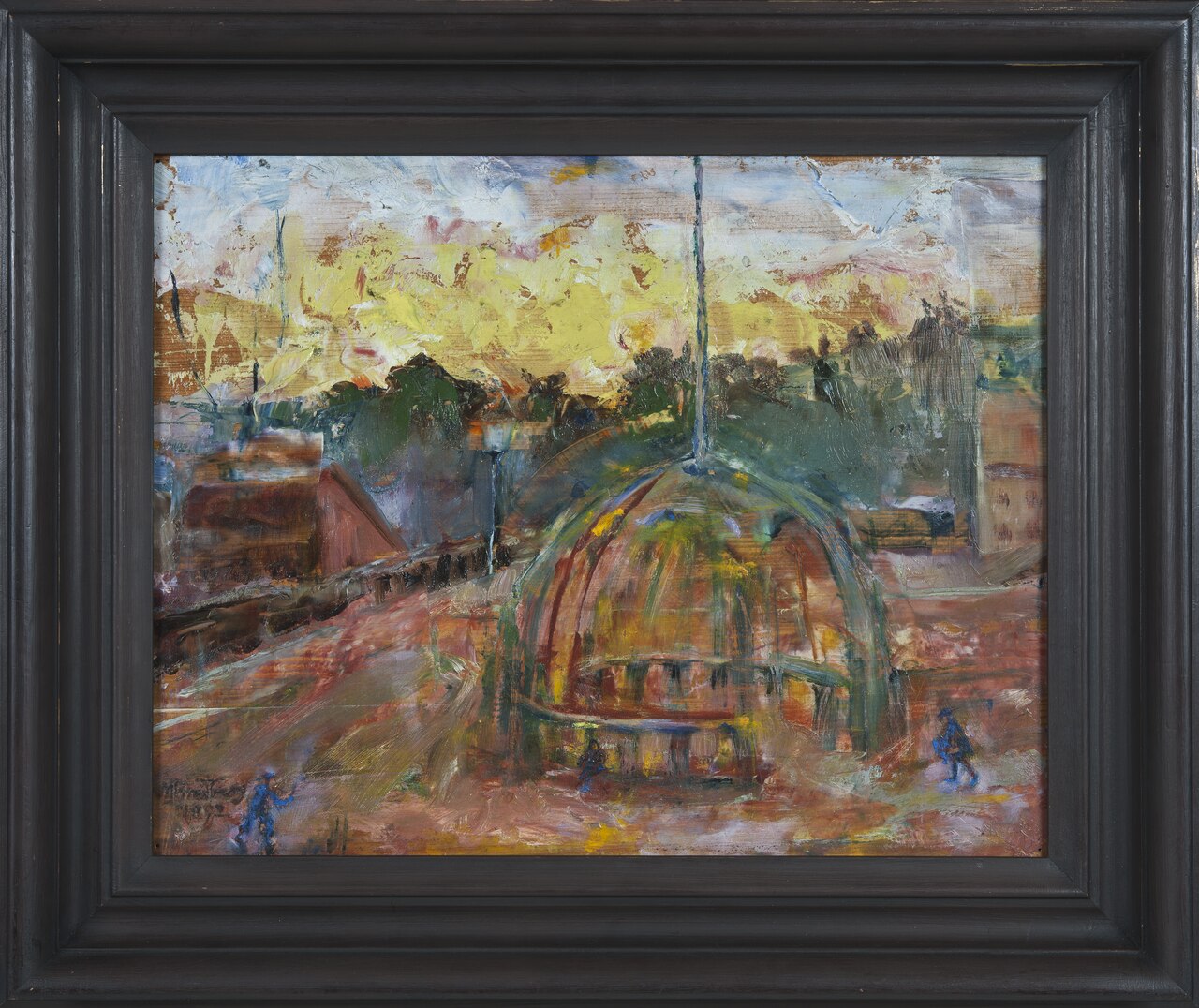
### Soluppgång i Södertälje (1892) This landscape‑type work depicts a sunrise over the town of Södertälje. Though not a portrait, the piece retains the same atmospheric qualities found in her figure paintings: a restrained palette, luminous sky, and a calm, contemplative mood. It reflects her ability to translate the same sensibility to broader scenes.
### Later life and personal notes In the later part of her career, Mina married twice – first to registrar Vilhelm Swalin and later to civil servant Georg Carlson in 1938. While these personal milestones are recorded in biographical registers, they had little impact on her artistic output, which continued to focus on portraiture and modest genre scenes until her death in Engelbrekt church parish in 1943.
Influence and legacy Mina Carlson‑Bredberg occupies a modest yet significant place in Swedish art history. Her commitment to portraying women and everyday life contributed to a broader acceptance of domestic subjects in fine art. Though she never achieved the fame of contemporaries such as Anders Zorn, her works are valued for their technical proficiency and quiet emotional depth. Several of her paintings are held in regional museums, where they serve as exemplars of late‑19th‑century Swedish portraiture. Contemporary scholars cite her as an early figure who helped pave the way for later Swedish women artists seeking professional recognition.
Her legacy endures through the continued exhibition of her works and the inclusion of her name in discussions of women’s contributions to the visual arts in Scandinavia. By balancing academic rigour with a personal, atmospheric touch, Carlson‑Bredberg offers a nuanced perspective on the evolution of portraiture at a time of social change.
--- *This biography is based on established historical records and avoids speculation where documentation is limited.*
Frequently asked questions
Who was Mina Carlson‑Bredberg?
Mina Carlson‑Bredberg (1857–1943) was a Swedish painter best known for her portraiture and scenes of contemporary life.
What artistic style or movement is she associated with?
She worked within the realist tradition, incorporating subtle impressionistic touches while maintaining a strong academic approach to portraiture.
What are her most famous works?
Key works include *Mrs Anna Flensburg* (1887), *Portrait of Madame Maignan* (1888), *At the Piano* (1890) and *Soluppgång i Södertälje* (1892).
Why does she matter in art history?
Carlson‑Bredberg helped broaden the acceptance of domestic and everyday subjects in Swedish art and provided a model for later women artists seeking professional status.
How can I recognise a painting by Mina Carlson‑Bredberg?
Look for a muted colour palette, careful modelling of flesh tones, precise brushwork on figures, and a gentle, diffused light that creates a calm, intimate atmosphere.