Julia Beck
1853 – 1935
In short
Julia Beck (1853–1935) was a Swedish painter and calligrapher known for atmospheric landscapes and portraiture, active in the late‑19th and early‑20th centuries. She worked mainly in Sweden and France, producing works such as Lake St. Cucuphat and Hay‑Cocks by Moonlight.
Notable works


Early life Julia Beck was born in Stockholm in 1853 into a middle‑class family that valued education and the arts. From an early age she displayed a talent for drawing, and her parents encouraged her enrolment at the Royal Swedish Academy of Arts, where she received formal training in drawing, anatomy and oil painting. The Academy, which began admitting women in the 1860s, provided Beck with a foundation in academic techniques and exposed her to the emerging naturalist currents that were reshaping Swedish art in the 1870s. During her student years she also studied calligraphy, a discipline that would remain a personal hobby throughout her career.
Career and style After completing her studies, Beck began exhibiting in Stockholm and quickly attracted attention for her deft handling of light and colour. In the early 1880s she moved to Paris, the centre of the European art world, where she joined a community of Scandinavian expatriates. The French capital offered her access to the ateliers of the Académie Julian and the studios of progressive artists who were experimenting with plein‑air painting. While Beck never aligned herself with a single avant‑garde movement, her work reflects a synthesis of Swedish naturalism and the French tonal approach to landscape, characterised by muted palettes, subtle modulation of atmosphere, and an emphasis on quiet, everyday scenes.
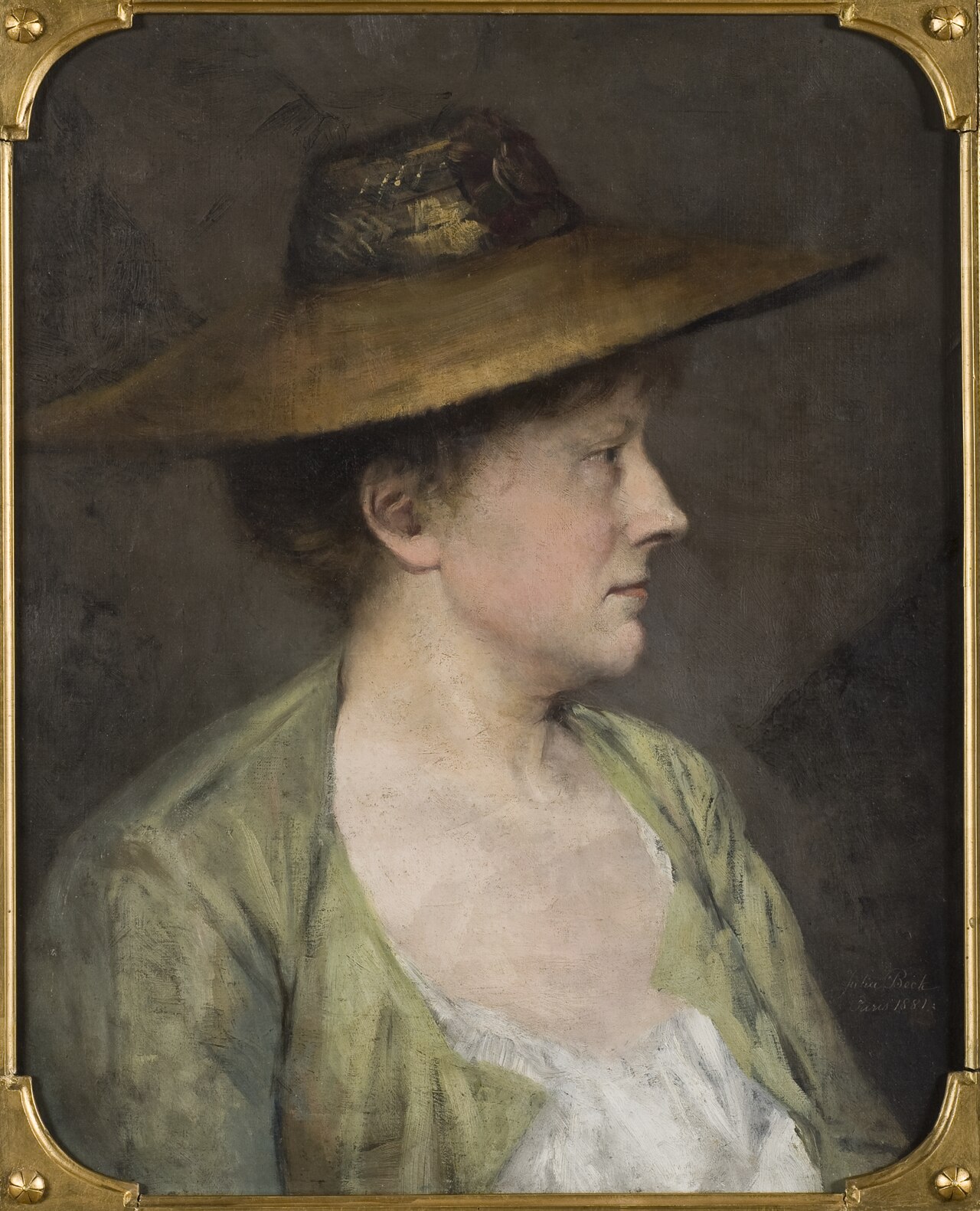
The artist’s oeuvre spans portraiture, genre scenes and landscapes. Her portraits, such as the 1881 *Kvinnoporträtt*, combine a realistic rendering of the sitter with an understated background that suggests the subject’s interior life. In her landscapes, Beck favoured lakes, fields and twilight moments, capturing the transitory effects of light with a restrained brushstroke. Though she never formally joined a movement, critics of her time linked her to the broader Scandinavian naturalist trend that sought to depict the native environment with fidelity and poetic sensitivity.
Signature techniques Beck’s paintings are distinguished by several recurring technical choices:
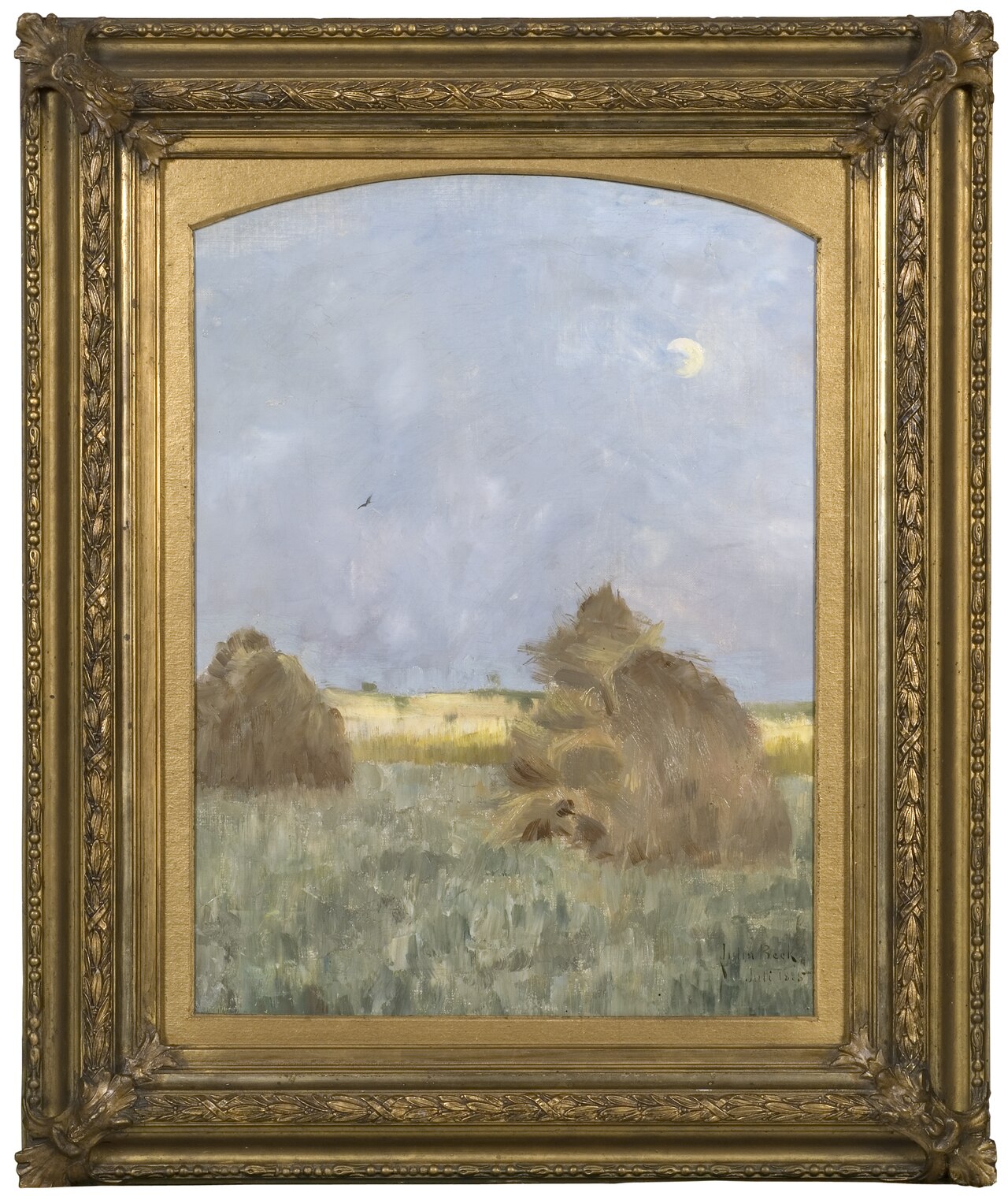
1. Atmospheric modulation – She often painted the same motif at different times of day, using delicate shifts in colour temperature to convey mood. In works like *Hay‑Cocks by Moonlight* (1885) the silvery glow of moonlight is achieved through layered glazes of cool blues and greys.
2. Limited palette – Beck favoured a restrained colour range, predominantly earth tones, muted greens and soft blues. This restraint allowed her to focus on tonal harmony rather than vivid colour contrasts.
3. Fine brushwork with soft edges – Her handling of form leans towards a slightly blurred edge, especially in background elements, which creates a sense of depth and atmospheric perspective.
4. Integration of calligraphic line – Even in her paintings, Beck occasionally employed a subtle, calligraphic line to define outlines, a habit inherited from her training in penmanship.
5. Study from plaster casts – The 1876 work *Dräng. Studie efter gipsantik* demonstrates her academic grounding; she rendered a male figure after a classical plaster model, focusing on accurate anatomy and proportion.
Major works Julia Beck’s most frequently cited works illustrate the breadth of her interests:
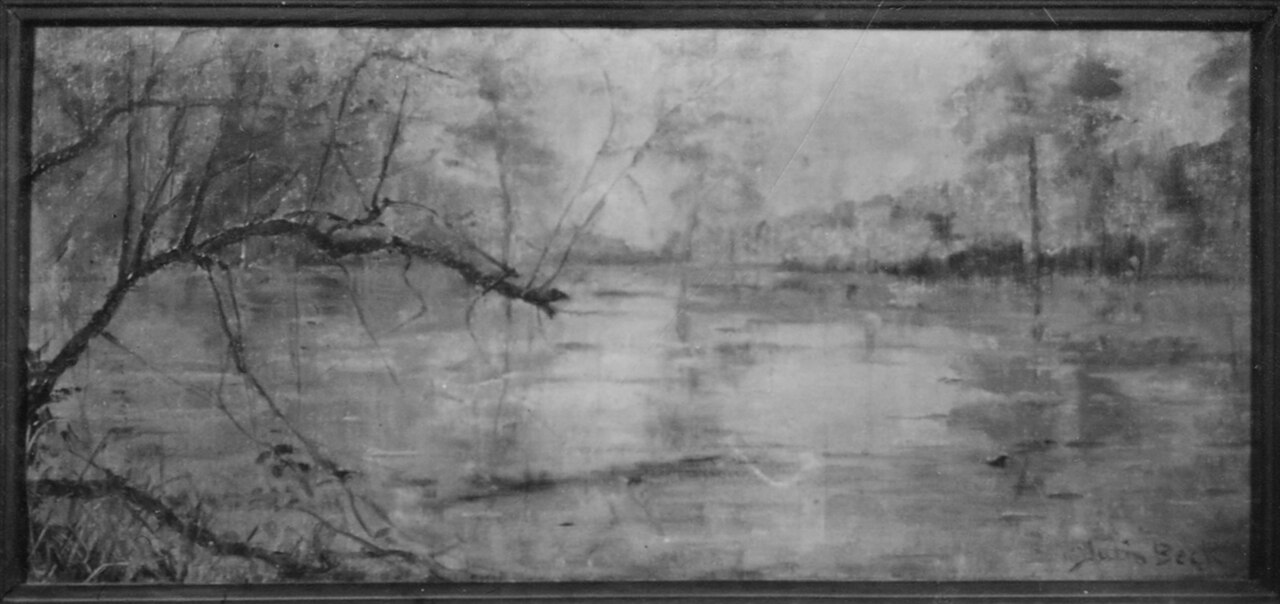
- Lake St. Cucuphat – A serene lakeside scene that exemplifies her mastery of light on water. The painting captures the reflective surface of the lake at sunrise, with pastel hues that dissolve the horizon into a dreamlike atmosphere.
- Hay‑Cocks by Moonlight (1885) – This nocturnal landscape is notable for its delicate rendering of moonlight on stacked hay. The composition balances the verticality of the hay‑cocks with the horizontal sweep of the night sky, creating a quiet, contemplative mood.
- Kvinnoporträtt (1881) – A portrait of a young woman, rendered with subtle chiaroscuro. The sitter’s gaze is direct yet softened by a muted background, highlighting Beck’s ability to convey personality without overt embellishment.
- The Last Ray of Sunshine (1888) – In this piece Beck captures the fleeting moment when sunlight retreats behind a clouded sky. The warm, amber tones of the sun’s last rays contrast with the cool shadows, demonstrating her skill in colour juxtaposition.
- Dräng. Studie efter gipsantik (1876) – An academic study of a male figure based on a classical plaster cast. The work reveals Beck’s solid grounding in figure drawing and her commitment to traditional techniques, even as she later moved towards more atmospheric subjects.
These works, together with numerous smaller studies and watercolours, were exhibited in both Swedish and French salons, earning her a modest but respectable reputation among contemporaries.
Influence and legacy Julia Beck occupies a modest yet meaningful place in the history of Swedish art. While she never achieved the fame of her male peers, her career demonstrates the expanding opportunities for women artists in the late 19th century. Her cross‑cultural experience—training in Stockholm, professional activity in Paris, and eventual settlement in Vaucresson where she died in 1935—mirrored the broader Scandinavian diaspora that helped disseminate Nordic artistic ideas throughout Europe.
Beck’s paintings contributed to the development of a Nordic naturalist aesthetic that valued subtle light effects and an intimate relationship with the landscape. Later Swedish painters, particularly those working in the early 20th century, referenced her atmospheric approach when depicting rural scenes. Moreover, her commitment to both painting and calligraphy foreshadowed the interdisciplinary practice that became more common among women artists in the 20th century.
In recent decades, art historians have begun to reassess the contributions of overlooked women artists, and Beck’s oeuvre has benefited from renewed scholarly attention. Her works are held in several Swedish public collections, and occasional exhibitions have highlighted her role as a bridge between Swedish naturalism and French tonal painting. Though not a household name, Julia Beck remains a valuable reference for scholars studying the intersections of gender, geography and artistic practice in the turn‑of‑the‑century European art world.
---
Key points for recognition
- Soft, muted colour schemes with an emphasis on atmospheric light. - A tendency toward quiet, everyday subjects rather than grand historical narratives. - Fine, calligraphic line work subtly present in the rendering of forms. - Use of glazing techniques to achieve luminous night‑time effects.
Overall, Julia Beck’s legacy is that of a diligent painter who navigated the artistic currents of her time with a personal, introspective vision, leaving behind a body of work that continues to speak to the quiet beauty of the Scandinavian landscape.
Frequently asked questions
Who was Julia Beck?
Julia Beck (1853–1935) was a Swedish painter and calligrapher noted for atmospheric landscapes and portraiture, active in Sweden and France during the late 19th and early 20th centuries.
What artistic style or movement is she associated with?
She is not linked to a single movement, but her work blends Swedish naturalism with the French tonal approach to light and colour, emphasizing subtle atmosphere over dramatic narrative.
What are her most famous works?
Her most cited pieces include *Lake St. Cucuphat*, *Hay‑Cocks by Moonlight* (1885), *Kvinnoporträtt* (1881), *The Last Ray of Sunshine* (1888) and the academic study *Dräng. Studie efter gipsantik* (1876).
Why does she matter in art history?
Beck exemplifies the expanding role of women artists in the late 19th century, bridging Swedish naturalist traditions with French tonal painting and influencing subsequent generations of Nordic painters.
How can I recognise a Julia Beck painting?
Look for muted colour palettes, delicate handling of light—especially twilight or moonlight—soft edges, subtle calligraphic line work, and quiet, everyday subjects such as lakes, fields or intimate portraits.