Hugo Salmson
1843 – 1894
In short
Hugo Salmson (1843–1894) was a Swedish painter renowned for his figurative and genre scenes, active in the late 19th century. He was born in the Storkyrkoförsamlingen parish and died in Lund Cathedral parish, leaving a modest but respected body of work that includes "Une arrestation dans un village de Picardie" and "Mademoiselle Pourtalès".
Notable works
_1.jpg)

Early life Hugo Fredrik Salmson was born in 1843 in the Storkyrkoförsamlingen parish of Stockholm, Sweden. Little is recorded about his family background, but archival sources indicate that he grew up in a milieu that valued education and the arts. As a child he showed an early aptitude for drawing, copying religious icons and the decorative motifs that adorned the churches of his native city. His first formal instruction came through local drawing schools, where he was exposed to the academic traditions that dominated Swedish art education in the mid‑19th century. By his late teens Salmerson had secured a place at the Royal Swedish Academy of Fine Arts, a prestigious institution that shaped the techniques and aesthetic sensibilities of many of his contemporaries.
Career and style After completing his studies in Stockholm, Salmson embarked on a series of study trips that were typical for ambitious Scandinavian artists of his generation. He travelled to Denmark, Germany, and ultimately France, where he spent several years in Paris, the epicentre of European artistic innovation. Though he never aligned himself with a specific avant‑garde movement, his exposure to French naturalism and the burgeoning Realist tradition left a lasting imprint on his work. Salmson’s style is characterised by a clear, disciplined draftsmanship inherited from his academic training, combined with a compassionate observation of everyday life. His paintings frequently depict modest domestic interiors, rural labourers, and genteel society, capturing moments of quiet drama with a restrained palette and careful attention to light.
Salmson’s oeuvre reflects a synthesis of Swedish sensibility and French influence. While he adopted the French penchant for plein‑air observation, he retained an undercurrent of Scandinavian lyricism, evident in his treatment of colour and his sympathetic portrayal of the human figure. His canvases often balance narrative content with a focus on formal composition, resulting in works that are both story‑telling and aesthetically balanced.
Signature techniques Salmson’s technique revolves around a few recurring methods that help identify his hand. Firstly, he employed a layered underpainting, usually in a muted earth tone, to establish tonal values before applying successive glazes of colour. This approach produced a luminous depth, especially evident in the rendering of skin and fabric. Secondly, he favoured a restrained brushstroke: fine, controlled strokes for the rendering of faces and hands, juxtaposed with broader, more gestural passages for background elements such as foliage or architectural details. This contrast lends his scenes a subtle dynamism without sacrificing realism.
His palette, while not overtly bright, is carefully calibrated. He often used a limited range of ochres, umbers, and muted greens for background tones, reserving richer reds or blues for focal points, such as a lady’s dress or a piece of fruit. The careful modulation of colour contributes to an overall harmony that underscores the narrative rather than overwhelming it. Finally, Salmson paid particular attention to the play of light on surfaces; his handling of chiaroscuro shows an understanding of how light can both define form and suggest atmosphere.
Major works Among Salmson’s most frequently cited pieces is **"Une arrestation dans un village de Picardie" (1879)**, a genre scene that captures a moment of law enforcement in a rural French setting. The composition is anchored by a central figure—a police officer—while villagers react with a mixture of curiosity and apprehension. Salmson’s handling of the surrounding architecture, rendered in muted stone tones, contrasts with the vivid reds of the officer’s uniform, drawing the viewer’s eye to the focal point.
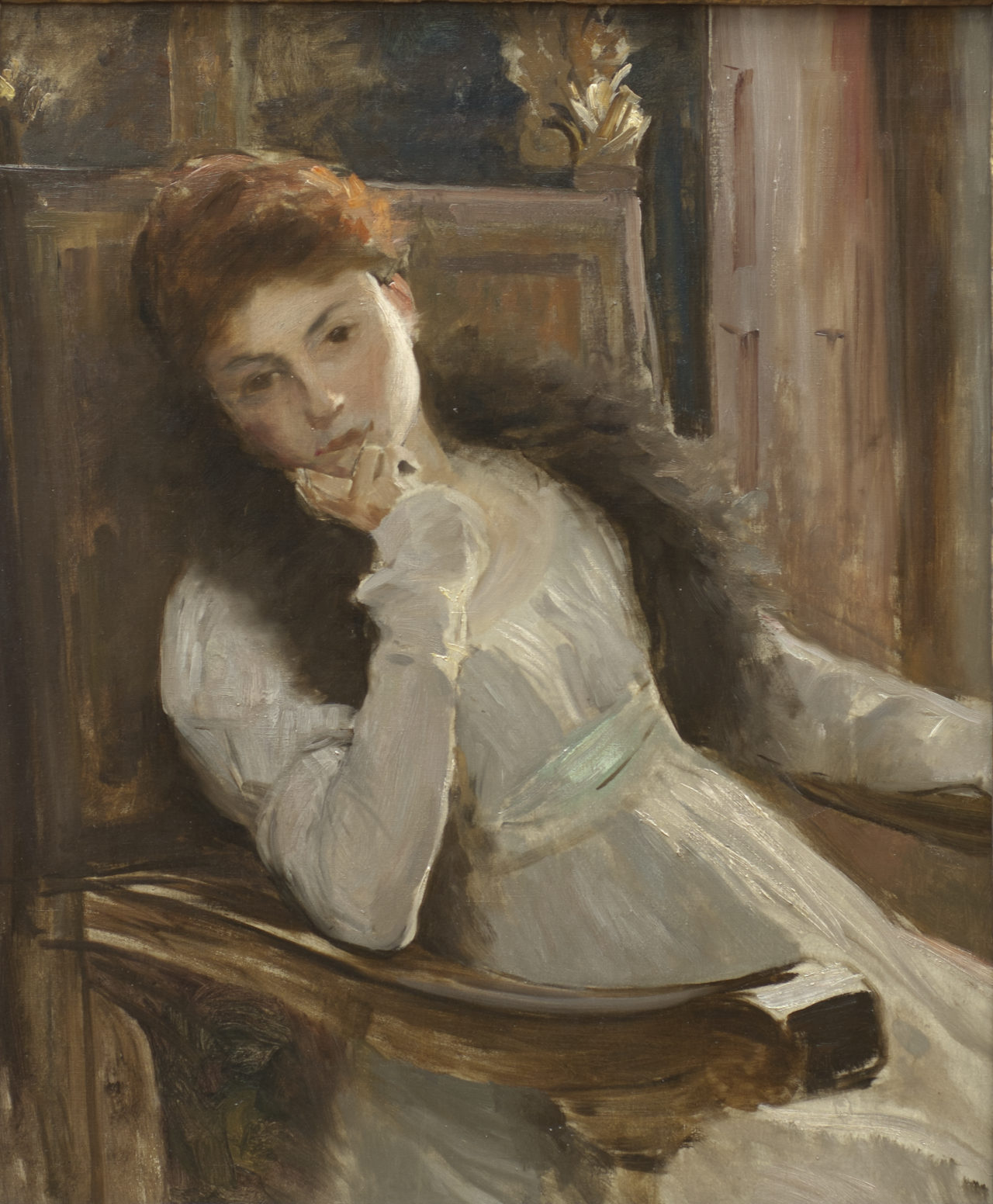
Another notable work, "Mademoiselle Pourtalès" (1880), exemplifies his portraiture. The painting presents a young woman in an elegant, though simple, dress, set against a muted interior. Salmson’s delicate rendering of the subject’s features, especially the subtle play of light on her cheekbones, showcases his skill in capturing personality within a restrained compositional framework.
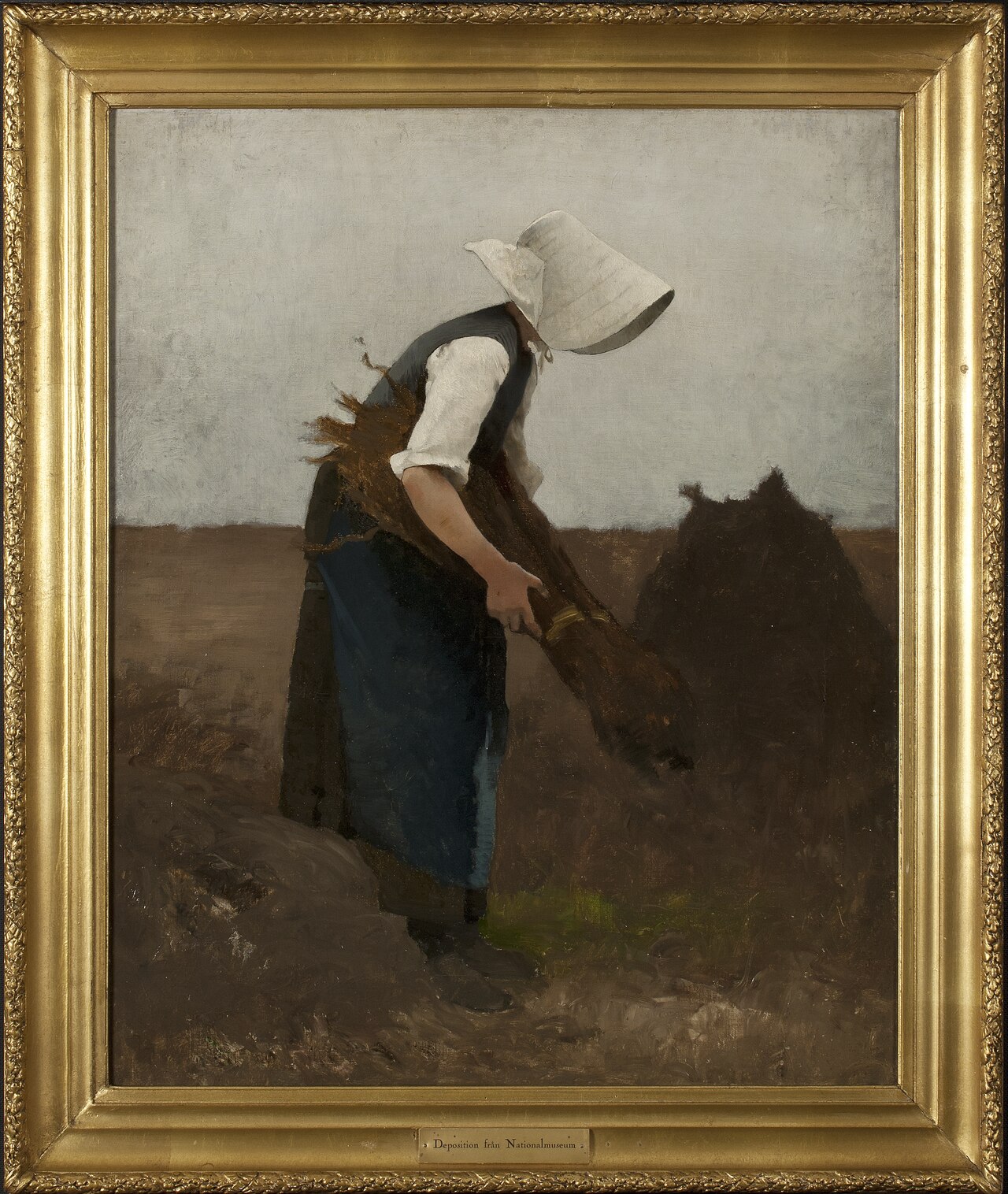
"The Little Gleaner" and "Gathering Poppies. Study" reflect his affinity for rural subjects. In "The Little Gleaner," a young girl is depicted bent over a field, collecting remnants of the harvest. The work’s gentle colour scheme and the softness of the girl's posture convey a tender, almost nostalgic view of agrarian life. "Gathering Poppies. Study" is a more intimate study, focusing on the act of a figure reaching for poppy flowers; the piece demonstrates Salmson’s capacity to convey movement and intent through a relatively simple arrangement.
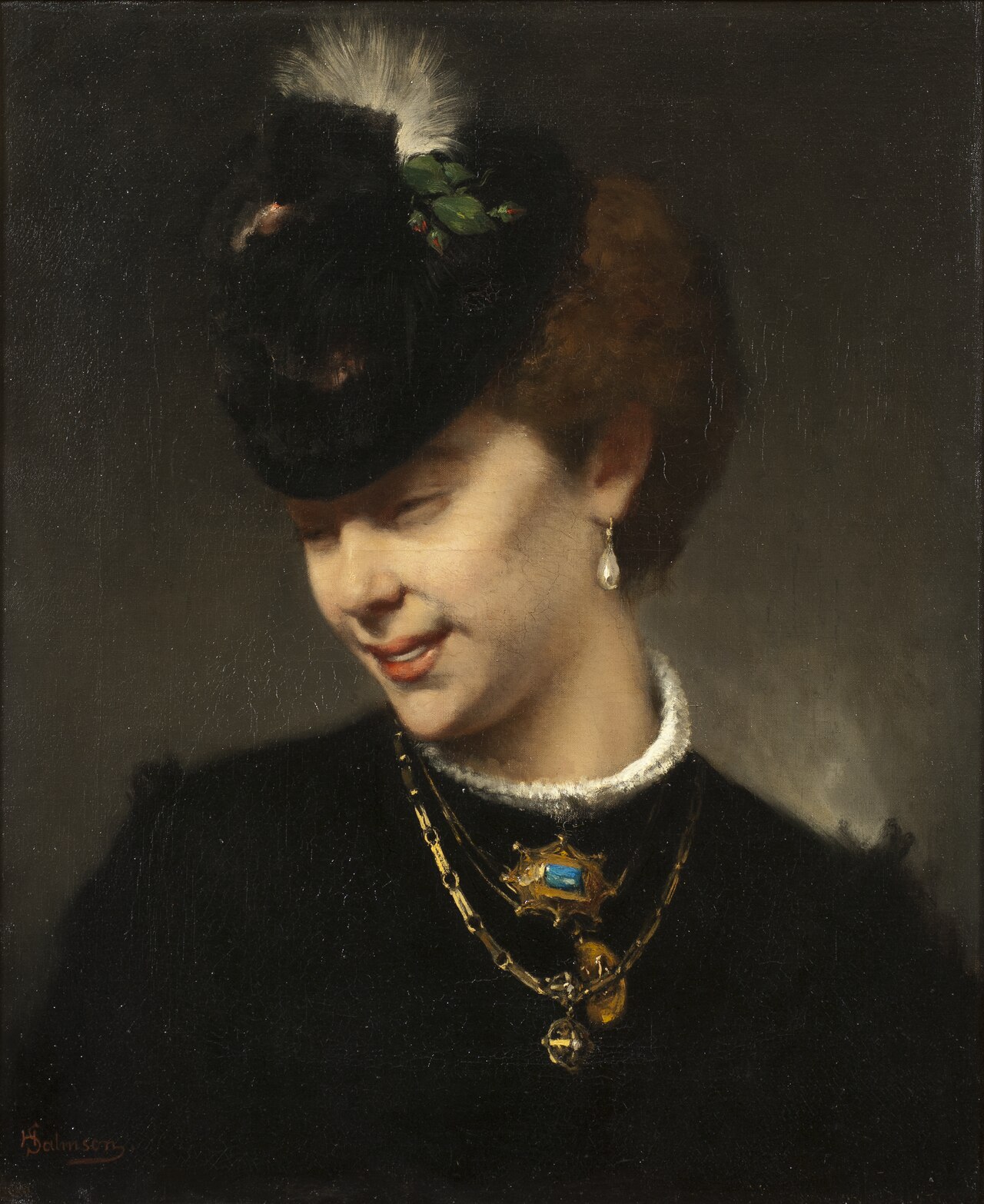
"A Parisian Lady" further underscores his engagement with urban subjects. The painting portrays a fashionable woman strolling along a Parisian boulevard, her attire rendered with meticulous attention to texture. The background, hinted at rather than fully detailed, situates the figure within the bustling atmosphere of late‑19th‑century Paris, while allowing the viewer to concentrate on the elegance of the subject.
These works collectively illustrate Salmson’s versatility: he could move fluidly between portraiture, genre scenes, and studies, always maintaining a consistent approach to light, colour, and narrative.
Influence and legacy Although Hugo Salmson never achieved the renown of contemporaries such as Anders Zorn or Carl Larsson, his contribution to Swedish art lies in his role as a bridge between the academic traditions of his early training and the more observational, naturalistic trends that emerged in the latter half of the 19th century. His paintings were exhibited in Stockholm and Paris, gaining modest critical appreciation for their technical competence and humane subject matter.
Salmson’s legacy persists primarily through the works that remain in museum collections and private holdings across Scandinavia and France. Art historians regard his paintings as valuable examples of cross‑cultural artistic exchange, illustrating how Swedish artists assimilated French techniques while retaining a distinct Northern sensibility. Moreover, his careful treatment of everyday scenes prefigured the later interest in social realism that would dominate early‑20th‑century Scandinavian art.
In recent decades, scholars have revisited Salmson’s oeuvre to better understand the broader network of Scandinavian artists who worked abroad during the 1870s and 1880s. Exhibitions focusing on Nordic artists in Paris often include Salmson’s work to demonstrate the diversity of approaches within this diaspora. While his name may not be ubiquitous, his paintings continue to be studied for their compositional balance, subtle narrative depth, and the way they encapsulate a transitional moment in European art history.
Overall, Hugo Salmson occupies a respectable niche in art history: a diligent practitioner whose disciplined technique and compassionate eye for ordinary life provide a window into the cultural currents of his era.
Influence and legacy (Continued) Hugo Salmson’s influence can also be traced in the pedagogical realm. He occasionally taught drawing classes in Stockholm later in his career, imparting his methodical approach to composition and tonal modelling to a new generation of artists. Although few of his students achieved fame, the emphasis on disciplined observation that Salmson championed helped sustain the academic standards that underpinned Swedish art education well into the early 20th century.
In summary, Hugo Salmson stands as a representative figure of the 19th‑century Swedish painter who, through travel and study, absorbed broader European artistic trends while preserving a uniquely Swedish perspective on everyday life.
Frequently asked questions
Who was Hugo Salmson?
Hugo Salmson (1843–1894) was a Swedish painter known for his figurative and genre scenes, active in the late 19th century.
What artistic style or movement is he associated with?
Salmson did not belong to a specific movement; his work blends academic training with naturalistic observation, reflecting French Realism and Swedish lyricism.
What are his most famous works?
His best‑known paintings include "Une arrestation dans un village de Picardie" (1879), "Mademoiselle Pourtalès" (1880), "The Little Gleaner", "Gathering Poppies. Study" and "A Parisian Lady".
Why is Hugo Salmson important in art history?
He serves as a bridge between Swedish academic tradition and the naturalist trends of his time, illustrating cross‑cultural artistic exchange and influencing later Swedish realism.
How can I recognise a Hugo Salmson painting?
Look for precise draftsmanship, a muted yet harmonious colour palette, careful handling of light, and subjects that portray everyday people with quiet narrative depth.