Geskel Saloman
1821 – 1902
In short
Geskel Saloman (1821–1902) was a Danish‑Swedish portrait and genre painter, born in Tønder and died in Båstad. He is noted for his depictions of everyday life and for a celebrated portrait of composer Bedřich Smetana painted when Saloman was thirty‑four.
Notable works



Early life Geskel Saloman was born in 1821 in the town of Tønder, then part of the Danish duchy of Schleswig. His family background was culturally mixed, giving him fluency in both Danish and Swedish contexts. From an early age he displayed a talent for drawing, and his parents encouraged his artistic pursuits by enrolling him in local drawing schools. By his teenage years Saloman had begun copying works of the Dutch masters, a practice that honed his technical skill and introduced him to the genre‑painting tradition.
Career and style After completing his basic education, Saloman moved to Stockholm to study at the Royal Swedish Academy of Arts. The academy’s curriculum emphasized classical drawing, anatomy, and the study of light, all of which informed Saloman’s later portraiture. Although the dominant artistic movements of his time—Romanticism and later Realism—shaped the broader Swedish art scene, Saloman’s own style remained loosely defined. He preferred a realistic approach that combined careful observation with a gentle, often lyrical mood. His subjects ranged from intimate domestic scenes to formal portraits of notable individuals, reflecting both personal interest and the commissions that sustained his livelihood.
Signature techniques Saloman’s paintings are characterised by a restrained palette, typically dominated by earth tones and muted blues. He employed delicate modelling of flesh tones, achieving a subtle flesh‑like translucency. In his genre scenes, Saloman often used a low‑angled light source to create soft shadows that enhance the three‑dimensionality of objects without overwhelming the composition. His brushwork is generally smooth, with fine, almost invisible strokes in the rendering of skin and fabric, while his treatment of background elements—such as wooden floors or interior furnishings—shows a slightly looser, textural approach. This contrast between meticulous foreground detail and broader background suggestion became a visual hallmark of his oeuvre.
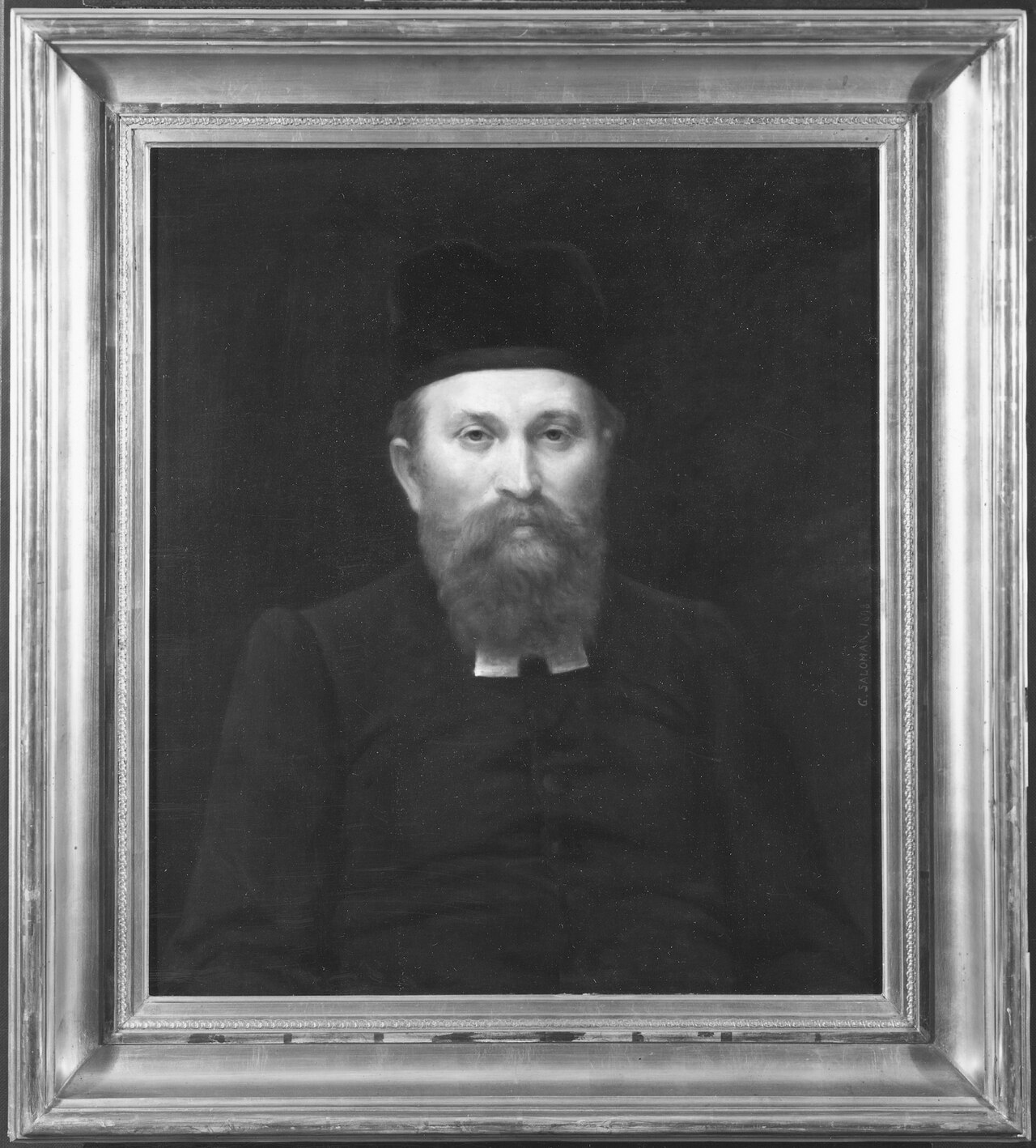
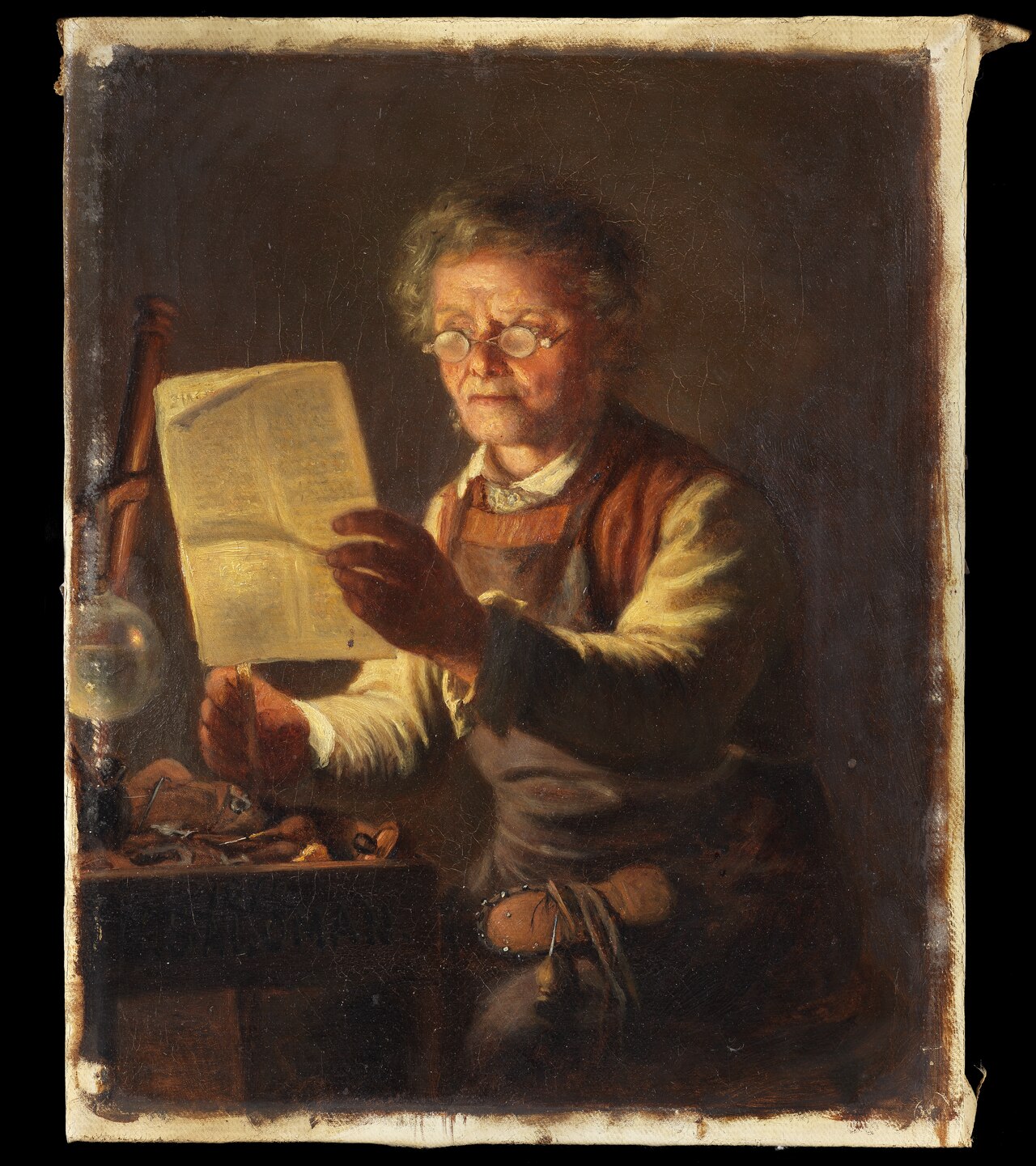
Major works Among Saloman’s most recognised pieces is **"Marsk Stigs døtre" (1893)**, a large genre canvas that depicts a folkloric scene drawn from Scandinavian legend. The work demonstrates his skill in narrative composition, balancing multiple figures while maintaining a clear focal point. Another notable painting, **"Den politiske skomakaren" (1870)**, presents a humble cobbler in a politically charged setting, hinting at the social concerns that occasionally surfaced in his work. Saloman also produced several preparatory sketches, such as **"Skiss till \"Den förste violinundervisningen\"** and **"Skiss till \"Den förste violinlektionen\"**, which reveal his methodical planning process and his interest in musical education as a cultural theme. Additionally, Saloman painted a portrait of **Gottlieb Klein (1852‑1914)**, a prominent over‑rabbi and religious historian, capturing Klein’s dignified bearing and intellectual presence. Perhaps his most historically significant portrait is that of **Bedřich Smetana**, created when Saloman was thirty‑four; it is one of only three surviving likenesses of the Czech composer and testifies to Saloman’s personal connection with the composer’s circle.
Influence and legacy Geskel Saloman’s work occupies a modest yet distinct niche within 19th‑century Nordic art. While he never aligned himself with a specific avant‑garde movement, his realistic treatment of everyday subjects contributed to the broader acceptance of genre painting in Sweden and Denmark. His portraits, especially the Smetana portrait, have been reproduced in music histories and continue to serve as visual references for scholars of Czech music. Moreover, Saloman’s meticulous technique and his ability to render both the dignity of his sitters and the subtle humour of domestic scenes influenced younger Swedish artists who sought a balance between academic rigour and narrative warmth. Today, his paintings are held in several regional museums, and his sketches are valued by researchers for their insight into the preparatory stages of 19th‑century painting. Saloman’s legacy endures as a testament to the cross‑cultural artistic dialogue between Denmark and Sweden during a period of national consolidation.
Frequently asked questions
Who was Geskel Saloman?
Geskel Saloman (1821–1902) was a Danish‑Swedish painter known for portraits and genre scenes, born in Tønder and active mainly in Sweden.
What artistic style or movement is he associated with?
He did not belong to a specific movement; his work reflects a realistic, academic style with lyrical touches typical of 19th‑century Nordic genre painting.
What are his most famous works?
Key works include the genre painting "Marsk Stigs døtre" (1893), "Den politiske skomakaren" (1870), several violin‑lesson sketches, a portrait of Gottlieb Klein, and his celebrated portrait of composer Bedřich Smetana.
Why is Geskel Saloman important in art history?
Saloman provides a valuable example of cross‑national artistic exchange between Denmark and Sweden, and his portrait of Smetana remains a primary visual source for the composer’s early appearance.
How can one recognise a painting by Geskel Saloman?
Look for a restrained colour palette, smooth modelling of flesh, subtle lighting that creates soft shadows, and a careful balance between detailed figures and loosely rendered backgrounds.