Eugène Jansson
1862 – 1915
In short
Eugène Jansson (1862–1915) was a Swedish painter renowned for his nocturnal cityscapes rendered in deep blues, later turning to male nudes. His work bridges late‑19th‑century realism and early modernist explorations of light, mood, and the human form.
Notable works
Early life Eugène Fredrik Jansson was born in 1862 in the rural parish of Jakob and Johannes, Sweden. Little is recorded about his family background, but the region’s stark natural light and long winter evenings left an early imprint on his visual sensibility. Jansson moved to Stockholm as a young adult to study art, enrolling at the Royal Swedish Academy of Fine Arts. The academy’s curriculum, rooted in classical drawing and academic painting, gave him a solid technical foundation while exposing him to the burgeoning modern movements that were reshaping European art at the turn of the century.
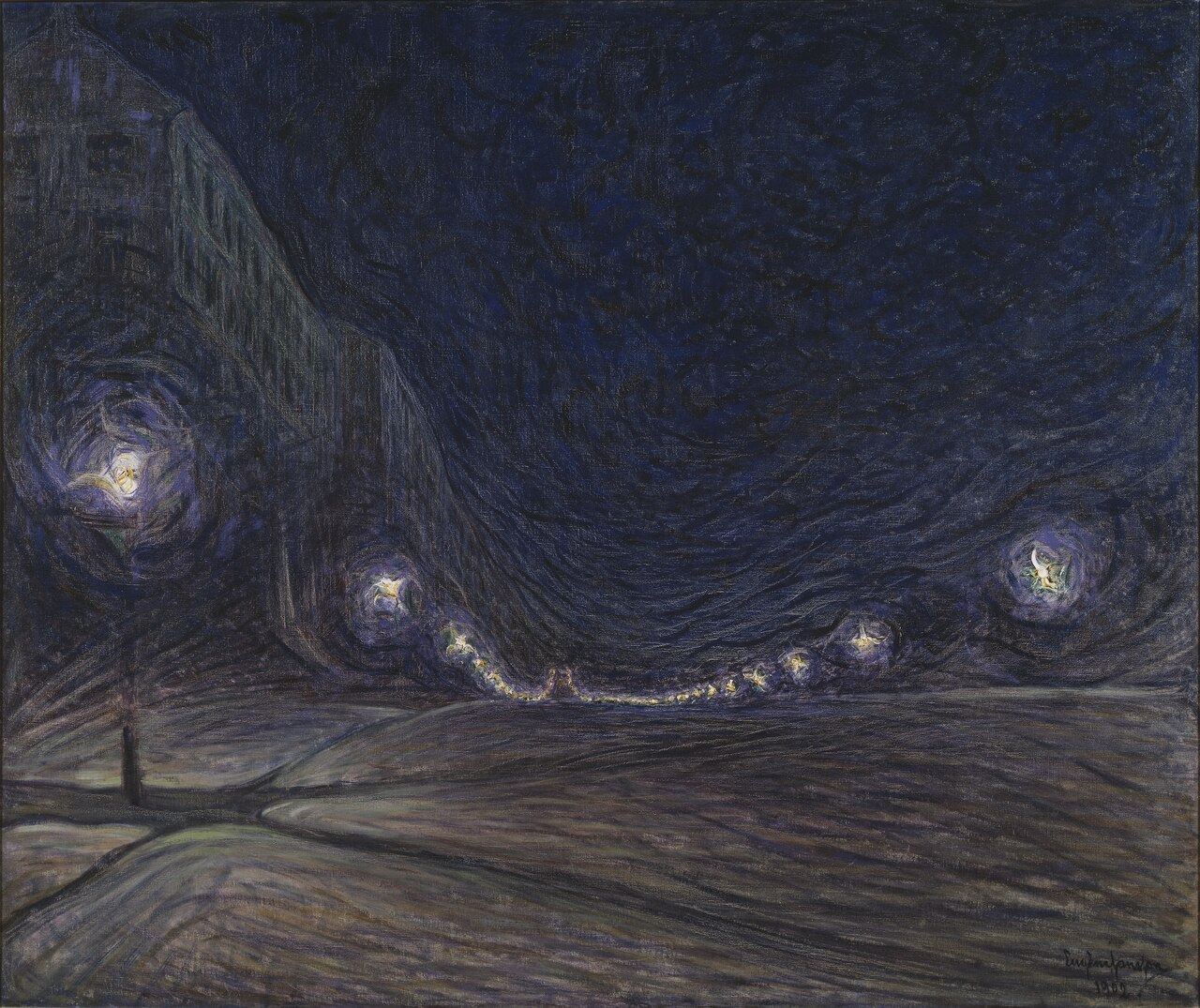
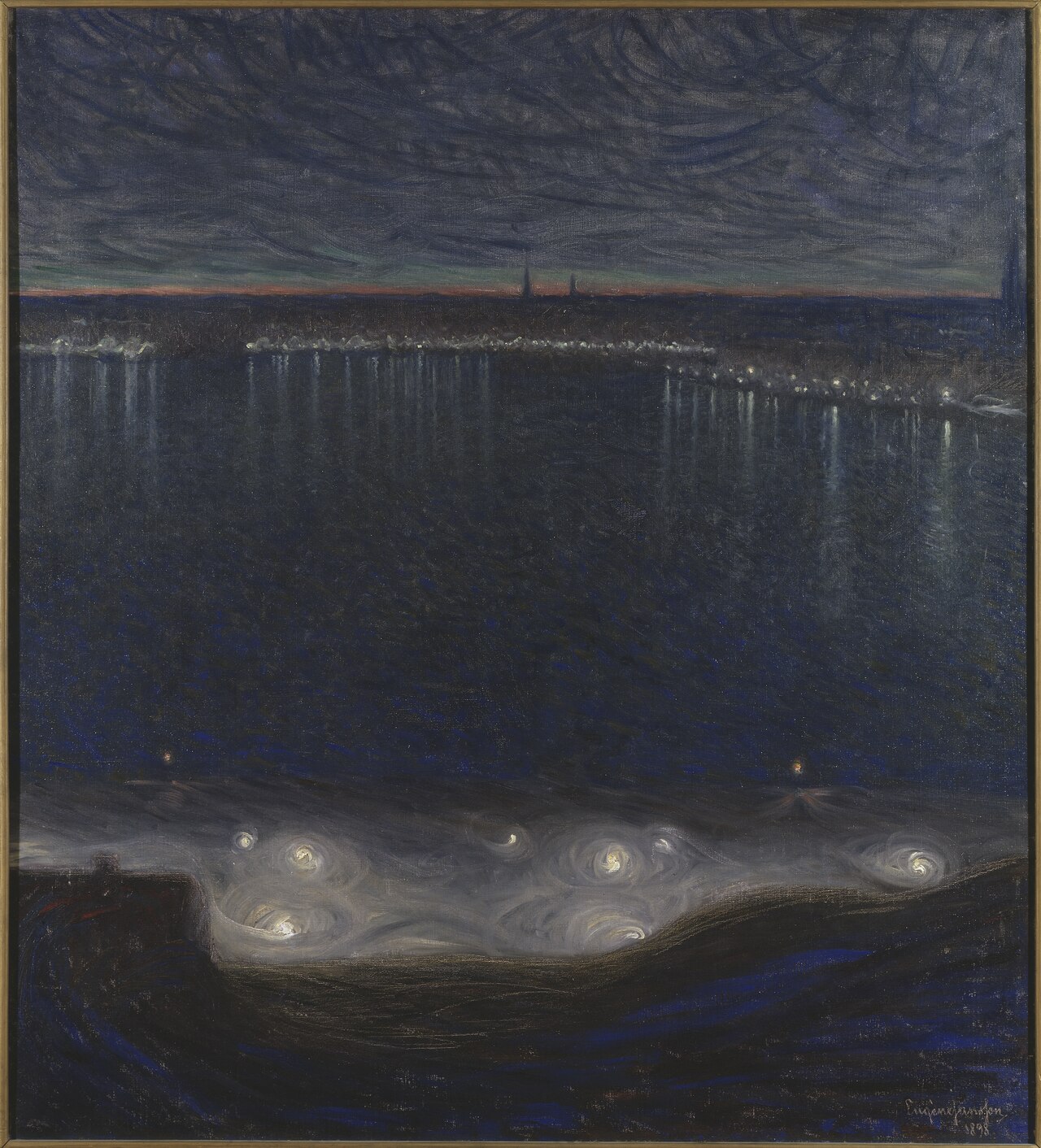
Career and style After completing his studies, Jansson remained in Stockholm, where he quickly attracted attention for his distinctive night‑time cityscapes. Unlike many of his contemporaries who favoured bright, sun‑lit scenes, Jansson chose to depict the capital under the cover of darkness, using a limited palette dominated by deep blues and muted greys. This approach earned him the nickname *blåmålaren* – “the blue‑painter”. His paintings from the 1890s and early 1900s capture the quiet, reflective atmosphere of streets, canals, and rooftops bathed in artificial light, a visual language that anticipates the later Symbolist and Expressionist preoccupations with mood over narrative.
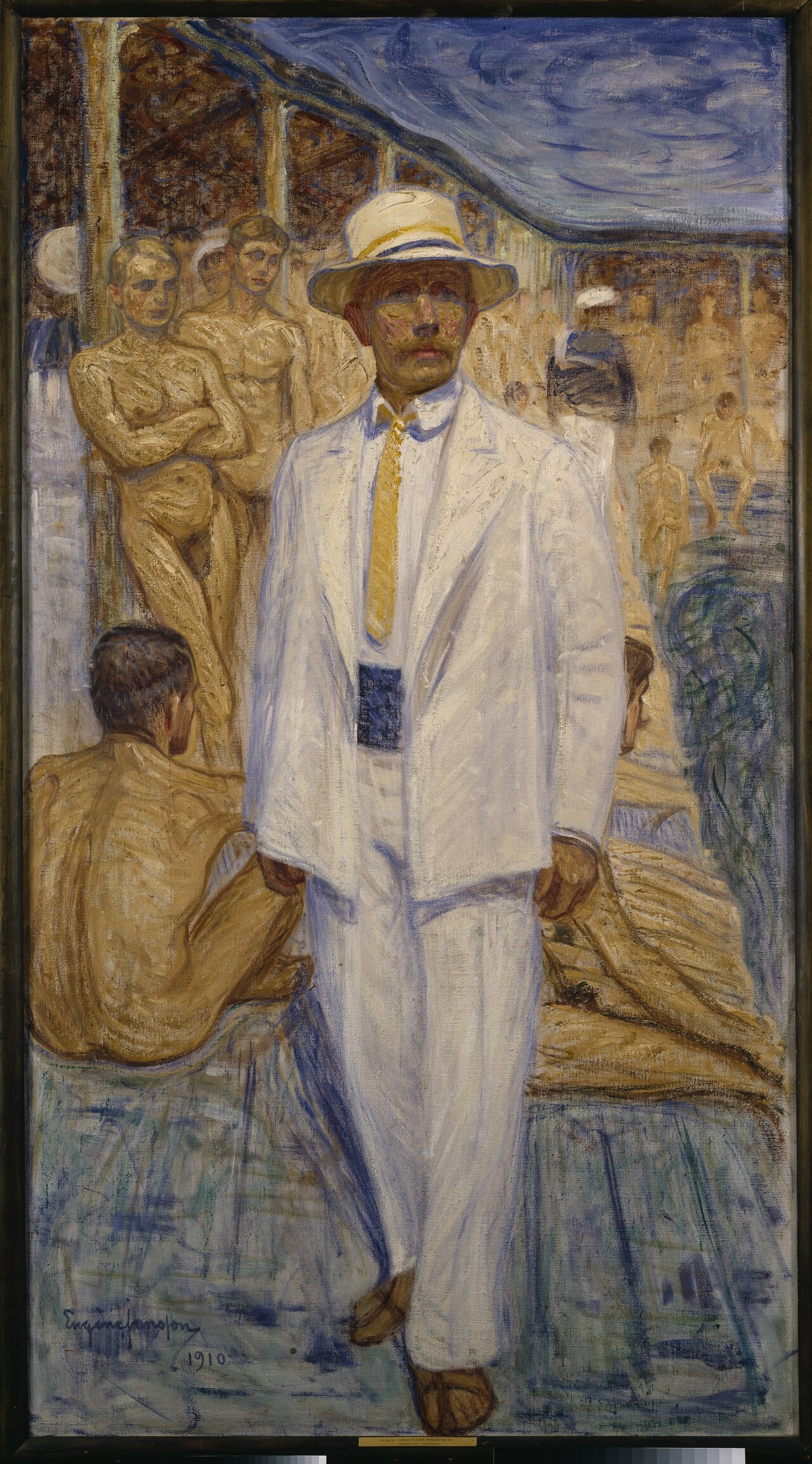
Around 1904, Jansson’s artistic focus shifted dramatically. He began to work almost exclusively on male nudes, a subject that was both daring and controversial in Swedish society at the time. These works retain his characteristic handling of light, with the flesh rendered in soft, diffused illumination that echoes the tonal range of his earlier cityscapes. Though the subject matter changed, the underlying concern with the play of light and shadow, the psychological depth of the figure, and the subtle colour harmonies remained constant.
Jansson never aligned himself with a formal art movement; his work sits at the crossroads of late‑realism, Symbolism, and the early stirrings of modernism. Critics have noted his ability to fuse rigorous academic training with a personal, almost poetic vision of urban and interior spaces.
Signature techniques Jansson’s paintings are distinguished by several recurring technical traits:
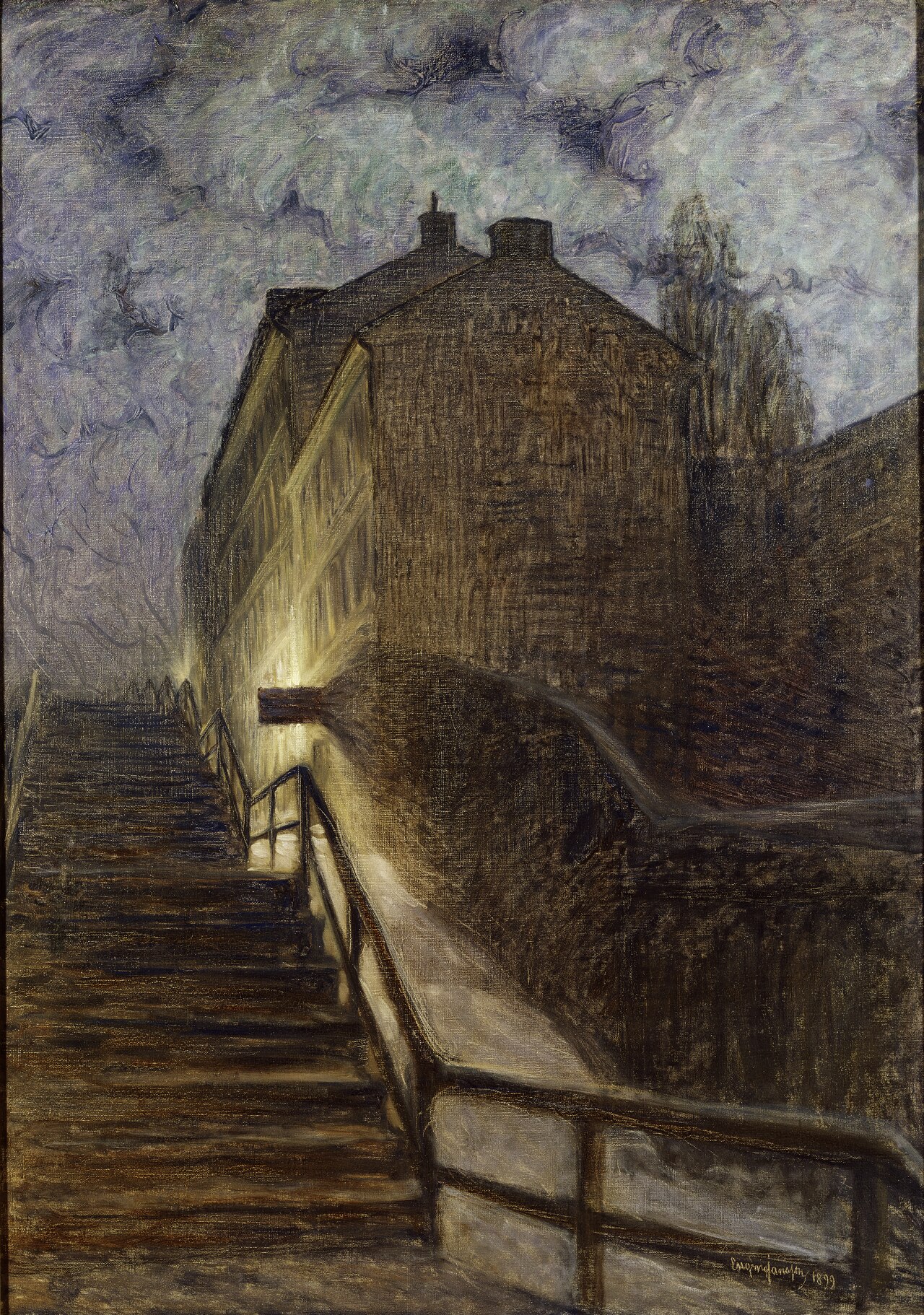
* Monochromatic blue palette – He often limited his colour scheme to variations of blue, using complementary touches of warm tones only to highlight artificial light sources such as gas lamps or reflected moonlight. * Soft, atmospheric brushwork – Rather than crisp detailing, Jansson employed a fluid, almost hazy brushstroke that blurs the boundaries between architecture and sky, creating a sense of depth and quiet. * Layered glazing – Multiple thin layers of oil glaze allowed him to build luminous depth, particularly in night scenes where the underlying tones subtly emerge through the surface. * Focused light sources – Whether a streetlamp or a candle, Jansson placed a single, strong light source within the composition, using it to guide the viewer’s eye and to dramatise the surrounding forms. * Intimate scale – Many of his works are modest in size, encouraging close viewing and a personal engagement with the scene.
These techniques collectively generate a mood of introspection, inviting viewers to contemplate the stillness of the night and, later, the quiet dignity of the human body.
Major works
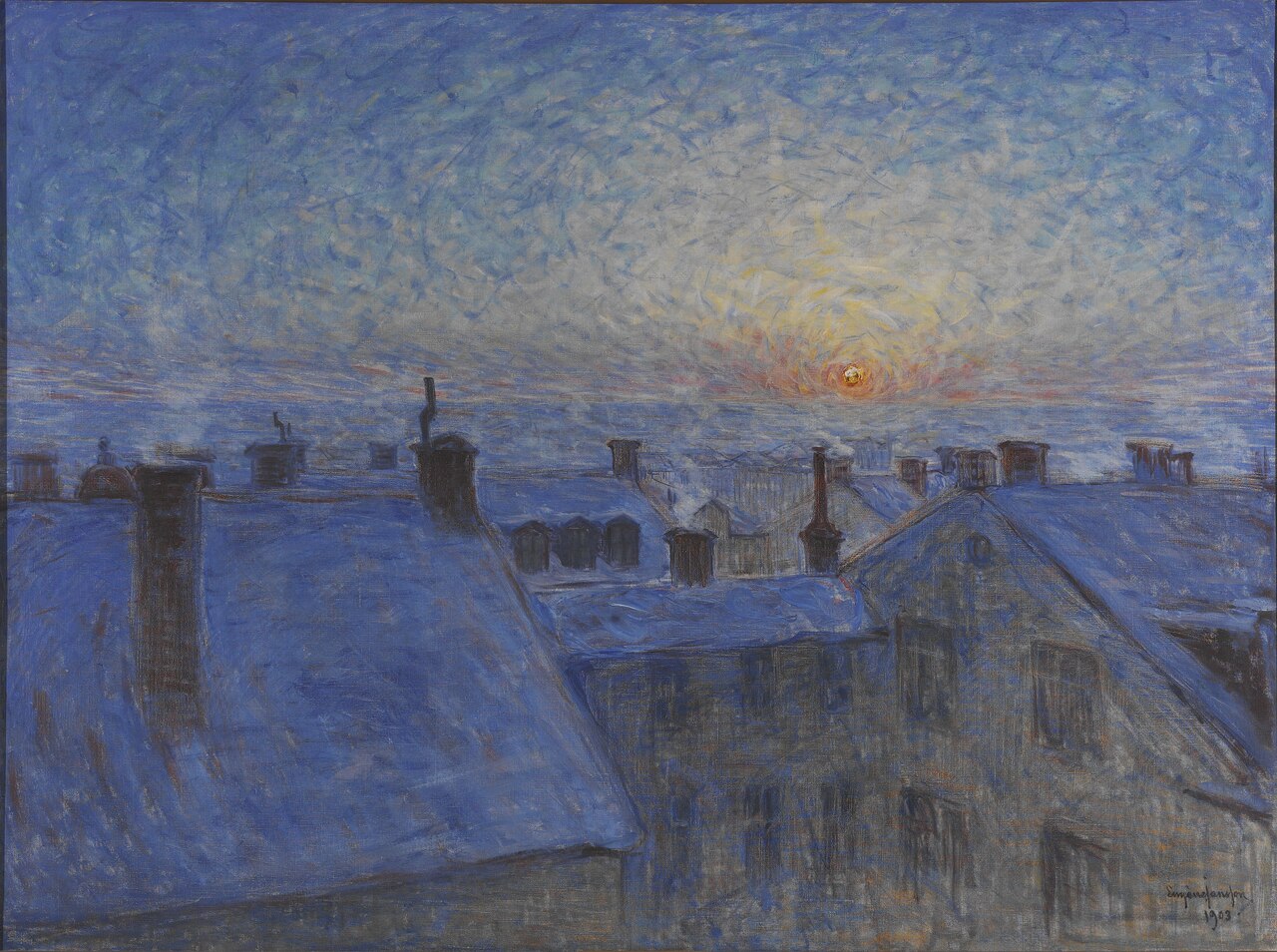
* Self‑portrait (1910) – Executed near the end of his career, this portrait reveals Jansson’s self‑reflection both literally and stylistically. The canvas is dominated by muted blues, with a subtle play of light on the facial features that mirrors his nocturnal cityscapes. The work demonstrates his mature handling of chiaroscuro and his continued interest in the psychological interior of his subjects. * Hornsgatan by Night (1902) – One of his most celebrated urban scenes, this painting captures a Stockholm street illuminated by gas lamps. The deep blue sky and the reflective wet pavement create a mirror‑like surface that doubles the architectural forms, while the sparse figures add narrative tension. The composition exemplifies Jansson’s mastery of light as a structural element. * Riddarfjärden, Stockholm (1898) – Depicting the waterway that separates the old town from the modern city, Jansson renders the water’s surface as a dark, glassy plane punctuated by the soft glow of distant lanterns. The painting’s limited palette and atmospheric depth convey the quiet majesty of the city’s waterfront at dusk. * Sunrise over the Rooftops. Motif from Stockholm (1903) – Though titled “sunrise”, the work retains Jansson’s characteristic blue dominance, with the early light rendered as a pale, cool hue that barely lifts the darkness. The rooftops appear as silhouetted forms against a sky that transitions from night to day, underscoring his fascination with transitional moments. * Motif from Timmermansgatan (1899) – This piece presents a narrow street lined with historic buildings, the scene bathed in a single streetlamp’s amber glow. The surrounding darkness is rendered in deep indigo, while the illuminated patches reveal texture and detail, highlighting Jansson’s skill at balancing light and shadow.
Each of these works demonstrates Jansson’s consistent visual language while also showing his willingness to explore different urban motifs and atmospheric conditions.
Influence and legacy Eugène Jansson’s contribution to Swedish art lies in his singular focus on nocturnal light and his later daring exploration of male nudes. Though he never achieved the fame of contemporaries such as Anders Zorn, his paintings have been reassessed in recent decades for their forward‑looking treatment of mood and colour. Art historians view Jansson as a bridge between 19th‑century realism and the more subjective, colour‑driven approaches of the early 20th century. His night scenes prefigure the work of later Scandinavian painters who would adopt a similar blue‑toned palette to evoke melancholy and introspection.
In contemporary museum exhibitions, Jansson’s works are often displayed alongside Symbolist and early Expressionist pieces, highlighting his role in the broader European shift toward personal, atmospheric painting. His male nudes, while still relatively obscure, are gaining scholarly interest for their nuanced treatment of the human form and for challenging the gender norms of his era.
Overall, Jansson remains a compelling figure for scholars of Scandinavian art, offering insight into how an artist can develop a cohesive visual identity within a rapidly changing artistic landscape.
Influence and legacy Eugène Jansson’s contribution to Swedish art lies in his singular focus on nocturnal light and his later daring exploration of male nudes. Though he never achieved the fame of contemporaries such as Anders Zorn, his paintings have been reassessed in recent decades for their forward‑looking treatment of mood and colour. Art historians view Jansson as a bridge between 19th‑century realism and the more subjective, colour‑driven approaches of the early 20th century. His night scenes prefigure the work of later Scandinavian painters who would adopt a similar blue‑toned palette to evoke melancholy and introspection.
In contemporary museum exhibitions, Jansson’s works are often displayed alongside Symbolist and early Expressionist pieces, highlighting his role in the broader European shift toward personal, atmospheric painting. His male nudes, while still relatively obscure, are gaining scholarly interest for their nuanced treatment of the human form and for challenging the gender norms of his era.
Overall, Jansson remains a compelling figure for scholars of Scandinavian art, offering insight into how an artist can develop a cohesive visual identity within a rapidly changing artistic landscape.
Influence and legacy Eugène Jansson’s contribution to Swedish art lies in his singular focus on nocturnal light and his later daring exploration of male nudes. Though he never achieved the fame of contemporaries such as Anders Zorn, his paintings have been reassessed in recent decades for their forward‑looking treatment of mood and colour. Art historians view Jansson as a bridge between 19th‑century realism and the more subjective, colour‑driven approaches of the early 20th century. His night scenes prefigure the work of later Scandinavian painters who would adopt a similar blue‑toned palette to evoke melancholy and introspection.
In contemporary museum exhibitions, Jansson’s works are often displayed alongside Symbolist and early Expressionist pieces, highlighting his role in the broader European shift toward personal, atmospheric painting. His male nudes, while still relatively obscure, are gaining scholarly interest for their nuanced treatment of the human form and for challenging the gender norms of his era.
Overall, Jansson remains a compelling figure for scholars of Scandinavian art, offering insight into how an artist can develop a cohesive visual identity within a rapidly changing artistic landscape.
Frequently asked questions
Who was Eugène Jansson?
Eugène Jansson (1862–1915) was a Swedish painter best known for his night‑time cityscapes rendered in deep blues and, later in his career, for his male nude studies.
What artistic style or movement is Jansson associated with?
Jansson is not linked to a single movement; his work sits between late‑realism, Symbolism and early modernist explorations of light and colour, earning him the nickname “the blue‑painter”.
What are his most famous works?
Key works include *Hornsgatan by Night* (1902), *Riddarfjärden, Stockholm* (1898), *Sunrise over the Rooftops* (1903), *Motif from Timmermansgatan* (1899) and his *Self‑portrait* (1910).
Why is Jansson important in art history?
He pioneered the atmospheric treatment of nocturnal urban scenes in Sweden and later challenged conventions with his male nudes, influencing later Scandinavian painters’ use of colour and mood.
How can I recognise a Jansson painting?
Look for a limited blue‑dominant palette, soft hazy brushwork, a single strong artificial light source, and a tranquil, reflective mood, often depicting Stockholm’s streets or water at night.