Elise Arnberg
1826 – 1891
In short
Elise Arnberg was a Swedish artist born in 1826 and died in 1891. She was a miniaturist and photographer, known for her portrait miniatures on ivory. Arnberg's work is represented at the Nationalmuseum in Stockholm.
Notable works
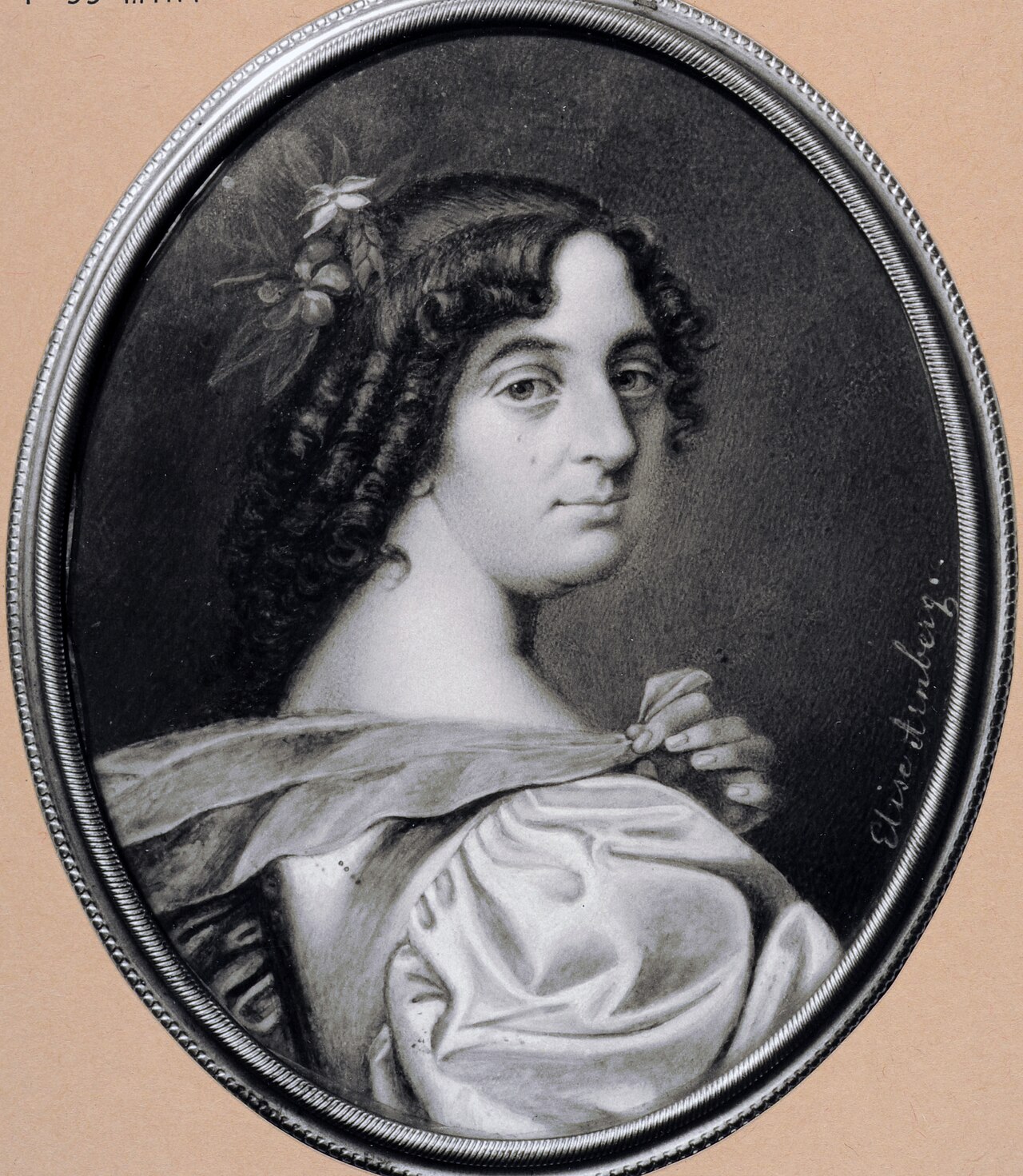


Early life Elise Arnberg was born in 1826 in Stockholm, Sweden. While specific details about her early life are scarce, it is known that she was raised in a city that would later become a hub for artistic innovation. As a young woman, Arnberg would have been exposed to various forms of art, potentially influencing her future career.
Career and style Arnberg's career as an artist spanned multiple mediums, including watercolors, gouache, and Crayon. She is foremost known for her work as a miniaturist, creating intricate portrait miniatures on ivory. Additionally, Arnberg was active as a photographer, demonstrating her adaptability and willingness to explore different artistic techniques. Her style, while not explicitly tied to a specific movement, reflects the attention to detail and realism characteristic of portrait miniatures during the 19th century.
Signature techniques Arnberg's use of ivory as a medium for her portrait miniatures allowed for a level of delicacy and precision that was highly regarded. Her ability to capture the subtleties of her subjects' expressions and the fine details of their attire showcases her technical skill. Furthermore, her exploration of photography as an artistic medium highlights her openness to new technologies and methods, setting her apart from some of her contemporaries.
Major works Among Arnberg's notable works are 'Kristina, drottning av Sverige', 'Queen Desideria', 'Portrait of a young lady', 'Josefina, Crownprinsess of Sveden', and 'Mrs. Juliana Schröder'. These pieces demonstrate her proficiency in capturing the likenesses of her subjects, ranging from historical figures to contemporary portraits. 'Kristina, drottning av Sverige' and 'Queen Desideria' showcase her interest in depicting royalty and figures of historical significance, while 'Portrait of a young lady' and 'Mrs. Juliana Schröder' highlight her ability to capture the essence of everyday individuals. 'Josefina, Crownprinsess of Sveden' further exemplifies her skill in portraying members of the nobility.
Influence and legacy Elise Arnberg's contributions to the world of art, particularly in the realm of portrait miniatures and early photography, are significant. Her work, as part of the Nationalmuseum in Stockholm, continues to inspire and educate audiences about the artistic practices of the 19th century. While her specific influence on subsequent art movements may not be broadly documented, her dedication to her craft and her exploration of different mediums underscore her importance as a figure in Swedish art history.
Frequently asked questions
Who was Elise Arnberg?
Elise Arnberg was a Swedish miniaturist and photographer, known for her portrait miniatures on ivory and her work in watercolors, gouache, and Crayon.
What style or movement was Elise Arnberg associated with?
While not explicitly tied to a specific movement, Arnberg's work reflects the realism and attention to detail characteristic of 19th-century portrait miniatures.
What are Elise Arnberg's most famous works?
Her most notable works include 'Kristina, drottning av Sverige', 'Queen Desideria', 'Portrait of a young lady', 'Josefina, Crownprinsess of Sveden', and 'Mrs. Juliana Schröder'.
Why does Elise Arnberg matter in the history of art?
Arnberg matters for her contributions to the development of portrait miniatures and early photography, as well as her representation of Swedish art in the 19th century.
How can I recognize Elise Arnberg's work?
Her work is recognizable by its delicate, detailed nature, particularly in her portrait miniatures on ivory, and her use of realistic, subtle expressions in her subjects.