Berndt Lindholm
1841 – 1914
In short
Berndt Lindholm (1841–1914) was a Swedish‑born Finnish landscape painter noted for his coastal scenes. Associated with the Düsseldorf School, his work also anticipates early Impressionism, and he produced several well‑known paintings such as Landscape (1869) and Boats on the Shore (1870).
Notable works
.jpg)
.jpg)

Early life Berndt Adolf Lindholm was born in 1841 in Loviisa, a coastal town on the Gulf of Finland. His family belonged to the Swedish‑speaking minority in the region, which later influenced his identification as Swedish in nationality. From a young age Lindholm showed a keen interest in drawing, often sketching the surrounding sea‑shore and the distinctive birch‑lined horizons that characterised his hometown. He received his first formal instruction at a local drawing school, where his talent for rendering atmospheric light and water was recognised. In the early 1860s he moved to Stockholm to continue his studies, a common pathway for artists from the Finnish provinces seeking professional training.
Career and style Lindholm’s artistic development was shaped by the teachings of the Düsseldorf School, a German academy that emphasised meticulous draftsmanship, idealised composition, and a Romantic sensibility toward nature. While in Stockholm, he attended workshops run by teachers who had trained in Düsseldorf, absorbing their emphasis on careful tonal modelling and narrative landscape. By the mid‑1860s he began to exhibit his works in both Swedish and Finnish venues, gaining a reputation for scenes that combined realistic detail with a lyrical ambience. Over time his palette lightened and his brushwork loosened, hinting at the emerging Impressionist movement. This synthesis of Düsseldorf rigour and a more spontaneous handling of light makes Lindholm a transitional figure in 19th‑century Nordic art.
Signature techniques Lindholm is distinguished by several recurring techniques. He favoured a muted, earth‑toned underpainting that he then overlaid with thin glazes of blue and green to convey the translucency of water and sky. His handling of foliage, especially birch trees, often involved delicate, vertical strokes that capture the characteristic bark texture without excessive detail. In coastal compositions he employed a low horizon line, allowing the expansive sky to dominate the visual field and to accentuate atmospheric effects such as mist and reflected light. Occasionally he used a stippling method to suggest distant clouds or distant shoreline, a device that anticipates later Impressionist approaches. The overall effect is a balance between precise structure and an impression of fleeting natural phenomena.
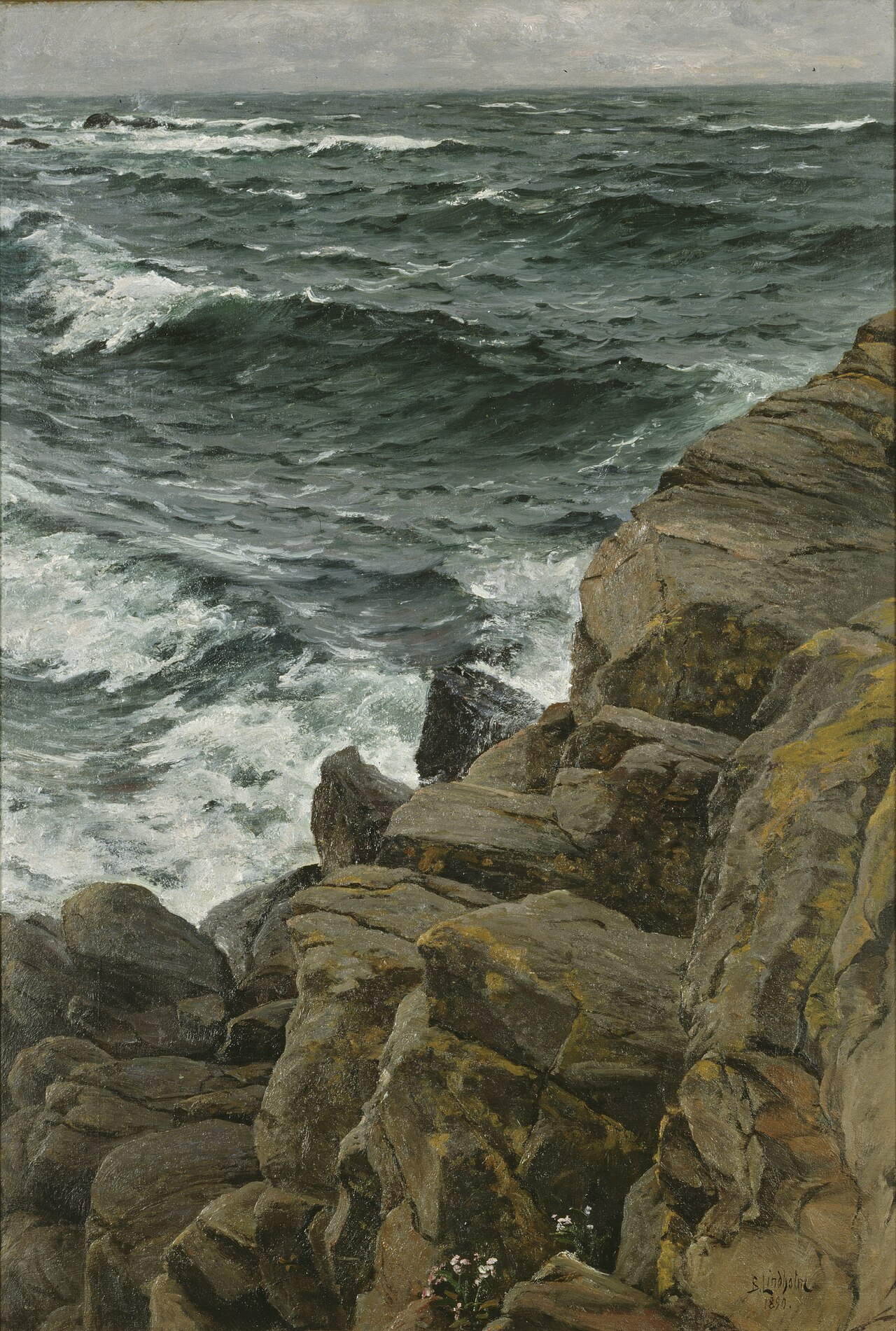
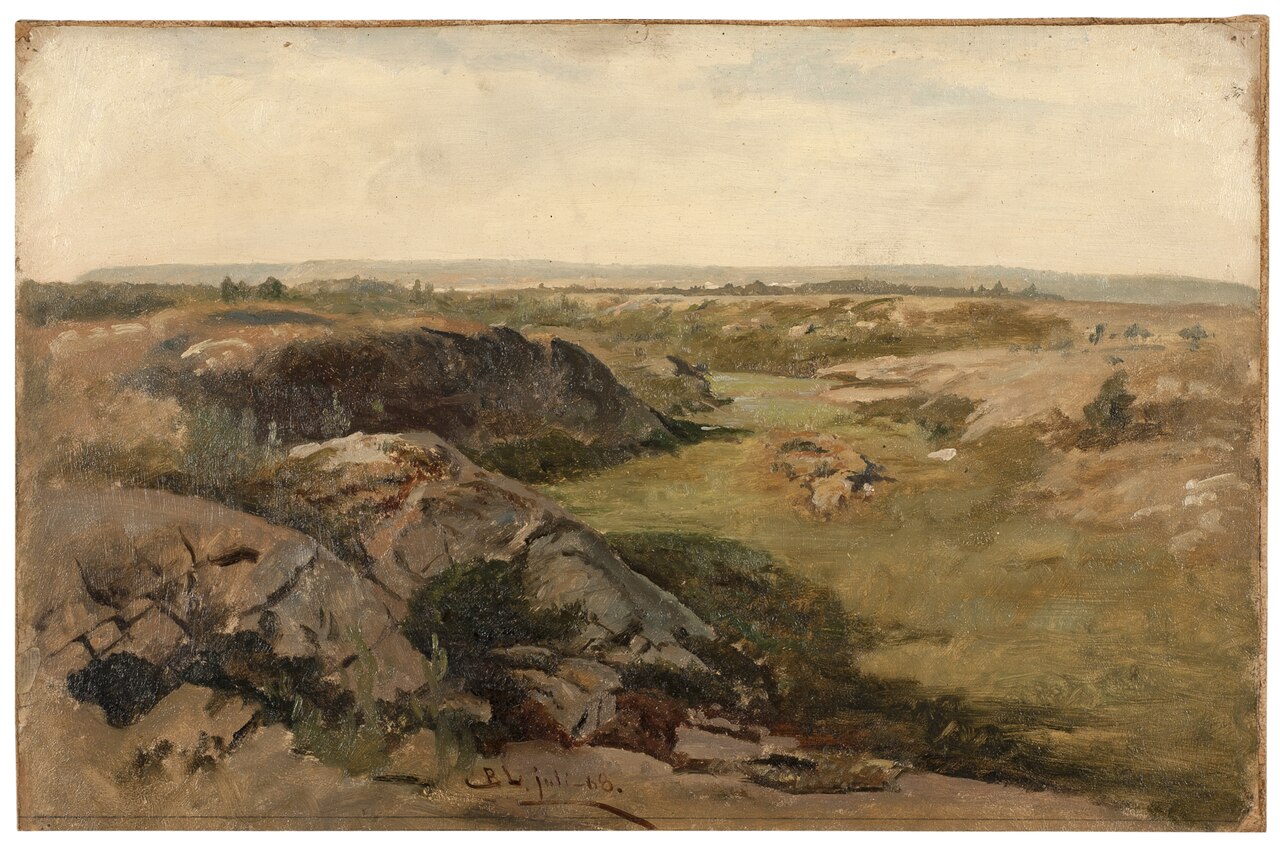
Major works - **Landscape (1869)** – This early mature work presents a gentle, undulating terrain punctuated by a solitary birch stand. The composition is anchored by a calm lake that mirrors the sky, demonstrating Lindholm’s skill with reflective surfaces. The painting’s subdued palette and careful modelling reflect his Düsseldorf training. - **Landscape with Birch Trees (1864)** – One of his earliest dated canvases, it showcases a cluster of birches against a soft, overcast sky. The verticality of the trunks creates a rhythmic pattern that guides the viewer’s eye across the surface, highlighting his interest in the interplay of light and bark texture. - **Boats on the Shore (1870)** – In this piece Lindholm captures a quiet harbour scene, with small wooden vessels moored against a rocky coastline. The work is notable for its nuanced rendering of water movement and the subtle reflections of the sky, indicating his growing confidence with atmospheric effects. - **View of the Kattegat (1890)** – Produced later in his career, this expansive seascape depicts the open waters of the Kattegat strait. The composition employs a low horizon and a broad sky, allowing the shifting blues and greys to dominate. The painting’s looser brushwork suggests an embrace of Impressionist spontaneity while retaining a disciplined compositional framework. - **Undulating Country. Study (1868)** – A preparatory study that reveals Lindholm’s methodical approach. The work features a rolling landscape rendered in quick, gestural strokes, serving as a visual experiment in simplifying form while preserving the sense of depth.
Influence and legacy Lindholm’s oeuvre occupies a distinctive niche in Scandinavian art history. By merging the academic rigour of the Düsseldorf School with an early appreciation for light‑driven, atmospheric painting, he helped pave the way for later Nordic artists who embraced Impressionism and modern landscape approaches. His coastal subjects resonated with contemporaries who sought to define a national visual identity rooted in the sea and its surrounding terrain. Although not as widely recognised internationally as some of his peers, Lindholm’s paintings are held in several Finnish and Swedish museum collections, where they continue to be studied for their technical synthesis and regional significance. Art historians cite his work as an example of the transitional moment between 19th‑century Romantic naturalism and the more experimental tendencies of the early 20th century.
Frequently asked questions
Who was Berndt Lindholm?
Berndt Lindholm (1841–1914) was a Swedish‑born Finnish landscape painter noted for his coastal scenes and his blend of Düsseldorf School discipline with early Impressionist touches.
What style or movement is Lindholm associated with?
He is primarily linked to the Düsseldorf School, though his later works display elements of early Impressionism.
What are his most famous works?
Key paintings include Landscape (1869), Landscape with Birch Trees (1864), Boats on the Shore (1870), View of the Kattegat (1890) and the study Undulating Country (1868).
Why does Lindholm matter in art history?
Lindholm bridges academic Romantic landscape painting and the emerging Impressionist sensibility, influencing Scandinavian artists who sought to depict light and atmosphere in coastal environments.
How can I recognise a Lindholm painting?
Look for low horizons, calm water with subtle reflections, delicate birch foliage rendered in vertical strokes, and a muted palette softened by translucent glazes that suggest early Impressionist light effects.