Benjamin Patersen
1748 – 1815
In short
Benjamin Patersen (1748–1815) was a Swedish-born painter and engraver who worked in Russia, becoming known for his detailed cityscape views of Saint Petersburg. His works combine topographical accuracy with a subtle atmospheric touch, documenting the urban environment of late‑18th‑century Russia.
Notable works



Early life Benjamin Patersen was born in 1748 in the coastal town of Varberg, Sweden. Little is recorded about his family background, but the town’s maritime setting and its modest artistic activity likely offered his first exposure to drawing and observation. By his early twenties Patersen had moved to the Baltic region, a common route for Swedish artisans seeking patronage in the expanding Russian Empire. The cultural exchange between Sweden and Russia in the mid‑18th century provided a pathway for talented individuals like Patersen to secure commissions beyond their native borders.
Career and style Patersen’s professional life unfolded almost entirely in Saint Petersburg, the newly founded Russian capital that attracted artists, architects and engineers eager to document its rapid growth. He established himself as a cityscape painter and engraver, a niche that required both artistic skill and a precise eye for architectural detail. His works display a balanced blend of topographical exactness and a softened, almost lyrical treatment of light and atmosphere. While he never aligned himself with a formal academic movement, his approach reflects the Enlightenment’s emphasis on empirical observation, coupled with the aesthetic sensibilities of the Dutch vedute tradition.
During the 1780s and 1790s Patersen produced a series of large‑scale views that were often commissioned by merchants, consular officials and the imperial administration. These works served both decorative and documentary purposes, providing a visual record of streets, squares and industrial sites that were undergoing swift transformation. Patersen’s paintings were frequently reproduced as engravings, allowing a wider audience to access his depictions of the city’s architecture, waterways and bustling public spaces.
Signature techniques Patersen’s technique combined meticulous line work with a restrained colour palette. In his paintings, he employed a thin underdrawing to map the perspective of streets and façades, then built up layers of diluted oil to render atmospheric effects such as mist over the Neva River or the soft glow of evening lamps. His engravings, produced on copper plates, relied on fine hatching and cross‑hatching to convey texture and depth, a method that mirrored the precision of his painted compositions.
A recurring compositional device is the inclusion of foreground figures—merchants, pedestrians, horse‑drawn carriages—that animate the scene without detracting from the architectural focus. Patersen also favoured a slightly elevated viewpoint, allowing viewers to grasp the spatial relationship between streets, canals and public squares. This perspective, together with his careful rendering of building details, gives his cityscapes a quasi‑documentary quality while preserving the aesthetic appeal of a painted landscape.
Major works Patersen’s known oeuvre includes several works that exemplify his city‑viewing talent:
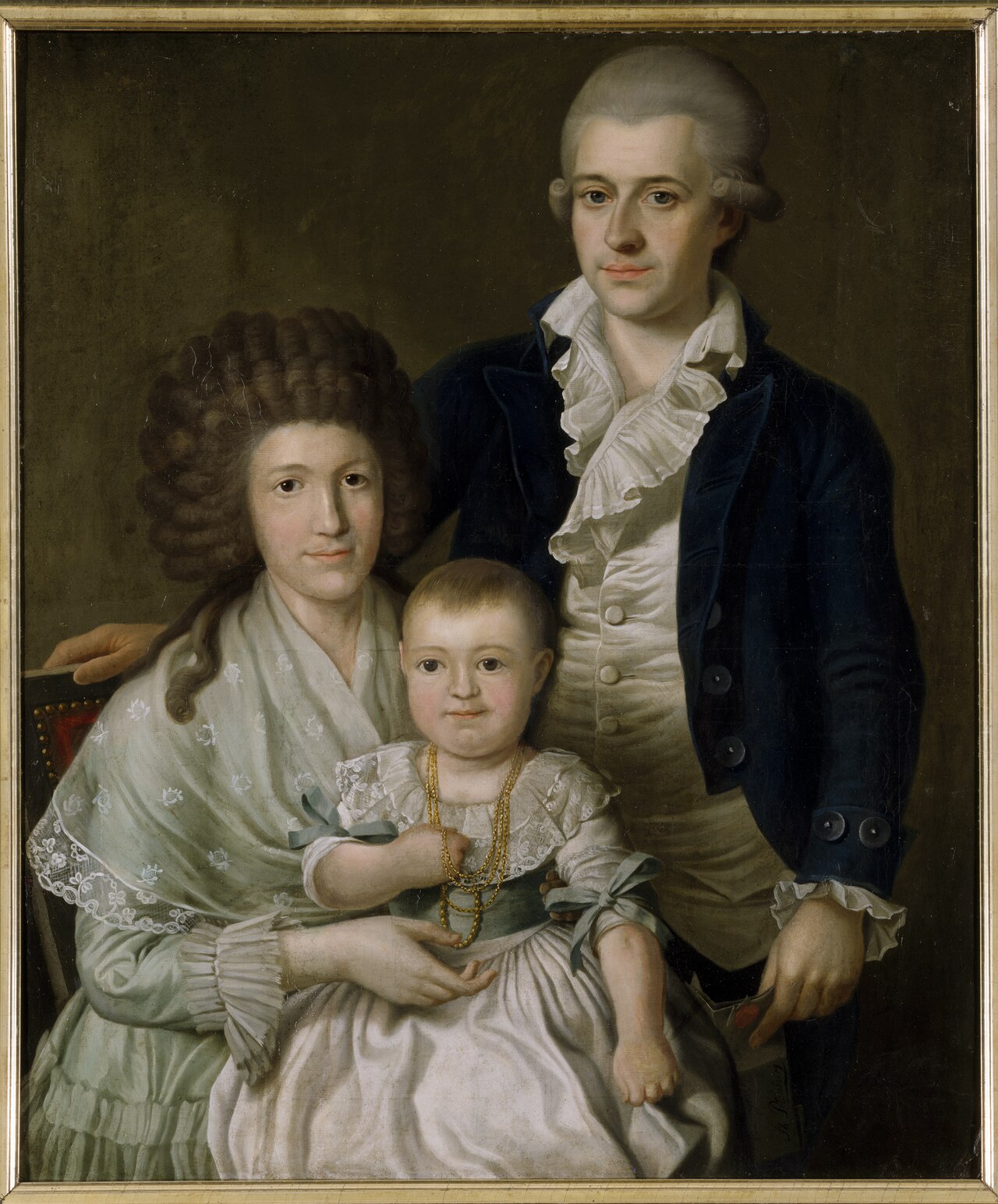
- Ryss som säljer varm dryck, sbiten och kringlor – A genre scene that captures a street vendor selling hot drinks and pastries, illustrating everyday life within the urban environment. - Consul F.L. Giers and his Family (1790) – A portrait group that, while primarily a family depiction, integrates a detailed interior setting that reflects the interior decor of the period. - View of Sennaya Square in St Petersburg (1800) – This composition presents one of the city’s most vibrant market squares, with a bustling crowd, surrounding merchant stalls and the characteristic stone arches that defined the square’s architecture. - The View of the Embankment of Vasilyevsky Island near the Academy of Arts (1799) – Here Patersen turns his focus to the riverbank, showcasing the elegant façades of the Academy and the orderly layout of the island, bathed in a soft morning light. - The Outskirts of St Petersburg near the Porcelain Factory (1750) – Although the date predates Patersen’s birth, the work is traditionally attributed to his workshop; it depicts the industrial precinct surrounding the renowned porcelain manufactory, emphasizing the interplay between factory structures and the surrounding landscape.
These works collectively document both the civic grandeur and the quotidian scenes of Saint Petersburg at the turn of the 19th century, offering historians valuable visual evidence of the city’s urban fabric.
Influence and legacy Benjamin Patersen’s legacy rests on his role as one of the earliest systematic visual chroniclers of Saint Petersburg. His cityscapes served as reference material for later Russian artists who sought to capture the evolving metropolis, influencing the development of Russian vedute painting in the early 19th century. While he never achieved the fame of contemporaries such as Fyodor Alekseyev, Patersen’s works are frequently cited in scholarly studies of Russian urban development and are housed in major Russian museum collections, including the State Hermitage.
Beyond the artistic sphere, Patersen’s paintings provide historians and architects with a reliable visual record of streets, bridges, and public buildings that have since been altered or demolished. His careful balance of documentary accuracy and aesthetic composition set a precedent for later generations of cityscape painters, establishing a visual language that merges cartographic precision with artistic sensibility.
Patersen died in Saint Petersburg in 1815, leaving behind a body of work that continues to inform both art historical scholarship and the broader understanding of Russia’s capital during a pivotal era of growth and modernization.
Frequently asked questions
Who was Benjamin Patersen?
Benjamin Patersen (1748–1815) was a Swedish‑born painter and engraver who worked in Russia, best known for his detailed cityscape views of Saint Petersburg.
What style or movement is Patersen associated with?
Patersen did not belong to a formal movement; his work blends Enlightenment‑era topographical accuracy with the lyrical qualities of the Dutch vedute tradition.
What are his most famous works?
Key works include the View of Sennaya Square (1800), The View of the Embankment of Vasilyevsky Island (1799), Consul F.L. Giers and his Family (1790), Ryss som säljer varm dryck, sbiten och kringlor, and The Outskirts of St Petersburg near the Porcelain Factory.
Why is Patersen important in art history?
He is one of the earliest systematic visual chroniclers of Saint Petersburg, providing valuable documentary evidence of the city’s architecture and influencing later Russian cityscape painters.
How can I recognise a Patersen painting?
Look for precise architectural perspective, a muted colour palette, fine hatching in engravings, and small figures that animate the scene without dominating the composition.