Jean-Baptiste Pater
1695 – 1736
In short
Jean‑Baptiste Pater (1695–1736) was a French Rococo painter noted for his elegant fêtes galantes and pastoral scenes. Working mainly in Paris, he produced works such as Pastoral Concert (1734) and a series of fête‑galante compositions that exemplify the light, decorative style of early‑18th‑century France.
Notable works

_-_F%C3%AAte_galante_-_P460_-_The_Wallace_Collection.jpg)

Early life Jean‑Baptiste Pater was born in 1695 in Valenciennes, a city in the north of France that had a thriving artistic community. Little is recorded about his family background, but the city's guild environment provided a natural entry point for a young artist. Pater would have received his first training locally, learning the fundamentals of drawing, colour and composition from the workshops that catered to the region’s decorative arts and religious commissions. These formative years gave him a solid technical base and an appreciation for the delicate handling of light that would later become a hallmark of his work.
Career and style In the early 1720s Pater moved to Paris, the centre of French artistic life, where he entered the studio of Antoine Watteau, the leading exponent of the fête‑galante genre. Under Watteau’s guidance Pater absorbed the painter’s lyrical approach to leisure scenes, the graceful posture of figures, and the subtle tonal harmonies that characterised Rococo painting. After Watteau’s death in 1721, Pater continued to work independently, receiving commissions from aristocratic patrons who favoured the light‑hearted, decorative aesthetic of the period. His style is firmly situated within the Rococo movement: a bright palette, fluid brushwork and an emphasis on amorous or pastoral narratives rather than grand historical or religious subjects. While he never achieved the fame of his master, Pater’s oeuvre reflects a consistent refinement of the fête‑galante idiom.
Signature techniques Pater’s paintings are distinguished by several technical traits. He favoured a pastel palette dominated by soft pinks, blues and buttery yellows, creating an atmosphere of warmth and intimacy. His brushwork is fine and almost imperceptible, allowing the surface to appear smooth and polished. Pater often employed a delicate sfumato to model faces, giving them a fleeting, dream‑like quality. Compositionally, he placed his figures within loosely rendered landscapes, using foliage and architectural elements to frame the scene without overwhelming the subjects. Light is typically diffused, with a gentle glow that suggests early morning or late afternoon, reinforcing the sense of leisurely enjoyment.
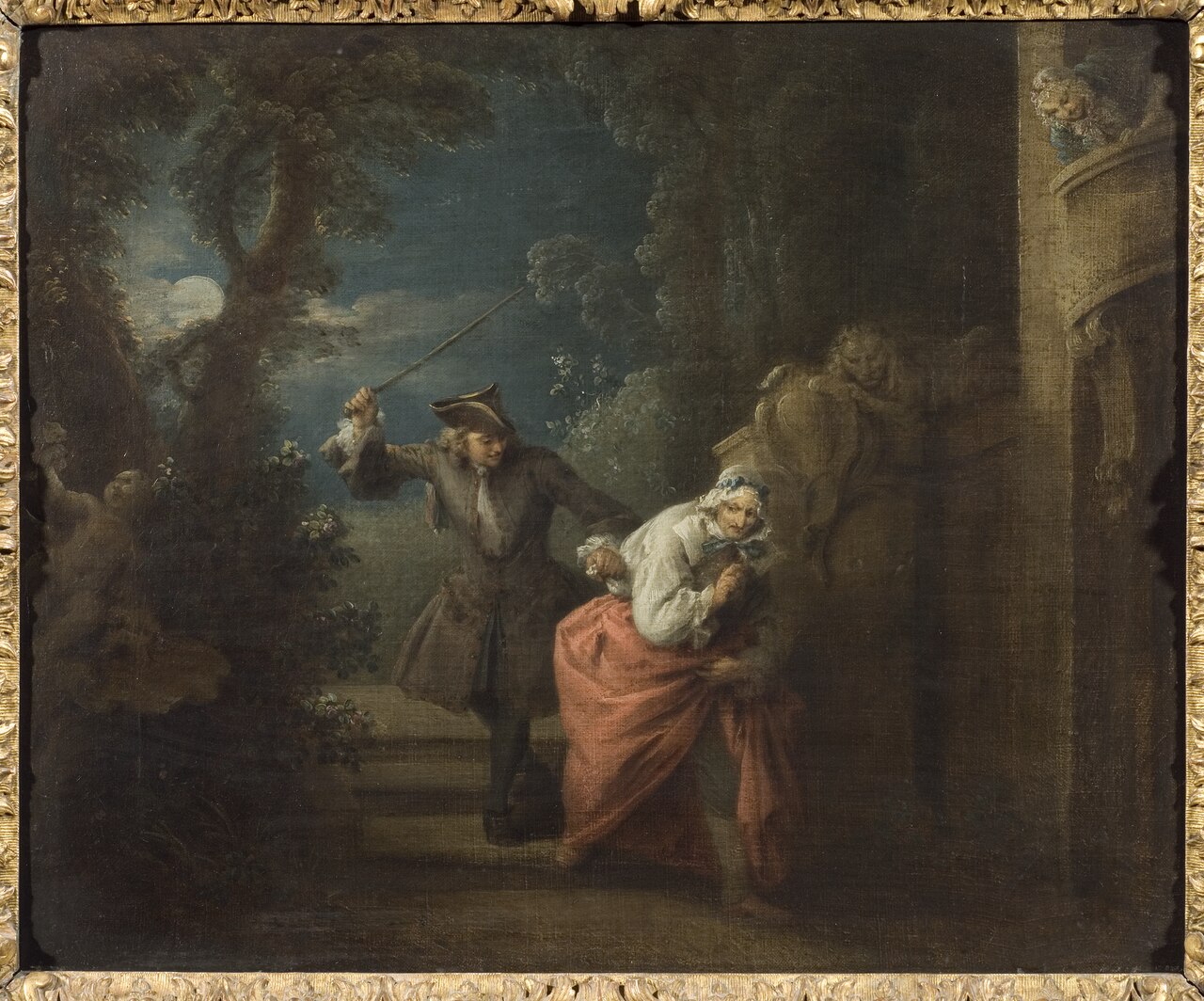
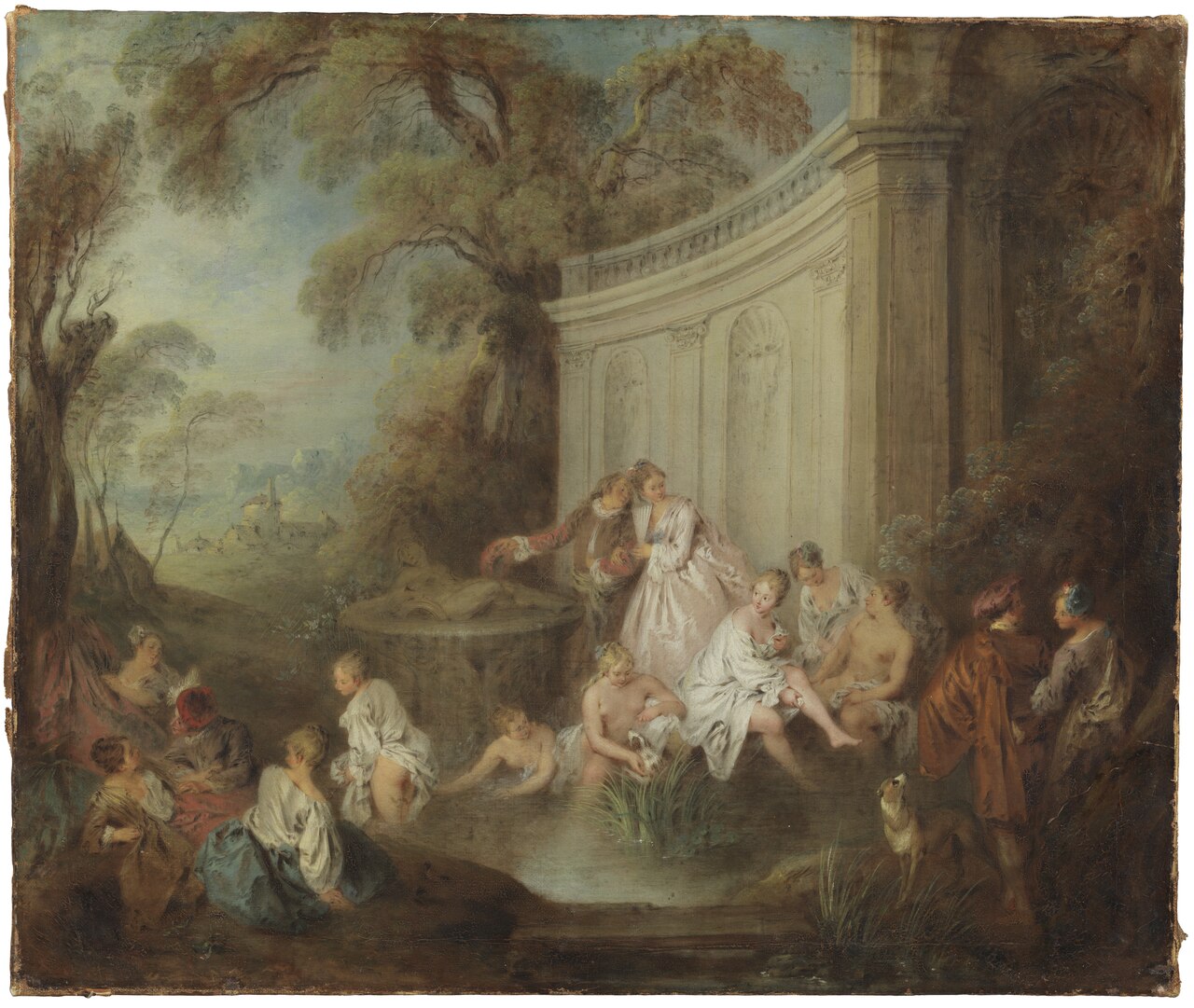
Major works - **Pastoral Concert (1734)** – This work depicts a group of musicians amid a bucolic setting, embodying the Rococo fascination with music as a symbol of harmony. The figures are arranged in a semi‑circular composition, their gestures and expressions suggesting a casual, spontaneous performance. The landscape is rendered with a light, almost sketch‑like quality, allowing the viewer to focus on the interaction of sound and sight. - **Fête galante (1731)** – In this painting, a young couple engages in a flirtatious dialogue within a garden pavilion. The delicate interaction of the figures, their elegant costumes and the subtle play of light on the stone columns exemplify Pater’s mastery of the fête‑galante genre. The work’s composition balances vertical architectural elements with the horizontal sweep of the garden, creating a harmonious visual rhythm. - **Fête galante in a Landscape (1730)** – Similar in theme to the previous piece, this canvas places the figures within a broader natural setting. The surrounding trees and distant hills are suggested with loose brushstrokes, emphasizing the figures’ prominence. The painting’s colour scheme of muted greens and warm ochres reinforces a tranquil, idyllic mood. - **The Cudgelled and Contented Cuckold** – A more humorous composition, this work portrays a man receiving a beating while appearing resigned to his fate, a subject drawn from contemporary anecdotes. Pater treats the scene with a light touch, employing exaggerated facial expressions and a bright palette that undercuts the violent action, turning it into a moralised yet comic vignette. - **A Company Bather in a Park** – This piece shows a group of bathers enjoying a park setting, combining elements of the pastoral with the sensual. The figures are rendered with the same soft modelling as his other works, while the surrounding foliage is hinted at rather than fully detailed, creating a sense of privacy and intimacy.
Influence and legacy Although Pater never eclipsed the reputation of Watteau, his paintings contributed to the diffusion of the fête‑galante style beyond the court of Louis XV. By adhering closely to the Rococo language of elegance, his works provided a template for later artists who sought to capture the fleeting pleasures of aristocratic leisure. His modest output, preserved in private collections and a few museum holdings, offers scholars a clear example of how Watteau’s teachings were interpreted by a second‑generation painter. In contemporary art‑historical scholarship, Pater is recognised as a competent, if not revolutionary, figure whose paintings illustrate the transition from the late Baroque to the fully developed Rococo aesthetic.
Frequently asked questions
Who was Jean‑Baptiste Pater?
Jean‑Baptiste Pater (1695–1736) was a French painter of the Rococo period, best known for his elegant fêtes galantes and pastoral scenes.
What artistic style or movement is he associated with?
He is firmly associated with the Rococo movement, working in the fête‑galante genre pioneered by Antoine Watteau.
Which works are considered his most famous?
His most recognised works include Pastoral Concert (1734), Fête galante (1731), Fête galante in a Landscape (1730), The Cudgelled and Contented Cuckold, and A Company Bather in a Park.
Why does he matter in art history?
Pater helped spread the Rococo fête‑galante style beyond Watteau, providing a clear example of early‑18th‑century French decorative painting and influencing later artists who pursued similar themes of leisure and romance.
How can I recognise a painting by Jean‑Baptiste Pater?
Look for a pastel colour palette, delicate brushwork, softly modelled figures in relaxed poses, and compositions that blend elegant figures with loosely rendered garden or landscape settings.