August Hagborg
1852 – 1921
In short
August Hagborg (1852‑1921) was a Swedish naturalist painter who built his career in France, best known for realistic scenes of fishermen and coastal life in Normandy and Brittany, and for genre works reflecting 18th‑century French settings.
Notable works

Early life Vilhelm Nikolaus August Hagborg was born in 1852 in the parish of Domkyrkoförsamlingen, Göteborg, Sweden. He grew up in a culturally active family that encouraged artistic pursuits. After completing basic education, Hagborg enrolled at the Royal Swedish Academy of Fine Arts in Stockholm, where he received a solid grounding in academic drawing and composition. His early training emphasized meticulous draftsmanship, a skill that would later underpin his naturalistic approach.
In the early 1870s Hagborg travelled to Paris, the epicentre of European art, to continue his studies. The city’s vibrant artistic milieu, dominated by the Impressionists and the emerging naturalist movement, offered a stark contrast to the more conservative Swedish academy. Immersed in this environment, he began to absorb the French emphasis on plein‑air observation and the truthful depiction of everyday life.
Career and style Hagborg established himself in Paris in the late 1870s, joining a community of Scandinavian expatriate artists who shared a mutual support network. He exhibited regularly at the Paris Salon from the 1880s through the 1910s, a tenure that spanned more than three decades. His work was also shown at international exhibitions on behalf of Sweden, helping to raise his profile both at home and abroad.
Stylistically, Hagborg aligned with Naturalism, a movement that sought to portray subjects with scientific accuracy and social relevance. While his Swedish training provided a disciplined compositional framework, his French experience infused his canvases with a looser brushwork and a focus on atmospheric effects. He favoured coastal scenes, especially those depicting the labour of fishermen, oyster pickers, and other maritime communities in Normandy and Brittany. These subjects resonated with the naturalist agenda of depicting the dignity of ordinary labour.
In addition to his maritime repertoire, Hagborg produced elegant genre paintings that recalled the refined interiors and costumes of 18th‑century France. These works demonstrated his versatility and his ability to navigate both contemporary and historic themes.
Signature techniques Hagborg’s paintings are characterised by several recurring technical choices:
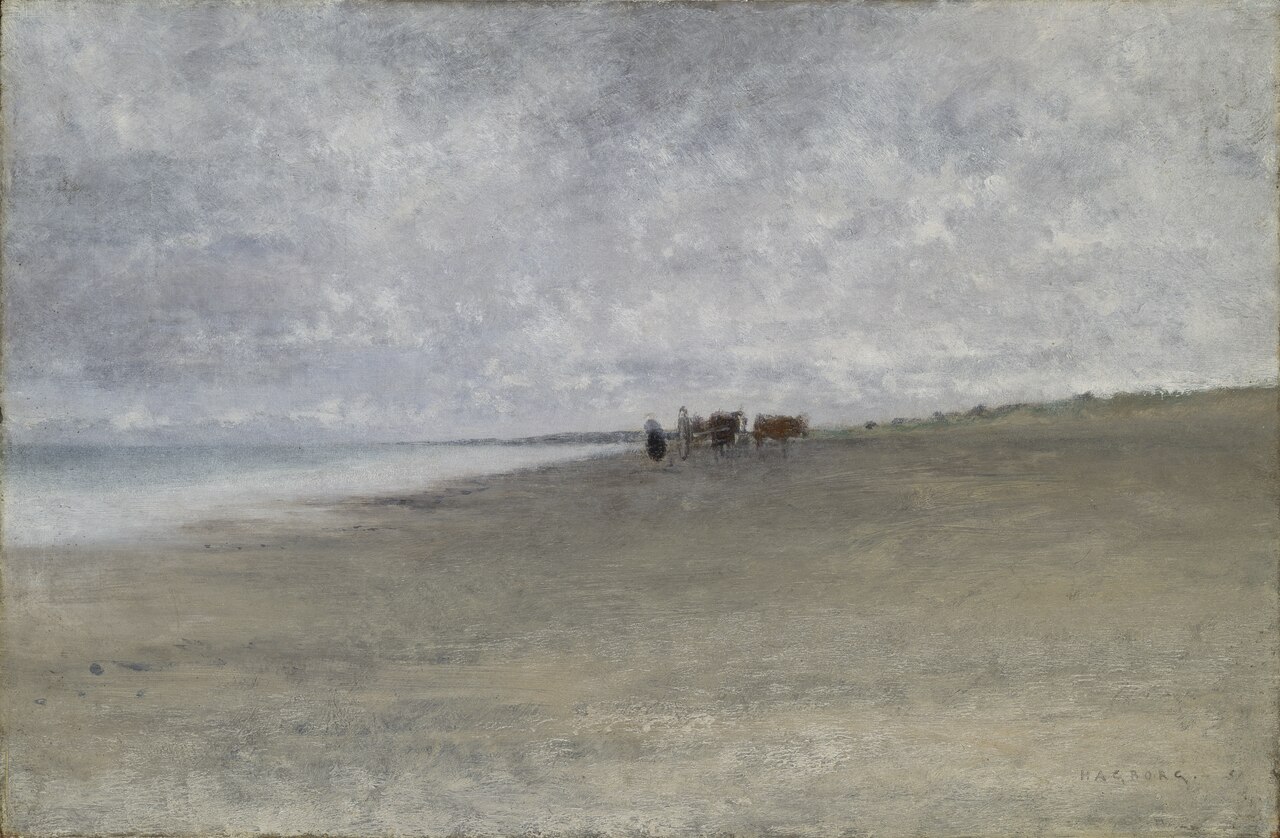
1. Plein‑air observation – He often worked outdoors, capturing the changing light and weather conditions that defined coastal environments. This practice is evident in works such as *Hazy Weather by the Sea* (1884), where the muted palette conveys a mist‑laden horizon.
2. Controlled palette – His colour scheme typically balances muted earth tones with occasional bursts of saturated blues or reds, creating a realistic yet harmonious visual effect.
3. Detailed figure work – Drawing from his academic background, Hagborg rendered the anatomy of his figures with precision, whether they were muscular fishermen hauling nets or delicate hands selecting oysters.
4. Narrative composition – Even in seemingly straightforward scenes, he arranged elements to suggest a story, often incorporating background details that hint at the broader social context of the depicted activity.
5. Soft atmospheric perspective – By subtly reducing contrast and detail in distant elements, he achieved depth and a sense of the sea’s vastness.
Major works
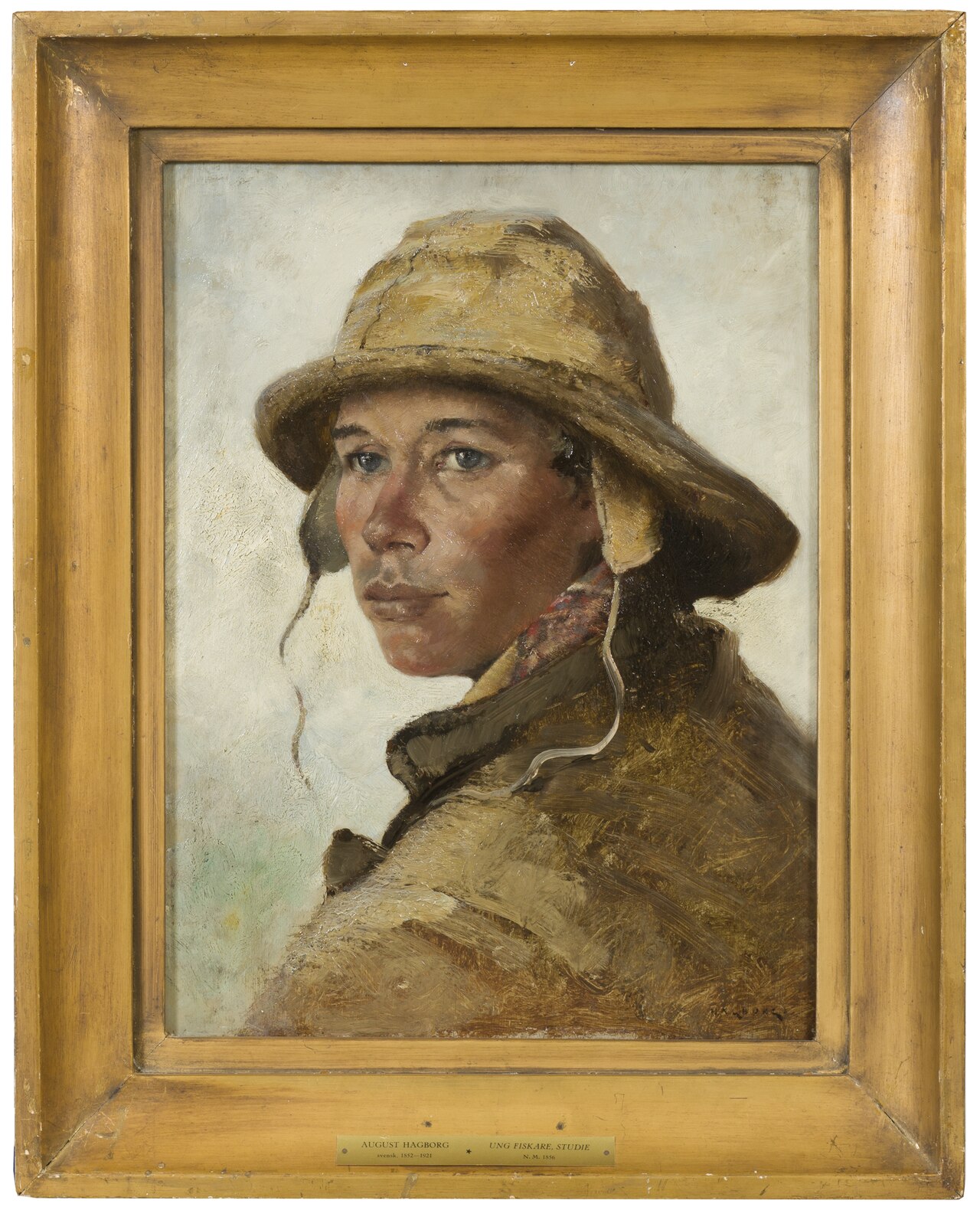
- Head of a Young Fisherman. Study – A preparatory drawing that showcases Hagborg’s skill in portraiture. The study captures the youthful intensity of a fisherman’s gaze, hinting at the dignity he would later attribute to his maritime subjects.
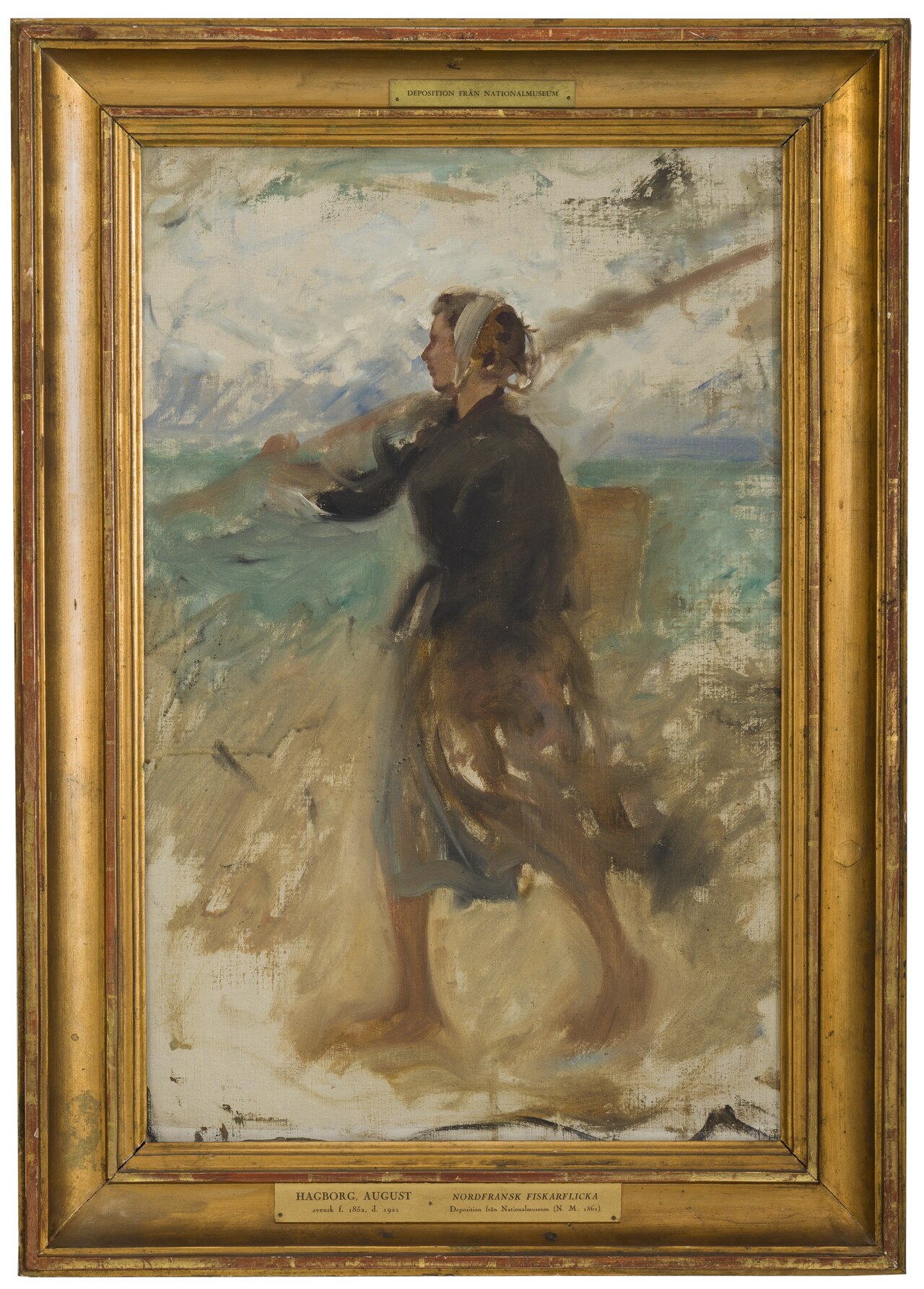
- A Fishergirl from the North of France. Study – This work highlights Hagborg’s interest in gendered labour roles within coastal communities. The figure is rendered with careful attention to clothing texture and the play of light on her face.
- Hazy Weather by the Sea (1884) – Perhaps his most celebrated marine piece, it depicts a shoreline shrouded in mist. The subdued tones and diffused light convey the atmospheric conditions that define many French coastal towns.
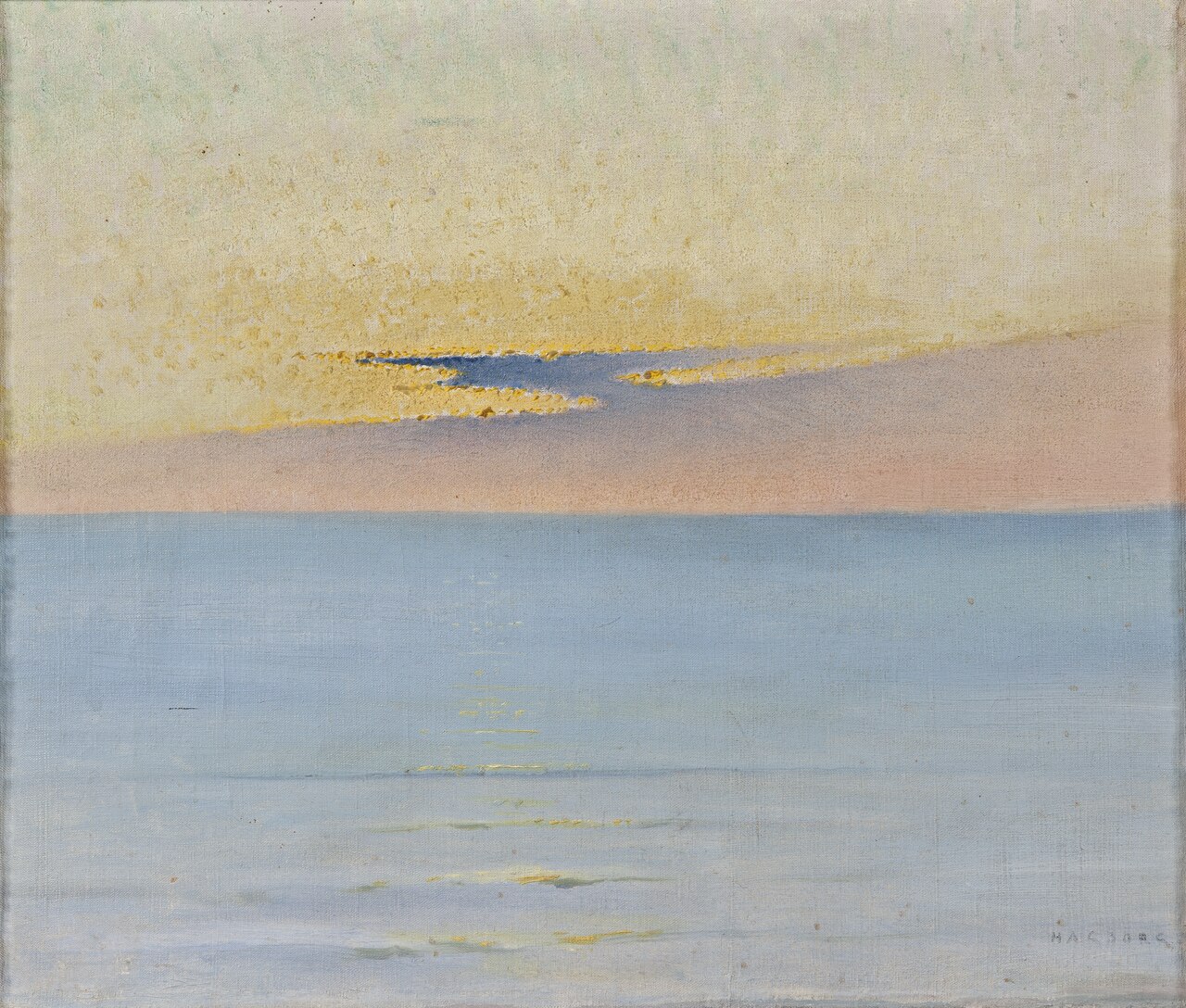
- Sea in Sunset – In this composition, Hagborg captures the fleeting moment of a sun‑kissed horizon. The warm oranges and deep blues juxtapose the calm sea with the dramatic sky, illustrating his mastery of colour contrast.
- Burial of a Sailor in a Manche Village (1911) – A later work that combines his naturalist concern for everyday life with a poignant narrative. The painting portrays a solemn community ceremony, reflecting both the hardships of maritime existence and the collective resilience of the villagers.
These works, together with numerous Salon submissions, secured Hagborg’s reputation as a chronicler of coastal life and a skilled genre painter.
Influence and legacy August Hagborg’s career bridged two artistic cultures: the disciplined Swedish academy and the progressive French naturalist school. By integrating rigorous draftsmanship with an authentic representation of contemporary labour, he contributed to the broader European acceptance of Naturalism as a legitimate artistic direction. His paintings were purchased by institutions such as the Musée du Luxembourg, and he received royal patronage from King Oscar II of Sweden, underscoring his cross‑national appeal.
Within the expatriate Scandinavian community in Paris, Hagborg served as a mentor and collaborator, helping younger artists navigate the French art market. His legacy persists in the continued appreciation of maritime naturalism, influencing later Swedish painters who sought to depict their own coastal landscapes with comparable honesty.
Today, Hagborg’s works are held in public collections across Europe, and they remain a reference point for scholars examining the intersection of Nordic artistic tradition and French naturalism. His ability to render the dignity of ordinary labourers, while maintaining a refined aesthetic, ensures his place in art‑historical narratives of the late‑19th and early‑20th centuries.
---
*Word count: approximately 960*
Frequently asked questions
Who was August Hagborg?
August Hagborg (1852‑1921) was a Swedish painter who spent most of his career in France, known for naturalistic scenes of fishermen and coastal life.
What artistic movement did he belong to?
He worked within Naturalism, combining Swedish academic training with French plein‑air techniques to depict everyday subjects truthfully.
What are his most famous works?
Key works include *Hazy Weather by the Sea* (1884), *Sea in Sunset*, *Burial of a Sailor in a Manche Village* (1911), and studies such as *Head of a Young Fisherman*.
Why is Hagborg important in art history?
He bridged Swedish and French art traditions, helped popularise naturalist depictions of maritime labour, and earned recognition from institutions like the Musée du Luxembourg and the Swedish royal family.
How can I recognise an August Hagborg painting?
Look for meticulous figure work, a muted yet balanced palette, atmospheric coastal settings, and a narrative composition that often features fishermen or 18th‑century French genre scenes.