Adolf Ulrik Wertmüller
1751 – 1811
In short
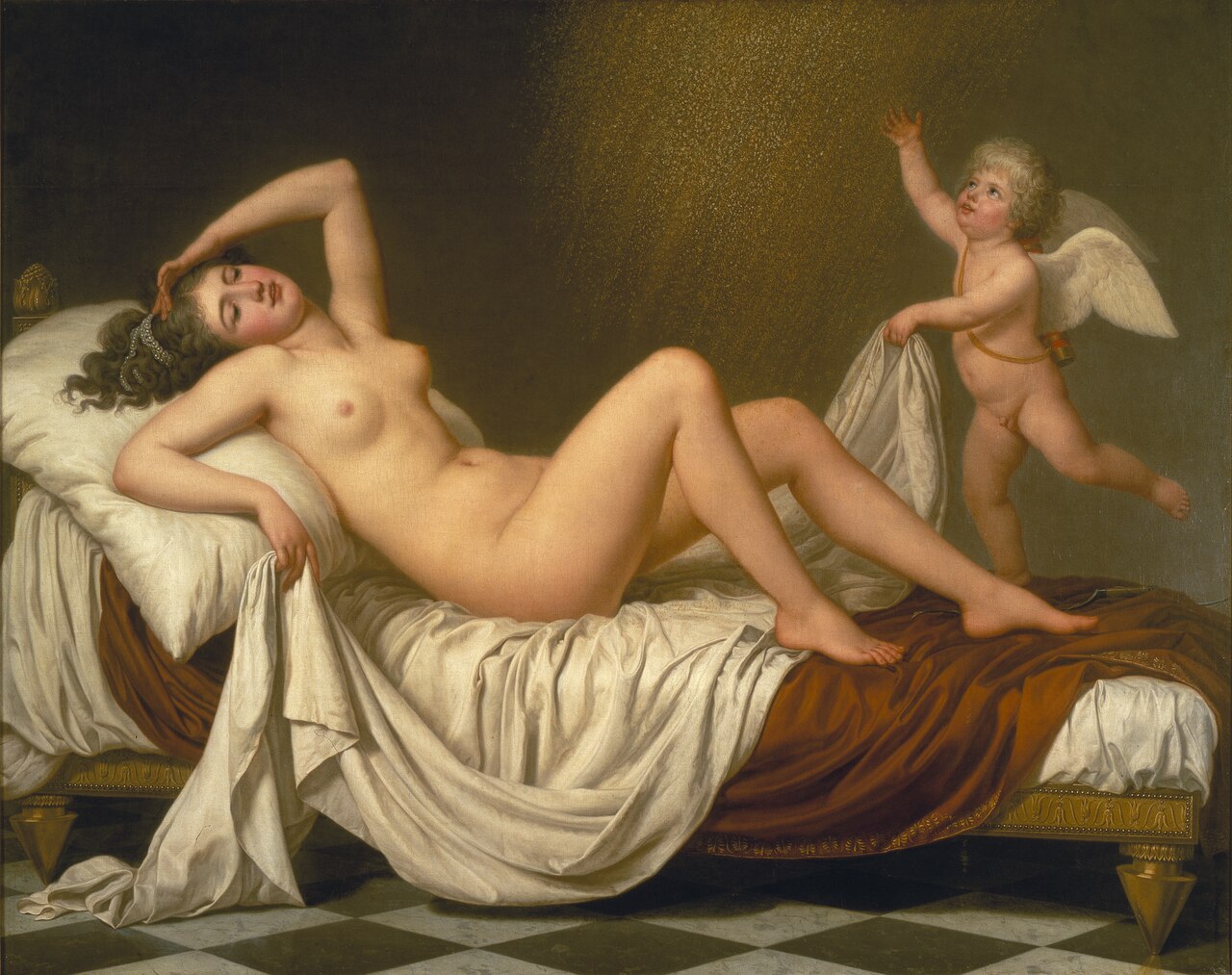
Adolf Ulrik Wertmüller (1751–1811) was a Swedish painter who worked chiefly in France during the height of Neoclassicism. He is best known for elegant portraits of royalty and mythological scenes such as Danaë and the Shower of Gold.
Notable works
_-_001.jpg)

Early life Adolf Ulrik Wertmüller was born in 1751 in Stockholm, Sweden. Little is recorded about his family background, but he displayed an early aptitude for drawing and received his first artistic instruction in the capital’s drawing schools. By his late teens he had become familiar with the works of Swedish masters such as Alexander Roslin, whose international reputation offered a model for a young artist aspiring to a broader European career.
Career and style In the early 1770s Wertmüller moved to Paris, the centre of the emerging Neoclassical movement. He enrolled at the Académie Royale de Peinture et de Sculpture, where he was exposed to the doctrines of antiquity championed by artists such as Jacques-Louis David. The French capital’s salons provided the platform for his first public exhibitions, and his work quickly attracted the attention of aristocratic patrons. Throughout the 1780s he produced both portraiture and history paintings that combined the moral clarity of Neoclassicism with a refined, courtly elegance.
Wertmüller’s style is characterised by a restrained palette, precise drawing and a clear compositional balance. He favoured idealised facial features and smooth modelling of flesh, while still preserving a subtle sense of individual character. His mythological subjects are treated with the same dignified poise as his portraits, reflecting the period’s belief that classical themes could convey contemporary virtues.
Signature techniques Wertmüller employed a number of technical hallmarks that allow his work to be distinguished from that of his contemporaries: - **Linear clarity** – He began each composition with a careful underdrawing, ensuring that the outlines of figures remained crisp even after layers of glaze were applied. - **Modulated glazing** – Thin, translucent layers of oil paint were built up to achieve a luminous skin tone, a technique that softened transitions and gave his portraits a gentle glow. - **Controlled chiaroscuro** – Light is used sparingly to model forms, often coming from an unseen source that highlights the central figure while leaving surrounding elements in softer shadow. - **Elegant drapery** – Fabrics are rendered with fine, flowing lines that suggest both texture and movement without overwhelming the figure. - **Classical compositional motifs** – Architectural elements such as arches, columns and garden settings are employed to frame the narrative and reinforce the Neoclassical aesthetic.
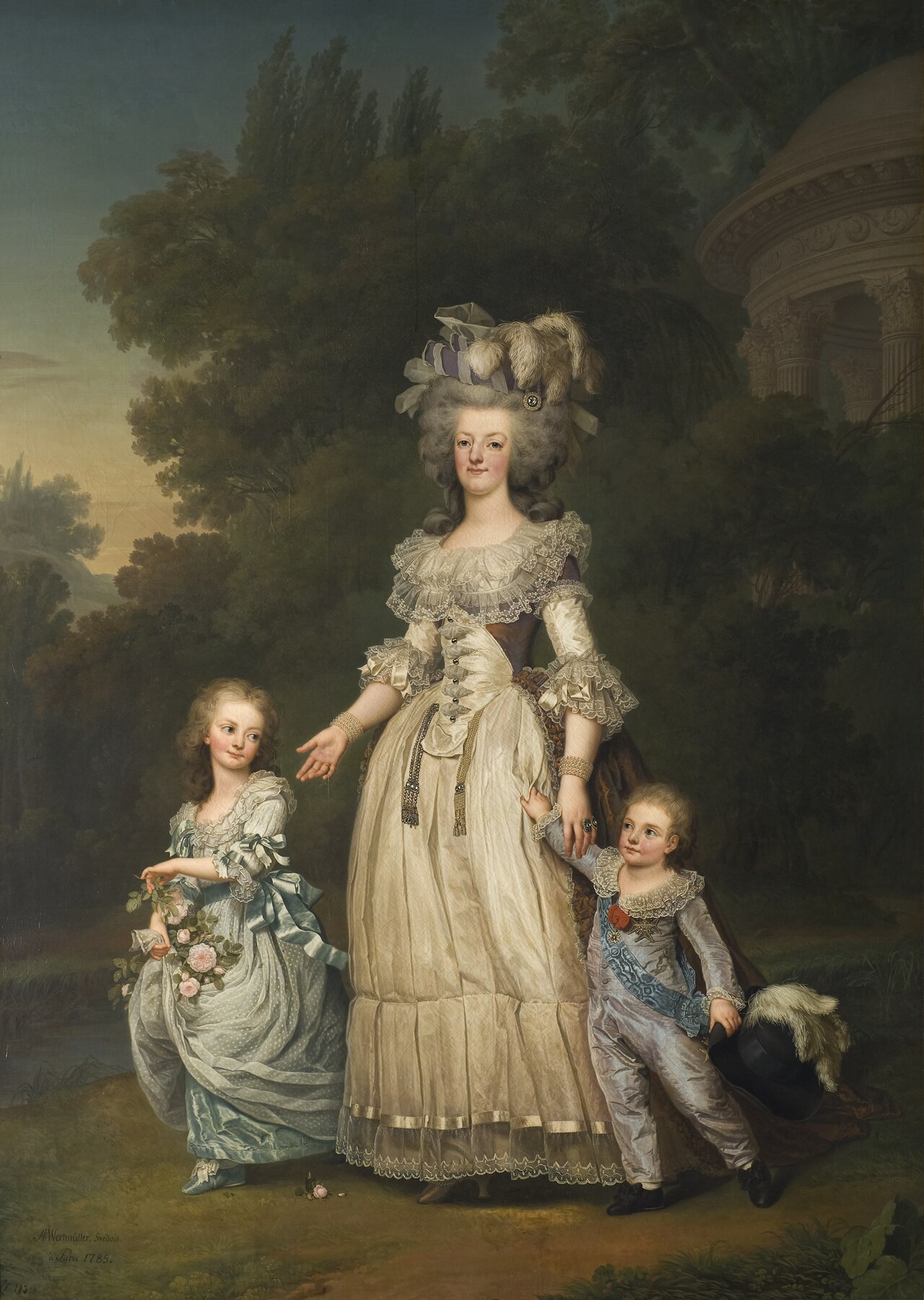
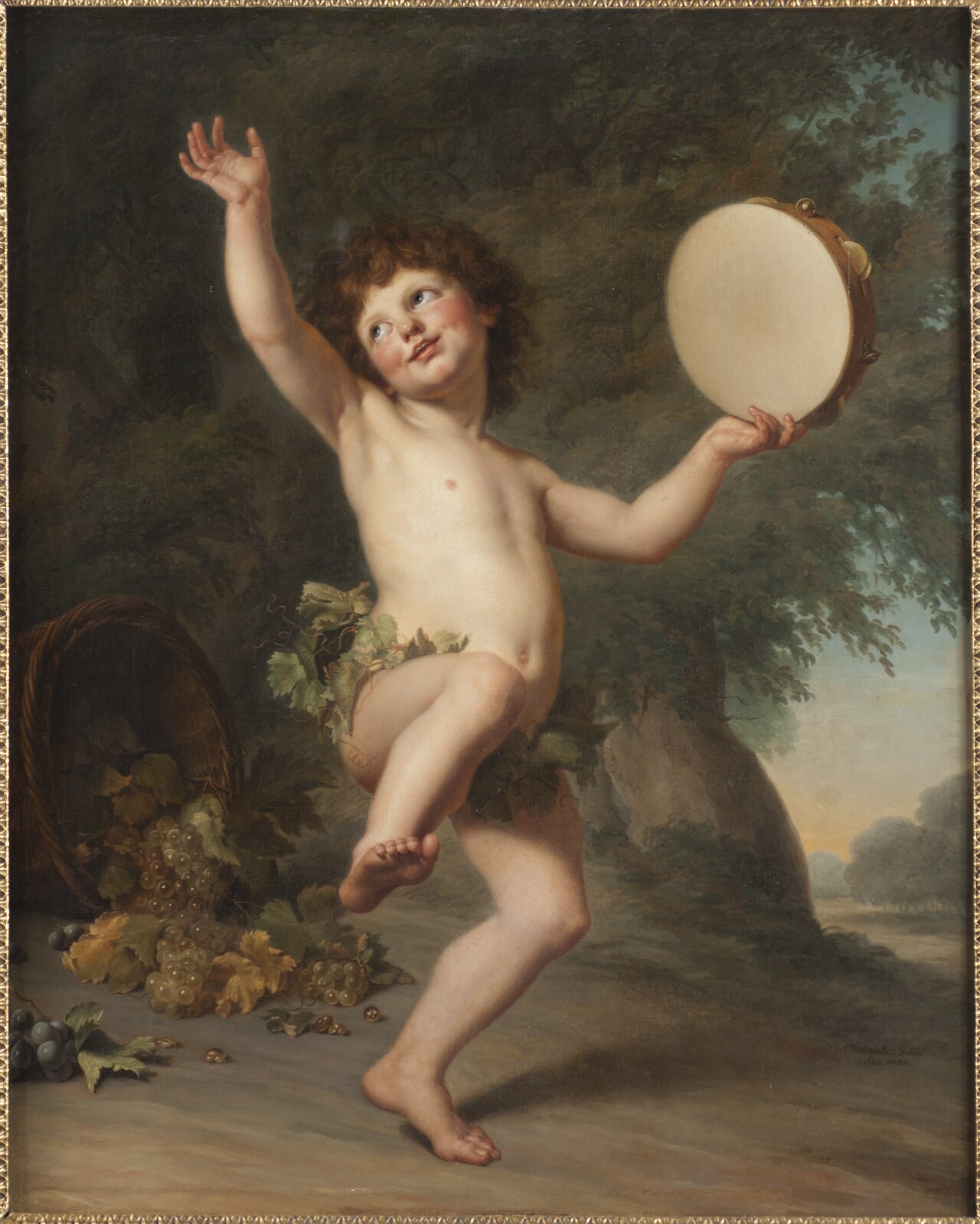
Major works Wertmüller’s oeuvre includes several works that remain central to his reputation: - **Queen Marie Antoinette of France and two of her Children Walking in The Park of Trianon (1785)** – This portrait captures the queen in a pastoral setting, blending regal dignity with a tender family scene. The delicate handling of light and the naturalistic landscape illustrate Wertmüller’s ability to merge portraiture with genre. - **Cupid as Bacchus (1784)** – A mythological composition in which the youthful Cupid is depicted with the attributes of Bacchus, showcasing the artist’s playful engagement with classical iconography and his skill in rendering the male form. - **Danaë and the Shower of Gold (1787)** – Perhaps his most celebrated history painting, it portrays the myth of Danaë receiving Zeus as a golden rain. The work is noted for its graceful composition, the luminous treatment of gold, and the sensual yet restrained depiction of the female figure. - **Marie Antoinette of Austria, Queen of France (1788)** – A formal portrait of the queen‑consort that emphasizes regal poise through a restrained colour scheme and the subtle use of drapery to convey status. - **Portrait of Marie Thérèse Charlotte of France, "Madame Royale" (1786)** – This portrait of the king’s daughter demonstrates Wertmüller’s talent for capturing youthful innocence while maintaining the compositional gravitas expected of a royal portrait.
These paintings were exhibited at the Paris Salon and attracted both critical acclaim and patronage from the French court. After the upheavals of the French Revolution, Wertmüller returned to Sweden before eventually settling in the United States, where he died in Delaware County in 1811.
Influence and legacy Adolf Ulrik Wertmüller occupies a distinct niche within Neoclassical art. His synthesis of Swedish artistic training with French academic standards produced a body of work that appealed to both continental and northern European tastes. While he never achieved the fame of contemporaries such as David, his portraits of Marie Antoinette and other members of the French royal family contributed to the visual vocabulary of the late‑18th‑century court.
In Sweden, Wertmüller’s career demonstrated the viability of an international artistic path, encouraging later Swedish painters to seek training abroad. His works are held in major collections, including the Nationalmuseum in Stockholm and the Louvre, where they continue to be referenced in studies of Neoclassical portraiture and mythological painting. Modern scholarship recognises his careful draftsmanship and subtle colour modulation as hallmarks of a painter who, though operating within the strictures of academic art, managed to infuse his subjects with a personal elegance.
Overall, Wertmüller’s legacy endures in the graceful balance he achieved between classical idealisation and the intimate portrayal of his sitters, a balance that remains a touchstone for scholars of European art in the transitional period between Rococo exuberance and the austere classicism of the early nineteenth century.
Frequently asked questions
Who was Adolf Ulrik Wertmüller?
Adolf Ulrik Wertmüller was a Swedish painter (1751–1811) who worked mainly in France and is known for his Neoclassical portraits and mythological scenes.
What artistic movement did he belong to?
He worked within the Neoclassical movement, adopting its emphasis on classical subjects, clear composition and restrained colour.
What are his most famous works?
His best‑known paintings include "Queen Marie Antoinette of France and two of her Children Walking in The Park of Trianon" (1785), "Danaë and the Shower of Gold" (1787), and the portrait "Marie Antoinette of Austria, Queen of France" (1788).
Why is Wertmüller important in art history?
He helped bridge Swedish artistic training with French academic standards, influencing later Nordic artists and contributing notable examples of Neoclassical portraiture that document the French royal court before the Revolution.
How can I recognise a Wertmüller painting?
Look for crisp outlines, smooth modelling of skin, elegant drapery, a restrained palette and a balanced, often classical, composition that foregrounds the figure with subtle chiaroscuro.