Wilhelm von Gegerfelt
1844 – 1920
In short
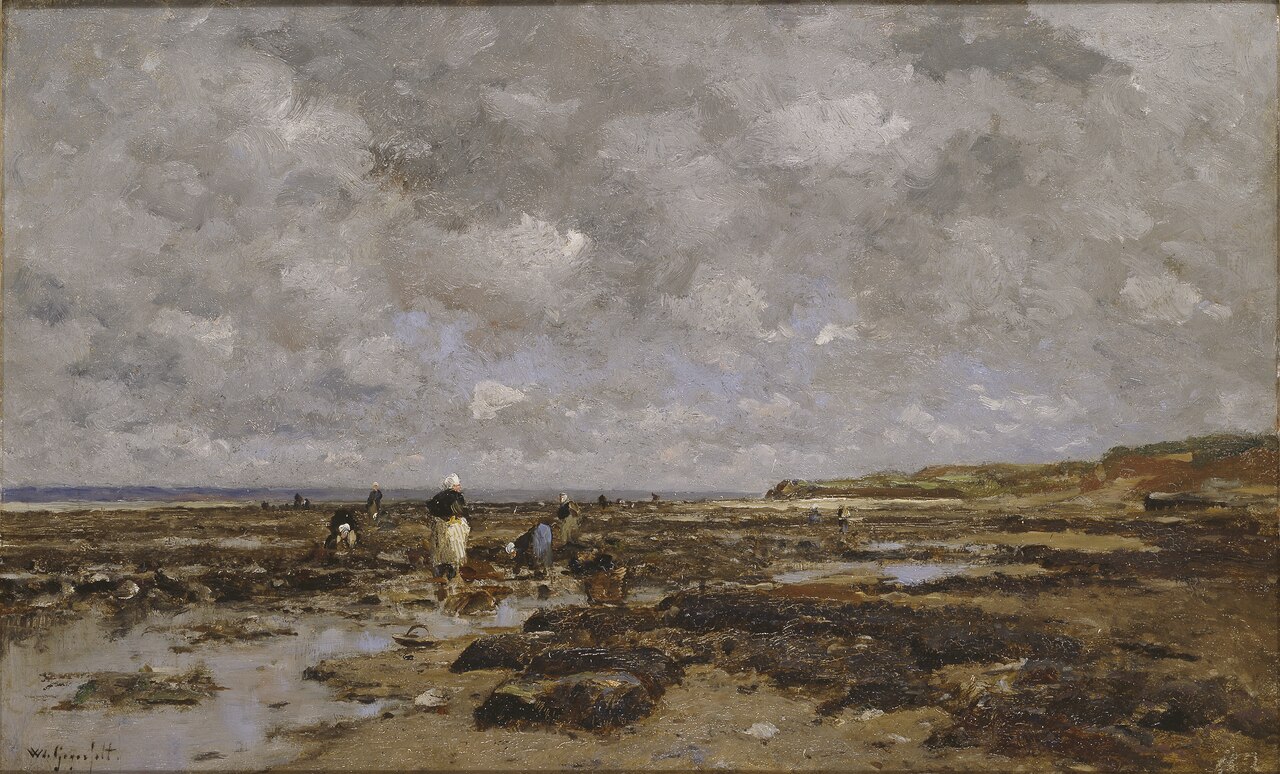
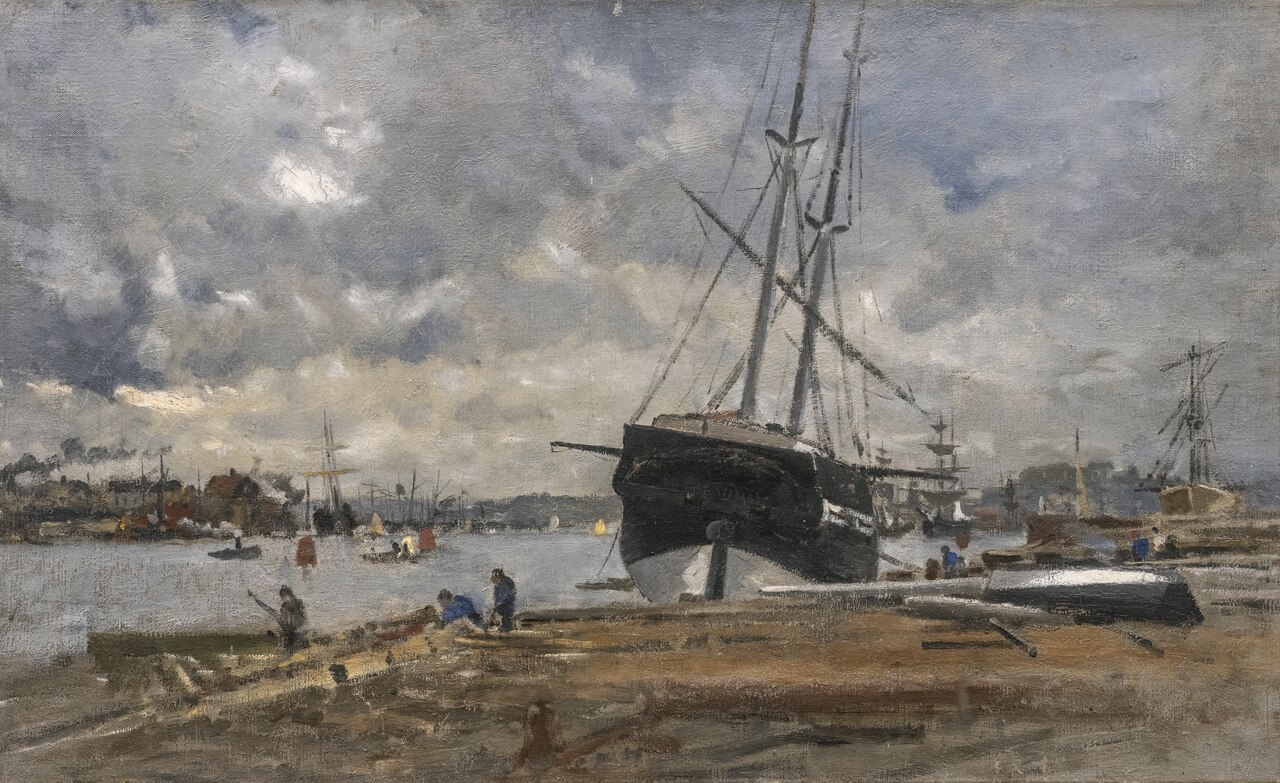
Wilhelm von Gegerfelt (1844–1920) was a Swedish painter born in Gothenburg and active in the late 19th century. He is noted for coastal and harbour scenes, particularly works such as Clam‑Pickers in Villerville and The Gothenburg Harbour in the 1880s.
Notable works
_-_Eastern_Scene_-_VIS.771_-_Sheffield_Galleries_and_Museums_Trust.jpg)
Early life Wilhelm von Gegerfelt was born in 1844 in the port city of Gothenburg, Sweden. His family belonged to the local bourgeoisie, which afforded him a solid education and exposure to the burgeoning cultural life of the city. From an early age he displayed an affinity for drawing, sketching the bustling harbour and the surrounding countryside. After completing secondary schooling, he enrolled at the Royal Swedish Academy of Fine Arts in Stockholm, where he received formal training in drawing, anatomy, and the principles of colour. The Academy’s curriculum, rooted in classical techniques, was beginning to open up to contemporary trends, and von Gegerfelt absorbed both the academic rigour of his teachers and the emerging interest in painting directly from nature.
Career and style Following his studies, von Gegerfelt embarked on a series of study trips that took him to the artistic centres of Europe. He spent time in France, where the influence of the Barbizon School and the early French Impressionists left a lasting imprint on his approach to light and atmosphere. Although his work does not fit neatly into a single movement, it is often characterised as naturalist with an impressionistic sensibility. He preferred plein‑air painting, setting up his easel outdoors to capture the fleeting effects of weather and water. His palette tended toward muted earth tones punctuated by brighter accents, especially when rendering the glint of sunlight on sea‑foam or the warm hues of sunrise.
During the 1870s and 1880s von Gegerfelt exhibited regularly at the Swedish Academy’s annual shows and at commercial galleries in Paris and Copenhagen. Critics praised his ability to convey the vitality of maritime life without resorting to overt romanticisation. He was also a member of several artists’ societies that advocated for greater artistic freedom and the promotion of Swedish art abroad. By the early 1890s he had settled in the coastal town of Torekov, where he continued to paint local scenes until his death in 1920.
Signature techniques Von Gegerfelt’s technique combined meticulous draftsmanship with a looser handling of paint when dealing with atmospheric effects. He often began with a precise underdrawing, outlining the main compositional elements—boats, figures, or architectural features—before applying thin layers of colour. In his water‑based works, he employed wet‑on‑wet applications to blend colours directly on the canvas, creating soft transitions that suggest mist or haze. For coastal subjects, he used a palette knife to render the texture of cliffs and the frothy edge of waves, a method that added physical depth to the surface.
His treatment of light is a hallmark of his oeuvre. He favoured the early morning and late afternoon light, capturing the warm glow that bathes harbour structures and the cool blue tones that dominate overcast skies. In addition, he occasionally incorporated a subtle stippling technique to suggest the sparkle of sunlight on water, a practice reminiscent of the pointillist experiments of his French contemporaries but applied in a restrained manner.
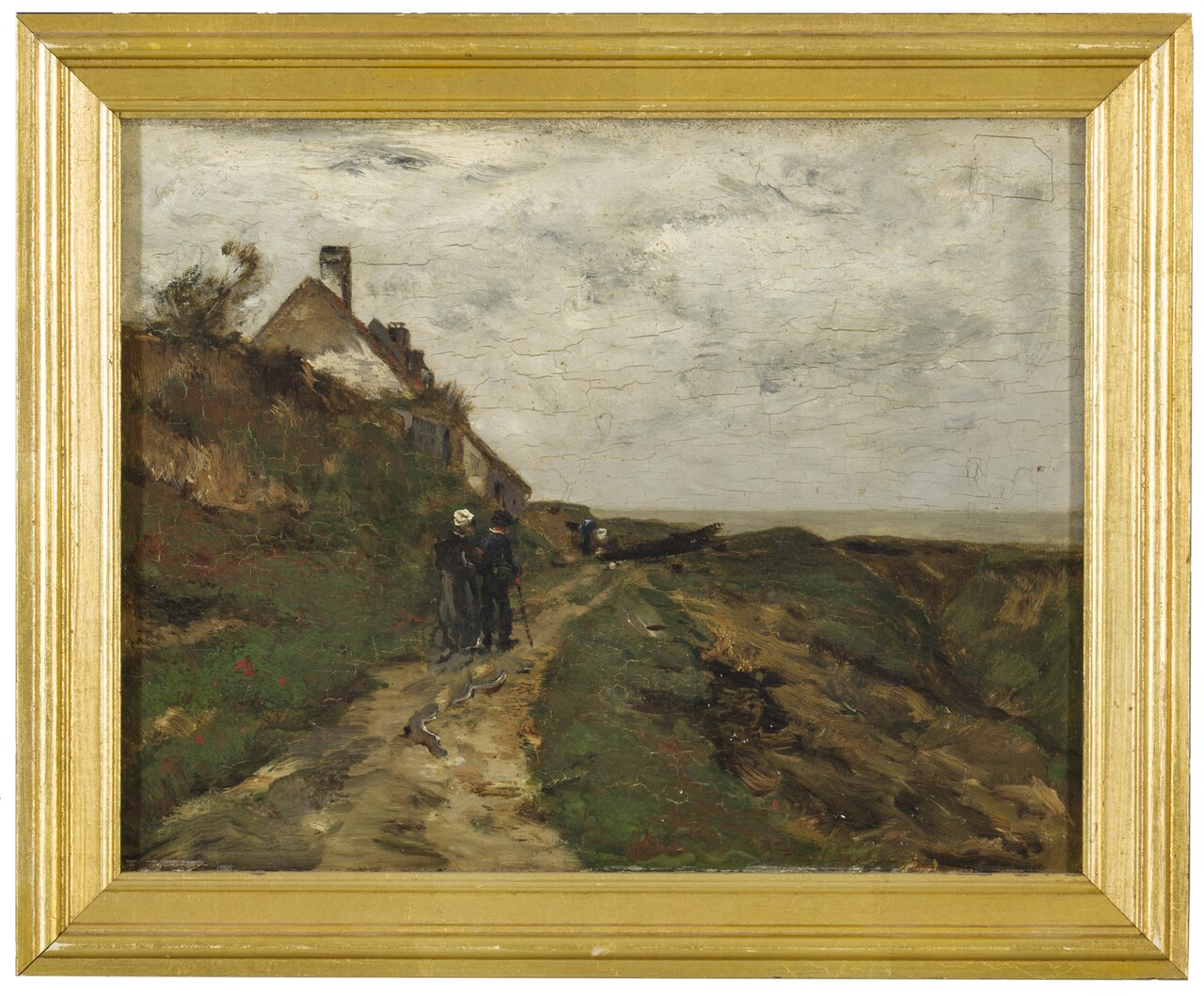
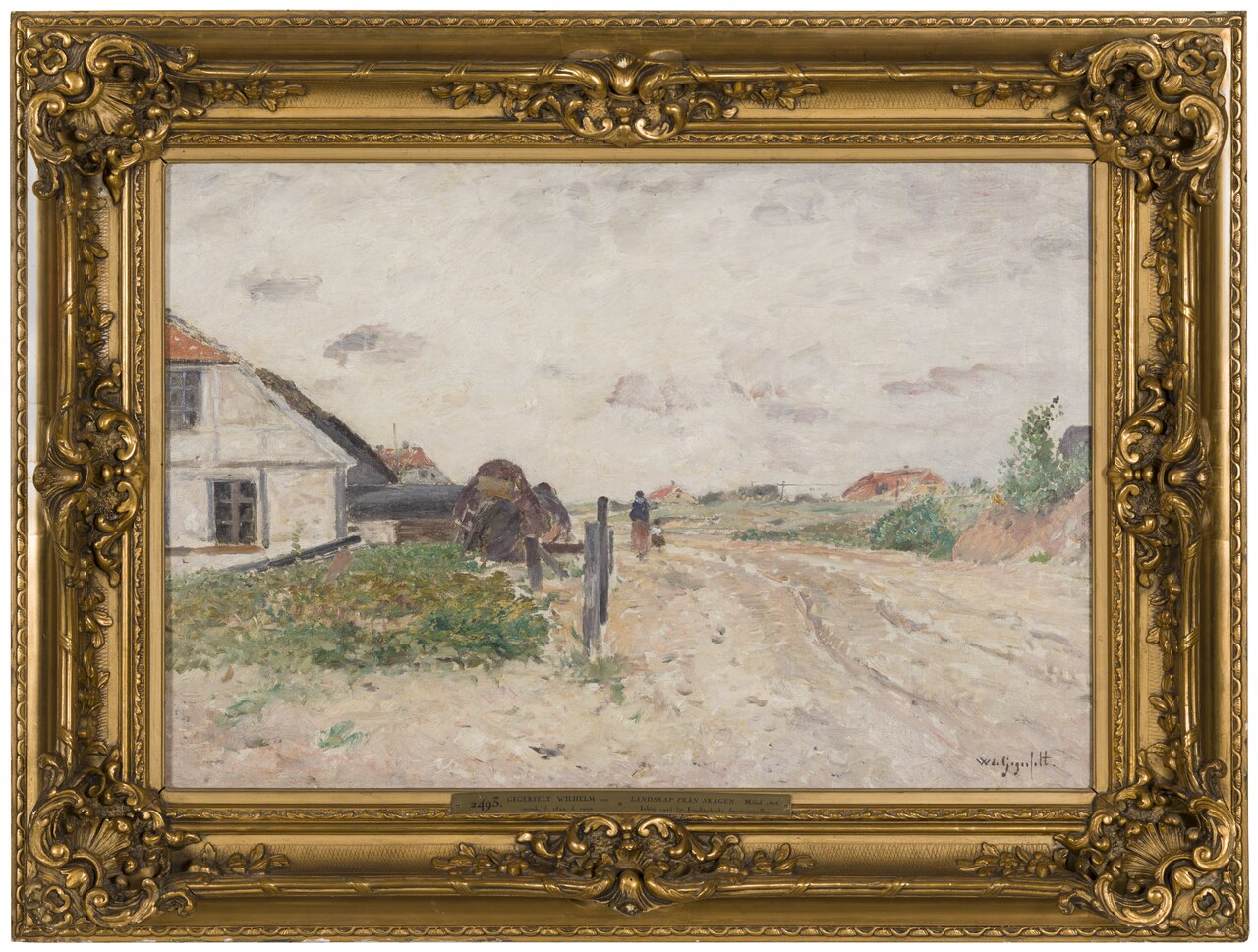
Major works - **Clam‑Pickers in Villerville** – This canvas depicts a group of labourers along the Normandy coast, their figures silhouetted against a sky streaked with soft pinks. The composition balances the human activity with the expansive sea, exemplifying von Gegerfelt’s skill at integrating narrative and landscape. - **Eastern Scene** – A more ambiguous title, this work likely represents a view of a distant, possibly oriental, locale. The painting showcases his interest in exotic subjects, rendered through a muted palette that emphasises the atmospheric depth of the scene. - **View at Menil‑Val (1878)** – Executed in 1878, this piece captures a tranquil valley with a river winding through it. The subtle gradations of green and blue illustrate his command of colour harmony and his ability to convey the serenity of inland scenery. - **Landscape from Skagen (1878)** – Also dated 1878, this work portrays the Danish fishing village of Skagen, famous for its unique light. Von Gegerfelt’s rendering of the sky’s luminous quality and the bustling harbour life aligns him with the Skagen painters, who were exploring similar themes. - **The Gothenburg Harbour in the 1880’s (1880)** – Reflecting his hometown, this painting presents a bustling port with ships, warehouses, and workers. The composition is anchored by the intricate detailing of the harbour infrastructure, while the surrounding water and sky are treated with his characteristic atmospheric brushwork.
Each of these works demonstrates his consistent focus on maritime and coastal subjects, his dedication to plein‑air observation, and his nuanced handling of light and colour.
Influence and legacy Wilhelm von Gegerfelt occupies a modest yet distinct place in Swedish art history. Though not as widely known as some of his contemporaries, his paintings contributed to the broader acceptance of naturalist and early impressionist approaches within Sweden. By depicting everyday labour and ordinary waterfront scenes with dignity, he helped expand the thematic range of Swedish landscape painting beyond the grand, idealised vistas that dominated earlier periods.
His teaching activities, informal mentorship of younger artists, and participation in artists’ societies fostered a network that encouraged experimentation with colour and brushwork. In later decades, Swedish art historians have cited von Gegerfelt as a bridge between the academic tradition of the Royal Academy and the more avant‑garde movements that emerged at the turn of the century.
Today his works are held in several public collections, including the Gothenburg Museum of Art and regional museums in Denmark and France, where they are appreciated for their technical proficiency and atmospheric quality. Scholars continue to study his paintings as examples of cross‑national artistic exchange in the late 19th century, illustrating how a Swedish artist absorbed and adapted French naturalist techniques while retaining a distinct Scandinavian sensibility.
In summary, Wilhelm von Gegerfelt’s legacy lies in his skillful portrayal of maritime life, his subtle integration of impressionistic light effects, and his role in broadening the visual vocabulary of Swedish landscape painting.
Frequently asked questions
Who was Wilhelm von Gegerfelt?
Wilhelm von Gegerfelt (1844–1920) was a Swedish painter known for his coastal and harbour scenes, active primarily in the late 19th century.
What style or movement is he associated with?
His work blends naturalist detail with an early impressionistic handling of light, but he is not tied to a single defined movement.
What are his most famous works?
Key paintings include Clam‑Pickers in Villerville, Eastern Scene, View at Menil‑Val (1878), Landscape from Skagen (1878) and The Gothenburg Harbour in the 1880s (1880).
Why does Wilhelm von Gegerfelt matter in art history?
He helped introduce plein‑air techniques and a softer, atmospheric approach to Swedish landscape painting, bridging academic traditions and emerging modern styles.
How can I recognise a Wilhelm von Gegerfelt painting?
Look for maritime subjects rendered with careful draftsmanship, subtle colour harmonies, and an emphasis on the quality of light—especially early morning or late afternoon illumination.