Robert Thegerström
1857 – 1919
In short
Robert Thegerström (1857–1919) was a Swedish painter and graphic artist, born in London and later based in Stockholm. He is noted for his plein‑air coastal scenes, intimate studies such as Study of a Hand, and portrait commissions of contemporary actors like Oscar Baeckström and Victor Lundberg.
Notable works
Early life Robert Thegerström was born in 1857 in London to Swedish parents who were part of the expatriate community. His family returned to Sweden when he was a child, settling in Stockholm where he would spend most of his life. Growing up in a culturally vibrant capital, he was exposed early to the visual arts through museum visits and the burgeoning Swedish art societies of the late 19th century. Formal training began in Stockholm’s Royal Swedish Academy of Arts, where he studied drawing, painting and printmaking under teachers who emphasized both academic technique and the emerging interest in natural observation.
Career and style After completing his academy studies, Thegerström embarked on a career that combined studio portrait work with an enthusiasm for outdoor painting. The period of the 1880s saw him travel to the Swedish coast, joining a small but active group of artists who painted en plein air, capturing the shifting light and colour of the sea‑shore landscape. His style blended a disciplined academic foundation with a looser handling of colour, reflecting the influence of French naturalism without fully aligning with any single movement. While he never signed onto a specific avant‑garde group, his work resonates with the broader Nordic turn toward realism and atmospheric landscape painting.
Signature techniques Thegerström’s graphic work often employed drypoint and etching, techniques that allowed him to render fine line work and subtle tonal gradations. In his paintings, he favoured a limited palette of muted blues, greys and earth tones, which he layered to suggest the translucency of water and sky. A characteristic feature of his canvases is the careful rendering of foreground foliage or architectural detail that frames the broader landscape, guiding the viewer’s eye toward the horizon. His portraiture demonstrates a restrained chiaroscuro, using light to model the sitter’s features while preserving a sense of immediacy.
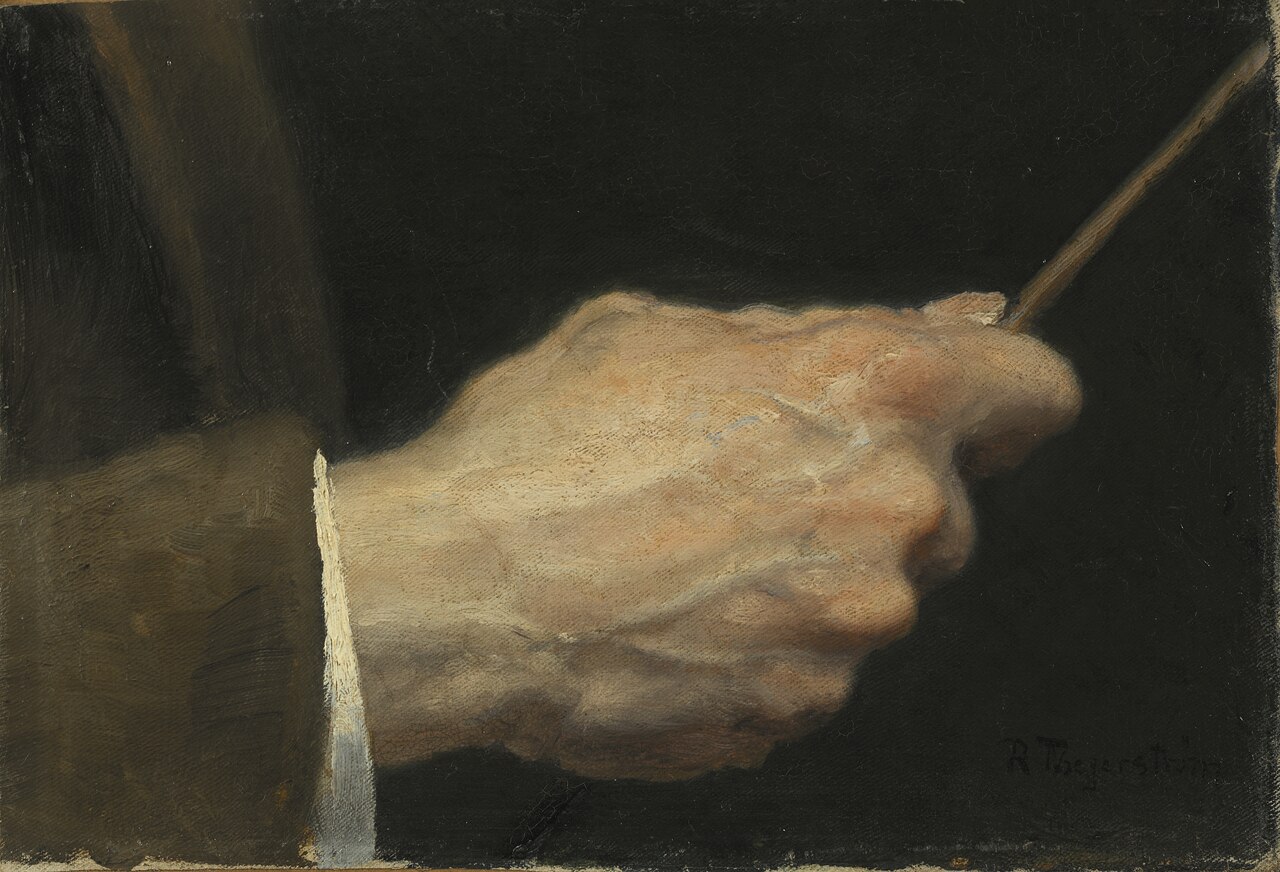
Major works Among Thegerström’s most frequently cited pieces is **Study of a Hand** (date not specified), a graphic study that showcases his deft handling of line and shadow to convey the anatomy and gesture of the human form. The work is often discussed in art‑historical surveys of Scandinavian drawing practice for its clear observation and technical precision.
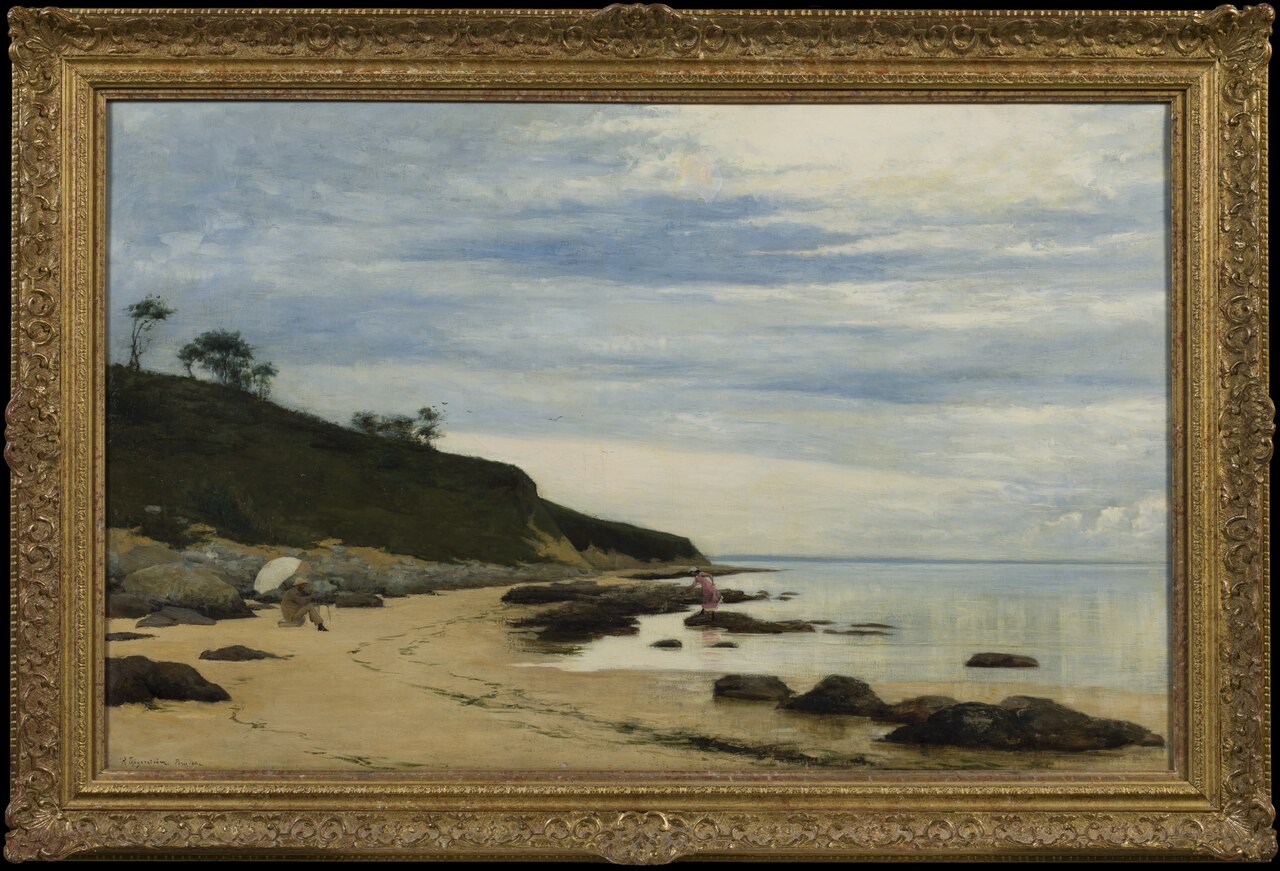
Another key work, Intermezzo (1883), reflects his plein‑air interests. The title suggests a brief, lyrical interlude, and the painting captures a fleeting moment of light on a coastal scene, with a muted sky and a calm sea surface. The composition balances a modest foreground of rocks with an expansive horizon, emphasising the atmosphere over narrative.
Plein Air‑Painter at the Coast (1881) further exemplifies his dedication to painting outdoors. In this work, Thegerström places himself within the scene, a figure with palette and brush positioned against a windswept shoreline, thereby merging the act of creation with the natural environment he depicts.
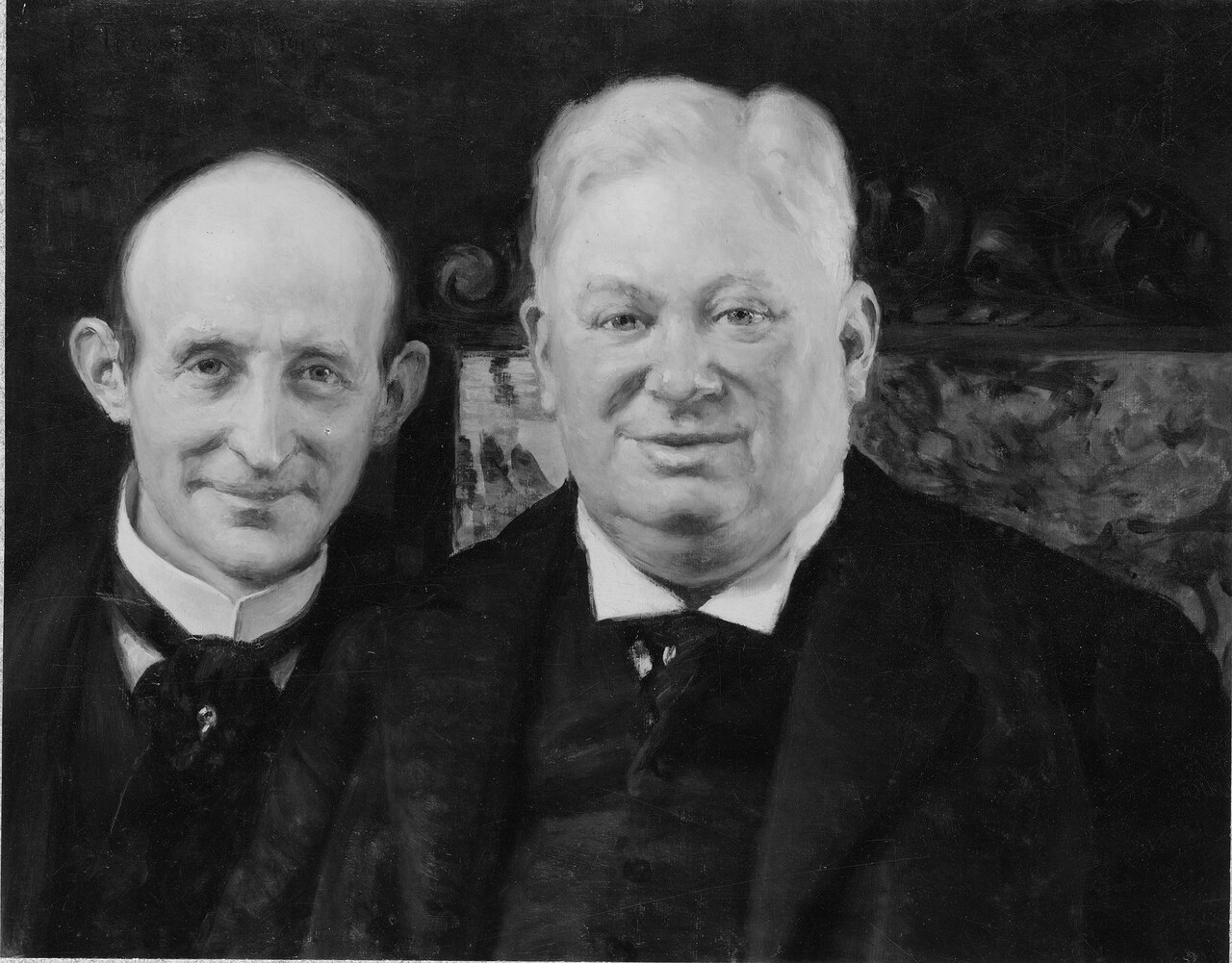
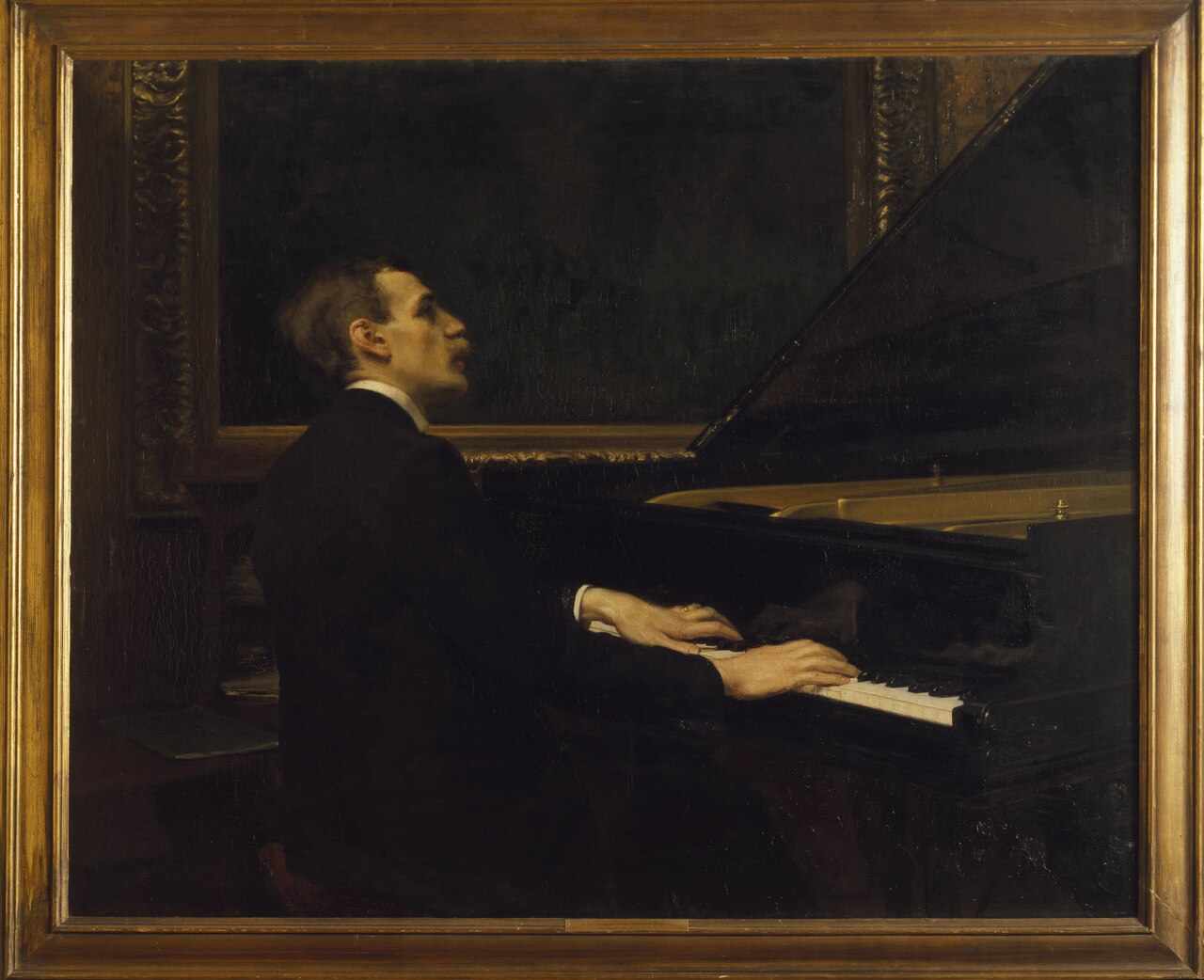
Portrait commissions also formed a significant part of his oeuvre. He executed several portraits of notable Swedish actors of the period, including Oscar Baeckström (1854‑1919) and Victor Lundberg (1859‑1939). These portraits not only document the cultural figures of the Swedish stage but also reveal Thegerström’s ability to capture personality through subtle expression and controlled lighting. The portrait of Baeckström, for example, presents the actor in a thoughtful pose, his gaze directed off‑canvas, while Lundberg’s portrait records a more dynamic, theatrical presence, reflecting the performer’s own career.
Influence and legacy Robert Thegerström’s contribution to Swedish art lies in his synthesis of academic training with an emerging naturalist sensibility. Though he never achieved the fame of contemporaries such as Anders Zorn or Carl Larsson, his work provides valuable insight into the transitional period of Swedish art at the turn of the 20th century. His coastal scenes anticipate later developments in Swedish landscape painting, while his graphic studies contributed to the tradition of precise draftsmanship valued by the Royal Academy.
His legacy endures in museum collections that hold his prints and paintings, and in the continued scholarly interest in Sweden’s plein‑air movement. Thegerström is also referenced in studies of theatrical portraiture, illustrating how visual artists documented the performing arts in an era before photography became dominant. Contemporary Swedish artists who explore the relationship between figure and environment occasionally cite his balanced composition and restrained palette as points of inspiration.
Overall, Robert Thegerström remains a representative figure of a generation that negotiated between strict academic conventions and the desire to capture modern, lived experience in both studio and field.
Frequently asked questions
Who was Robert Thegerström?
Robert Thegerström (1857–1919) was a Swedish painter and graphic artist born in London, known for his coastal landscapes, portraiture of actors, and precise studies of the human form.
What artistic style or movement is he associated with?
He worked within a realist‑naturalist framework, blending academic training with plein‑air techniques, but did not belong to a formally defined movement.
What are his most famous works?
Key works include Study of a Hand, Intermezzo (1883), Plein Air‑Painter at the Coast (1881), and portrait commissions of actors Oscar Baeckström and Victor Lundberg.
Why does Robert Thegerström matter in art history?
He illustrates the transition in Swedish art from strict academicism to naturalist landscape painting and provides valuable documentation of 19th‑century Swedish theatrical culture.
How can I recognise a Robert Thegerström painting?
Look for muted coastal palettes, careful foreground framing, subtle chiaroscuro in portraits, and fine line work in his graphic studies that reveal a disciplined yet atmospheric approach.