Song Xu
1525 – 1606
In short
Song Xu (1525–1606) was a Chinese landscape painter of the Ming dynasty, known for his evocative mountain scenes and his later life as a Buddhist priest. His most celebrated works include the Eighteen Views of Huzhou and a series of ink paintings created in 1588.
Notable works


Early life Song Xu was born in 1525 during the middle period of the Ming dynasty. Contemporary records give differing accounts of his birthplace: some place him in Jixing, a town in Zhejiang province, while others suggest Huzhou, also in Zhejiang, as his native region. The lack of definitive archival evidence means that his exact origins remain uncertain. He is recorded to have taken the courtesy name Chuyang (初炀) and the pen name Shimen, both of which were customary for educated men of his era. Early in his life he received a classical education, which included the study of poetry and calligraphy, disciplines that later informed his artistic practice.
Career and style Song Xu emerged as a landscape painter at a time when the literati tradition of ink wash painting was flourishing in China. His work reflects the influence of earlier masters such as Wang Yuanqi and the Southern School of painting, yet he developed a distinctive approach that combined meticulous brushwork with a more spontaneous, expressive use of ink. Thematically, his paintings focus on rugged mountains, mist‑shrouded valleys and the subtle interplay of light and shadow, evoking a contemplative atmosphere. In the later stages of his career, Song Xu embraced Buddhism, becoming a priest and adopting several religious names. This spiritual turn deepened the meditative quality of his landscapes, which often incorporate symbolic elements such as solitary pavilions or distant, ethereal peaks.
Signature techniques Song Xu’s technique is characterised by a controlled yet fluid handling of the brush. He employed a range of ink tones, from deep, saturated blacks for foreground elements to lighter washes that suggest atmospheric depth. A hallmark of his style is the use of "wet‑brush" strokes to render clouds and mist, creating a sense of movement within static scenery. He also made frequent use of "cun" (texture strokes) to suggest rock surfaces, varying the density and direction of these marks to convey different geological forms. In some works, he applied a dry brush to outline distant mountains, allowing the paper’s texture to emerge as part of the composition. His calligraphic skill is evident in the inscriptions that accompany many of his paintings, where the fluidity of the script mirrors the natural rhythms of the depicted landscape.
Major works Among Song Xu’s surviving oeuvre, several pieces stand out for their historical importance and artistic merit. The *Eighteenth Views of Huzhou* (1588) is a series of ink paintings that capture the scenic variety of the Huzhou region. Each panel presents a different perspective—rivers, bridges, temples and mountain passes—rendered with a consistent tonal palette that unifies the collection. The *Landscape Album* showcases a broader range of subjects, from intimate garden scenes to expansive mountain panoramas, demonstrating the versatility of his brush.
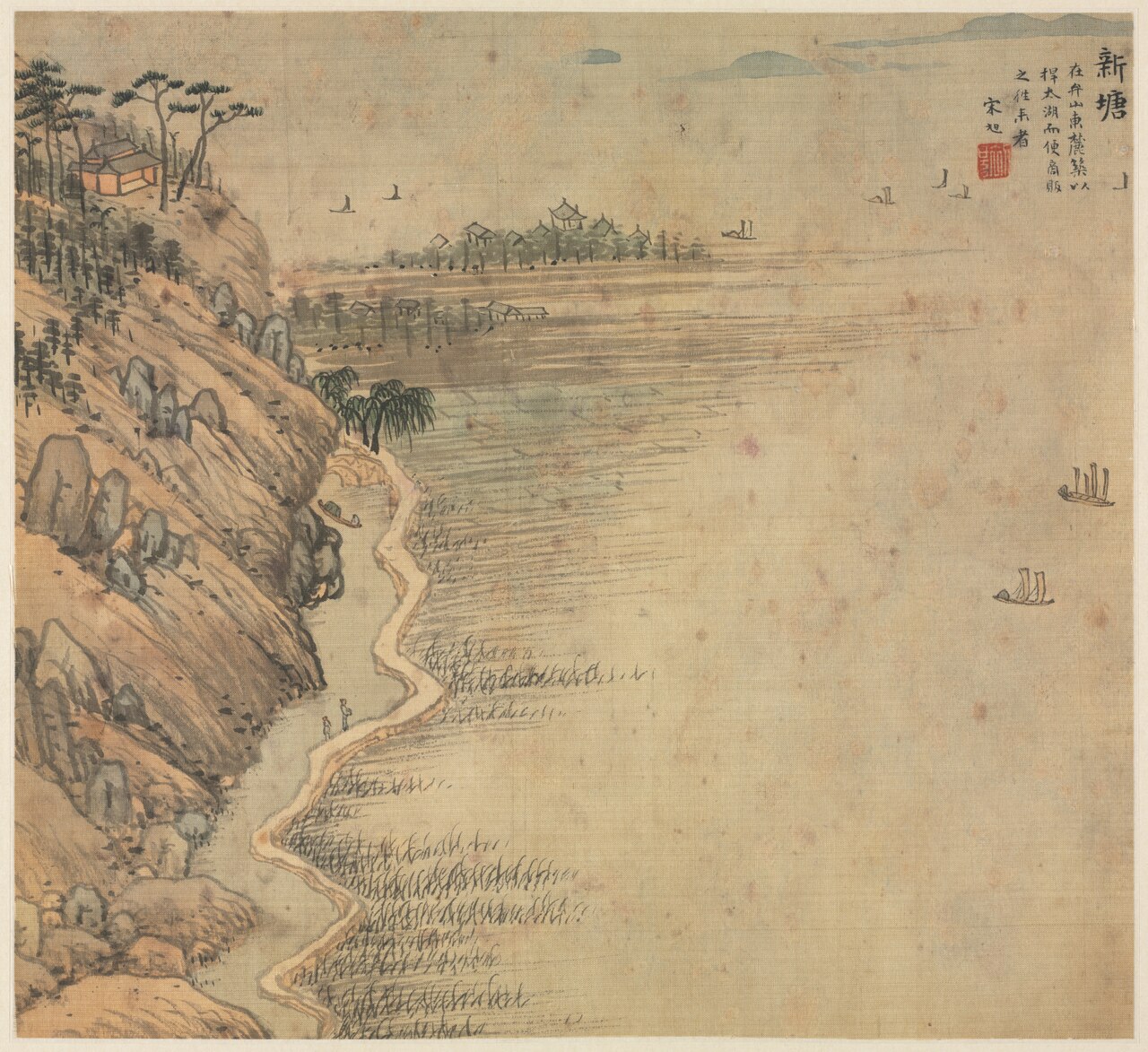
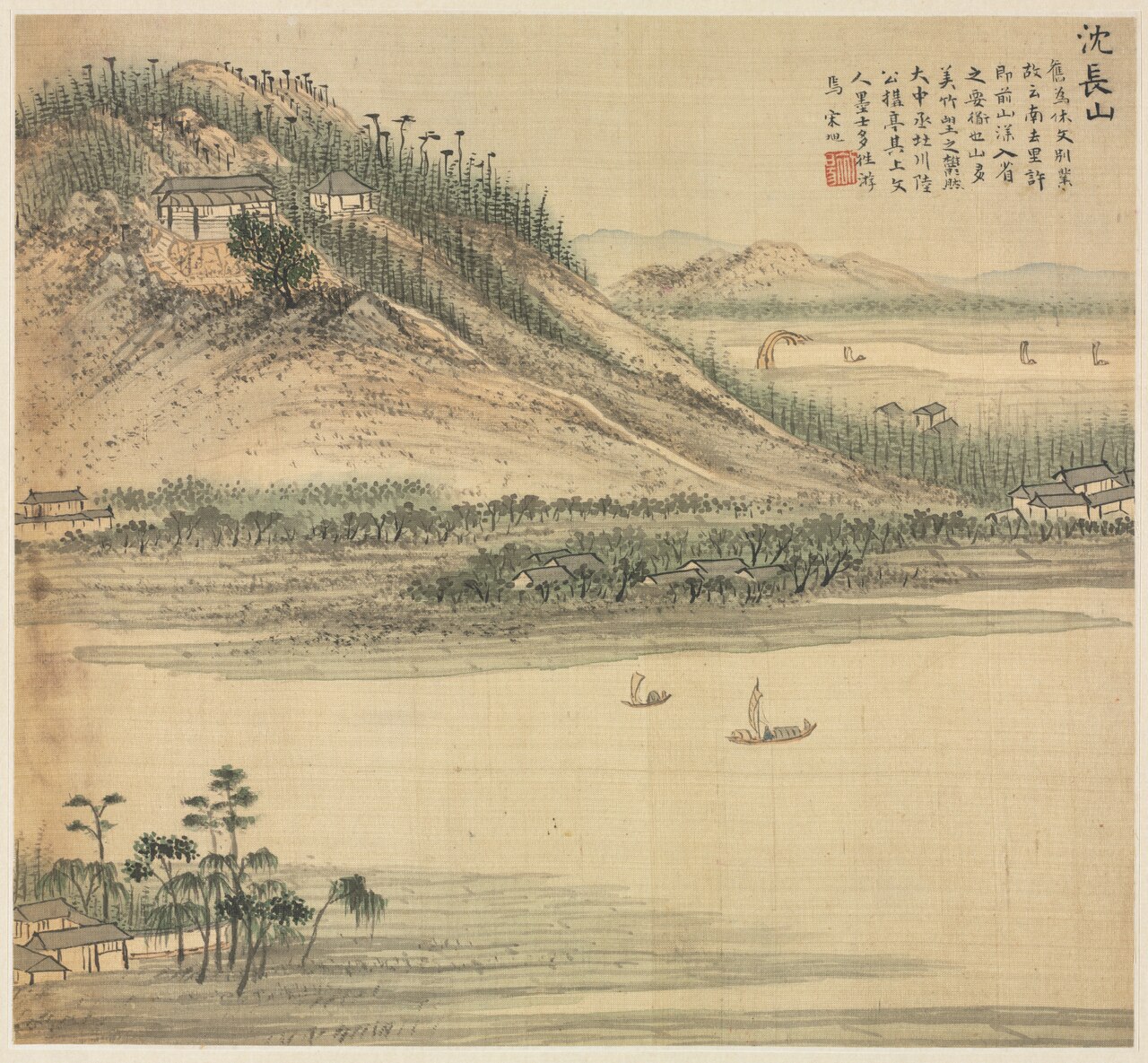
*A Thousand Peaks After Snowfall* exemplifies Song Xu’s ability to convey the quiet majesty of winter mountains. The work uses restrained ink washes to suggest snow‑capped peaks, while subtle variations in tone evoke the play of light on icy surfaces. *Xintang (Immortal’s Peak)*, also dated 1588, portrays a solitary summit surrounded by mist, embodying the Taoist and Buddhist symbolism of transcendence. Finally, *Mt. Shenchang* (1588) presents a towering mountain that dominates the composition, its rugged cliffs rendered through vigorous texture strokes that contrast with the delicate, almost ethereal background. Together, these works illustrate Song Xu’s preoccupation with the spiritual dimensions of landscape, as well as his technical mastery of ink on paper.
Influence and legacy Song Xu’s paintings contributed to the development of late‑Ming landscape aesthetics, bridging the literati tradition with an emerging emphasis on personal expression and spiritual contemplation. His integration of Buddhist themes into secular landscape painting influenced subsequent generations of artists who sought to infuse their work with philosophical depth. While his name is not as widely recognised as some of his contemporaries, scholars of Chinese art history regard his surviving pieces as valuable exemplars of the period’s artistic currents. The *Eighteenth Views of Huzhou* in particular have been studied for their documentary value, providing visual insight into regional geography and architecture of the late 16th century. Modern exhibitions of Ming painting often include Song Xu’s works to illustrate the diversity of approaches within the era, and his techniques continue to be referenced in contemporary ink‑painting practice.
Overall, Song Xu remains a noteworthy figure whose paintings encapsulate both the technical skill and the contemplative spirit that defined Ming‑dynasty landscape art.
Frequently asked questions
Who was Song Xu?
Song Xu (1525–1606) was a Ming‑dynasty Chinese landscape painter who later became a Buddhist priest, known for his ink paintings of mountains and scenery.
What style or movement is Song Xu associated with?
He worked within the literati tradition of Chinese ink‑wash painting, blending classical techniques with a personal, meditative approach influenced by Buddhism.
What are Song Xu’s most famous works?
His best‑known pieces include the *Eighteenth Views of Huzhou* (1588), the *Landscape Album*, *A Thousand Peaks After Snowfall*, *Xintang (Immortal’s Peak)* (1588) and *Mt. Shenchang* (1588).
Why is Song Xu important in art history?
He exemplifies the late‑Ming synthesis of scholarly painting and spiritual expression, influencing later artists who sought to merge landscape with Buddhist and Taoist symbolism.
How can I recognise a painting by Song Xu?
Look for finely controlled brushwork, subtle ink washes that create mist and depth, textured rock strokes, and a calm, contemplative atmosphere often accompanied by poetic inscriptions.