Pehr Hilleström
1732 – 1816
In short
Pehr Hilleström (1732–1816) was a Swedish painter and academic who served as professor and director of the Royal Swedish Academy of Arts, noted for his detailed genre scenes, still lifes and depictions of military subjects.
Notable works


Early life Pehr Hilleström was born in 1732 on the island of Väddö, a small community in the Stockholm archipelago. Little is recorded about his family background, but the region’s maritime environment and the visual culture of rural Sweden would later surface in his work. He moved to Stockholm as a young man to pursue artistic training, a common path for provincial talent in the eighteenth‑century Swedish art world. The capital offered access to the burgeoning Royal Swedish Academy of Arts, which had been founded in 1735 and was rapidly becoming the centre for artistic education and official commissions.
Career and style Hilleström’s professional life was closely tied to the Academy. He entered the school as a student, progressed to the rank of master, and eventually secured a professorship. By the late 1770s he had been appointed director of the Academy, a role that involved overseeing curriculum, managing exhibitions, and advising the crown on artistic matters. His long tenure gave him a unique perspective on the evolution of Swedish art from the late Baroque through the early Neoclassical period, although he never aligned himself with a single, codified movement.
His painting style is characterised by a clear, narrative‑driven approach. Hilleström favoured a subdued palette of earth tones, allowing the composition to convey the everyday reality of his subjects. Whether depicting a domestic interior, a market scene, or a battlefield, he employed a measured perspective that foregrounded human activity over theatricality. The artist’s work reflects the Enlightenment interest in documenting social customs, and his meticulous attention to detail makes his canvases valuable visual records of eighteenth‑ and early‑nineteenth‑century Swedish life.
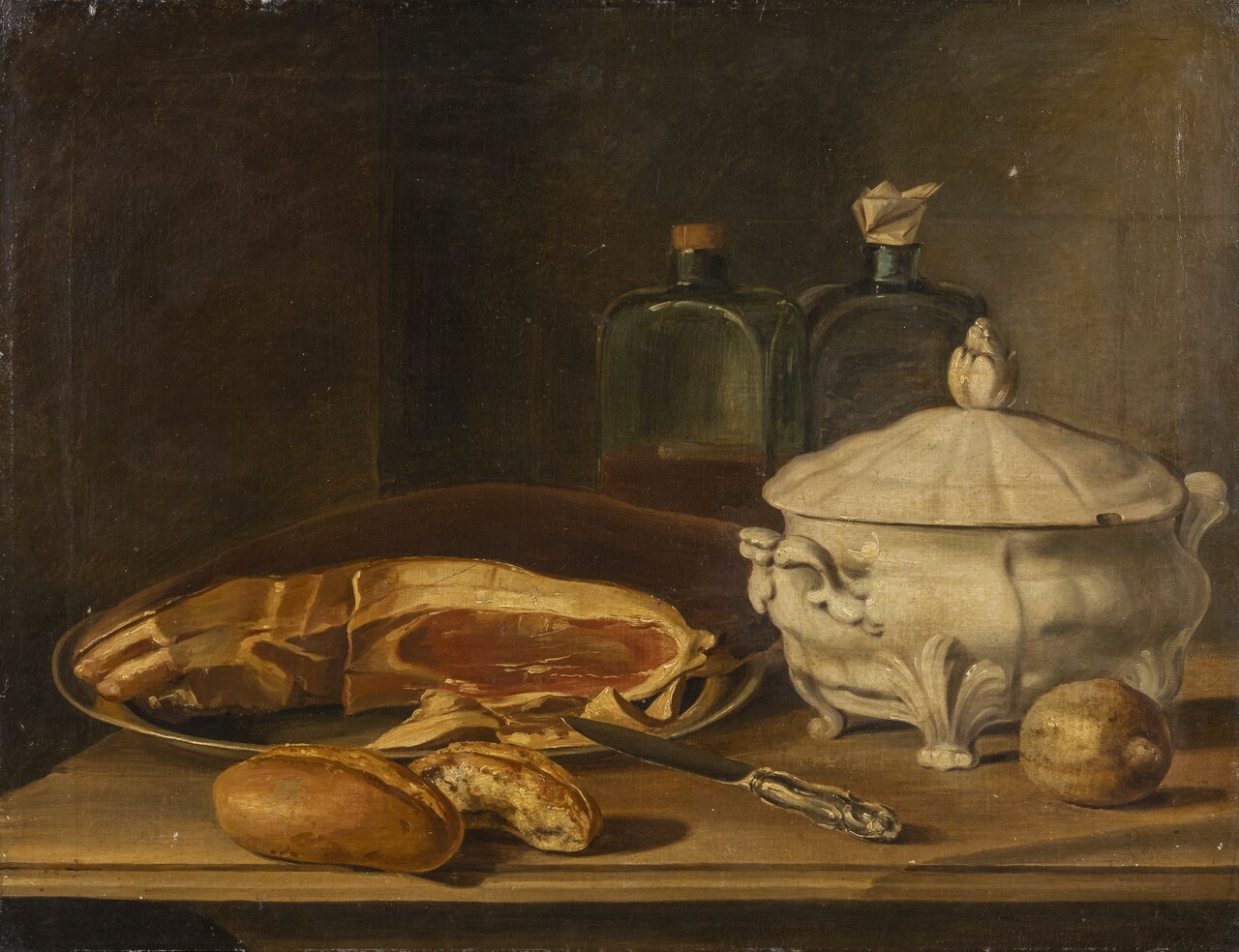
Signature techniques Hilleström’s technique combined careful drawing with a smooth, almost lacquered handling of paint. He typically prepared his supports with a fine gesso ground, then sketched the principal outlines in charcoal before applying thin layers of oil. This method allowed for subtle modulation of light and shadow, which he used to model forms without relying on dramatic chiaroscuro. In his still‑life compositions, the artist rendered textures—such as the glistening skin of a ham or the reflective surface of a tureen—with a restrained brushstroke that suggests rather than exaggerates surface qualities.
A notable aspect of his practice was the inclusion of modest, everyday objects that serve as visual signposts for the viewer. In genre scenes, he often placed items like wooden bowls, pewter mugs, or musical instruments in the foreground, inviting close inspection. This compositional habit not only reinforces the narrative content but also provides a sense of authenticity. Hilleström also employed a modest colour scheme, favouring muted reds, ochres and greys, which helped to unify the various elements within a painting.
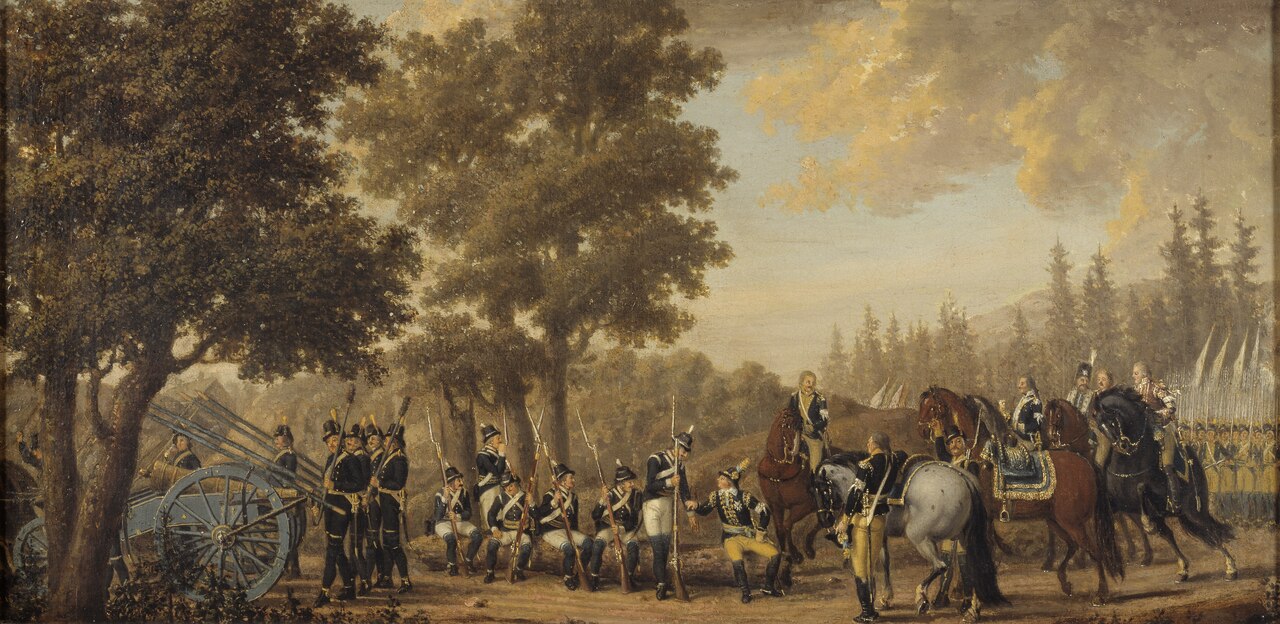
Major works **King Gustav III of Sweden & a Soldier. Episode from the Russian War 1789 (1790)** – This canvas records a moment from the Russo‑Swedish conflict of 1788‑1790. Hilleström places the monarch beside a soldier, emphasizing royal presence on the battlefield. The work demonstrates his capacity to blend portraiture with historical narrative, using a restrained palette to focus attention on the figures’ expressions and attire.
Flöjtblåsare – A genre painting that depicts a solitary flute player, likely a street musician, absorbed in his performance. The piece exemplifies Hilleström’s interest in everyday life and his skill at capturing the atmosphere of a quiet interior, with light filtering through a window to illuminate the musician’s face.
Still Life with Ham and Tureen (1810) – In this still‑life, a cured ham rests beside a ceramic tureen, accompanied by modest tableware. The work showcases Hilleström’s mastery of texture, from the glossy glaze of the tureen to the fibrous surface of the meat, while the composition’s balanced geometry reflects a calm, orderly domestic setting.
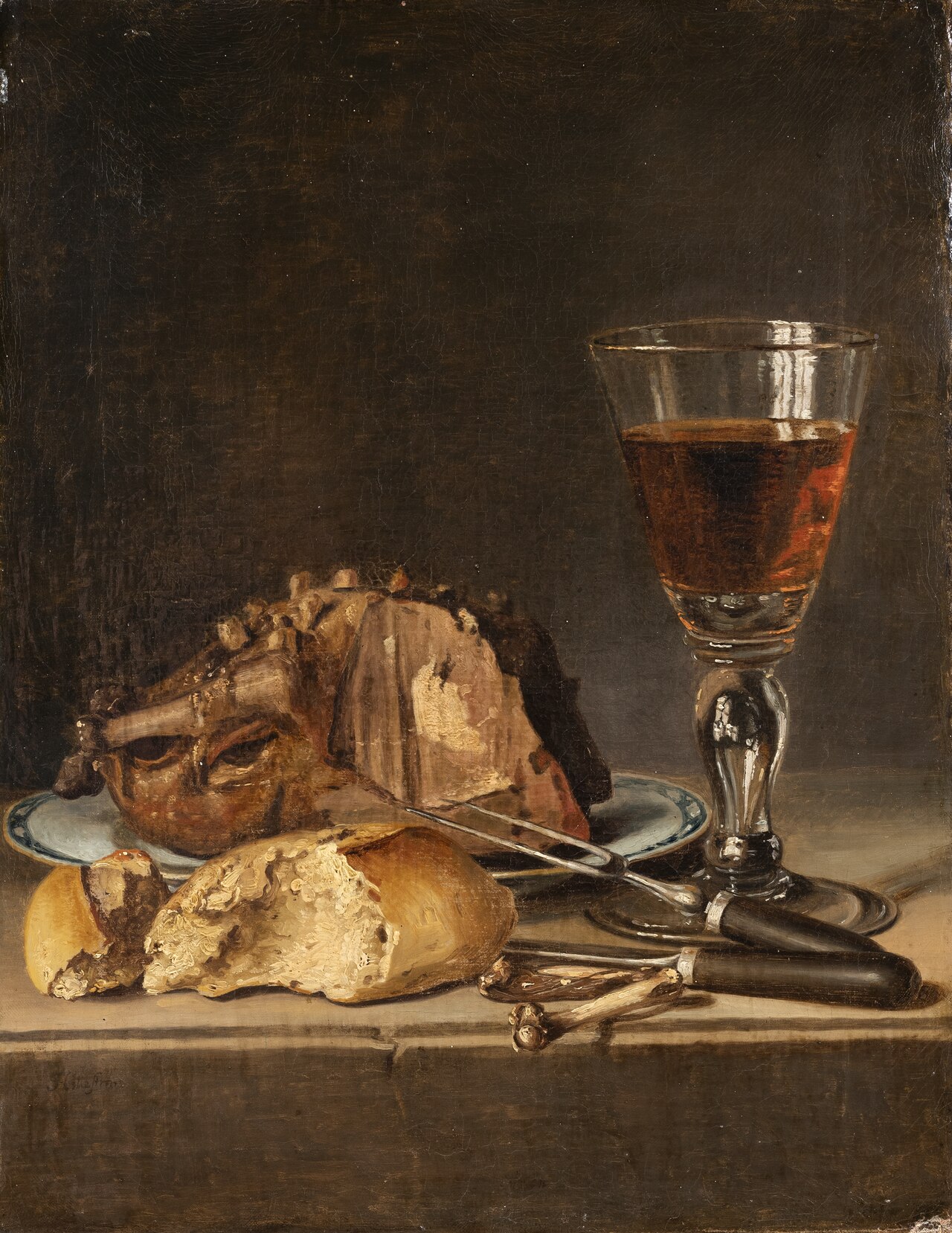
Still Life with Roast Fowl and Wineglass (1810) – Another late‑career still‑life, this painting features a roasted bird positioned next to a delicate wineglass. The juxtaposition of warm, cooked flesh with the cool, transparent glass underscores Hilleström’s ability to render contrasting materials convincingly. The subdued lighting further accentuates the tactile qualities of the objects.
Battle at Uttismalm – This larger historical canvas depicts the 1790 battle near the Finnish coast, a decisive engagement in the Russo‑Swedish war. Hilleström presents a panoramic view of troops, cavalry and smoky terrain, employing a measured perspective that allows the viewer to discern individual soldiers amidst the larger conflict. The painting reflects his commitment to documenting national history with accuracy rather than romantic embellishment.
Influence and legacy Pehr Hilleström’s long association with the Royal Swedish Academy of Arts positioned him as a key educator for successive generations of Swedish painters. His emphasis on observation, compositional clarity and modest realism helped shape the Academy’s teaching philosophy, which favoured a disciplined approach to drawing and a respect for everyday subjects. Though he never achieved the fame of contemporaries such as Johan Tobias Sergel, Hilleström’s works remain valuable for art historians and cultural scholars because they provide a visual chronicle of Swedish society during a period of significant political and economic change.
Beyond the classroom, his paintings have been preserved in several Swedish museum collections, where they continue to be exhibited as exemplars of late‑Baroque and early‑Neoclassical Swedish art. Modern scholars appreciate Hilleström for his documentary quality: his genre scenes illuminate domestic customs, his still‑lifes record culinary practices, and his military works preserve the visual memory of Sweden’s 18th‑century conflicts. In this way, Hilleström occupies a distinctive niche—both as an artist and as a chronicler of his nation’s cultural heritage.
Overall, Pehr Hilleström’s career reflects the dual role of the Swedish artist in the Enlightenment era: a creator of aesthetically pleasing works and a diligent recorder of the world around him. His legacy endures through the continued study of his paintings, which offer insight into the visual language of an age that straddled tradition and emerging modernity.
Frequently asked questions
Who was Pehr Hilleström?
Pehr Hilleström (1732–1816) was a Swedish painter and academic who served as professor and director of the Royal Swedish Academy of Arts, known for genre scenes, still lifes and military subjects.
What style or movement is Hilleström associated with?
He did not belong to a single formal movement; his work blends late Baroque realism with early Neoclassical restraint, focusing on detailed narrative and modest colour.
What are Hilleström’s most famous works?
Key works include *King Gustav III of Sweden & a Soldier. Episode from the Russian War 1789* (1790), *Flöjtblåsare*, *Still Life with Ham and Tureen* (1810), *Still Life with Roast Fowl and Wineglass* (1810) and *Battle at Uttismalm*.
Why is Hilleström important in art history?
He played a pivotal role in Swedish art education, documenting everyday life and national history with a precise, observational style that provides valuable cultural insight.
How can I recognise a painting by Hilleström?
Look for calm, earth‑toned palettes, meticulous detail of everyday objects, a balanced composition, and a narrative focus that often depicts domestic interiors, still‑lifes or historically accurate military scenes.