Olof Johan Södermark
1790 – 1848
In short
Olof Johan Södermark (1790–1848) was a Swedish military officer who became a noted painter, graphic artist and sculptor, recognised for his portraiture and small‑scale historical scenes. He worked in Sweden during the early‑to‑mid‑19th century, leaving a modest but respected body of work and influencing later Swedish artists, including his son Per Södermark.
Notable works

Early life Olof Johan Södermark was born in 1790 in the parish of Landskrona, a coastal community in southern Sweden. He grew up in a modest household that valued discipline and education. From a young age he received a basic schooling typical of the period, with instruction in reading, arithmetic and drawing. At the age of fifteen he entered the Royal Swedish Army, following a family tradition of military service. His early training combined the rigours of infantry drills with exposure to the visual culture of the army—uniforms, insignia and the occasional commission for portrait sketches of officers. This blend of martial routine and artistic observation would shape his later dual career.
Career and style Södermark’s military career progressed steadily; he attained the rank of lieutenant and served in several garrison towns across Sweden. While stationed in Stockholm, the capital’s vibrant artistic scene attracted his attention. He began to attend informal drawing circles and to study the works of established Swedish portraitists such as Johan Tobias Sergel and Carl Johan Fahlcrantz. Although he never enrolled in a formal academy, he absorbed the prevailing expectations of realism and attention to individual character that dominated early‑19th‑century portraiture.
Around the 1820s Södermark increasingly devoted his spare time to painting and drawing, eventually transitioning to a part‑time artistic practice while retaining his military duties. By the late 1820s he was receiving commissions for portraits of local dignitaries, scholars and fellow officers. His style remained rooted in the realistic tradition, with a clear emphasis on accurate likeness, restrained colour palettes and careful modelling of light. He did not align himself with any avant‑garde movement; instead, his work reflects the transitional period between the late‑Baroque academic approach and the emerging Romantic interest in national subjects.
Signature techniques Södermark’s technique combined a disciplined draftsmanship inherited from his military background with a soft, almost lyrical handling of paint. In oil portraits he employed a limited palette of earth tones—ochres, umbers and muted reds—to render flesh and fabric, allowing subtle tonal shifts to suggest volume. His brushwork is generally smooth, avoiding the thick impasto favoured by later Romantic painters. In graphic works and lithographs, he favoured fine hatching and cross‑hatching to achieve depth, a method that translated well into his small‑scale sculptural studies.
A hallmark of his oeuvre is the meticulous rendering of clothing and accessories. Uniforms, academic robes, and classical drapery are depicted with precise attention to folds, stitching and texture, providing valuable visual records of early‑19th‑century Swedish attire. Additionally, his compositions often place the sitter against a neutral or architectural background, focusing the viewer’s attention on the subject’s face and gesture.
Major works - **Grazia, Roman Model (1845)** – This oil painting depicts a young woman posed as the Roman goddess of grace. The work showcases Södermark’s skill in rendering classical drapery and his subtle use of chiaroscuro to suggest three‑dimensional form. The figure is seated before a simple column, allowing the viewer to appreciate the delicate modelling of skin against the richly textured fabric.
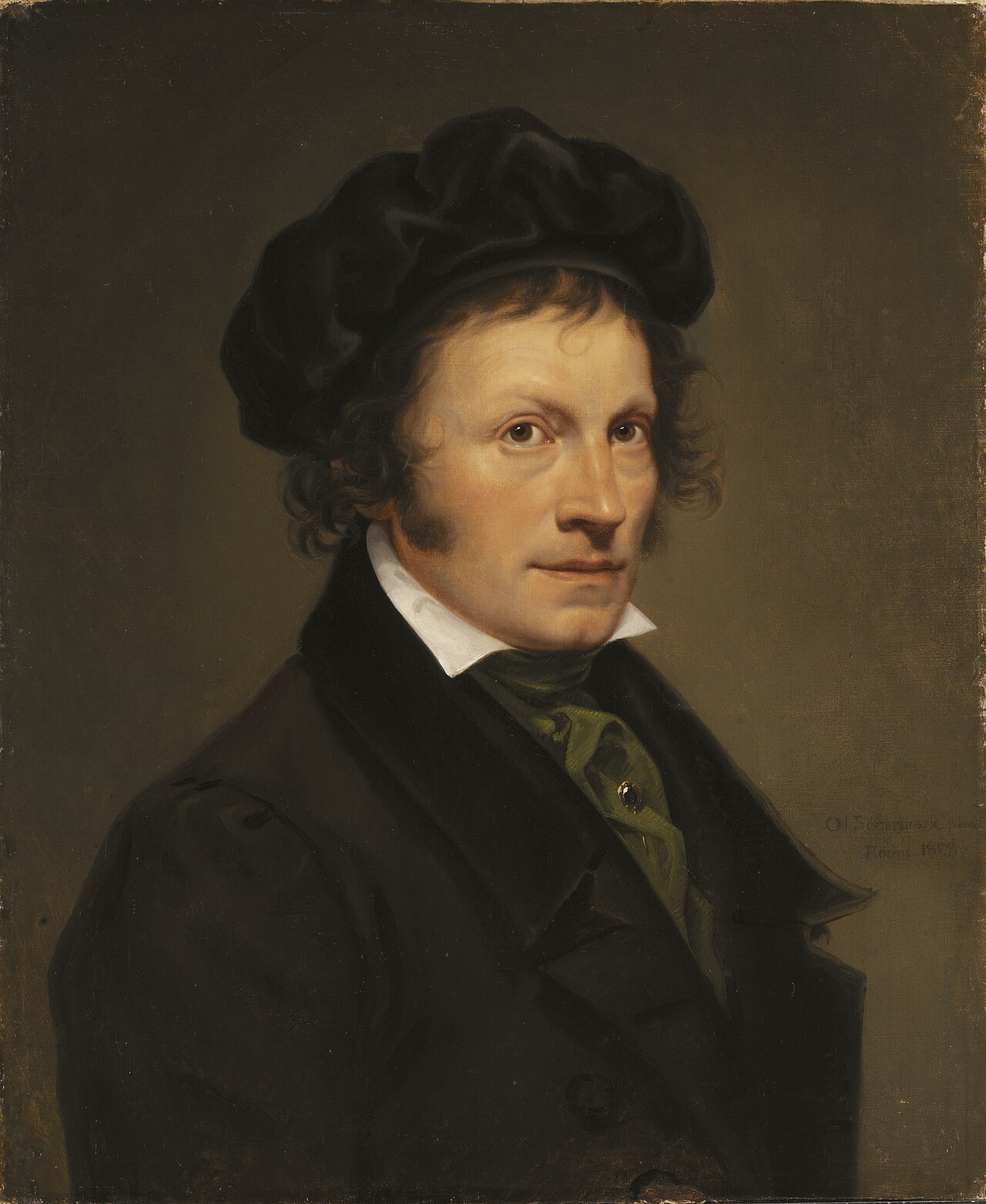
- The German Artist Franz Riepenhausen (1828) – A portrait of the German painter Franz Riepenhausen, executed shortly after Södermark’s return from a brief study trip to Berlin. The portrait captures Riepenhausen’s thoughtful expression and features a modest studio setting, with a sketchbook and palette subtly indicated in the background.
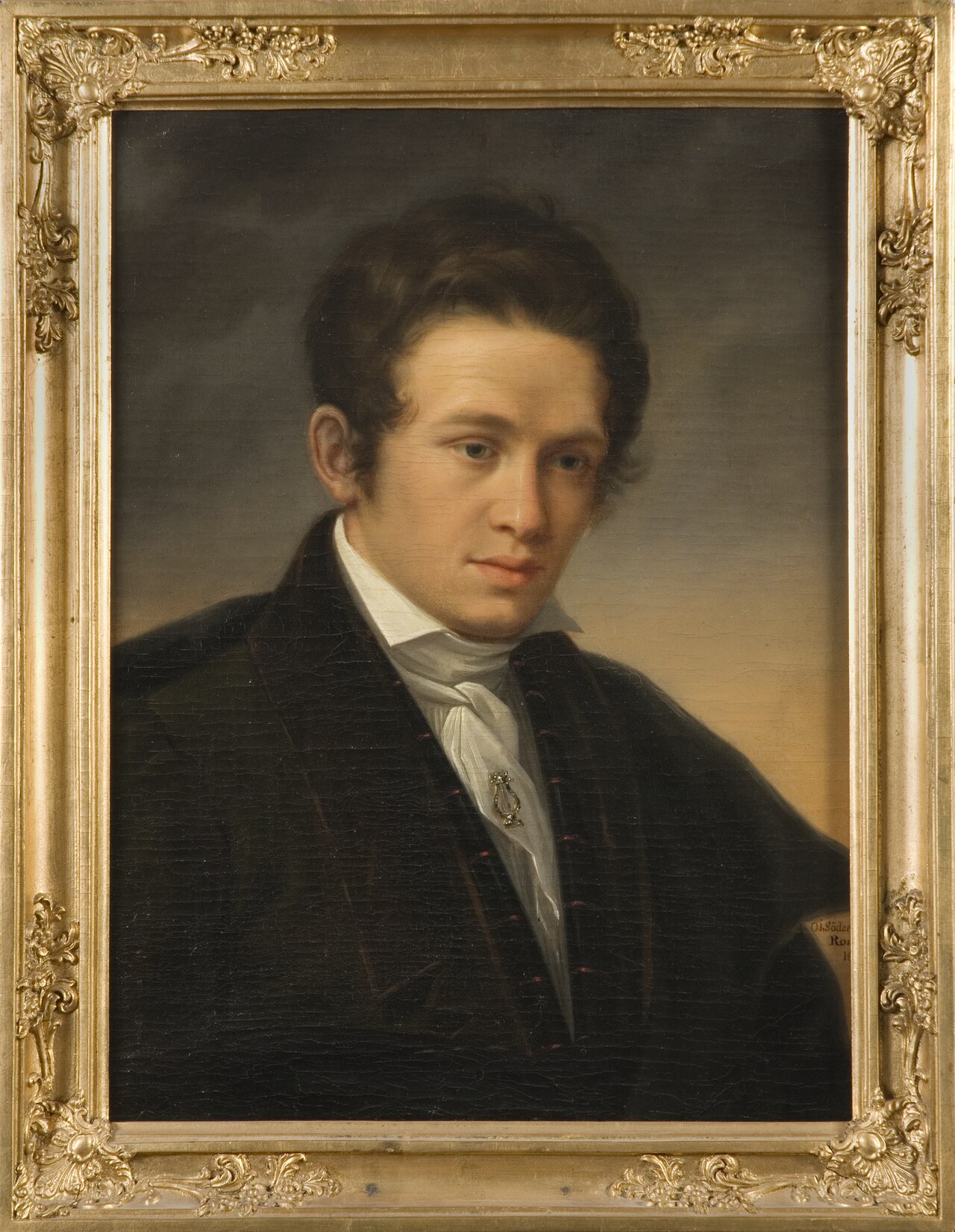
- Karl August Nicander (1799‑1839), author (1827) – This portrait of the Swedish poet and dramatist Karl August Nicander is notable for its psychological depth. Södermark renders Nicander with a contemplative gaze, his hand resting on a manuscript, underscoring the subject’s literary vocation.
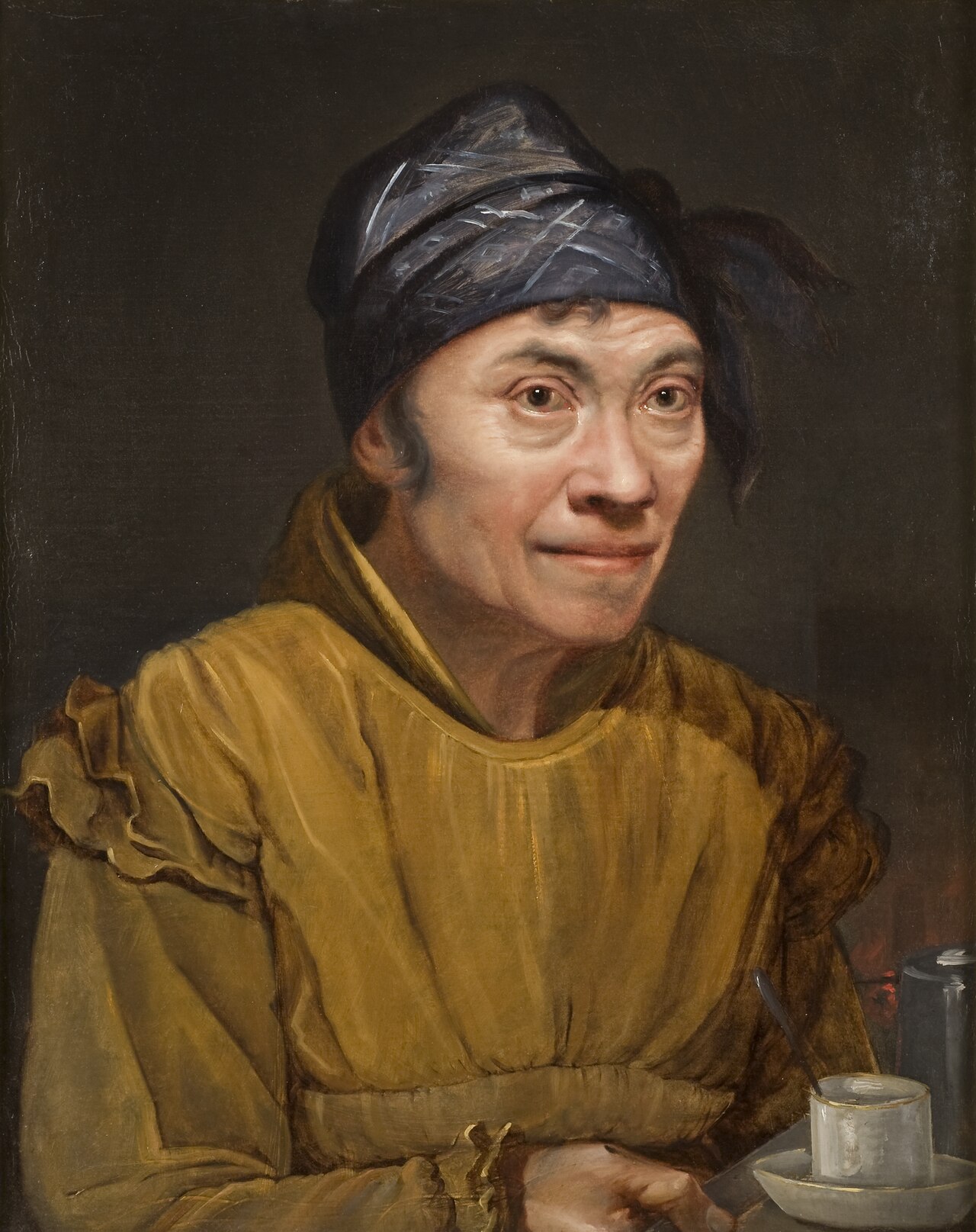
- Portrait of Signora Vincensa – A smaller, less documented work, this portrait portrays an Italian lady, likely a model for a series of studies Södermark undertook while traveling in the south of Europe. The composition is intimate, with a focus on the sitter’s expressive eyes and the soft folds of her silk dress.
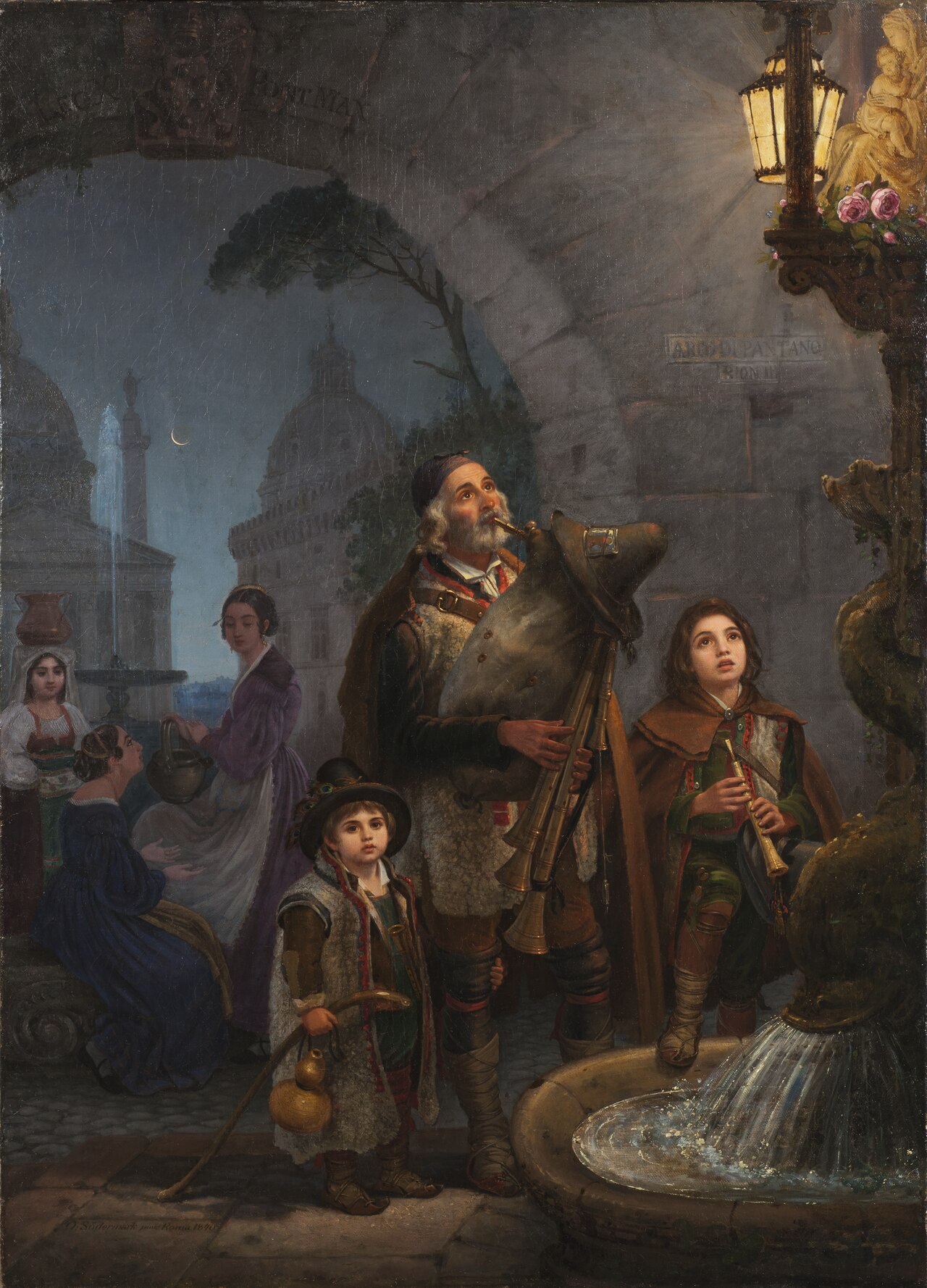
- Gatumusikanter vid Pantheon (1840) – Translating to “Street Musicians at the Pantheon,” this genre scene captures a group of itinerant performers gathered before the famed Roman monument. Though not a portrait, the work demonstrates Södermark’s ability to observe and depict everyday life, employing a balanced composition that contrasts the ancient architecture with the lively figures.
Influence and legacy Olof Johan Södermark’s artistic output, while not revolutionary, contributed to the visual documentation of Swedish society and the broader European cultural exchange of the early 19th century. His portraits served both as personal commemorations and as historical records of contemporary dress and demeanor. By maintaining a dual career as an officer and artist, he exemplified the emerging notion of the ‘gentleman‑artist’ in Scandinavia.
His son, Per Södermark (1820‑1888), inherited both the artistic talent and the work ethic of his father, becoming a respected painter and lithographer. Per’s success in the later half of the century helped to preserve Olof’s reputation, and several of Olof’s sketches were later reproduced by Per for publication in Swedish art journals.
In modern Swedish art history, Södermark is recognised as a competent portraitist whose works provide insight into the transitional aesthetic of his era. Museums in Stockholm and Lund hold examples of his paintings and graphic works, and his genre scenes are occasionally featured in exhibitions exploring the interplay between Swedish artists and European travel.
Although he never joined a formal movement, Södermark’s commitment to realistic representation and his careful technique influenced a generation of Swedish artists who sought to balance academic rigour with an emerging national consciousness. His legacy endures through the continued scholarly interest in his portraits and the preservation of his contributions within Sweden’s cultural heritage.
Frequently asked questions
Who was Olof Johan Södermark?
Olof Johan Södermark (1790–1848) was a Swedish military officer who became a noted painter, graphic artist and sculptor, best known for his realistic portraiture.
What artistic style or movement is he associated with?
He did not belong to a specific movement; his work reflects the realistic, academic style of early‑19th‑century portraiture, with a modest Romantic interest in historical subjects.
What are his most famous works?
Key works include the portrait *Grazia, Roman Model* (1845), *The German Artist Franz Riepenhausen* (1828), the portrait of poet Karl August Nicander (1827), *Portrait of Signora Vincensa*, and the genre scene *Gatumusikanter vid Pantheon* (1840).
Why does he matter in art history?
Södermark provides valuable visual documentation of Swedish society and early‑19th‑century European culture, and his disciplined technique influenced later Swedish artists, including his son Per Södermark.
How can I recognise a work by Olof Johan Södermark?
Look for precise rendering of clothing, a restrained colour palette, smooth brushwork, and a focus on the sitter’s expression, often set against a neutral or architectural background.