Nils von Dardel
1888 – 1943
In short
Nils von Dardel (1888–1943) was a Swedish painter of the early 20th century, known for his Post‑Impressionist portraits and genre scenes. A grandson of the celebrated illustrator Fritz von Dardel, he worked in Sweden and later in New York, where he died.
Notable works

Early life Nils Elias Kristofer von Dardel was born on 18 May 1888 in the small village of Bettna, Sweden. He came from a distinguished artistic lineage; his grandfather, Fritz von Dardel, was a well‑known illustrator and painter of the 19th century. The von Dardel family was part of the Swedish aristocracy, which gave Nils a comfortable upbringing and early exposure to the visual arts. After completing his primary schooling, he attended the Royal Swedish Academy of Fine Arts in Stockholm, where he received formal training in drawing, composition, and colour theory. The academy’s curriculum, steeped in academic realism, was gradually supplanted in his mind by the more experimental currents emerging across Europe.
Career and style After graduating, von Dardel travelled extensively throughout Europe, absorbing influences from Parisian salons, Munich’s avant‑garde circles and the Scandinavian modernists. The dominant trend of his mature work aligns with Post‑Impressionism, characterised by bold, saturated colours, flattened spatial planes and an emphasis on emotional expression rather than strict naturalism. Although he never joined a formal movement, his paintings display a synthesis of Symbolist mood, the decorative quality of Art Nouveau and the narrative clarity of early modern Swedish art. He returned to Stockholm in the late 1910s, where he began exhibiting at the Konstnärshuset and the Swedish Artists’ Association. By the early 1920s he had established a reputation as a portraitist capable of capturing the psychological depth of his sitters.
In 1925 von Dardel married Alma Mathilda Östergren, the daughter of a prominent Swedish industrialist. The marriage opened further social doors, granting him access to commissions from the country’s cultural elite. Throughout the 1930s he split his time between Stockholm and New York, where a growing expatriate community of Scandinavian artists welcomed his work. The move to the United States broadened his subject matter, leading to a series of urban scenes that juxtapose the bustling modernity of Manhattan with a lingering romantic nostalgia.
Signature techniques Von Dardel’s technique is recognisable by several recurring traits. First, he employed a relatively thin, yet opaque, paint layer that allowed underlying brushwork to remain visible, creating a textured surface without the thick impasto typical of some Post‑Impressionists. Second, his colour palette often juxtaposed complementary hues—especially blues against oranges—to heighten emotional tension. Third, he favoured a slightly elongated figure proportion, reminiscent of his grandfather’s caricatures, which lent his portraits a subtle stylisation without sacrificing likeness. Finally, his compositions frequently incorporate decorative motifs—such as patterned wallpaper, ornamental frames or stylised foliage—that serve both as background and as a symbolic extension of the sitter’s character.
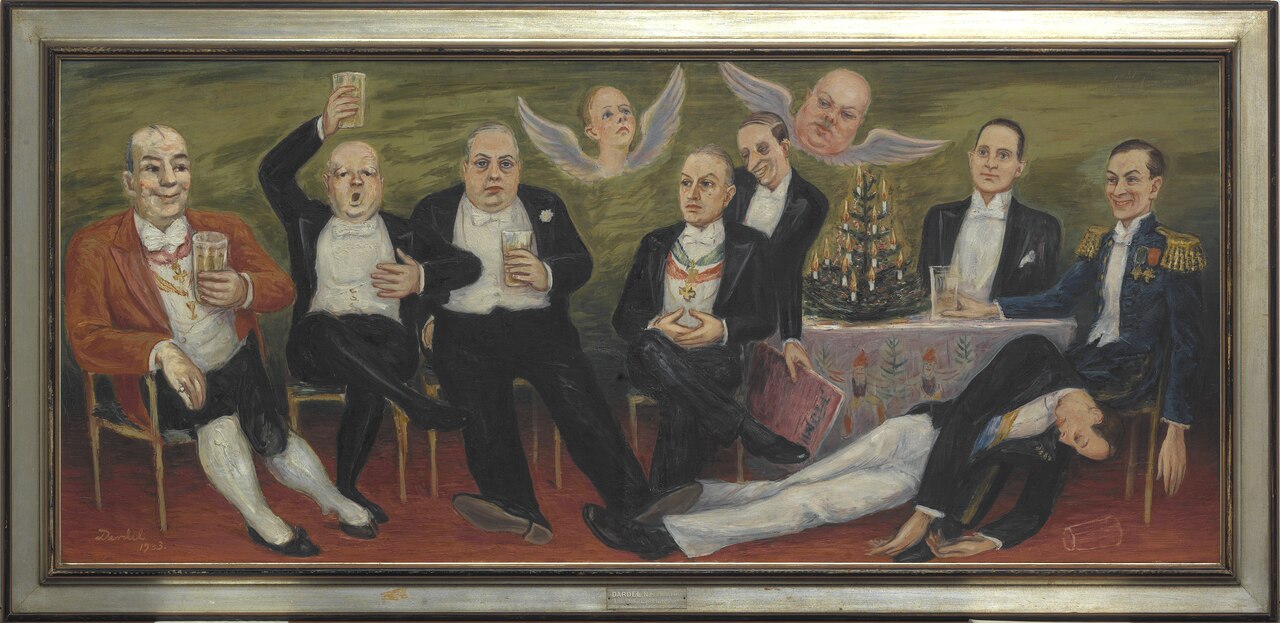
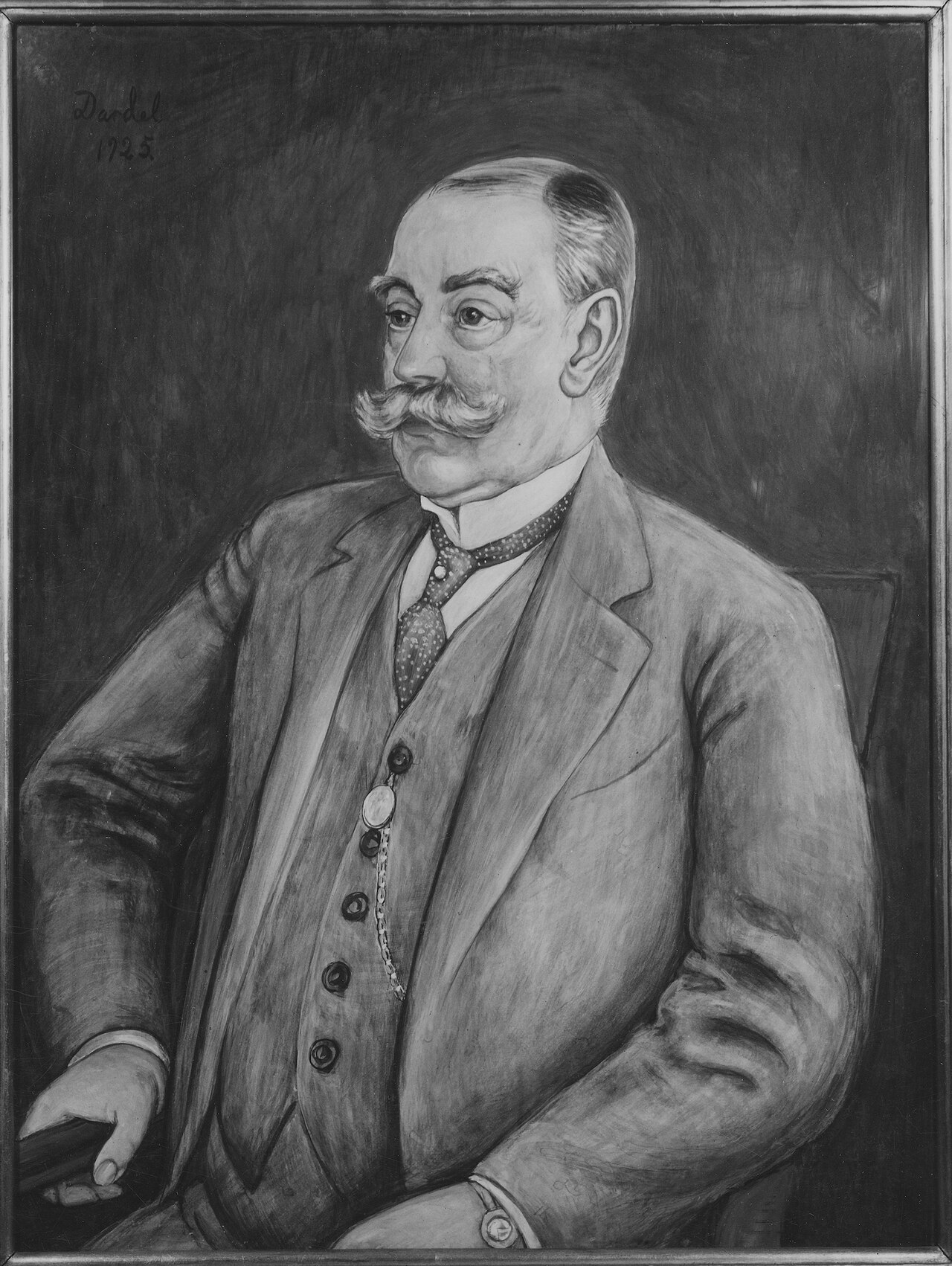
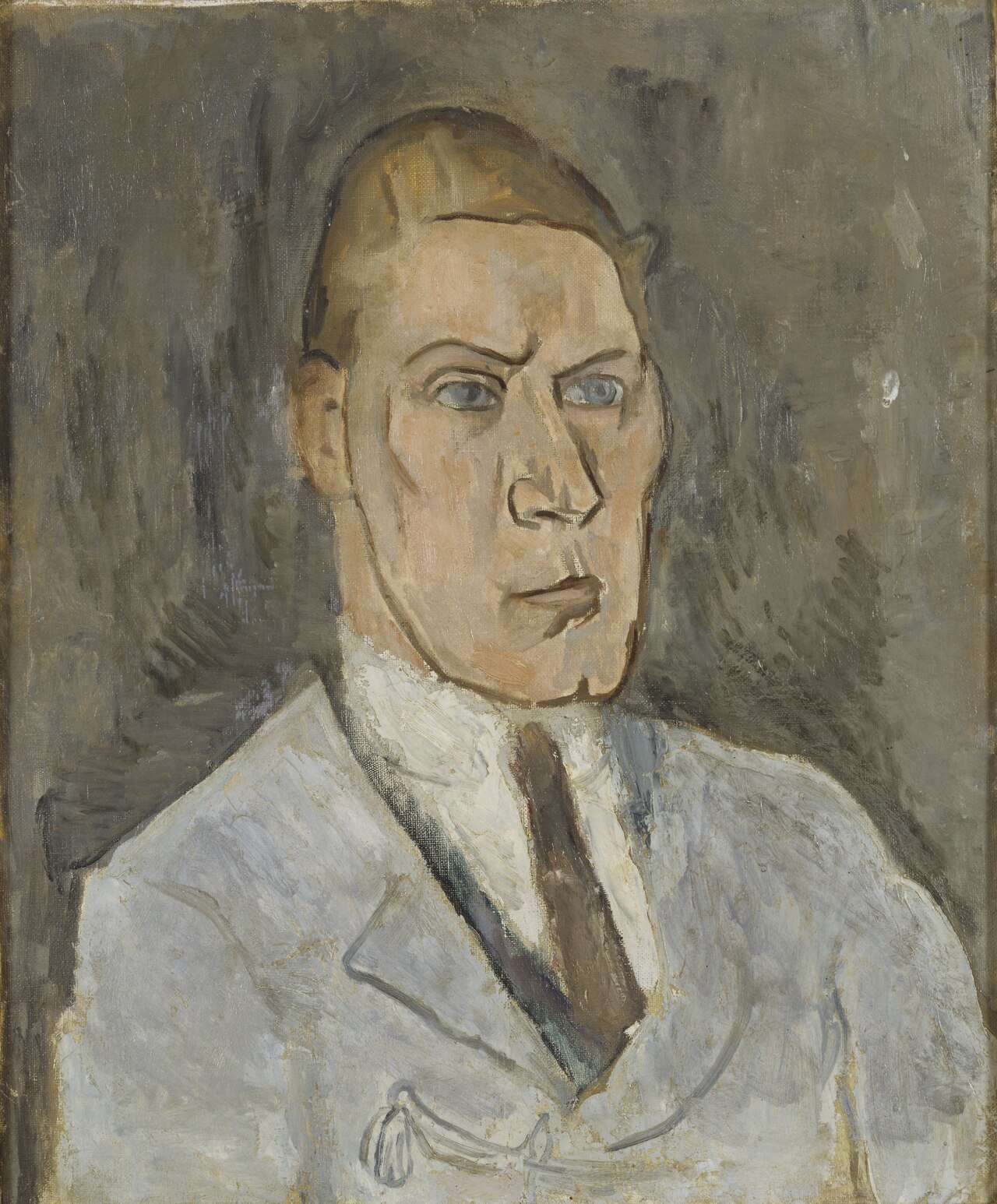
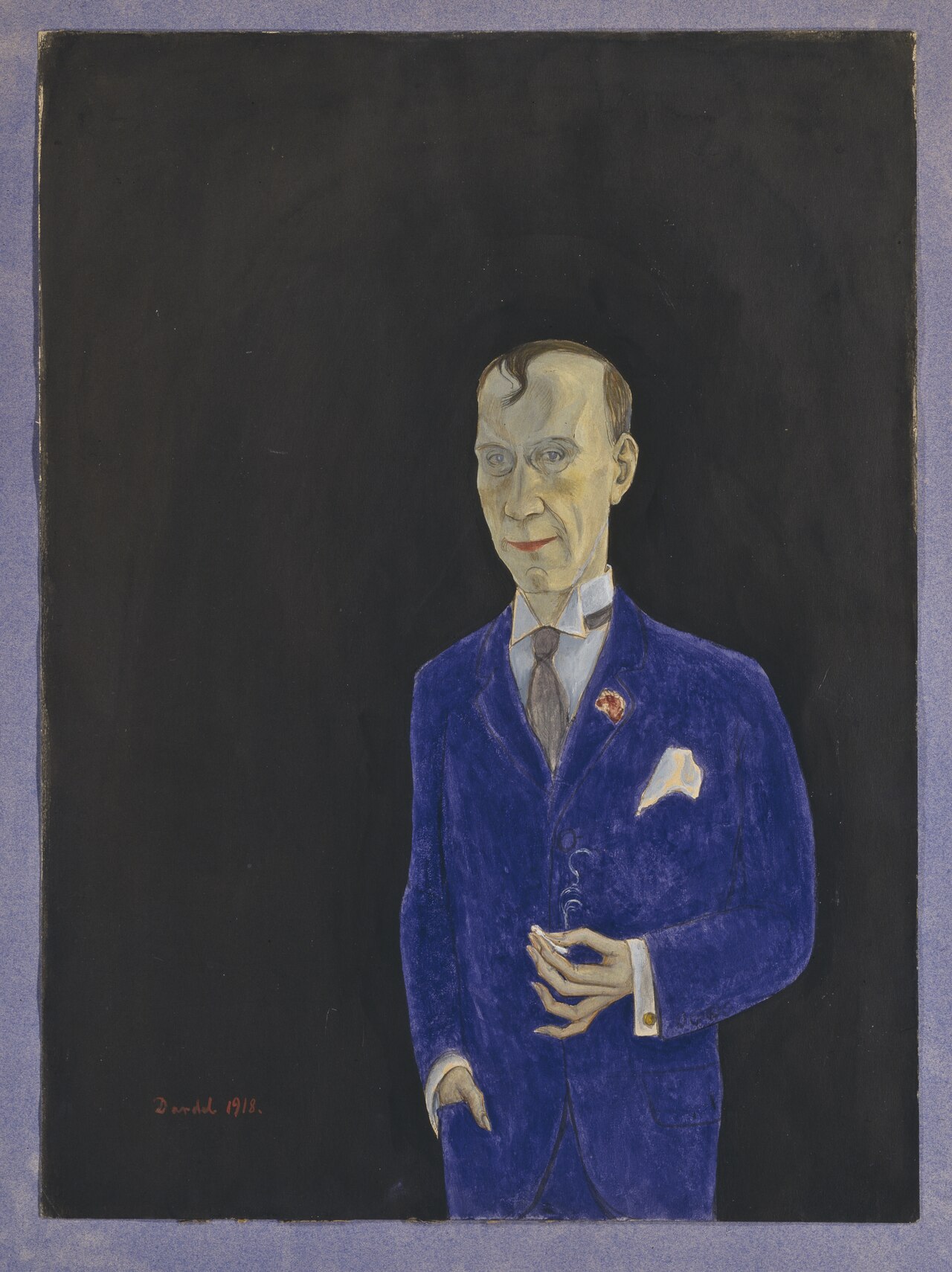
Major works - **The Dying Dandy (1918)** – This early masterpiece portrays a fashionable young man collapsed on a chaise lounge, surrounded by wilted roses and a half‑lit candle. The work is often interpreted as a commentary on the fleeting nature of celebrity and the decadence of the post‑World‑War era. Its muted palette of greys and deep reds, combined with a stark, almost theatrical lighting, exemplifies von Dardel’s skill in merging narrative with atmosphere. - **Lilla Julaftonsklubben (1933)** – Translating to “The Little Christmas Eve Club”, this genre painting depicts a group of children gathered around a modestly decorated Christmas tree in a modest Swedish interior. The scene is rendered with warm ochres and soft whites, capturing the gentle intimacy of family tradition. The work gained popularity for its nostalgic resonance with Swedish audiences during the interwar period. - **Portrait of Axel Lagrelius (c. 1930)** – Axel Lagrelius (1863‑1944) was a respected director at the Academy of Arts and a consul general. Von Dardel’s portrait presents Lagrelius seated before a bookshelf, his thoughtful gaze directed off‑canvas. The painter’s use of a restrained colour scheme—deep navy and muted browns—emphasises the sitter’s dignified authority while the subtle play of light across the face hints at an inner introspection. - **Portrait of Gustaf Hellström (c. 1935)** – The celebrated Swedish author Gustaf Hellström (1882‑1953) is shown in a relaxed pose, holding a manuscript. Von Dardel captures the writer’s intellectual vigor through a crisp contrast of dark ink‑black hair against a light‑coloured shirt, while a faint background of bookshelves reinforces the literary context. - **Portrait of David Sprengel (1918)** – Sprengel, a noted journalist and critic, is rendered with a slightly exaggerated facial expression that hints at his critical temperament. The portrait’s bold brushwork and vibrant accent colours—particularly a splash of vermillion on the tie—reflect von Dardel’s ability to convey personality through chromatic choices.
Influence and legacy Although Nils von Dardel never achieved the global fame of contemporaries such as Edvard Munch or Anders Zorn, his contributions to Swedish modernism remain significant. He acted as a bridge between the academic traditions of the Royal Academy and the more experimental impulses that followed World War I. His portraits, in particular, provided a visual record of Sweden’s cultural elite during a period of rapid social change. Moreover, his transatlantic experience introduced a subtle synthesis of European and American visual vocabularies, influencing younger Swedish expatriates who later settled in New York.
After his death in New York City on 21 December 1943, von Dardel’s work was exhibited post‑humously at the Nationalmuseum in Stockholm, sparking renewed scholarly interest. Contemporary art historians cite his nuanced colour handling and his ability to fuse narrative with decorative elegance as hallmarks of early 20th‑century Scandinavian art. Today, his paintings are held in several public collections, including the Moderna Museet and the Gothenburg Museum of Art, and they continue to appear in auction houses, where they attract collectors interested in the intersection of portraiture and modernist experimentation.
In summary, Nils von Dardel stands as a noteworthy, if under‑recognised, figure within the broader tapestry of European modern art. His work offers insight into the cultural dialogues of his time and provides a distinctive visual voice that bridges tradition and innovation.
Frequently asked questions
Who was Nils von Dardel?
Nils von Dardel (1888–1943) was a Swedish painter known for his Post‑Impressionist portraits and genre scenes, active in both Sweden and New York.
What artistic style or movement is he associated with?
He worked primarily within a Post‑Impressionist idiom, blending bright colour contrasts, decorative motifs and a subtle Symbolist mood.
What are his most famous works?
His best‑known paintings include *The Dying Dandy* (1918), *Lilla Julaftonsklubben* (1933) and a series of portrait commissions such as those of Axel Lagrelius, Gustaf Hellström and David Sprengel.
Why does he matter in art history?
Von Dardel links late‑19th‑century academic tradition with early‑20th‑century modernism, documenting Sweden’s cultural elite and introducing a cross‑Atlantic aesthetic that influenced later Scandinavian expatriates.
How can I recognise a painting by Nils von Dardel?
Look for flattened spatial planes, vivid complementary colours, slightly elongated figures, and decorative background elements that together convey a narrative or psychological depth.