Nils Blommér
1816 – 1853
In short
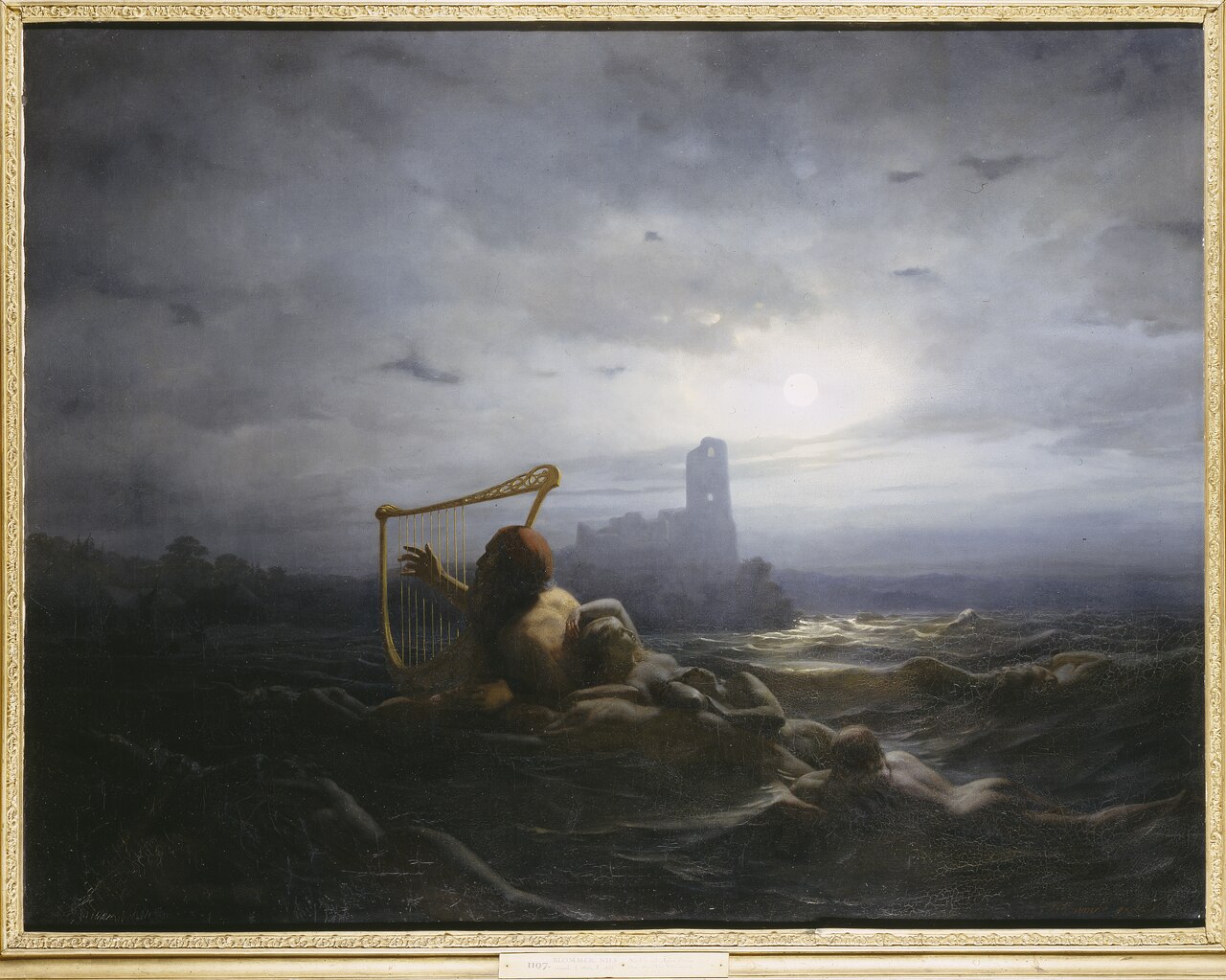
Nils Blommér (1816–1853) was a Swedish Romantic painter celebrated for his lyrical depictions of mythological and folk subjects. His works such as The Water‑Sprite and Ägir's Daughters illustrate his delicate brushwork and atmospheric colour, and he died in Rome while on a study trip.
Notable works


Early life Nils Blommér was born in 1816 in the parish of Öved, Sweden, originally under the name Nils Johan Olsson. The son of a modest farming family, he displayed an early aptitude for drawing, copying local church decorations and folk motifs. At a young age he was sent to Stockholm to receive formal training, enrolling at the Royal Swedish Academy of Arts where he was exposed to the emerging Romantic ideas that were reshaping European painting. The academy encouraged study of nature, mythology and national folklore, themes that would become central to Blommér’s artistic identity. During his student years he adopted the surname Blommér—a Swedish‑language version of his original name—reflecting a growing interest in national cultural heritage.
Career and style After completing his studies, Blommér returned to the Swedish provinces, where he worked as a teacher of drawing and as a freelance painter. The 1840s saw him travel extensively across Scandinavia, sketching rural landscapes, traditional costumes and local legends. His mature style is firmly rooted in Romanticism, characterised by a heightened emotional tone, a fascination with the supernatural, and a luminous palette that often emphasizes cool blues and soft greens. Unlike the more dramatic historicism of his contemporary Carl Johan Fahlcrantz, Blommér favoured intimate scenes that celebrated the quiet magic of everyday folklore. His paintings frequently juxtapose human figures with elemental forces—water, wind, light—suggesting a harmonious relationship between people and the natural world.
Signature techniques Blommér’s technique combines precise draftsmanship with a delicate, almost translucent handling of paint. He employed thin glazes to build atmospheric depth, allowing the underlying sketch to remain visible and impart a sense of immediacy. Light is a recurrent motif: he often illuminated his subjects from a low, diffused source, creating a gentle halo that enhances the ethereal quality of mythic figures. In addition, he used fine, almost stippled brushstrokes for foliage and water surfaces, giving his compositions a soft, dream‑like texture. His colour choices favoured muted earth tones punctuated by vivid accents—such as the red of a folk costume or the green of a forest glade—drawing the viewer’s eye to narrative focal points.
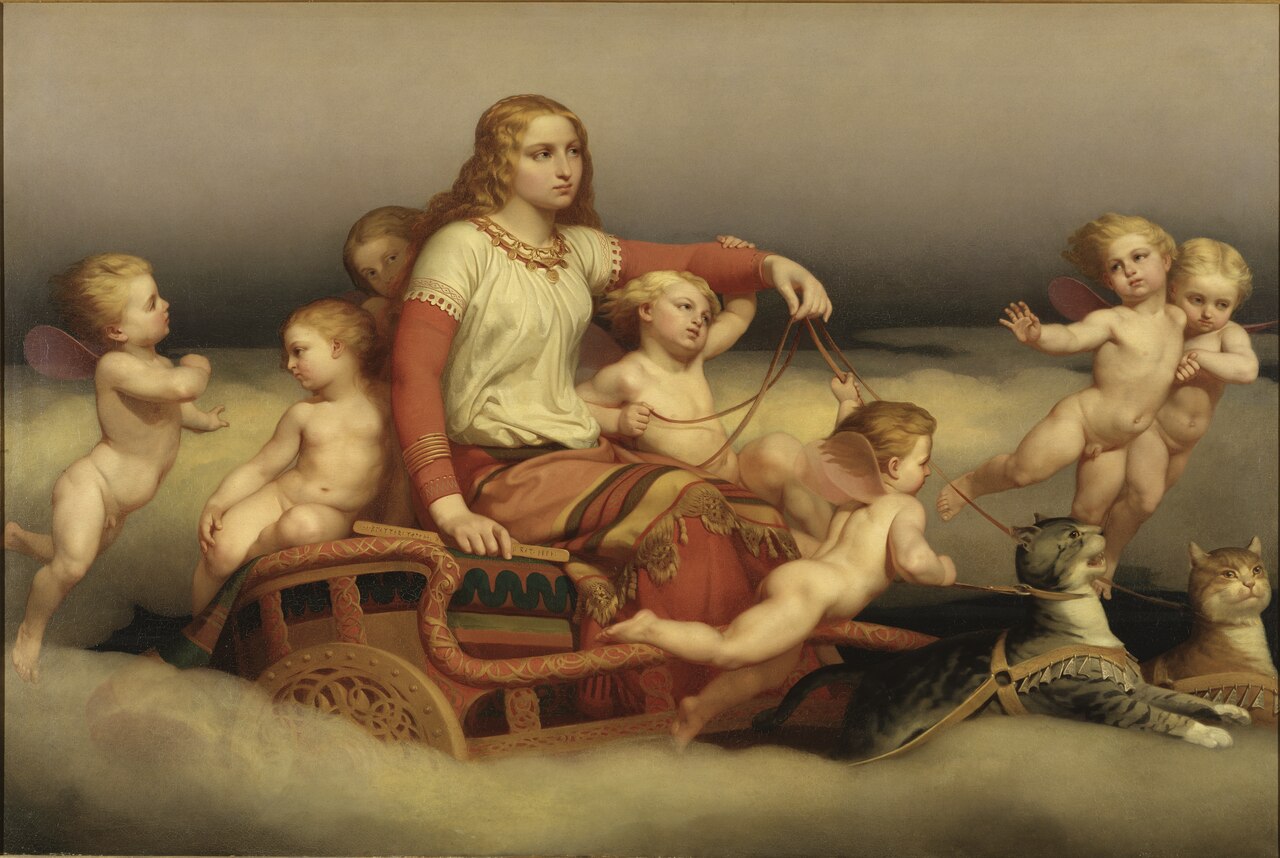
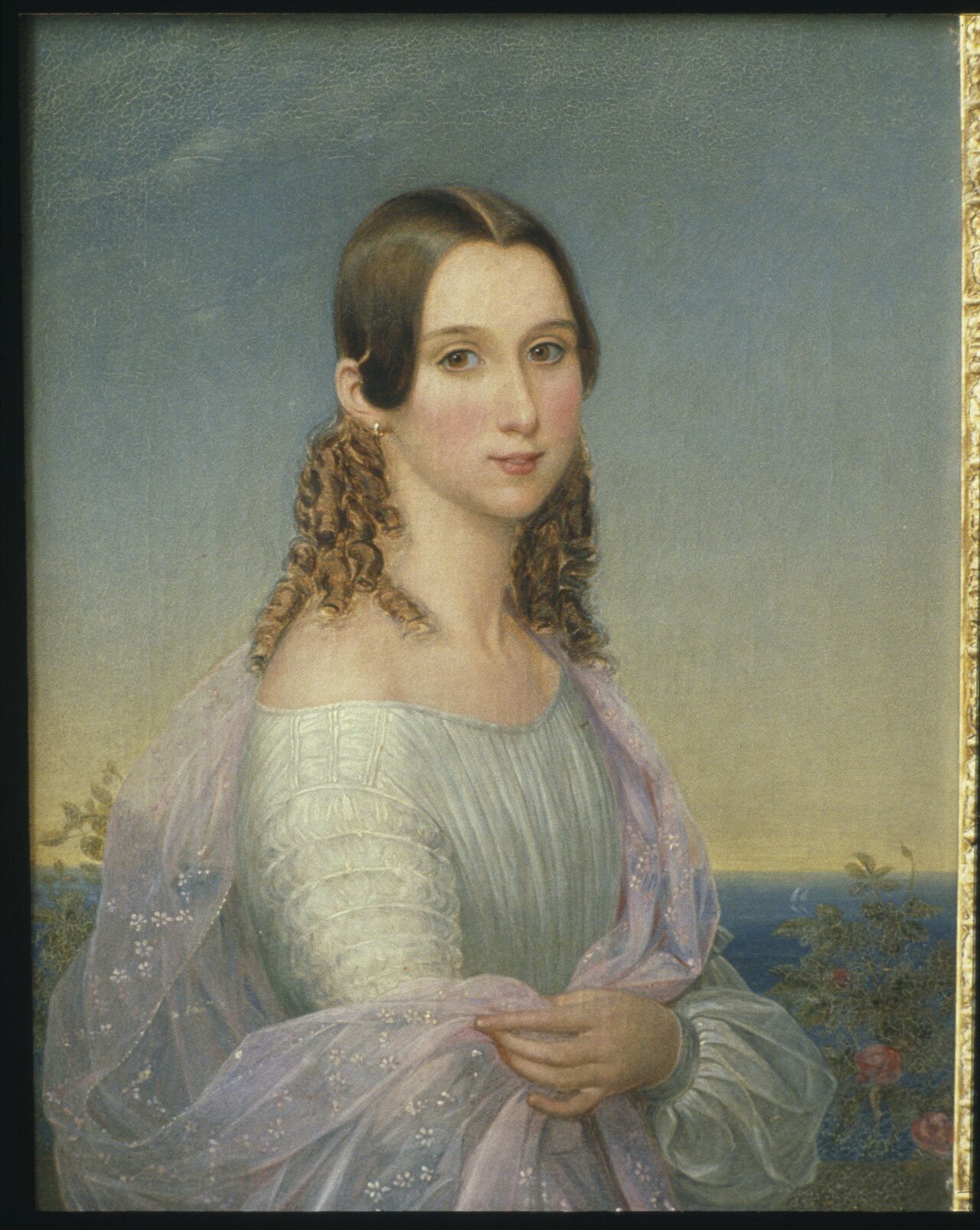
Major works - **The Water‑Sprite and Ägir's Daughters (1850)** – This painting depicts a water spirit surrounded by the daughters of the Norse sea‑god Ägir. Blommér renders the figures with luminous skin tones against a deep‑blue sea, the rippling surface rendered in fine, almost translucent brushwork. The composition balances mythic grandeur with a tender intimacy, reflecting his Romantic fascination with the unseen realms of nature. - **Fairies of the Meadow (1850)** – In this work, a group of delicate fairies dance among wildflowers, their translucent wings catching a soft, golden light. The piece showcases Blommér’s skill in rendering light and texture, as the meadow glows with a hazy, almost photographic realism that contrasts with the fantastical subjects. - **A Dutch Harbour (1840)** – Though the subject lies outside Scandinavia, Blommér’s treatment of the harbour demonstrates his broader Romantic sensibility. The scene captures a mist‑filled sunrise over a quiet dock, with muted blues and warm amber tones that convey both the tranquility of the locale and the emotional resonance of a distant place. - **Freja Seeking her Husband (1852)** – Drawing on Norse mythology, this painting portrays the goddess Freja in a moment of yearning. Blommér places her against a twilight sky, using a subtle gradation of purples and pinks to evoke the goddess’s emotional state. The work is notable for its narrative clarity and the delicate rendering of Freja’s flowing garments. - **Eugenia (1846)** – A portrait of a young woman, Eugenia combines the Romantic emphasis on individual feeling with a restrained, almost academic approach to form. The sitter is illuminated by a soft, interior light that highlights her thoughtful expression, while the background recedes into muted tones, allowing the viewer to focus on the psychological depth of the portrait.
Influence and legacy Blommér’s contribution to Swedish art lies in his synthesis of Romantic aesthetics with a distinctly national folklore. By integrating mythic narratives with the visual language of the Swedish landscape, he helped pave the way for later 19th‑century artists who sought to define a uniquely Swedish artistic identity. His teaching posts in Stockholm and later in provincial art schools disseminated his techniques, influencing a generation of students who adopted his gentle palette and narrative focus. Although his career was cut short by his untimional death in Rome in 1853, his works were exhibited posthumously at the Royal Academy, cementing his reputation as a leading figure of Swedish Romanticism. Modern scholarship recognises Blommér as an early proponent of the Nordic romantic mythos, and his paintings continue to be featured in museum collections and academic discussions of Romantic art.
---
In recent decades, art historians have re‑examined Blommér’s oeuvre through the lens of cultural nationalism, highlighting how his visual storytelling contributed to a burgeoning Swedish cultural self‑consciousness. Contemporary exhibitions often pair his works with those of his peers, illustrating the shared fascination with folklore that defined the period. As a result, Blommér’s paintings remain a touchstone for understanding how Romanticism was adapted to reflect local traditions and natural environments.
Frequently asked questions
Who was Nils Blommér?
Nils Blommér (1816–1853) was a Swedish Romantic painter and art teacher known for his lyrical depictions of mythological and folk subjects.
What artistic movement did he belong to?
He worked within the Romantic movement, emphasizing emotion, nature, and folklore in his paintings.
What are his most famous works?
His best‑known works include The Water‑Sprite and Ägir's Daughters (1850), Fairies of the Meadow (1850), A Dutch Harbour (1840), Freja Seeking her Husband (1852) and the portrait Eugenia (1846).
Why is Blommér important in art history?
Blommér helped shape a uniquely Swedish Romantic style by merging national mythology with the broader European Romantic aesthetic, influencing later Swedish artists and contributing to cultural nationalism.
How can I recognise a painting by Nils Blommér?
Look for delicate, translucent brushwork, a luminous colour palette with cool blues and soft greens, and subjects drawn from folklore or myth that are bathed in gentle, diffused light.