Mårten Eskil Winge
1825 – 1896
In short
Mårten Eskil Winge (1825–1896) was a Swedish painter and professor at the Royal Swedish Academy of Arts, known for his large‑scale historical canvases and mythological subjects drawn from Norse legends.
Notable works
Early life Mårten Eskil Winge was born in Stockholm in 1825. He grew up in a period when Sweden was cultivating a national artistic identity, and his early education reflected the country's strong academic tradition. After completing his primary studies, Winge entered the Royal Swedish Academy of Arts, where he received formal training in drawing, composition, and the classical techniques that formed the backbone of 19th‑century European art education.
Career and style After finishing his studies, Winge spent several formative years in Düsseldorf, aligning himself with the Düsseldorf school of painting. The school was renowned for its meticulous attention to detail, dramatic narrative, and a clear, almost photographic rendering of historical and literary subjects. This environment shaped Winge’s approach to composition, encouraging him to combine rigorous draftsmanship with a romantic sensibility.
Returning to Sweden, Winge secured a professorship at the Royal Swedish Academy of Arts. In this role he influenced a generation of Swedish artists, promoting a synthesis of academic discipline and national themes. His paintings often featured heroic or mythic narratives drawn from Norse mythology, a subject matter that resonated with contemporary cultural nationalism. While his work does not fit neatly into a single avant‑garde movement, it can be situated within the broader Romantic‑historic tradition that prevailed in mid‑19th‑century Europe.
Signature techniques Winge’s technique was characterised by a strong underdrawing, precise modelling of form, and a layered glazing process that generated depth and luminous colour. He favoured a muted palette for background architecture, allowing the figures—often rendered in richer, more saturated tones—to dominate the visual field. His compositions frequently employ a pyramidal structure, guiding the viewer’s eye toward a central dramatic moment. Light is used theatrically, with strong contrasts that highlight muscular tension and emotional intensity.
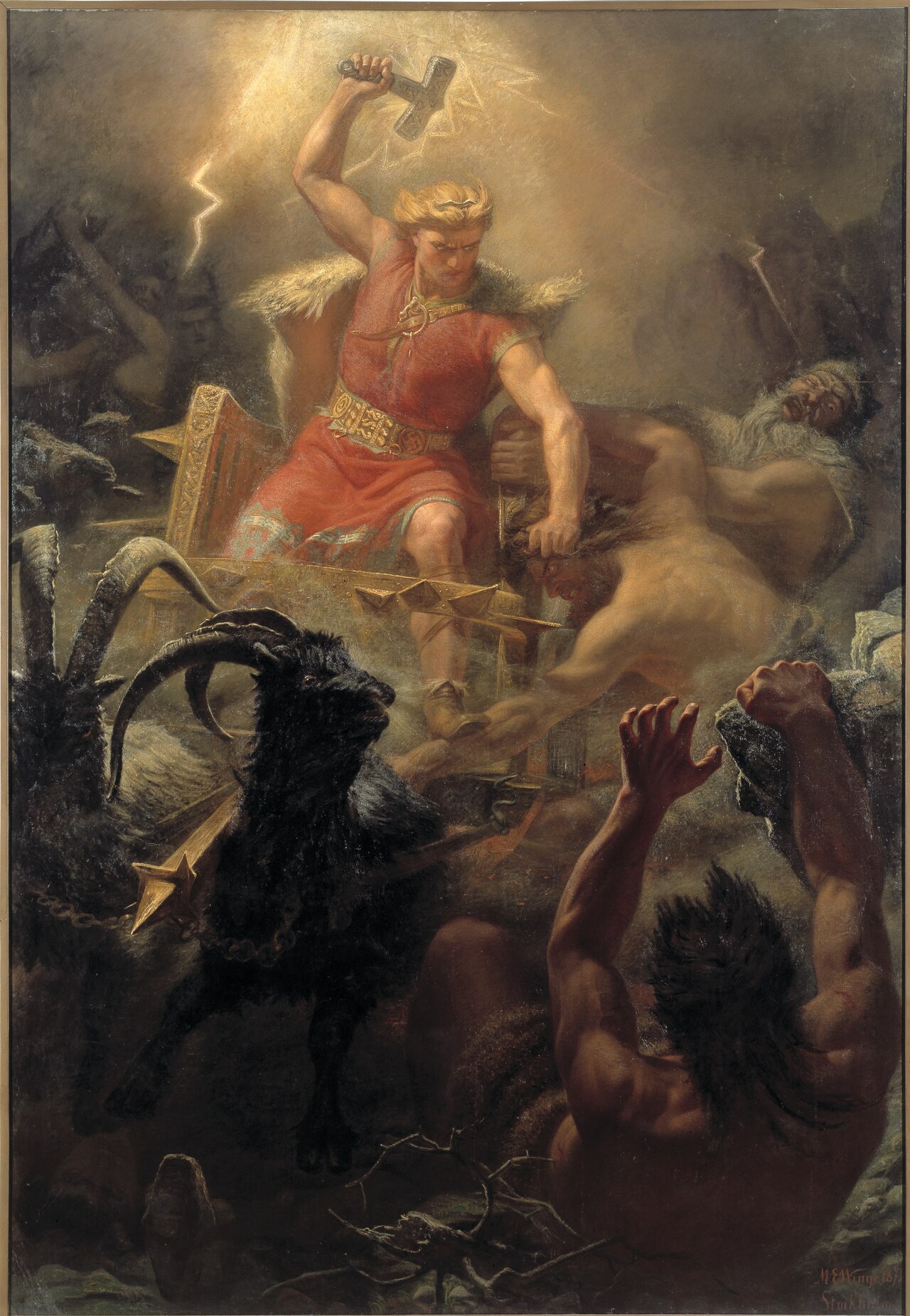
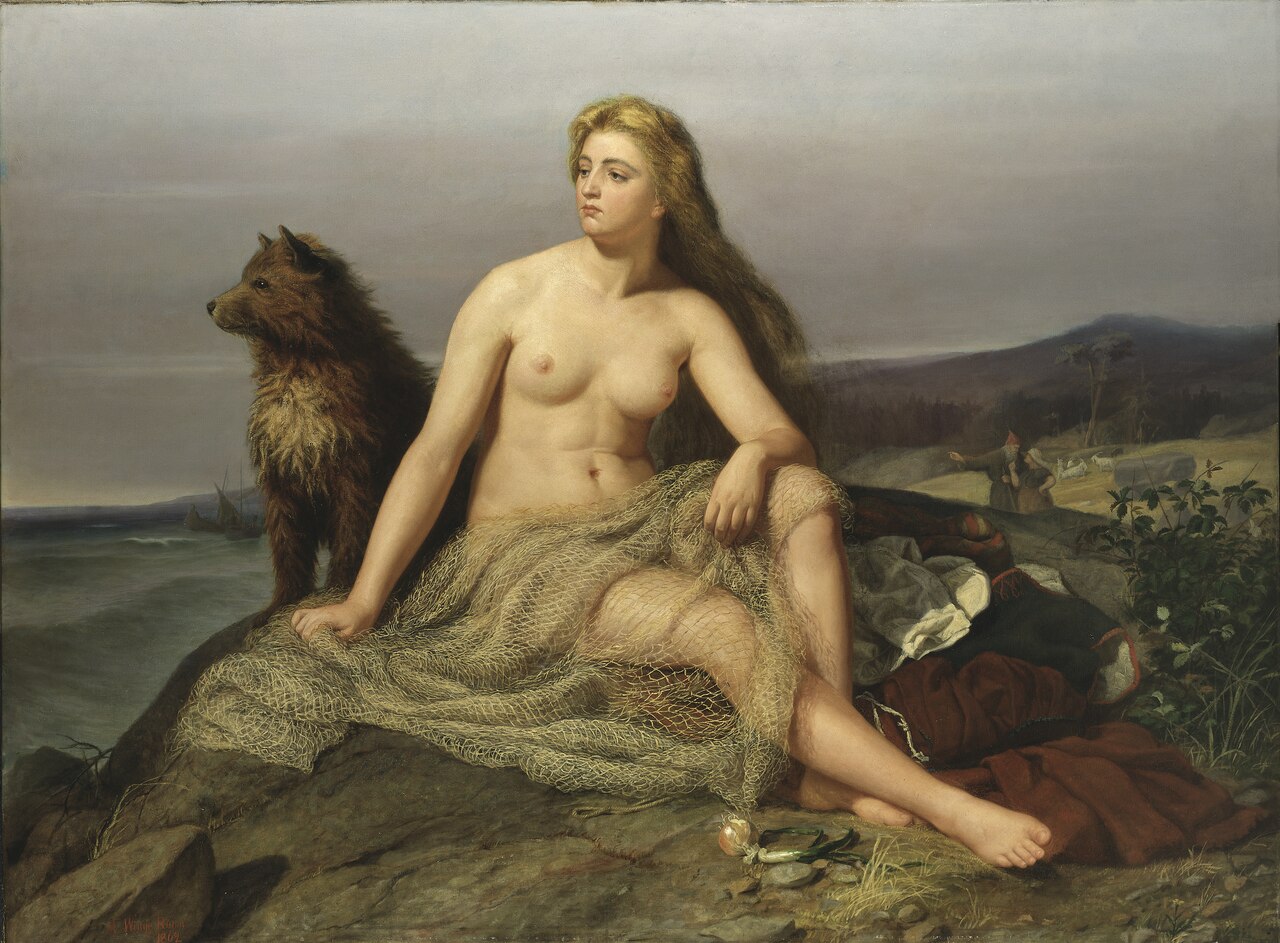
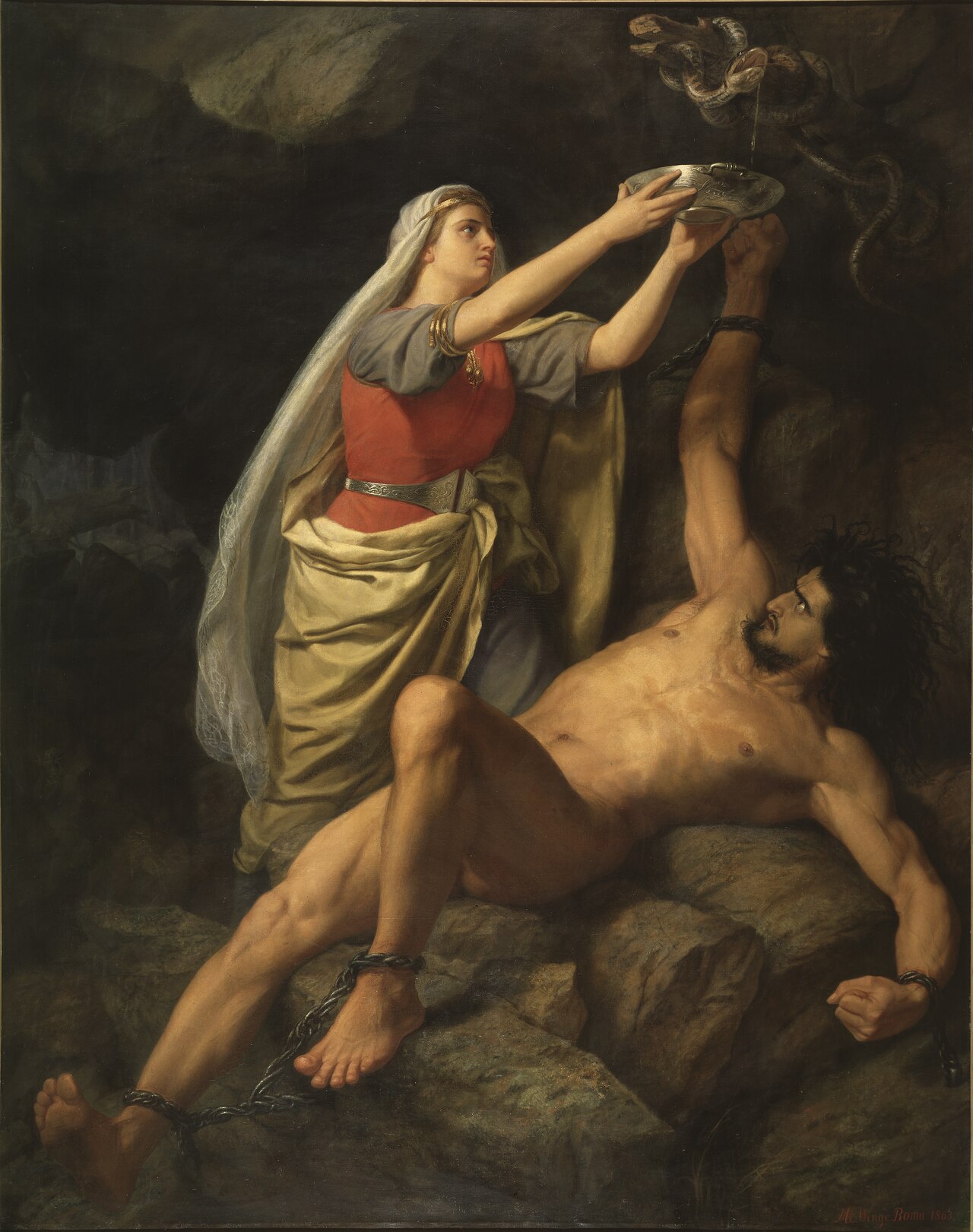
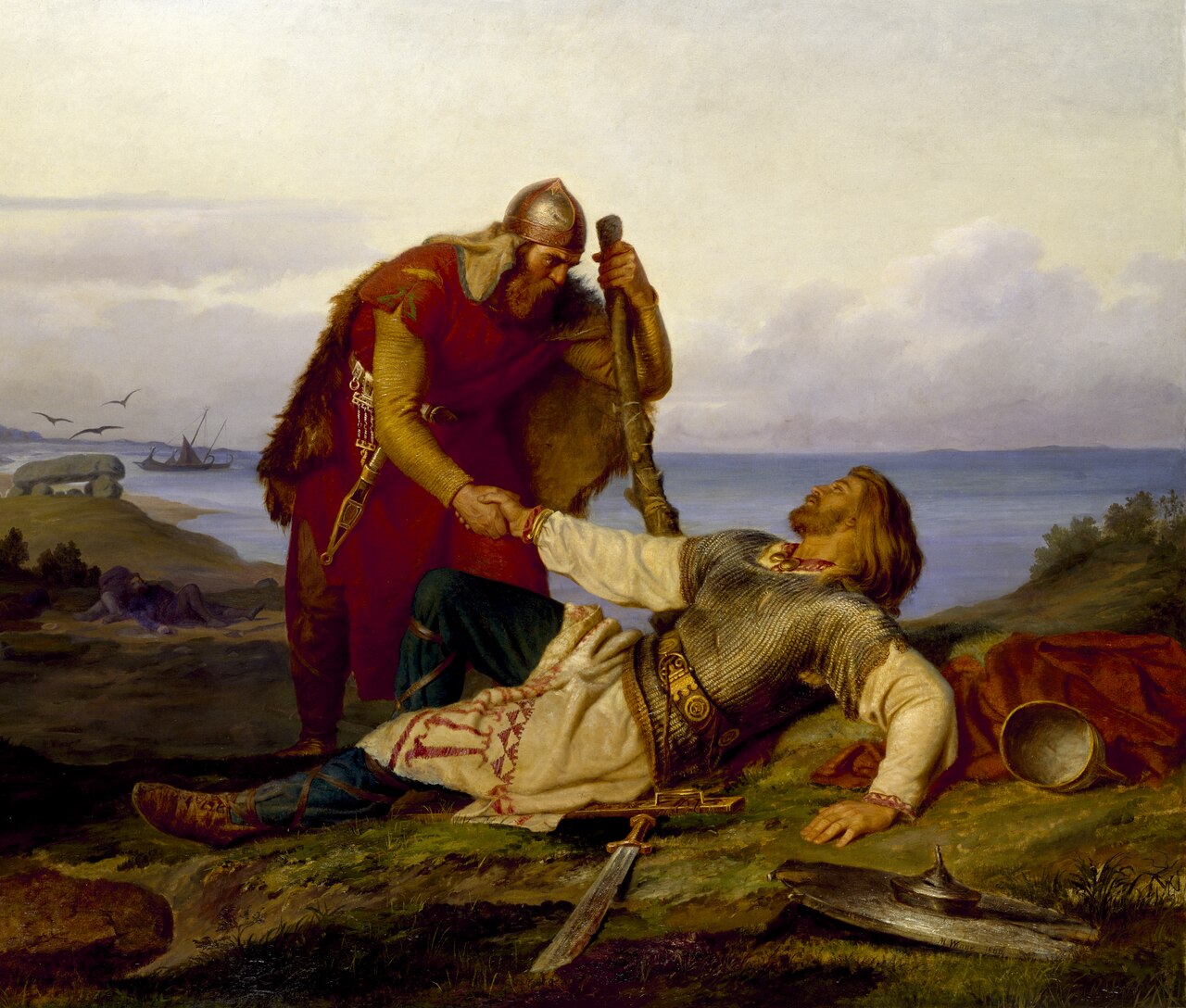
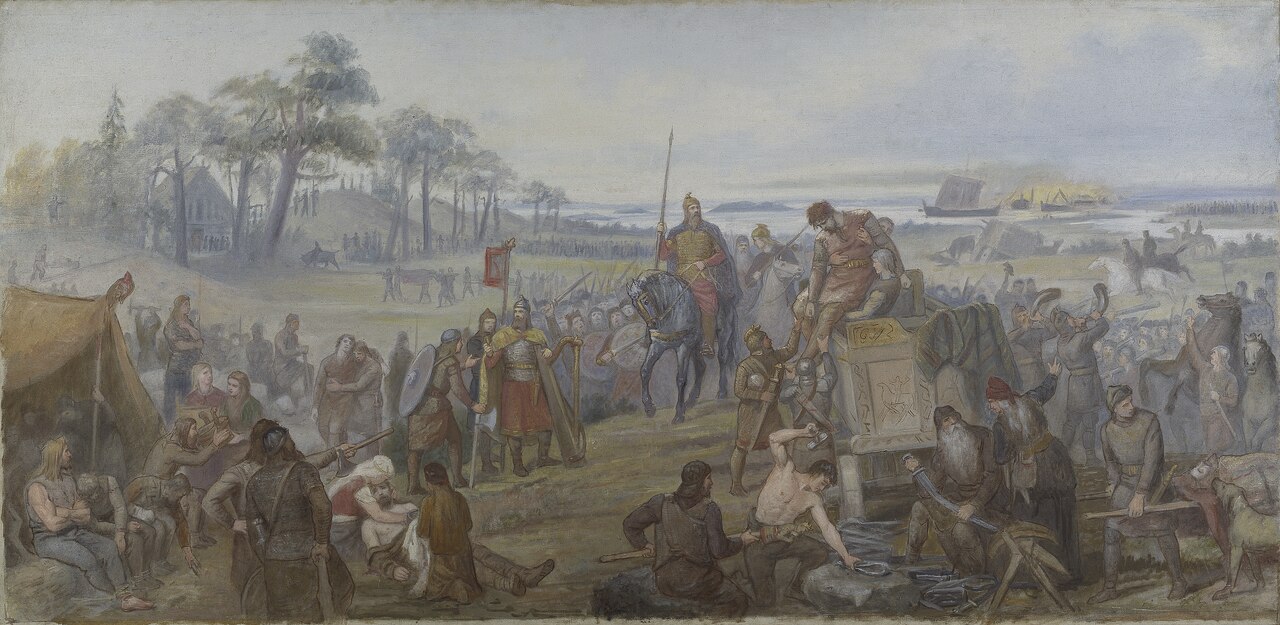
Major works - **Thor’s Fight with the Giants (1872)** – This monumental canvas depicts the god Thor battling the Jotunn in a thunder‑filled sky. Winge’s handling of chiaroscuro underscores the clash of divine power against chaotic forces, while the meticulous rendering of Thor’s hammer and the giants’ grotesque forms reveal his commitment to mythological accuracy. - **Kraka (1862)** – In this work Winge portrays the legendary heroine Kraka, a figure from Old Norse sagas. The painting balances delicate detail in the heroine’s attire with a broader, atmospheric landscape, illustrating Winge’s ability to merge intimate portraiture with narrative depth. - **Loke and Sigyn (1863)** – Here the tragic myth of Loki’s punishment is rendered with somber restraint. Winge captures the sorrow of Sigyn as she holds a bowl to catch Loki’s poisonous venom, employing soft lighting to convey the scene’s emotional weight. - **Hjalmar Parting from Orvar Odd after the Fight on Samsö (1866)** – This composition illustrates the heroic departure of Hjalmar from his comrade Orvar Odd. The painting’s dynamic pose and careful rendering of armour exemplify Winge’s skill in portraying heroic camaraderie and the aftermath of battle. - **After the Battle of Fyrisvall. Proposed Decoration of the Walls in the Upper Hall of the NM (1850)** – Although never realised as a permanent mural, this proposal demonstrates Winge’s ambition to translate his large‑scale historical vision into architectural decoration. The work envisages a dramatic, multi‑figure tableau that would have adorned the National Museum’s upper hall, reflecting his interest in integrating art with public spaces.
Influence and legacy Winge’s legacy rests on his role as a conduit between Swedish academic art and the burgeoning national romanticism of the late 19th century. By integrating the rigorous techniques of the Düsseldorf school with distinctly Scandinavian mythological content, he helped forge a visual language that celebrated Sweden’s cultural heritage. His tenure at the Royal Swedish Academy of Arts ensured that his methodological standards and thematic interests were transmitted to students who would later advance Swedish modernism. While later avant‑garde movements moved away from his historicist approach, Winge’s paintings remain valuable reference points for scholars examining the intersection of academic training and national identity in Scandinavian art.
Today, his works are held in major Swedish museum collections, and they continue to be exhibited in contexts that explore Romantic historicism and the visual representation of Norse mythology. Art historians regard him as a pivotal figure who bridged the gap between the academic conventions of his early training and the emerging desire for a uniquely Swedish artistic voice.
Frequently asked questions
Who was Mårten Eskil Winge?
Mårten Eskil Winge (1825–1896) was a Swedish painter and professor at the Royal Swedish Academy of Arts, noted for his large historical canvases and mythological subjects.
What style or movement is he associated with?
He is linked to the Düsseldorf school of painting and worked within the Romantic‑historic tradition, combining academic technique with Scandinavian mythological themes.
What are his most famous works?
His best‑known paintings include *Thor’s Fight with the Giants* (1872), *Kraka* (1862), *Loke and Sigyn* (1863), *Hjalmar Parting from Orvar Odd after the Fight on Samsö* (1866), and his proposed mural *After the Battle of Fyrisvall* (1850).
Why does he matter in art history?
Winge helped forge a distinctly Swedish visual language by marrying rigorous academic training with national mythological content, influencing both his contemporaries and later generations of Swedish artists.
How can I recognise a painting by Winge?
Look for a strong underdrawing, layered glazing, dramatic chiaroscuro, and a composition centred on heroic or mythic figures rendered with meticulous detail and a muted background palette.