Julius Kronberg
1850 – 1921
In short
Julius Kronberg (1850–1921) was a Swedish decorative painter known for mythological and allegorical works such as Nymph and Fauns and Cupid. He worked primarily in the late 19th century, producing paintings that combined academic training with a personal decorative style.
Notable works

Early life Julius Kronberg was born in 1850 in the city community of Karlskrona, a historic naval town on Sweden's southern coast. Little is recorded about his family background, but the cultural environment of Karlskrona, with its maritime heritage and burgeoning civic institutions, offered early exposure to artistic influences. Kronberg displayed an aptitude for drawing from a young age, prompting his parents to support his enrolment at a local drawing school. By his teenage years he had mastered basic drawing techniques and began to explore decorative painting, a discipline that would later define his career.
Career and style After completing his initial training, Kronberg moved to Stockholm to pursue formal artistic education. He attended the Royal Swedish Academy of Arts, where he received instruction in academic drawing, composition, and the principles of decorative painting. The Academy's curriculum emphasized classical subjects, which resonated with Kronberg's interest in mythological and biblical themes. Throughout the 1870s and 1880s he worked as a decorative painter, receiving commissions for public buildings, churches, and private residences. While his work does not fit neatly into a single avant‑garde movement, it reflects the lingering influence of Academic Realism combined with a personal decorative sensibility that foregrounds rhythm, colour harmony and narrative clarity.
Kronberg's style is characterised by a balanced composition, smooth modelling of figures, and a muted yet rich palette. He often employed a restrained use of chiaroscuro to suggest depth without overwhelming the decorative surface. His subjects, drawn from classical mythology and biblical history, were rendered with an emphasis on idealised human forms, echoing the academic tradition, while his decorative approach allowed for ornamental motifs that softened the narrative focus. This synthesis placed him among the late‑19th‑century Swedish artists who negotiated the transition from historicist academic painting to a more decorative, sometimes Symbolist, aesthetic.
Signature techniques Kronberg's decorative paintings frequently utilised tempera and oil on canvas, sometimes applied to plastered walls for murals. He favoured a layered approach, beginning with a monochrome underdrawing to establish composition, followed by successive colour washes that built tonal depth. In many works he incorporated gilded accents or subtle gold leaf, lending a luminous quality to mythological scenes. His brushwork remained controlled and precise, especially in rendering drapery and anatomical details. The artist also employed a limited but harmonious colour scheme, often relying on earth tones punctuated by brighter reds or blues to draw attention to focal points such as a Cupid’s arrow or a nymph’s gesture.
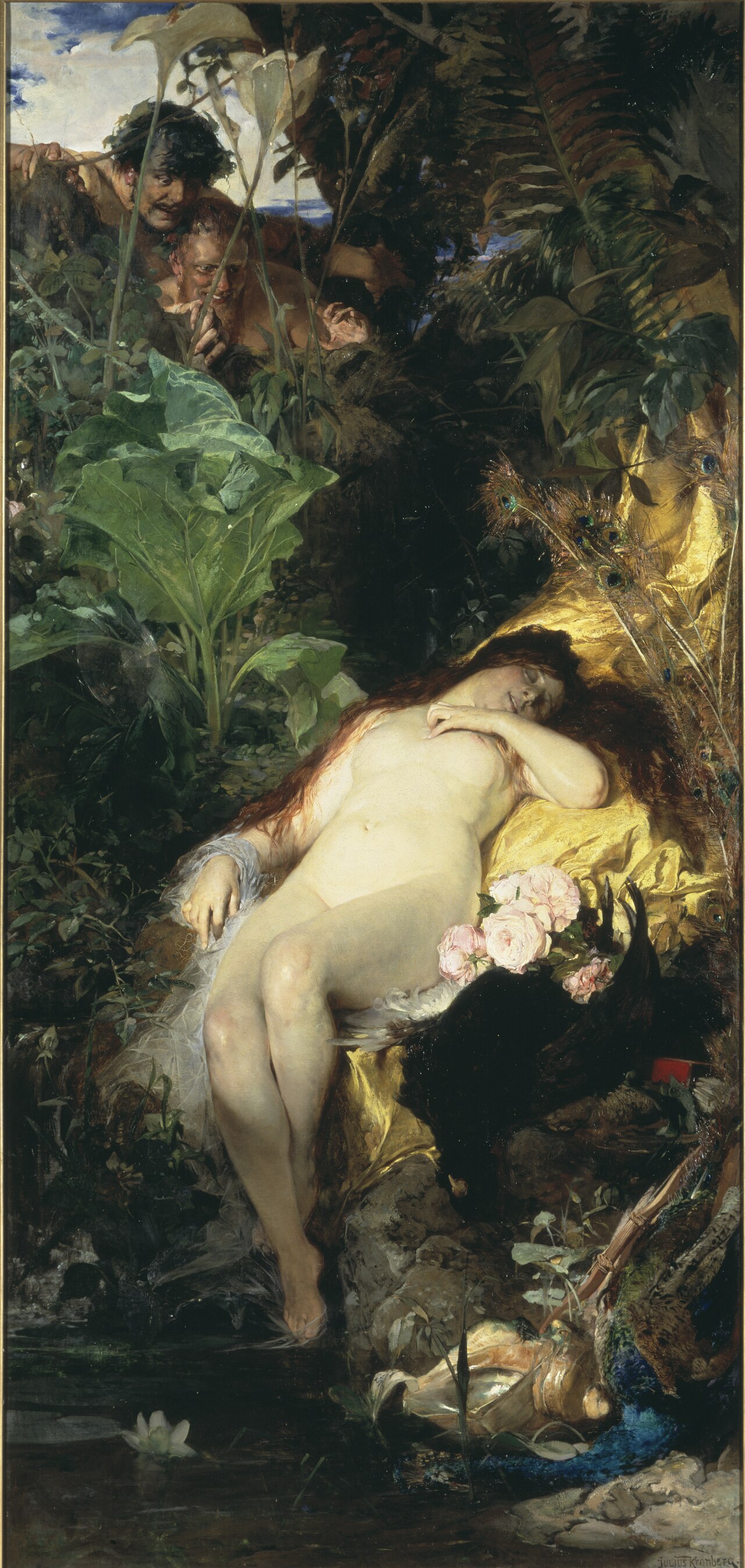
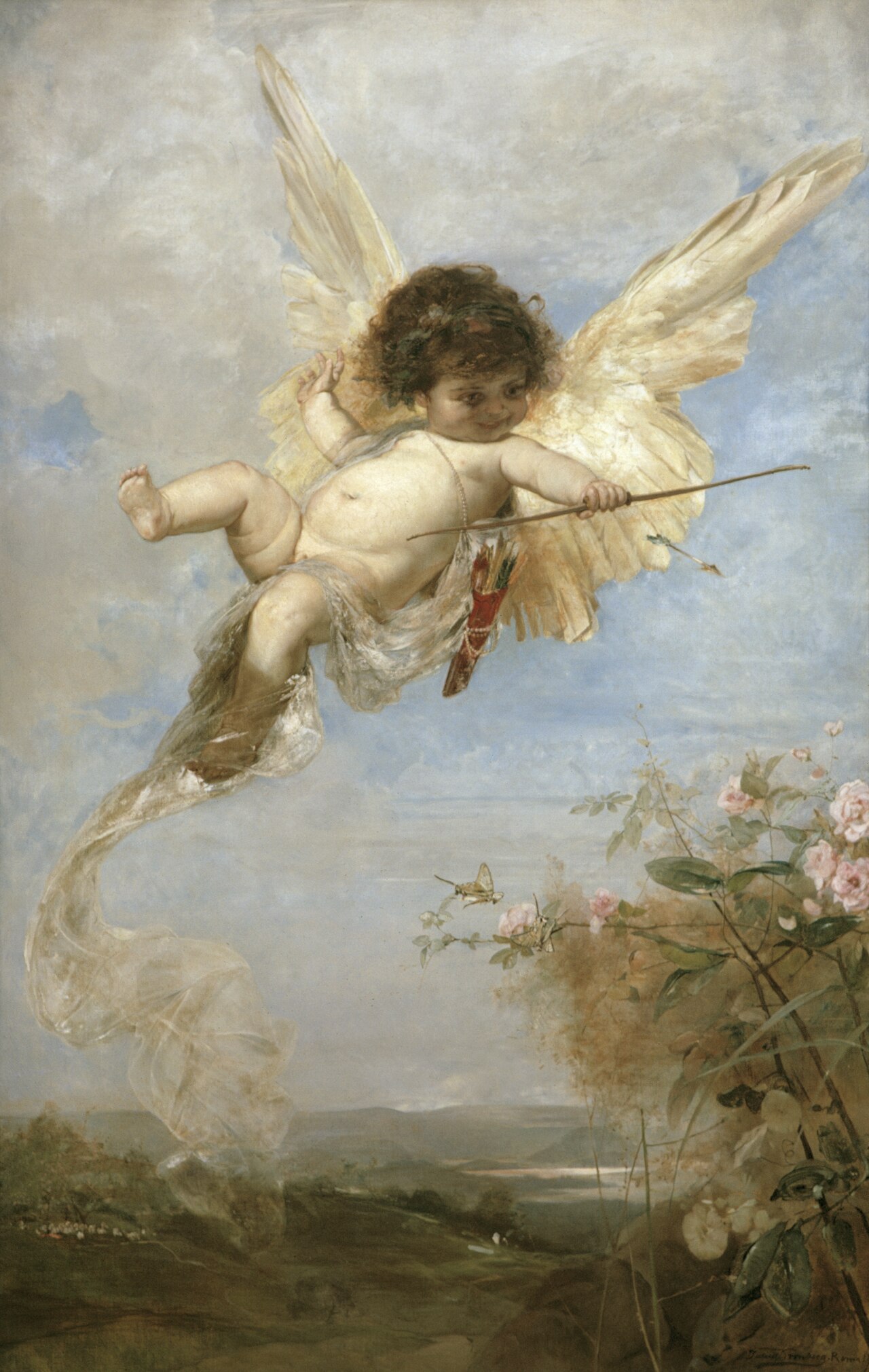
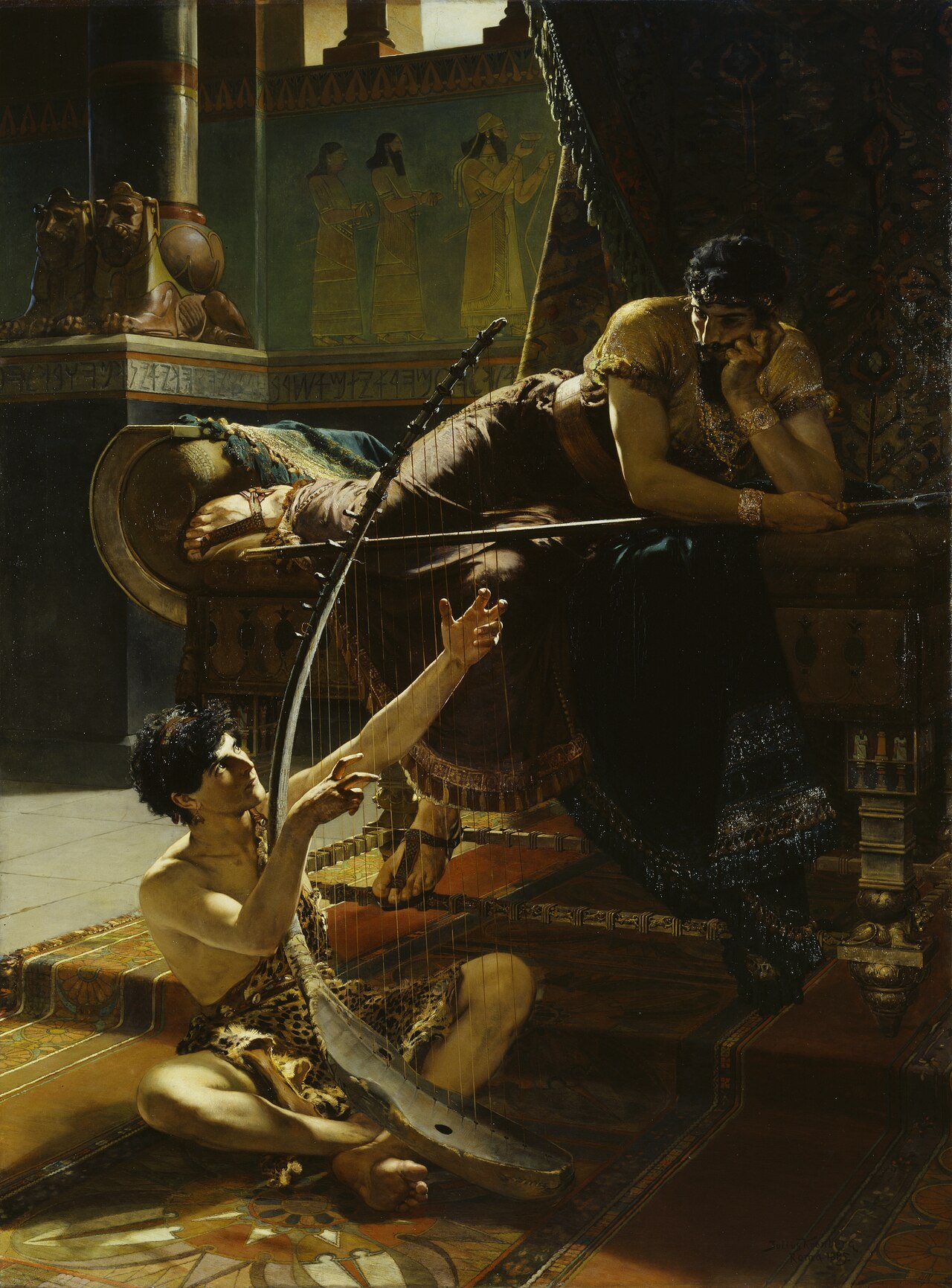
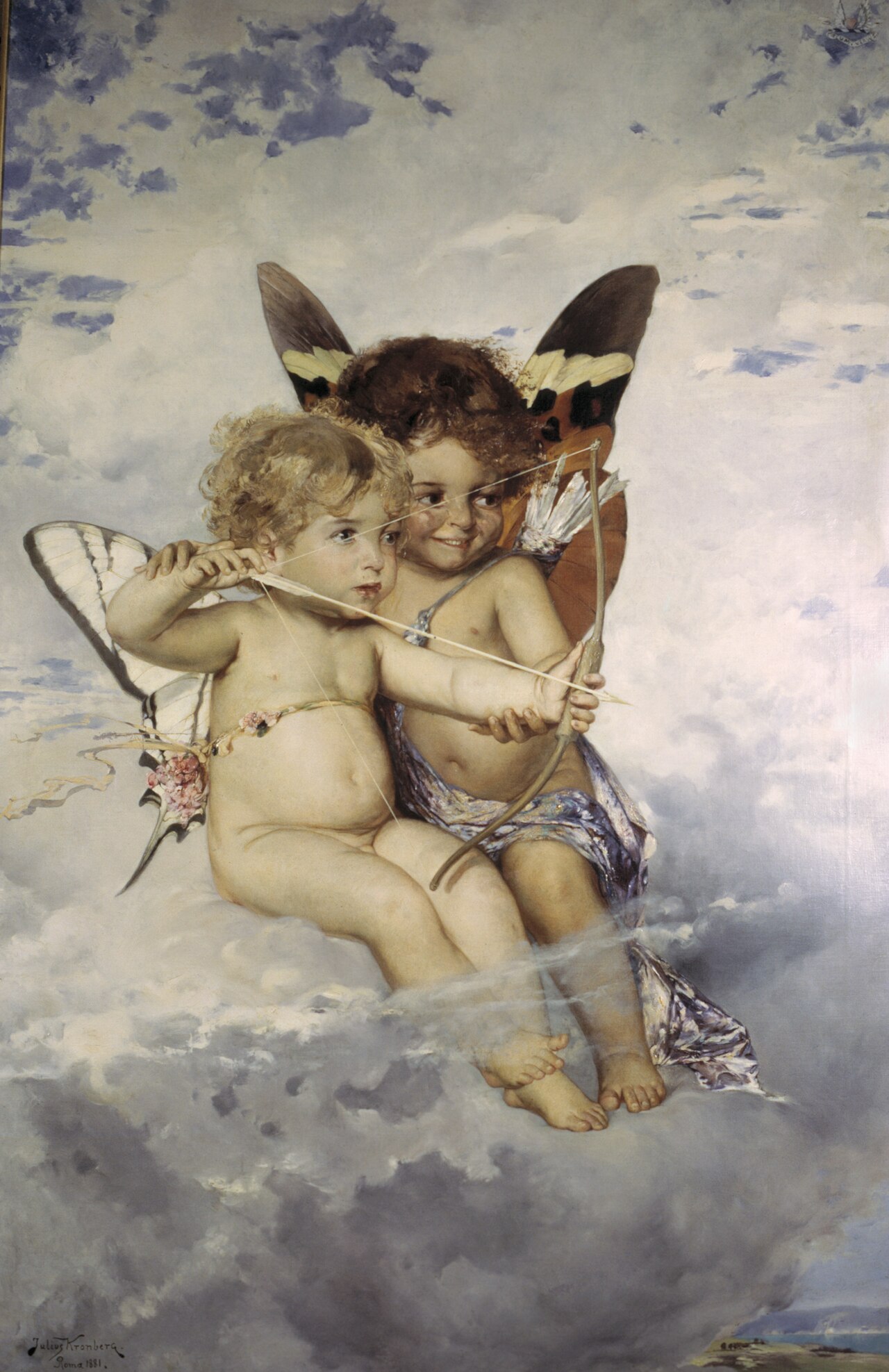
Major works Kronberg's oeuvre includes several works that illustrate his thematic interests and technical skill. **Nymph and Fauns (1875)** presents a pastoral scene where a nymph is surrounded by playful fauns; the composition balances dynamic movement with a tranquil landscape background, showcasing Kronberg's command of narrative balance. **Cupid (1878)** depicts the Roman god of love in a solitary pose, his delicate wings rendered with fine brushstrokes that convey both lightness and a sense of quiet introspection. **Cupids (1881)** expands on this motif, featuring multiple cupids interacting in a decorative tableau that highlights Kronberg's ability to orchestrate complex groupings while maintaining visual harmony. **David and Saul (1885)** marks a departure into biblical subject matter, illustrating the tension between the youthful David and the ageing King Saul; the work reflects Kronberg's skill in portraying psychological drama within a decorative framework. Finally, **Eko**—though less documented—demonstrates his continued engagement with allegorical themes, possibly referencing echoic or reflective motifs, and underscores his consistent decorative approach.
Influence and legacy Although Julius Kronberg never achieved the international fame of some contemporaries, his contributions to Swedish decorative painting were significant during a period of artistic transition. His works adorned public spaces and private interiors, influencing the visual culture of late‑19th‑century Sweden. By integrating classical subject matter with a decorative sensibility, Kronberg helped bridge the gap between academic historicism and the emerging Symbolist trends that would dominate the early 20th century. Contemporary Swedish art historians regard his paintings as valuable examples of the period’s decorative arts, and his surviving works continue to be studied for their technique and compositional elegance. Kronberg's legacy persists in the preservation of his murals and canvas works, which remain accessible in Swedish museums and historic buildings, offering insight into the decorative aspirations of his era.
Frequently asked questions
Who was Julius Kronberg?
Julius Kronberg (1850–1921) was a Swedish decorative painter known for mythological and biblical subjects.
What style or movement is he associated with?
He worked within an academic realist tradition but developed a personal decorative style that blended classical themes with ornamental design.
What are his most famous works?
His best‑known paintings include Nymph and Fauns (1875), Cupid (1878), Cupids (1881), David and Saul (1885) and the allegorical piece Eko.
Why does he matter in art history?
Kronberg exemplifies the late‑19th‑century Swedish shift from pure historicism to a decorative approach, influencing interior decoration and the visual language of public spaces.
How can I recognise a Julius Kronberg painting?
Look for smooth modelling of idealised figures, a balanced composition, muted earth tones highlighted by selective bright accents, and subtle gilded or gold‑leaf details.