Johan Richter
1665 – 1745
In short
Johan Richter (1665–1745) was a Swedish Baroque painter known for his detailed views of Venice. He spent a significant portion of his career in Italy, contributing to the city's rich artistic landscape with his architectural and veduta paintings.
Notable works


Early life
Johan Richter, also known by the Italianized name Giovanni Richter, was born in Stockholm, Sweden, in 1665. Little is documented about his early life and artistic training in Sweden. It is presumed that he received foundational artistic education in his native country before embarking on a journey that would lead him to Italy, the epicenter of Baroque art and a significant destination for artists across Europe.
Career and style
Richter's career is largely defined by his time spent in Venice, where he settled and became an active participant in the city's vibrant art scene. His work aligns with the Baroque period, characterized by dramatic compositions, rich colors, and a keen attention to detail, particularly in architectural rendering. While not explicitly associated with a singular art movement, his style reflects the prevailing trends in European painting of the late 17th and early 18th centuries, with a strong emphasis on landscape and architectural vedute.
His decision to settle in Venice suggests an affinity for the city's unique visual character and the opportunities it offered for painters specializing in topographical and architectural subjects. The city itself, with its intricate canals, grand palazzi, and historic landmarks, provided an inexhaustible source of inspiration, which Richter explored throughout his artistic output.
Signature techniques
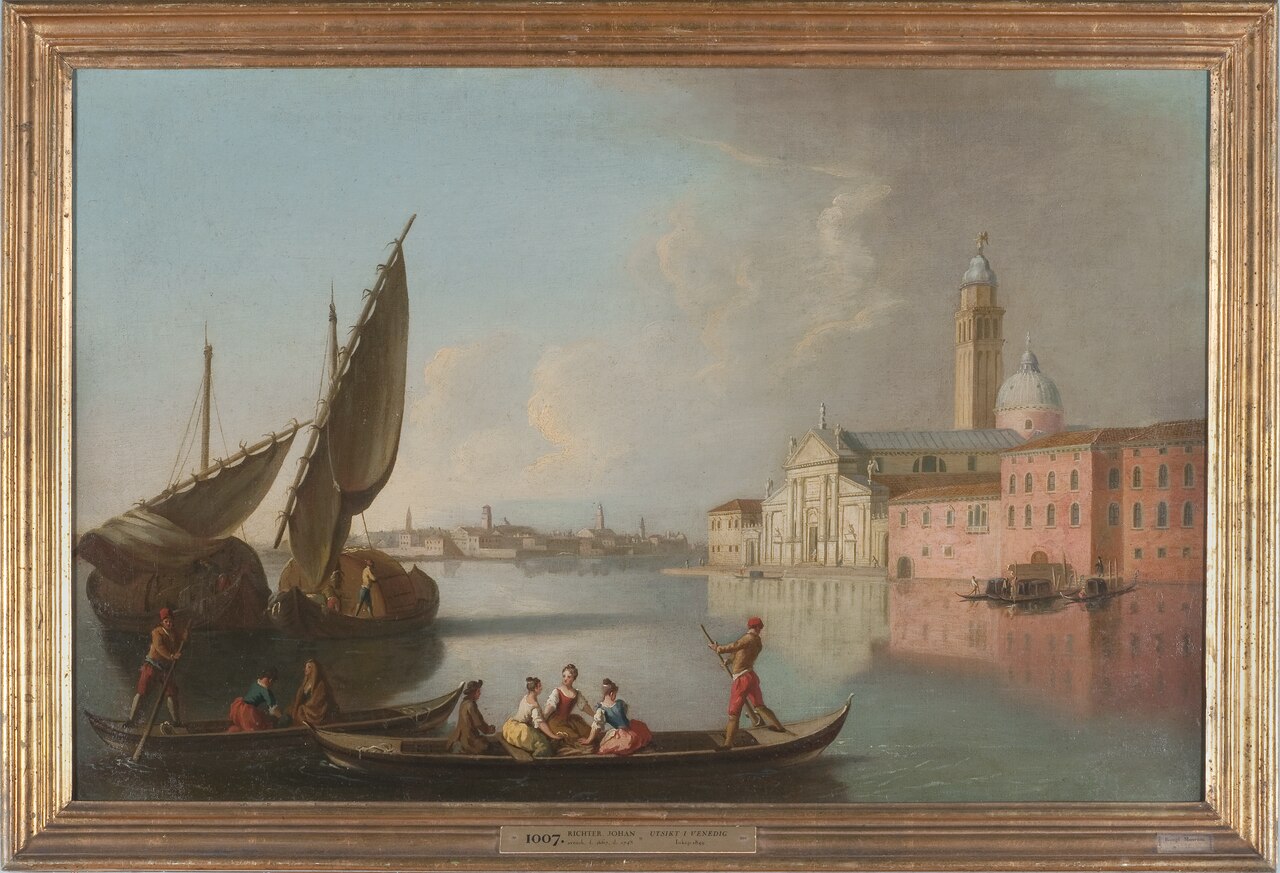
Richter was particularly recognized for his mastery in depicting architectural forms and urban landscapes. His approach to the veduta, or view painting, involved meticulous attention to perspective, light, and shadow, creating convincing and often atmospheric representations of Venetian scenes. He demonstrated a skilled hand in rendering the textures of stone, the play of light on water, and the intricate details of the city's famous buildings. The use of a clear, often bright palette, combined with a precise draughtsmanship, allowed him to capture the specific character and grandeur of Venice. His compositions often balanced the monumental scale of architecture with the human element, populating his scenes with figures that add life and context to the urban panorama.
Major works
Among Johan Richter's notable contributions are his evocative depictions of Venice. The "View of Venice with San Giorgio Maggiore" from 1715 is a prime example, showcasing his ability to capture the iconic cityscape with precision and atmospheric depth. The painting likely highlights the distinctive silhouette of the island and its prominent church, rendered with the characteristic attention to light and detail that defined his work.
"View from Venedig" and "Genre Picture with San Giorgio Maggiore in the Background" further exemplify his focus on Venetian settings. These works likely explore different perspectives and compositions, perhaps integrating genre elements into the grander architectural backdrops, a common practice in veduta painting. The inclusion of San Giorgio Maggiore in multiple works underscores its significance as a landmark and a recurring motif in his oeuvre.
Another significant piece is "VENICE: A VIEW OF THE ISOLA DI SAN BIAGIO WITH THE BENEDICTINE CHURCH AND CONVENT." This title indicates a focus on a specific, perhaps less commonly depicted, area of Venice, demonstrating Richter's commitment to exploring the city's diverse architectural heritage. Such works contribute to a broader understanding of Venice during the period, offering visual records of its urban fabric.
Influence and legacy
Johan Richter's legacy lies in his contribution to the genre of veduta painting, particularly his detailed and atmospheric renderings of Venice. While perhaps not as widely celebrated as some of his contemporaries, his works provide valuable historical and artistic insights into the appearance and character of Venice during the Baroque era. His paintings served not only as artistic expressions but also as important visual documents for posterity. His dedication to architectural detail and his skillful use of light and perspective influenced subsequent generations of landscape and city painters who were drawn to the unique allure of Venice. His Swedish origins also highlight the international nature of artistic exchange during this period, with artists traveling across Europe to study, work, and find inspiration.
Frequently asked questions
Who was Johan Richter?
Johan Richter (1665–1745) was a Swedish Baroque painter, best known for his detailed views of Venice.
What art movement is Johan Richter associated with?
Johan Richter's work is associated with the Baroque period, and he was a prominent practitioner of the veduta genre, or view painting, though not strictly tied to a singular art movement.
What are Johan Richter's most famous works?
His most recognized works include 'View of Venice with San Giorgio Maggiore' (1715), 'View from Venedig', and 'VENICE: A VIEW OF THE ISOLA DI SAN BIAGIO WITH THE BENEDICTINE CHURCH AND CONVENT'.
Why is Johan Richter significant in art history?
Richter is significant for his skilled contributions to the veduta genre, offering precise and atmospheric visual records of Venice during the Baroque era, and highlighting international artistic exchange.
How can I recognize a painting by Johan Richter?
Look for detailed and accurate architectural depictions of Venice, with a keen sense of perspective, light, and shadow, often featuring prominent landmarks like San Giorgio Maggiore and populated by small figures.