Johan Philip Korn
1727 – 1796
In short
Johan Philip Korn (1727–1796) was a Swedish painter born in Uddevalla and active mainly in the late 18th century. He is noted for his landscape and architectural scenes, including works such as Landscape with Cartage and The Sala Silver Mine.
Notable works
Early life Johan Philip Korn was born in 1727 in the coastal town of Uddevalla, Sweden. Little is recorded about his family background, but contemporary accounts suggest he grew up in a milieu that valued craft and trade, typical of the region’s maritime economy. His early exposure to the natural scenery of western Sweden—forests, fjords, and the bustling harbour—would later provide a visual vocabulary that permeated his paintings. Korn likely received his initial artistic instruction locally, perhaps through apprenticeship with a regional painter or a guild workshop, a common pathway for aspiring artists in 18th‑century Sweden.
Career and style By the 1750s Korn had moved to Stockholm, the cultural hub of the Swedish kingdom, where he began to establish himself as a professional painter. The capital’s artistic circles were increasingly influenced by the broader European currents of Rococo and early Neoclassicism, yet Korn’s work remained rooted in a distinctly Swedish visual language. His paintings are characterised by a balanced composition that juxtaposes human activity with the surrounding landscape, often highlighting the interaction between industry and nature.
Korn did not align himself with a formally recognised movement; rather, he worked within the pragmatic demands of patrons—nobility, merchants, and mining administrators—who commissioned depictions of estates, industrial sites, and countryside vistas. This pragmatic approach gave his oeuvre a documentary quality, while his handling of light and atmospheric perspective reveals an awareness of contemporary artistic developments across Europe.
Signature techniques Korn’s technique combines meticulous draftsmanship with a relatively restrained palette. He employed fine brushwork for architectural details—such as the stonework of castles or the timber frames of mills—while rendering foliage and water with softer, more fluid strokes. The painter favoured oil on canvas, a medium that allowed for subtle gradations of tone and the blending of colours to achieve atmospheric effects. Light in his works often falls from a low angle, creating gentle chiaroscuro that accentuates the texture of stone and the sheen of water.
Another recurring element is his use of compositional diagonals, frequently introduced by roads, canals, or cart tracks that guide the viewer’s eye across the canvas. This device not only adds dynamism but also underscores the thematic focus on movement and industry. Korn’s palette typically includes earth tones—ochres, umbers, and muted greens—interspersed with occasional highlights of brighter reds or blues to draw attention to specific architectural features or clothing.
Major works Korn’s surviving catalogue, though limited, demonstrates his preoccupation with Swedish landscapes and built heritage.
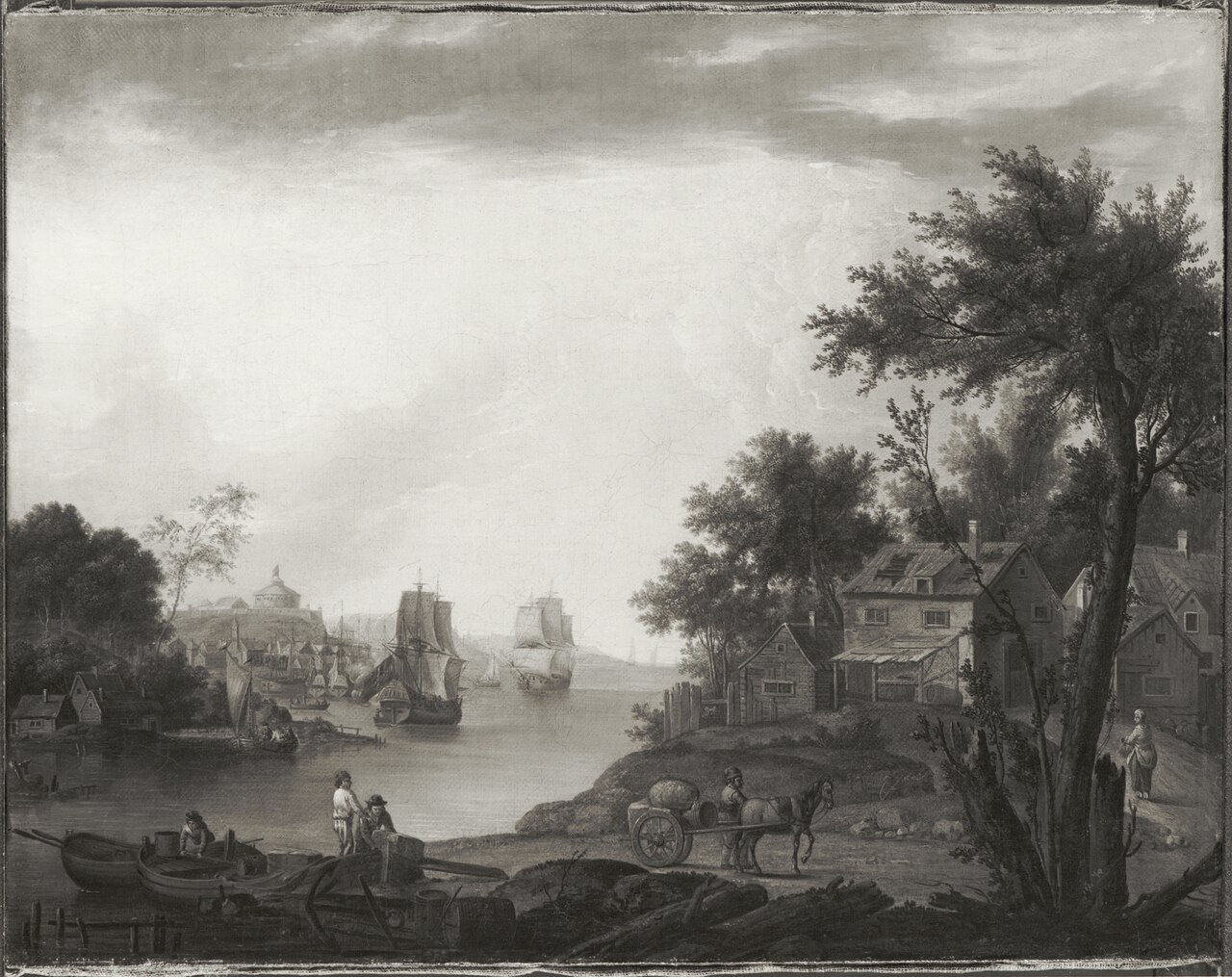
- Landscape with Cartage – This painting depicts a convoy of horse‑drawn carts traversing a rural road, framed by gently rolling hills and a distant village. The work exemplifies Korn’s skill in integrating human labour within a natural setting, and his careful rendering of the carts’ wooden structures reveals his attention to material detail.
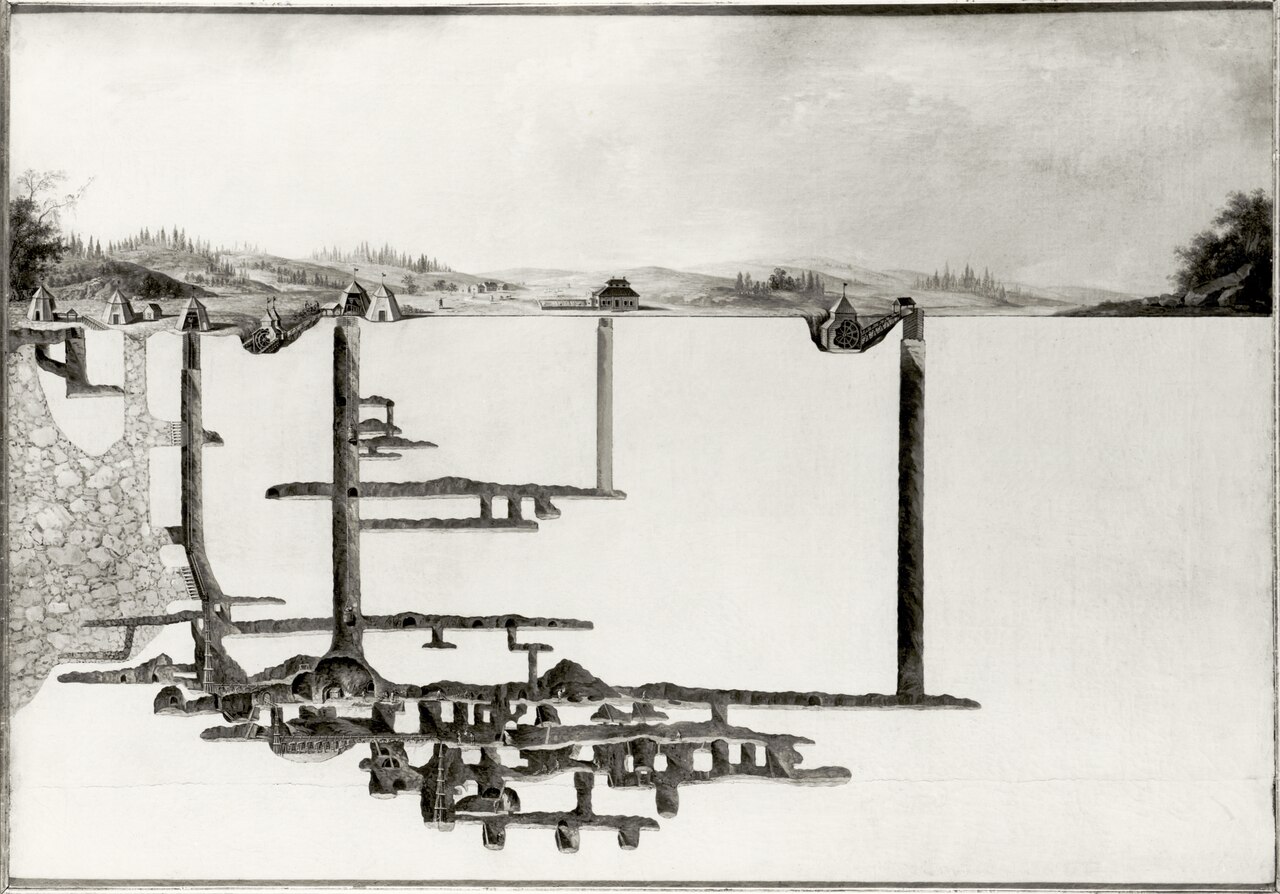
- The Sala Silver Mine – A depiction of one of Sweden’s most important mining sites, the painting captures the industrial architecture of the mine’s entrance and the surrounding topography. Korn’s treatment of smoke rising from the smelting works conveys both the economic significance of the mine and the environmental impact of its operations.
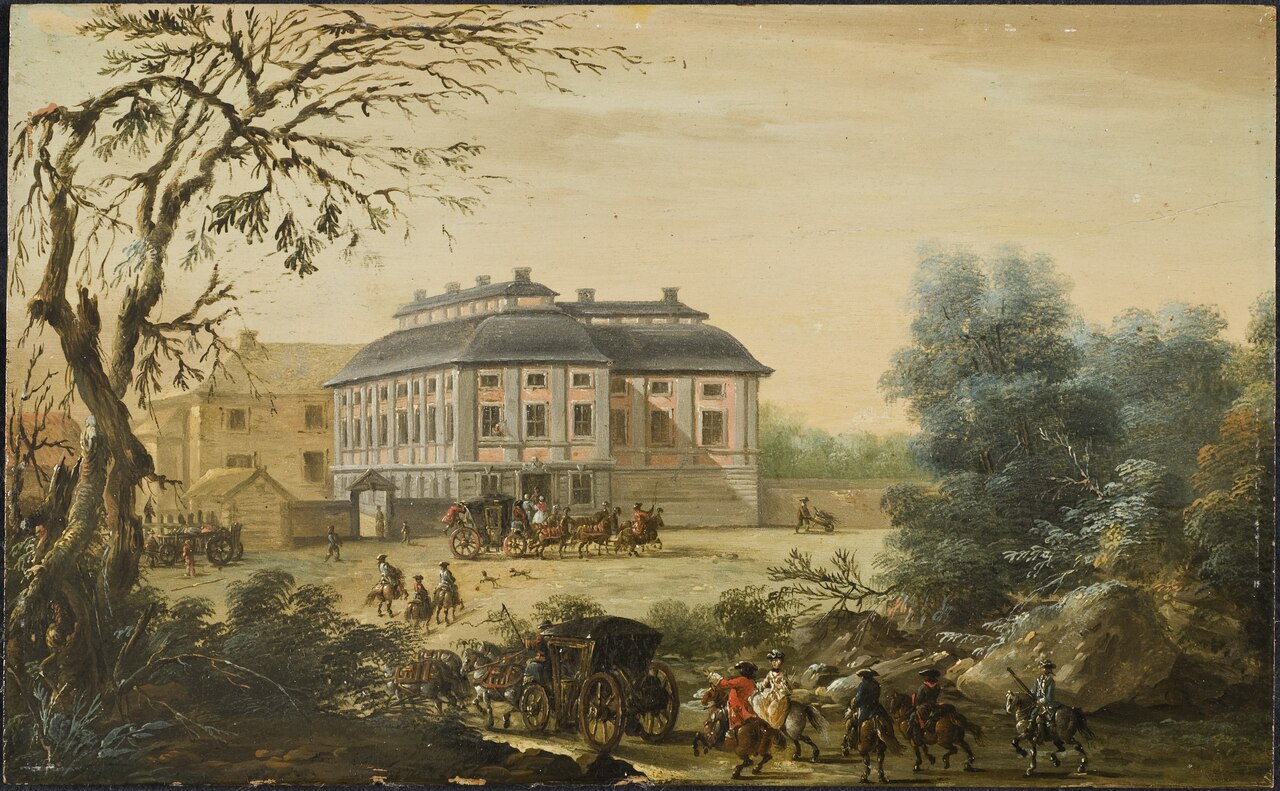
- Ekolsunds slott – In this canvas, Korn portrays the historic Ekolsund Castle, set amid a tranquil parkland. The composition balances the grandeur of the stone façade with the softer lines of surrounding trees, illustrating Korn’s ability to render both architectural solidity and natural elegance.
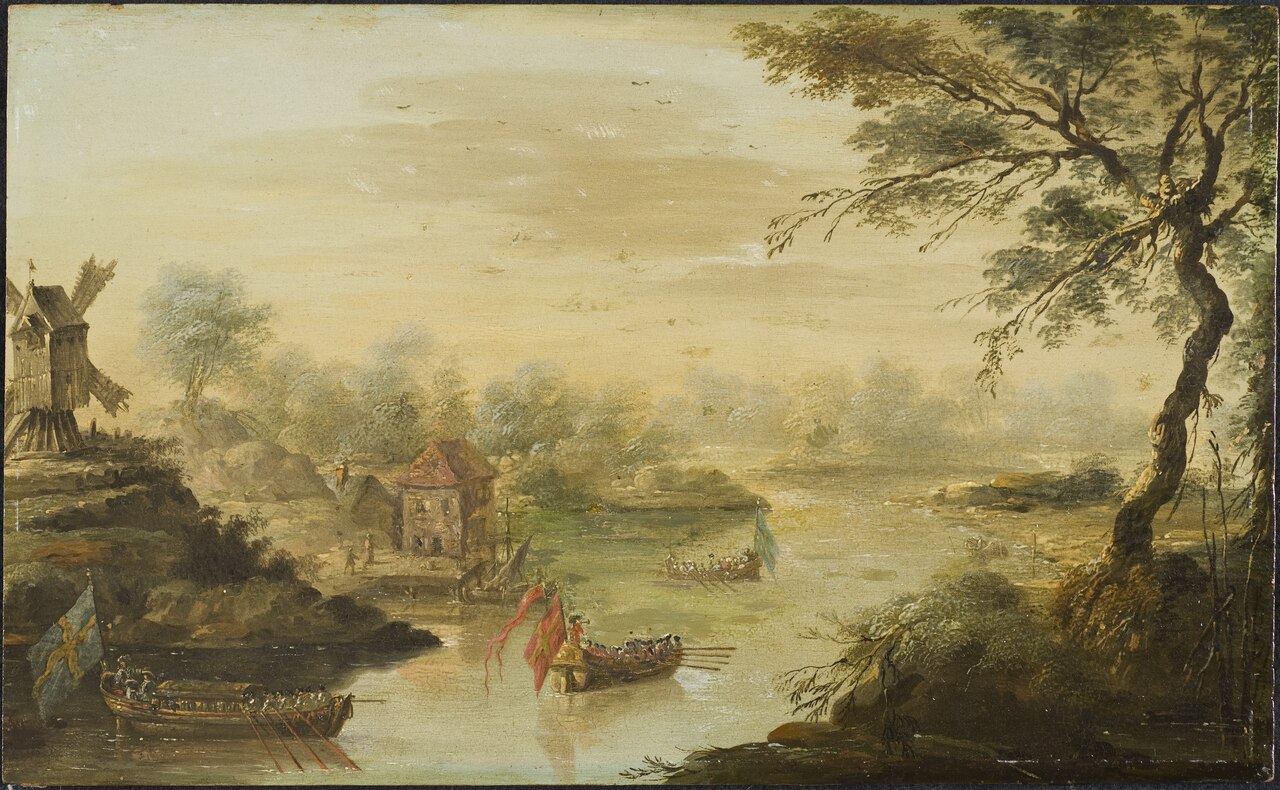
- Kvarnen vid Ekolsunds slott – Complementing the previous work, this painting focuses on a mill located near the castle grounds. The mill’s waterwheel is rendered with precise detail, while the flowing water is depicted using delicate brushstrokes that suggest movement. The piece underscores Korn’s interest in the interplay between aristocratic estates and the utilitarian structures that supported them.
These works collectively highlight Korn’s dedication to documenting Sweden’s evolving landscape during a period of economic growth and architectural transformation.
Influence and legacy Johan Philip Korn did not achieve the fame of some of his contemporaries, yet his paintings provide valuable visual records of 18th‑century Swedish industry and architecture. By combining a modest aesthetic with a documentary impulse, Korn contributed to a tradition of landscape painting that would later inform the Romantic and Nationalist movements in Sweden. His meticulous attention to structural detail influenced later Swedish artists who sought to portray the country’s cultural heritage with accuracy.
Although few of Korn’s works are housed in major international collections, those that remain are prized by Swedish museums for their historical relevance. Scholars of Scandinavian art history cite Korn as an example of an artist who bridged the gap between decorative court painting and the more observational approach that characterised later landscape traditions. In this sense, his oeuvre occupies a niche that enriches our understanding of how Swedish visual culture responded to the nation’s industrial and architectural developments in the late Enlightenment era.
Korn’s legacy persists through the continued exhibition of his paintings in regional galleries and the inclusion of his works in studies of early Swedish landscape art. By preserving scenes of cartage routes, mining operations, and noble estates, he offers modern viewers a window into the everyday and the monumental aspects of 18th‑century Swedish life.
Frequently asked questions
Who was Johan Philip Korn?
Johan Philip Korn (1727–1796) was a Swedish painter known for his landscape and architectural scenes, particularly depictions of Swedish industry and estates.
What artistic style or movement is Korn associated with?
Korn is not linked to a specific movement; his work reflects a pragmatic, documentary style rooted in the Swedish landscape tradition of the late 18th century.
What are his most famous works?
His most recognised paintings include Landscape with Cartage, The Sala Silver Mine, Ekolsunds slott, and Kvarnen vid Ekolsunds slott.
Why is Korn important in art history?
He provides valuable visual records of Sweden’s industrial and architectural development in the Enlightenment era, influencing later landscape painters and enriching the nation’s cultural heritage.
How can I recognise a painting by Johan Philip Korn?
Look for meticulous architectural detail, a restrained earth‑tone palette, low‑angle light, and compositional diagonals that often feature cart tracks or waterways guiding the viewer through a balanced landscape.