Johan Fredrik Höckert
1826 – 1866
In short
Johan Fredrik Höckert (1826–1866) was a Swedish painter renowned for his vivid, dramatic oil canvases that dramatise historic and mythic scenes. He is a leading figure of 19th‑century Swedish national romanticism, celebrated for works such as The Fire at the Royal Palace and Bridal Homecoming at Lake Hornavan.
Notable works
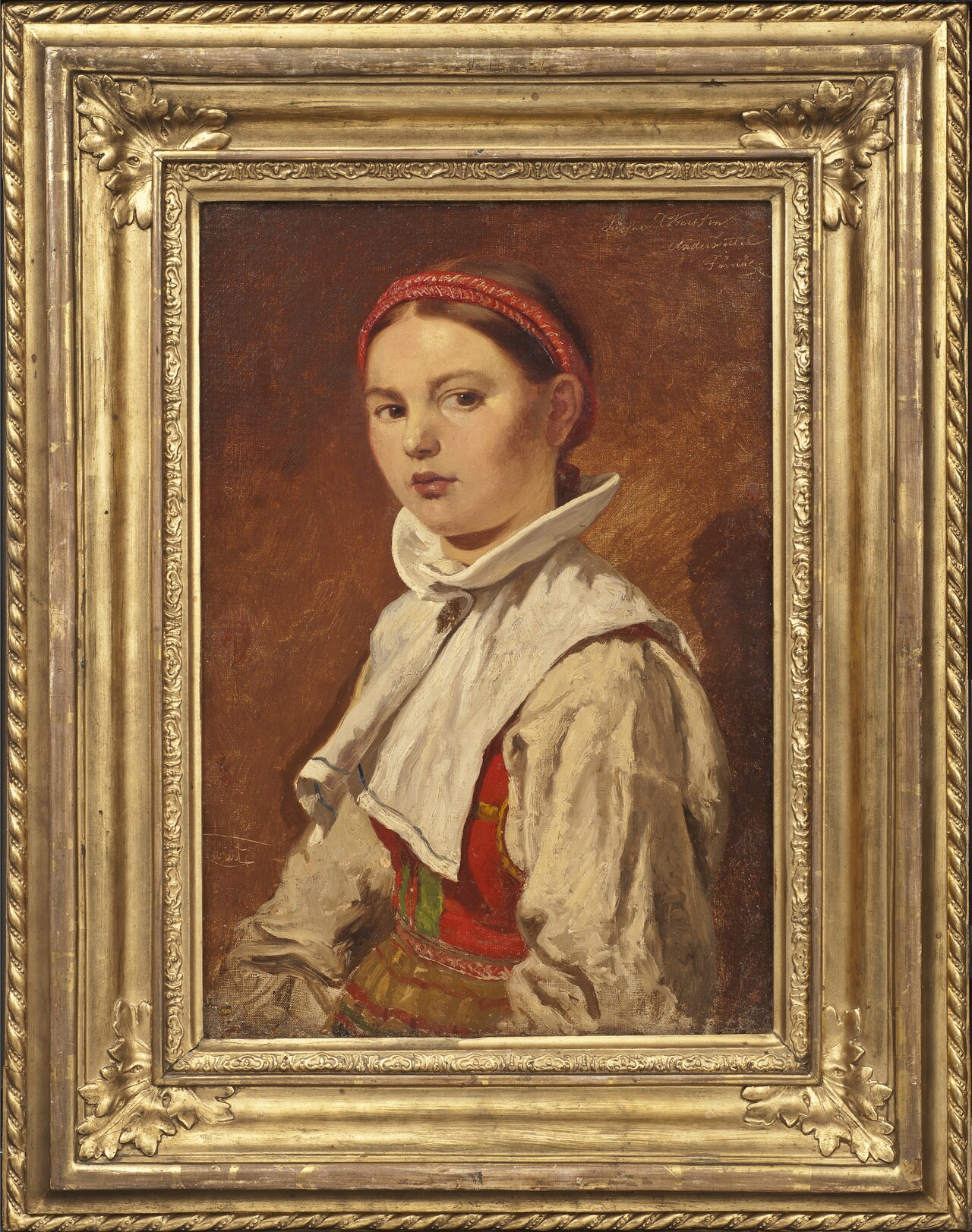
Early life Johan Fredrik Höckert was born in 1826 in the parish of Kristina, Jönköping, Sweden. His family was part of the modest middle class, and he showed an early aptitude for drawing, copying folk motifs and church decorations that surrounded his childhood. After completing basic schooling, Höckert moved to Stockholm to pursue artistic training, where he was exposed to the academic traditions then dominant in Swedish art academies. The young painter absorbed the prevailing interest in history painting, which was encouraged by the Royal Academy as a means of fostering national identity.
Career and style By the early 1850s Höckert had established himself as a professional artist, earning commissions for public and private patrons. His oeuvre is characterised by a vivid colour palette, strong chiaroscuro, and a narrative intensity that places viewers at the centre of historical drama. He embraced the ideals of national romanticism, a movement that sought to celebrate Sweden’s past through heroic and often mythic imagery. While he never aligned himself with a single avant‑garde school, his work reflects the broader European Romantic tendency toward emotional expression, combined with a distinctly Swedish sensibility.
Signature techniques Höckert’s paintings are distinguished by several recurring technical approaches. First, he employed a layered glazing method, applying thin translucent oil layers over a more opaque underpainting to achieve luminous depth. Second, his brushwork varies from fine, detailed passages in faces and textiles to broader, expressive strokes in atmospheric elements such as smoke, water and sky. Third, he used a restrained compositional geometry, often arranging figures along diagonal axes that guide the eye toward focal points—typically a dramatic event or a central character. Finally, his palette favoured warm earth tones punctuated by vivid reds and blues, enhancing the emotional impact of the scene.
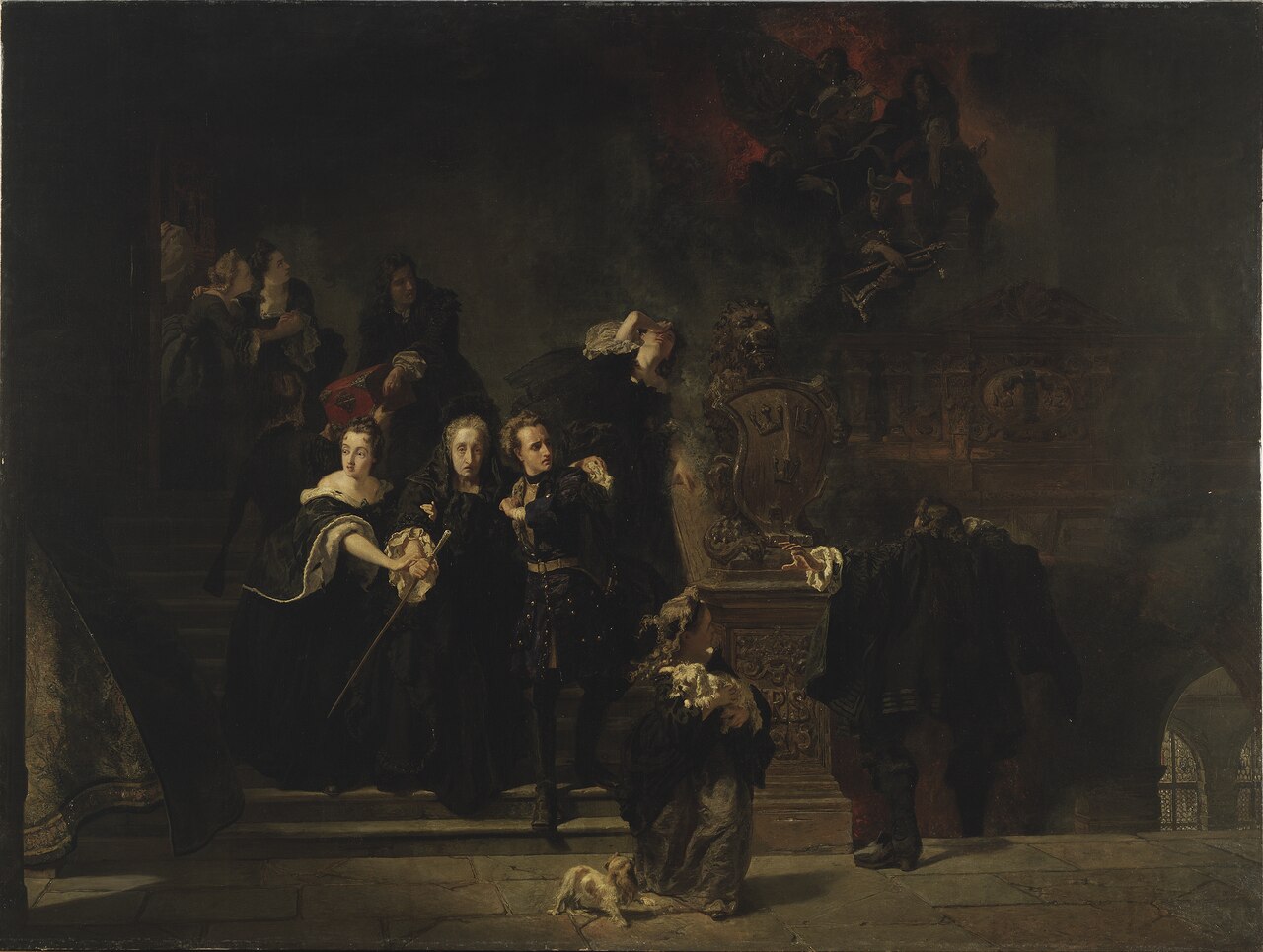
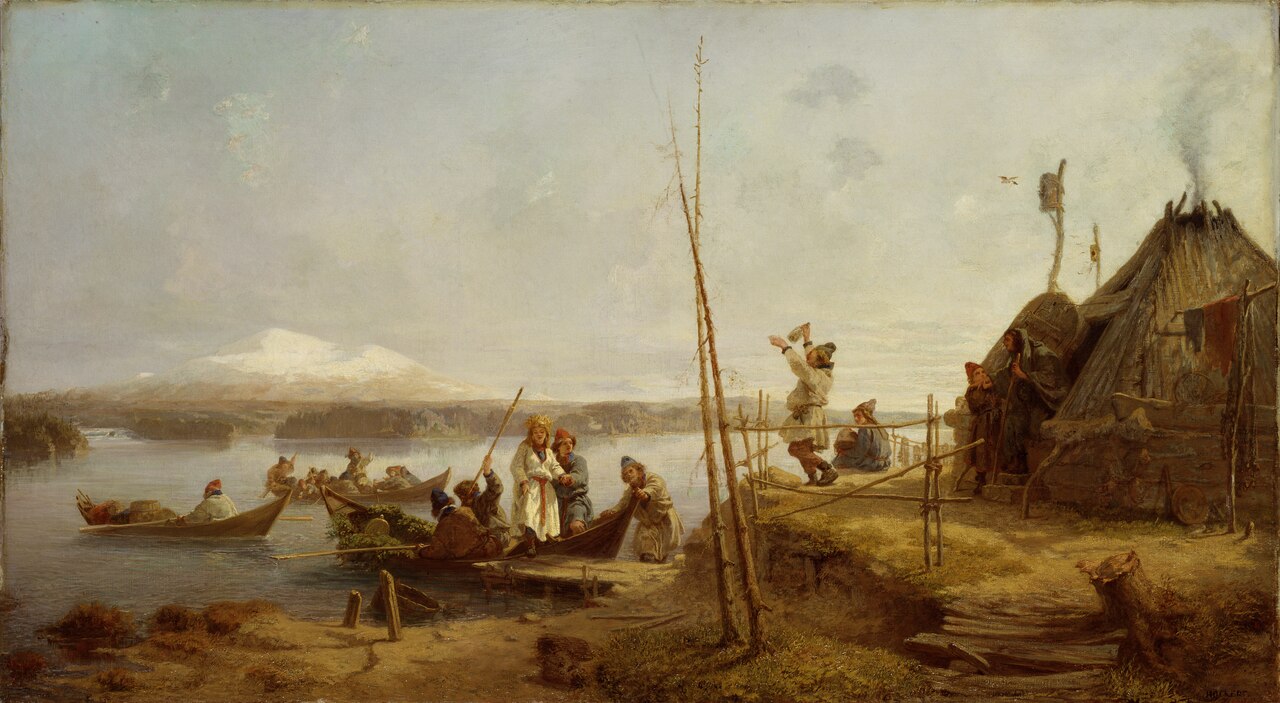
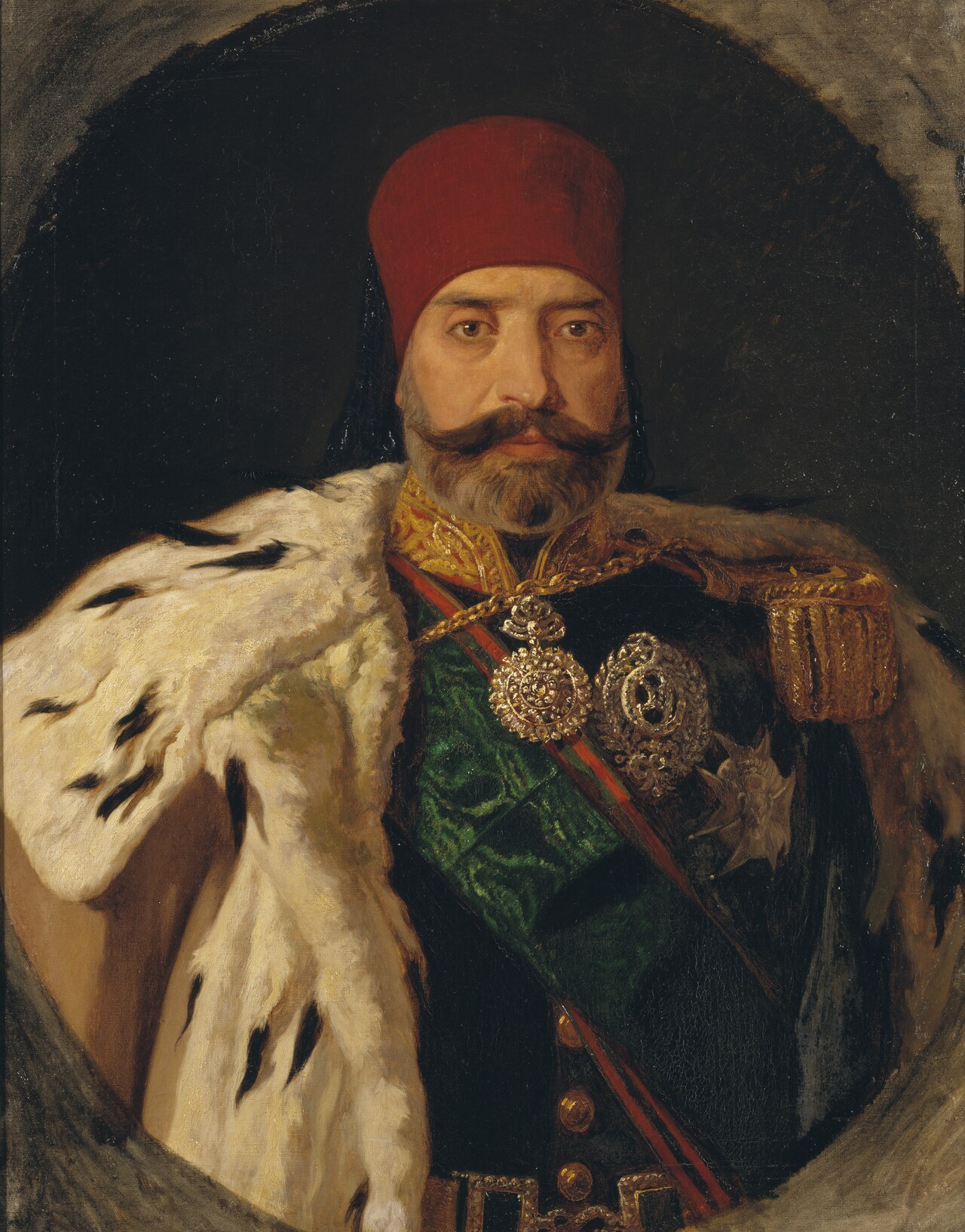
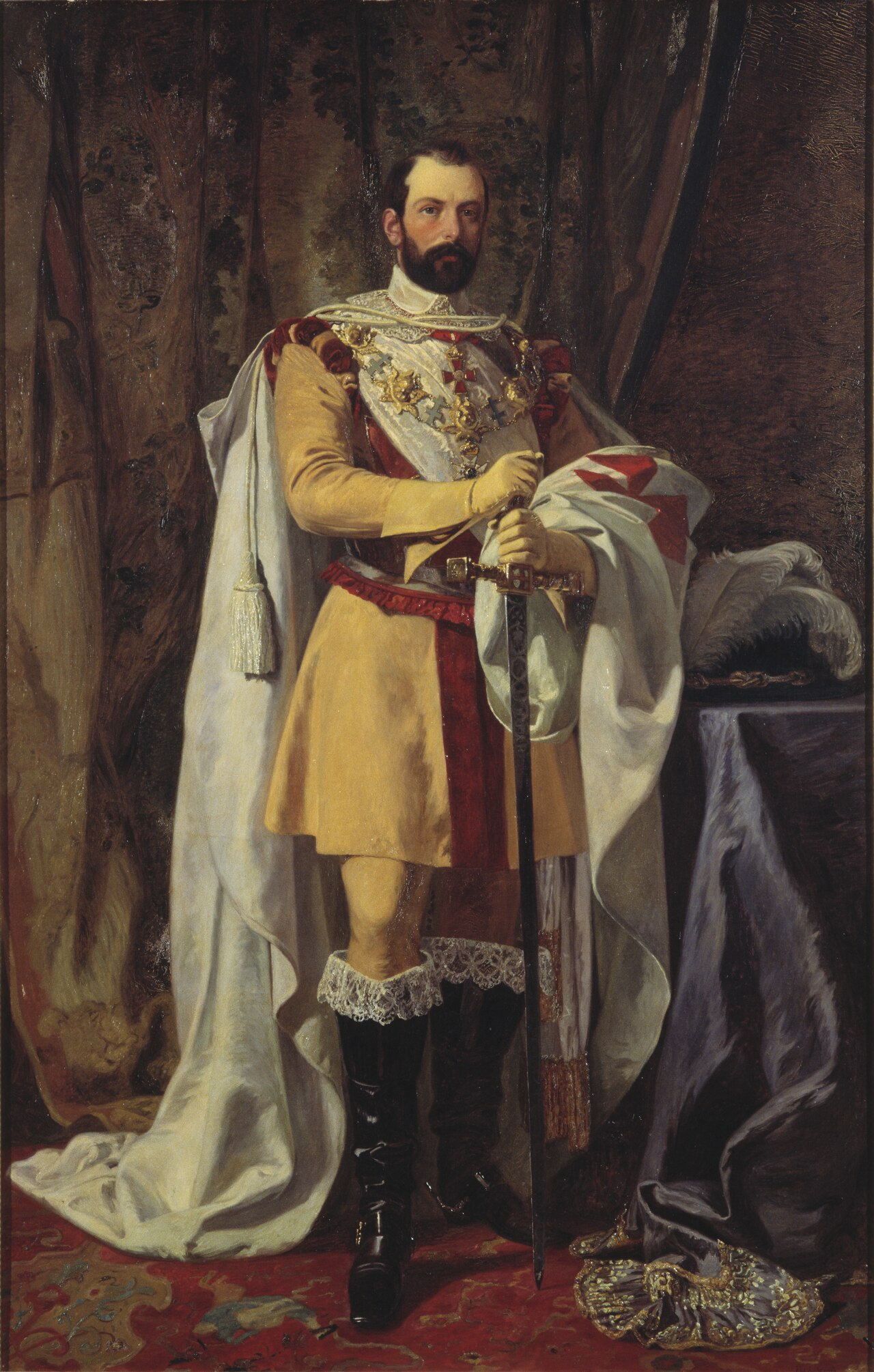
Major works - **The Fire at the Royal Palace, Stockholm, May 7th, 1697 (1866)** – Completed the year of his death, this large‑scale canvas depicts the catastrophic blaze that consumed the royal residence. Höckert captures the panic of courtiers and the fury of flames with a masterful use of light and shadow, highlighting both the tragedy and the resilience of the Swedish monarchy. - **Bridal Homecoming at Lake Hornavan** – This work illustrates a traditional wedding procession arriving by boat on the serene waters of Lake Hornavan. The painting juxtaposes the quiet, pastoral landscape with the bright, celebratory costumes of the bride’s entourage, underscoring Höckert’s interest in regional customs. - **The Bey of Tunis, Sid Muhammed Es Sadok (1862)** – A portrait of the Tunisian ruler, this painting reflects Höckert’s occasional forays into exotic subject matter. The work combines meticulous detail in the Bey’s dress with a subtle, dignified atmosphere, demonstrating the artist’s ability to convey status and personality. - **Karl XV (1826‑1872), king of Sweden and Norway, married to Lovisa of the Netherlands (1861)** – A royal portrait that presents King Karl XV in a dignified pose, flanked by symbols of his dual realm. Höckert’s treatment of regal regalia and the delicate rendering of the king’s expression highlight his skill in official portraiture. - **Såsser Kerstin Andersdotter, Dalecarlia (1858)** – This genre piece portrays a Dalecarlian woman in traditional costume, standing against a snowy landscape. The painting showcases Höckert’s affection for folk culture and his ability to render texture—particularly in the knitwear and fur— with convincing realism.
Influence and legacy Höckert’s contribution to Swedish art lies in his synthesis of Romantic drama with a burgeoning national consciousness. His canvases became visual reference points for later artists who sought to depict Sweden’s historic episodes with emotional immediacy. Museums across Sweden, including the Nationalmuseum in Stockholm, hold his works in permanent collections, ensuring his continued visibility to scholars and the public. By marrying technical prowess with narrative fervour, Höckert helped cement historical painting as a cornerstone of 19th‑century Swedish cultural identity, a legacy that endures in contemporary reinterpretations of national heritage.
Frequently asked questions
Who was Johan Fredrik Höckert?
Johan Fredrik Höckert (1826–1866) was a Swedish painter best known for his colourful, dramatic oil paintings of historic and folk subjects, making him a leading figure of national romanticism.
What artistic style or movement is Höckert associated with?
He is most closely linked to Swedish national romanticism, a 19th‑century movement that celebrated the nation’s history and folklore through emotionally charged, narrative art.
What are his most famous works?
His best‑known paintings include The Fire at the Royal Palace (1866), Bridal Homecoming at Lake Hornavan, The Bey of Tunis (1862), the portrait of King Karl XV (1861) and Såsser Kerstin Andersdotter, Dalecarlia (1858).
Why does Höckert matter in art history?
Höckert helped define Sweden’s visual narrative of the 19th century, combining technical skill with a patriotic storytelling that influenced subsequent generations of Swedish painters.
How can I recognise a Höckert painting?
Look for vivid, layered colour, strong contrasts of light and dark, dramatic historical scenes, and meticulous detail in costumes and textiles, often set against a clear, diagonal composition.