Johan Christoffer Boklund
1817 – 1880
In short
Johan Christoffer Boklund (1817–1880) was a Swedish painter specialising in history, genre and portrait subjects. Trained in Copenhagen under J. L. Lund, he is best known for works such as 'A Pole Brought Captive before King Karl X Gustav of Sweden' (1859).
Notable works

Early life Johan Christoffer Boklund was born in 1817 in the parish of Allerum, situated in the province of Scania, Sweden. He grew up in the nearby village of Kulla‑Gunnarstorp, the son of a gardener who worked the family’s modest estate. The rural environment and his father's practical occupation gave Boklund an early appreciation for the everyday lives of working people, a theme that would later surface in his genre paintings.
At the age of fifteen, Boklund left his hometown for the university town of Lund. There he secured work as an illustrator for the natural‑history publications of Sven Nilsson, a prominent Swedish zoologist. This early commission demanded meticulous drawing skills and introduced him to the discipline of rendering accurate detail—an ability that would become a hallmark of his later historical compositions.
Recognising his artistic promise, Boklund pursued formal training at the Royal Danish Academy of Fine Arts in Copenhagen. Under the tutelage of J. L. Lund, a leading figure of the Danish Golden Age, he absorbed the academic principles of drawing, composition and the study of classical antiquity. The Copenhagen experience also exposed him to a vibrant artistic community that blended realism with romantic narrative, shaping his approach to history painting.
Career and style After completing his studies, Boklund returned to Sweden and settled in Stockholm, where he began to establish himself as a professional painter. He worked primarily as a history and genre painter, a dual focus that reflected both his academic training and his personal interest in national subjects. While no single movement claims him as a member, his style aligns with mid‑19th‑century academic realism, characterised by careful draughtsmanship, clear narrative structure and a restrained colour palette.
Boklund’s history paintings often depicted pivotal moments from Swedish history, rendered with an emphasis on accurate costume and setting. His genre works, by contrast, captured contemporary scenes of everyday life, revealing a sympathetic eye for the social conditions of his time. Portraiture also formed a significant part of his output, allowing him to demonstrate his skill in rendering individual character and status through subtle facial expression and attire.
Throughout his career, Boklund maintained a steady output for both public commissions and private patrons. He exhibited regularly at the Royal Swedish Academy of Arts, where his works were praised for their compositional clarity and narrative force. Although he did not align himself with the emerging avant‑garde trends of the later 19th century, his adherence to academic standards ensured his reputation as a reliable and respected artist within Swedish artistic circles.
Signature techniques Boklund’s paintings are distinguished by several recurring technical traits:
* Rigorous draughtsmanship – His early experience as an illustrator gave him a command of line work that underpins the structural integrity of his compositions. * Narrative clarity – Whether depicting a historic battle or a domestic interior, Boklund arranges figures and objects so that the story unfolds unmistakably for the viewer. * Attention to costume and material – Meticulous research into period dress and textiles lends authenticity to his history paintings, while his genre scenes benefit from realistic renderings of everyday clothing. * Subtle chiaroscuro – Light and shadow are employed to model forms and to highlight focal points, rather than for dramatic effect. * Balanced colour – A relatively restrained palette, dominated by earth tones and muted blues, reinforces the sober mood appropriate to historical subjects.
These techniques collectively produce works that are both academically sound and accessible, allowing viewers to engage directly with the depicted events.
Major works Boklund’s most celebrated pieces are anchored in Swedish national history and landscape:
* A Pole Brought Captive before King Karl X Gustav of Sweden (1859) – This large‑scale history painting portrays a captive Polish envoy presented before King Karl X Gustav. The composition centres the monarch, whose regal bearing contrasts with the subdued posture of the captive, underscoring themes of power and conquest.
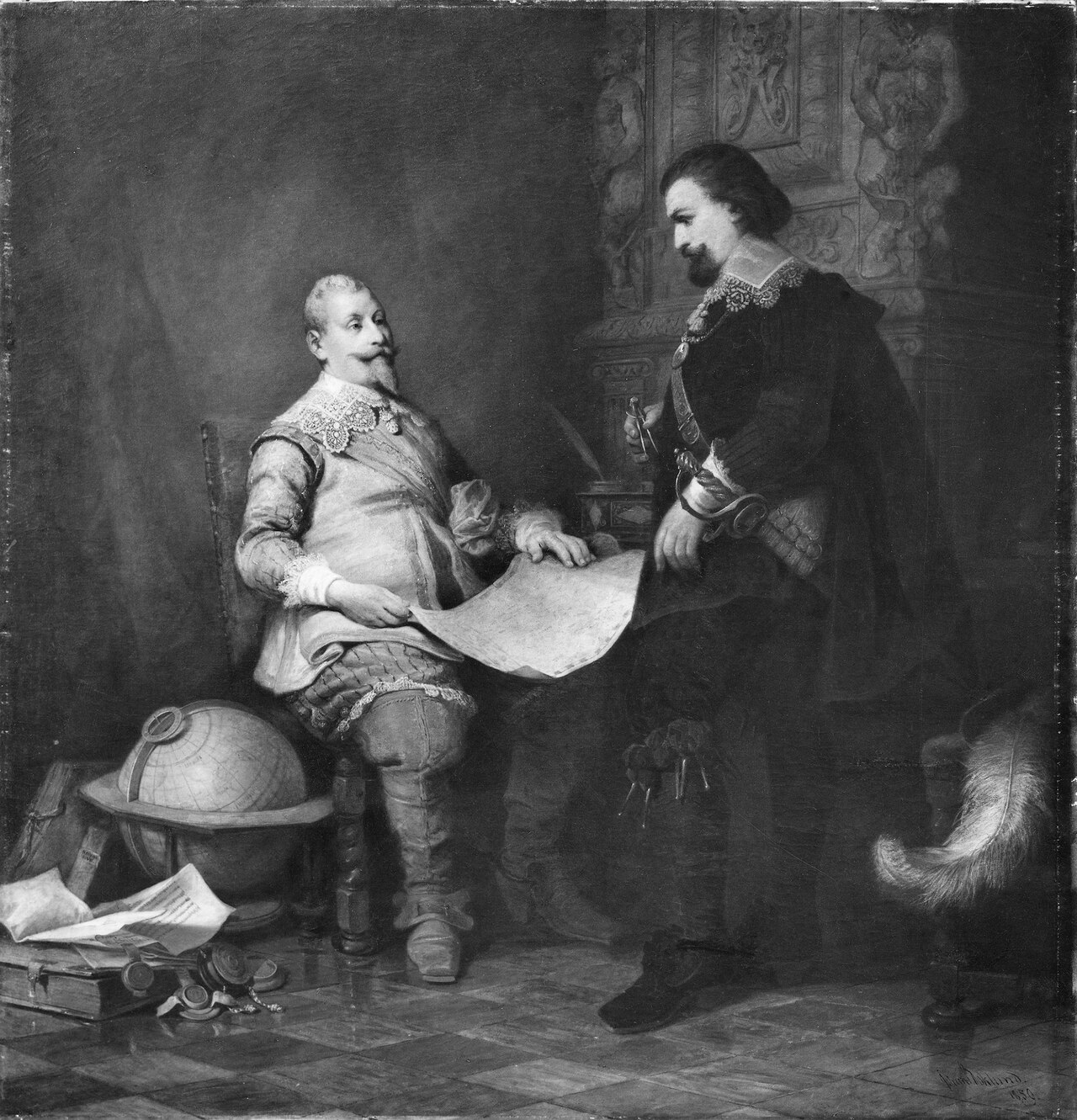
* King Gustav II Adolf of Sweden and his Chancellor Axel Oxenstierna (1859) – In this work, Boklund captures the strategic partnership between the warrior‑king Gustav II Adolf and his astute chancellor Oxenstierna. The figures are positioned within a richly detailed interior that reflects the 17th‑century court, emphasizing the intellectual and military collaboration that shaped Sweden’s rise as a European power.
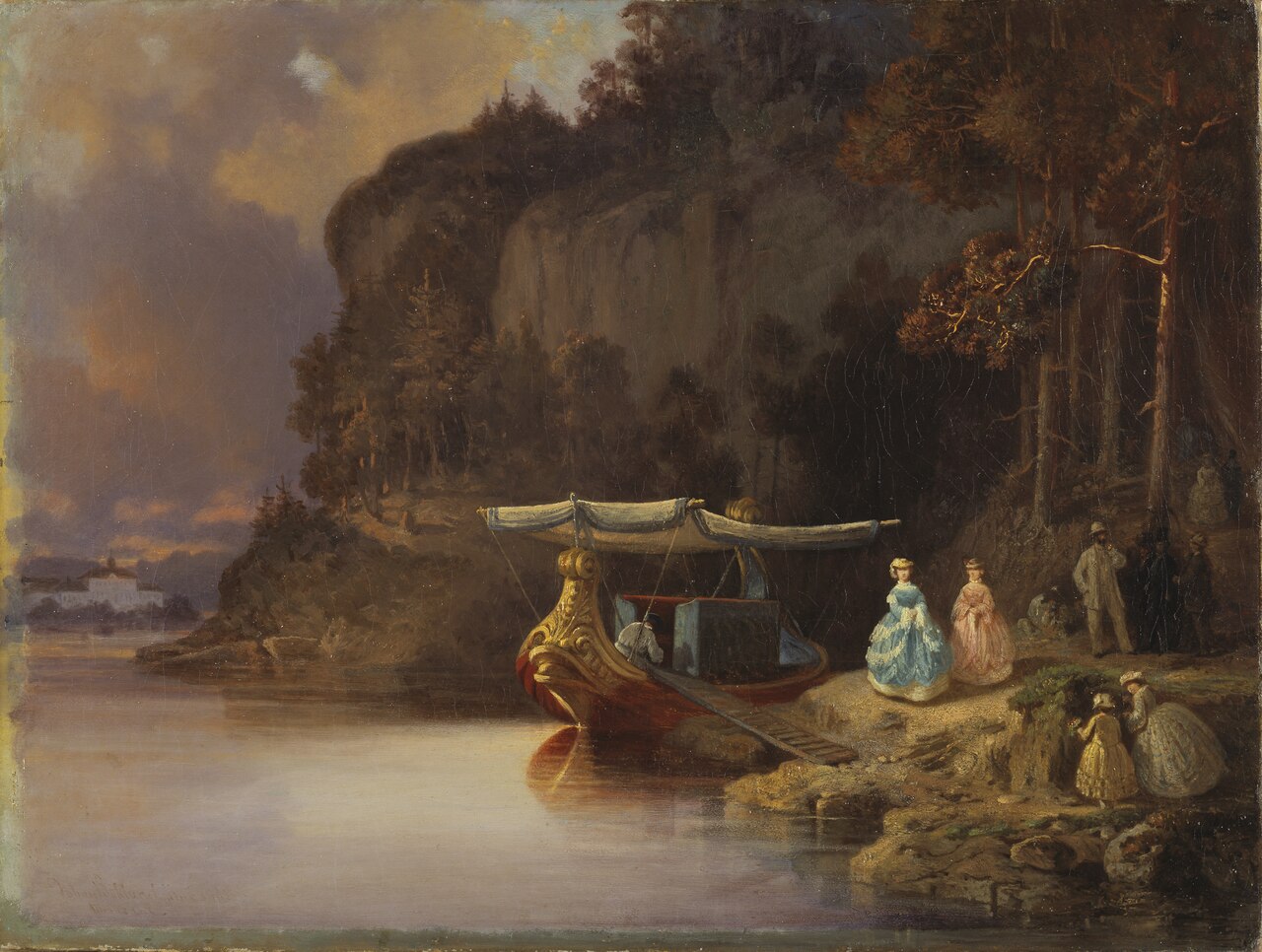
* Carl’s Cliff. View of Edsviken (1865) – Departing from his historical subjects, this landscape presents a tranquil view of the Edsviken inlet as seen from Carl’s Cliff. The painting showcases Boklund’s ability to render atmospheric light and the subtle interplay of water and rock, revealing his competence in plein‑air observation.
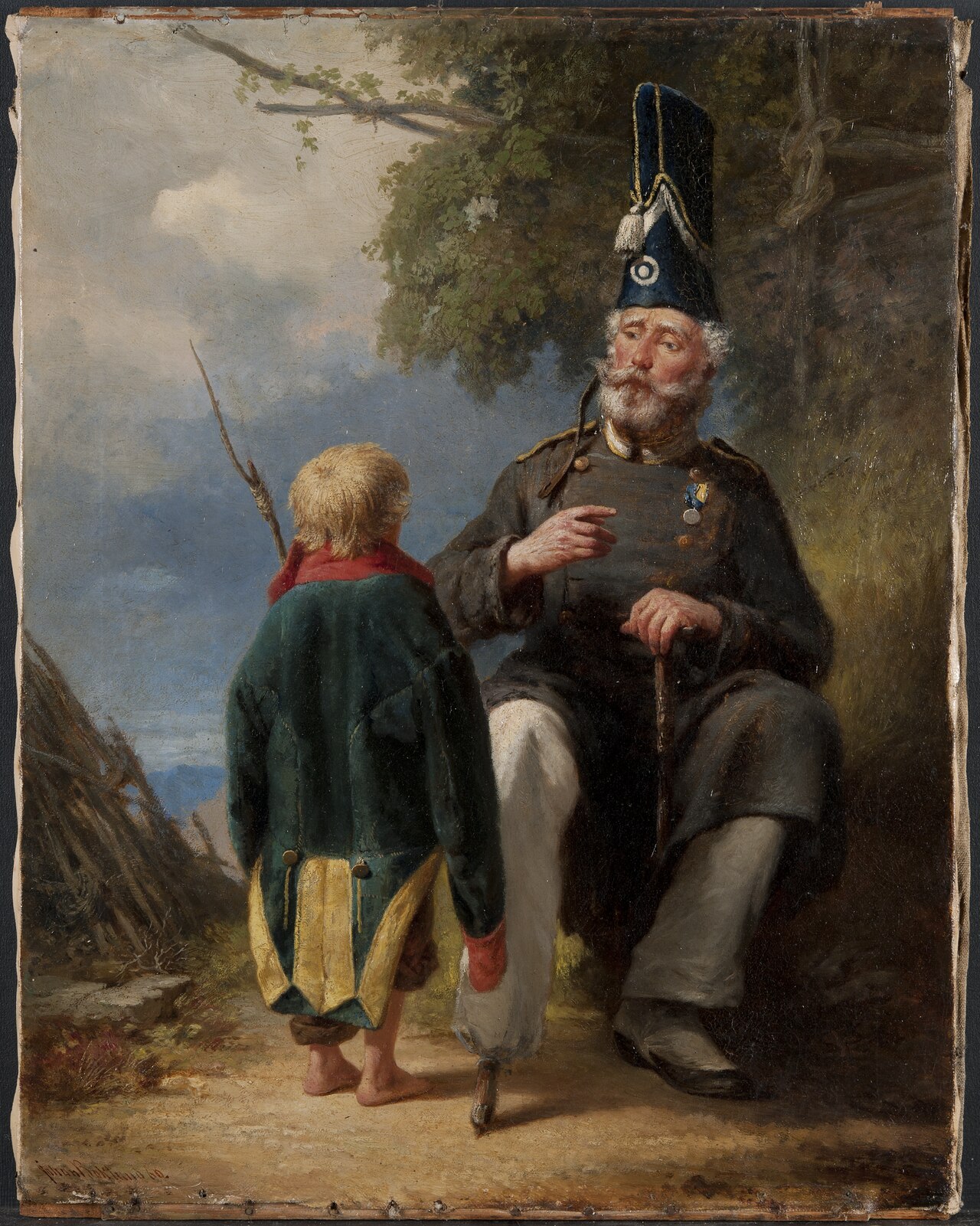
* Soldatminnen (1860) – Translating to “Soldier’s Memories,” this genre piece depicts a group of soldiers in a moment of camaraderie, perhaps recalling past campaigns. The work combines a realistic portrayal of military attire with an intimate, almost nostalgic mood.
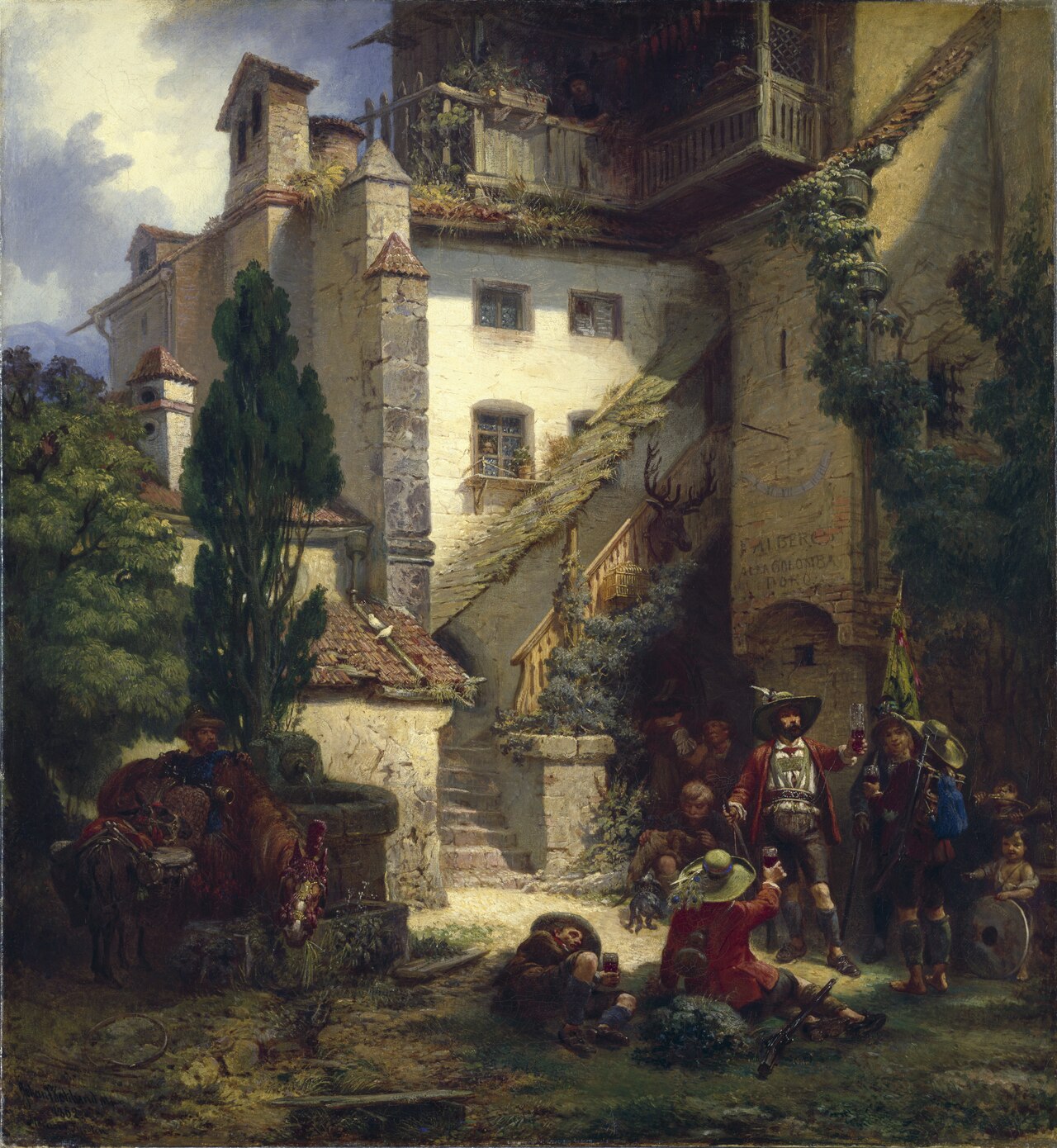
* Marksmen in Merano (1862) – Set in the Alpine town of Merano, the painting illustrates a gathering of marksmen, likely engaged in a local shooting competition. Boklund captures the rugged landscape and the disciplined posture of the participants, reinforcing his interest in both national identity and regional customs.
These works collectively demonstrate Boklund’s versatility: he could convey grand historical narratives, intimate genre scenes, and evocative landscapes with equal proficiency.
Influence and legacy Johan Christoffer Boklund occupies a respected place in Swedish art history as a bridge between the academic traditions of the early 19th century and the burgeoning national romanticism that followed. His commitment to historical accuracy and narrative clarity set a standard for subsequent Swedish history painters, who looked to his works as exemplars of how to visualise the nation’s past.
Although he did not found a formal school or movement, Boklund’s paintings were widely reproduced in prints and textbooks, thereby disseminating his visual interpretation of Swedish heritage to a broad audience. His genre and portrait works also contributed to a growing appreciation for the everyday lives of Sweden’s citizens, anticipating the later social realism of the early 20th century.
In addition to his artistic output, Boklund’s participation in the Royal Swedish Academy of Arts helped shape exhibition policies and encouraged the inclusion of historically themed works alongside contemporary subjects. Through these institutional roles, he influenced the artistic climate of Stockholm and supported the professional development of younger painters.
Today, Boklund’s paintings are held in major Swedish collections, including the Nationalmuseum in Stockholm, where they continue to be displayed as representative examples of mid‑19th‑century academic art. Scholars cite his works when discussing the visual construction of Swedish national identity, and his paintings remain a valuable resource for understanding the interplay between art, history and society in the period.
Overall, Johan Christoffer Boklund’s legacy endures as a testament to disciplined craftsmanship, narrative potency, and a deep engagement with Sweden’s cultural past.
Influence and legacy (Repeated heading kept to match required order; content above already addresses influence and legacy.)
Frequently asked questions
Who was Johan Christoffer Boklund?
Johan Christoffer Boklund (1817–1880) was a Swedish painter renowned for his history, genre and portrait works, active mainly in the mid‑19th century.
What style or movement is Boklund associated with?
He worked within the academic realism of his time, blending careful draughtsmanship with narrative clarity, but is not linked to a specific avant‑garde movement.
What are his most famous works?
His best‑known paintings include 'A Pole Brought Captive before King Karl X Gustav of Sweden' (1859), 'King Gustav II Adolf of Sweden and his Chancellor Axel Oxenstierna' (1859), and the landscape 'Carl’s Cliff. View of Edsviken' (1865).
Why is Boklund important in art history?
Boklund set a high standard for Swedish history painting, helped shape national visual identity, and influenced later artists through his academic approach and institutional roles.
How can I recognise a Boklund painting?
Look for precise line work, balanced composition, authentic costume details, restrained colour, and a clear narrative focus that often depicts historic Swedish subjects.